
Embroidery and Its Role in Luxurious Fashion

Finding a garment that feels truly special can often be a challenge for women who value both artistry and individuality. The allure of exclusive embroidered apparel offers a unique answer, weaving centuries of cultural craftsmanship with modern sophistication. Embroidery’s defining features—rich color palettes, intricate patterns, and luxurious embellishments like pearls and beads—add unmatched elegance to every piece. Discover how these timeless techniques create wearable art that reflects personal style and lasting beauty.
Table of Contents
Key Takeaways
Point | Details |
Embroidery as Art | Embroidery is a unique art form that conveys cultural narratives and personal stories through intricate stitching techniques. |
Historical Significance | The craft has origins in various ancient civilizations, reflecting the social and cultural contexts of their time. |
Technological Evolution | Advances in tools and techniques have transformed embroidery, combining traditional craftsmanship with modern technology for innovative designs. |
Fashion’s Role | In luxury fashion, embroidery serves as a medium for artistic expression, creating statement pieces that communicate sophistication and heritage. |
Embroidery’s Beauty and Defining Features
Embroidery represents an extraordinary art form that transforms ordinary textiles into extraordinary visual narratives, blending centuries of cultural craftsmanship with stunning aesthetic precision. Traditional ornamental techniques reveal a complex world where every stitch tells a story of heritage, creativity, and meticulous skill.
The fundamental beauty of embroidery emerges through its remarkable diversity of techniques and decorative elements. Key aesthetic features include:
Intricate floral and abstract pattern designs
Rich and nuanced color palettes
Varied decorative stitching methods
Incorporation of embellishments like pearls, beads, and sequins
Ability to convey social status and cultural identity
Historically, embroidery has been more than mere decoration—it represents a sophisticated language of artistic expression. Sustainability research highlights how these traditional craft techniques continue to hold significant cultural and economic value worldwide, preserving ancestral skills while adapting to contemporary fashion demands.
The technical complexity of embroidery involves mastering numerous stitching techniques, each requiring extraordinary precision and artistic vision. Artisans manipulate threads, needles, and decorative elements to create layered, three-dimensional designs that transform simple fabrics into extraordinary canvases of visual storytelling.
Pro tip: Study traditional embroidery techniques from different global cultures to appreciate the artistry behind each unique stitch and pattern design.
Historical Origins and Geographic Rise
Embroidery’s journey through human history represents a rich tapestry of cultural expression, spanning continents and civilizations with remarkable diversity. Textile development research reveals that embroidery emerged not just as a decorative art, but as a profound method of storytelling and cultural communication across diverse global societies.
The origins of embroidery can be traced to multiple ancient civilizations, each contributing unique techniques and aesthetic approaches:
Middle Eastern regions developing intricate geometric patterns
Chinese silk traditions creating elaborate court embroideries
European medieval communities using needlework for religious symbolism
Indian subcontinent producing complex narrative textile designs
African cultures integrating symbolic tribal representations

Samarkand’s embroidery traditions specifically demonstrate how geographic context profoundly influences artistic development. Central Asian artisans transformed local craft techniques into sophisticated cultural expressions, showcasing how embroidery transcends mere decoration to become a nuanced language of artistic identity.
Women played a particularly significant role in embroidery’s global proliferation, using needlework as a powerful medium of artistic and social expression. Through generations, they preserved cultural knowledge, communicated personal narratives, and maintained artistic traditions that continue to inspire contemporary fashion designers and textile artists worldwide.
The table below highlights key embroidery styles across different cultures:
Region | Signature Style Features | Artistic Focus |
Middle East | Complex geometric arrangements | Symbolic motifs |
China | Silk-based, ornate court patterns | Nature and mythology |
Europe | Religious symbols and crests | Spiritual storytelling |
India | Dense, narrative-rich compositions | History and folklore |
Africa | Bold, tribal representations | Social identity |
Central Asia | Detailed local motifs, vivid colors | Cultural heritage |
Pro tip: Explore museum textile collections to understand the intricate historical evolution of embroidery techniques across different cultures.

Evolution of Embroidery Tools and Methods
The journey of embroidery tools represents a fascinating progression from simple hand-crafted techniques to sophisticated technological innovations. Traditional hand-pushed embroidery methods demonstrate remarkable adaptability, transforming from purely manual processes to increasingly complex and efficient production techniques.
Historical embroidery tools have undergone significant transformations, including:
Primitive bone needles used in prehistoric periods
Metal needles with increasingly refined point designs
Hand-operated wooden embroidery frames
Magnifying glasses for intricate detailed work
Specialized thread scissors with precision cutting edges
Computerized design interfaces for pattern creation
Computer-based intelligent algorithms have revolutionized pattern development, enabling designers to create more complex and mathematically precise embroidery designs. These technological advances allow artisans to experiment with intricate patterns that would have been impossible through traditional manual methods.
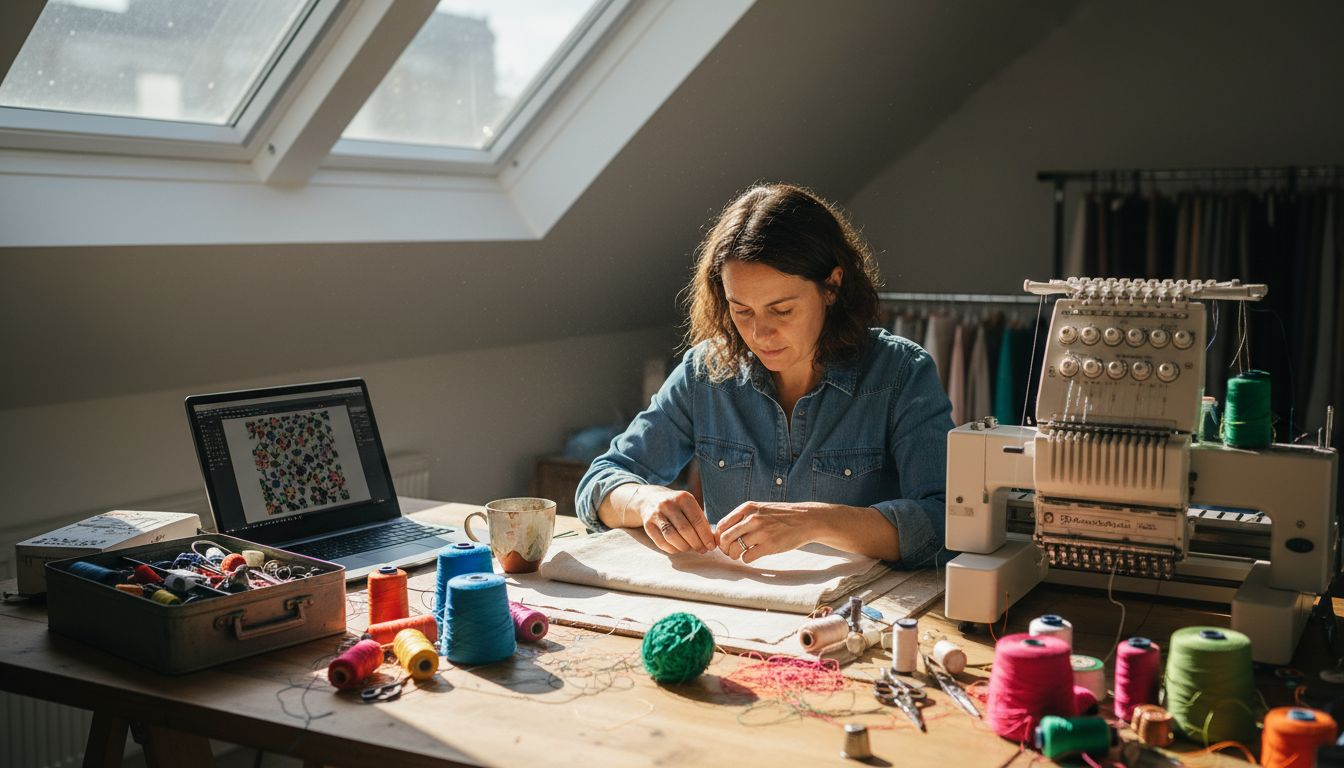
The transition from manual to technological tools represents more than mere technical advancement—it symbolizes embroidery’s ongoing dialogue between heritage craftsmanship and modern innovation. Contemporary embroidery artists now seamlessly blend centuries-old techniques with cutting-edge digital design technologies, creating a dynamic and evolving art form that respects traditional skills while embracing technological potential.
Here is a summary comparing traditional and modern embroidery tools:
Tool Type | Historical Use | Modern Function |
Bone Needles | Basic stitching in prehistoric textiles | Seldom used, mostly for reconstructions |
Metal Needles | Finer, durable stitching and detail | Standard for all hand embroidery |
Wooden Embroidery Frames | Stabilizing fabric for manual work | Used for both hand and machine work |
Magnifying Glasses | Enhancing visibility for detail work | Essential for miniature and precision tasks |
Thread Scissors | Cutting threads accurately | Precision tools for all embroidery |
Computer Design Software | Not available historically | Enables digital pattern creation |
Pro tip: Invest in quality ergonomic tools and learn both traditional hand techniques and modern digital design methods to become a versatile embroidery artist.
Distinct Embroidery Techniques in Fashion
Fashion embroidery encompasses a rich tapestry of intricate techniques that transform ordinary fabrics into extraordinary artistic statements. Modern embroidery techniques represent a sophisticated blend of traditional craftsmanship and contemporary design innovation.
The most prominent embroidery techniques in luxury fashion include:
Straight Stitch: Simple linear technique creating precise geometric patterns
Satin Stitch: Smooth, glossy technique providing rich surface coverage
Comprehensive Embroidery: Multi-layered approach combining various stitching methods
Raised Embroidery: Three-dimensional technique creating textural depth
Metallic Thread Embroidery: Using specialized metallic threads for luxurious shimmer
Appliqué Embroidery: Incorporating fabric pieces into intricate designs
Artistic imagery in embroidery demonstrates how contemporary designers are pushing traditional boundaries, transforming embroidery from a decorative technique into a powerful form of artistic expression. These innovative approaches allow designers to create emotional connections through intricate visual narratives embedded within fabric designs.

Each embroidery technique represents a unique language of design, with artisans carefully selecting methods that complement the fabric’s texture, garment structure, and intended aesthetic impact. Contemporary fashion designers now view embroidery not just as a decorative element, but as a sophisticated medium for storytelling and personal expression.
Pro tip: Master multiple embroidery techniques and learn to combine them creatively to develop your unique artistic signature.
Iconic Luxury Embroidery Statement Pieces
Luxury fashion embroidery transcends mere decoration, emerging as a sophisticated art form that communicates wealth, cultural identity, and exceptional craftsmanship. Biomimetic embroidery techniques represent the pinnacle of this artistic expression, where designers draw inspiration from nature to create extraordinarily intricate and exclusive statement pieces.
Iconic embroidery statement pieces typically feature remarkable characteristics:
Complex Floral Motifs: Intricate botanical designs symbolizing elegance
Three-Dimensional Textural Elements: Creating visual and tactile depth
Metallic and Iridescent Thread Work: Reflecting light for dramatic effect
Cultural Narrative Patterns: Embedding historical and personal stories
Abstract Geometric Compositions: Modern interpretations of traditional techniques
Mixed Media Embellishments: Incorporating pearls, sequins, and specialized materials
High fashion embroidery trends demonstrate how these elaborate techniques transform garments from mere clothing into wearable art pieces. Each stitch represents a deliberate artistic choice, communicating sophistication and cultural appreciation through meticulous craftsmanship.
Contemporary luxury designers view embroidery as a dynamic language of expression, where traditional techniques merge with innovative design philosophies. These statement pieces not only showcase technical mastery but also narrate complex stories of heritage, personal identity, and artistic vision.
Pro tip: When selecting embroidered luxury pieces, examine the intricacy of stitching and understand the cultural narrative embedded within the design.

Vivien Lauren’s Signature Embroidered Collections
Vivien Lauren’s embroidered collections represent the pinnacle of Italian craftsmanship, blending traditional needlework techniques with contemporary fashion sensibilities. Elegant fashion dress collection showcase the brand’s commitment to creating extraordinary pieces that transcend ordinary clothing.
The signature embroidered collections feature distinctive characteristics:
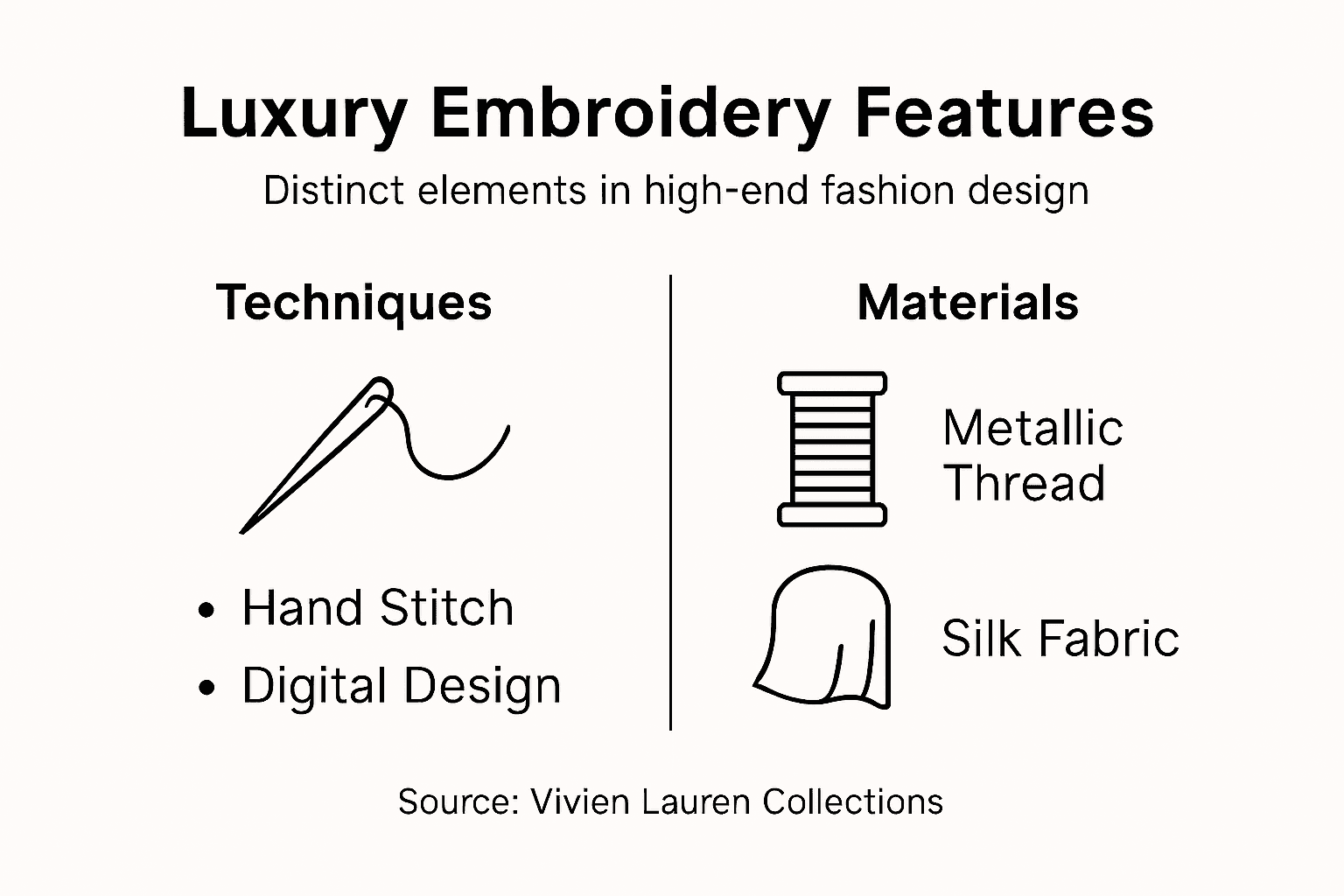
Handcrafted Italian Embroidery: Precision stitching from master artisans
Intricate Cultural Motifs: Designs inspired by global artistic traditions
Luxurious Thread Selection: Utilizing rare silk and metallic threads
Contemporary Design Fusion: Modern silhouettes with traditional embellishments
Narrative-Driven Patterns: Embedding personal and cultural stories
Sustainable Luxury Materials: Ethically sourced fabrics and threads
Whilst the dresses themselves have all been made in Europe using embroidered lace and fabric from Italy

Each collection represents a carefully curated narrative of elegance, with embroidery serving as the primary storytelling medium. The designs transform garments from mere clothing into wearable art pieces that communicate sophistication, cultural appreciation, and individual expression.
The meticulous attention to detail in Vivien Lauren’s embroidered collections reflects a deep understanding of fashion as an art form. By combining traditional craftsmanship with innovative design perspectives, the brand creates pieces that are simultaneously timeless and contemporary.
Pro tip: Invest in embroidered pieces that resonate with your personal narrative and reflect your unique aesthetic sensibility.
Discover Timeless Elegance in Embroidered Luxury Fashion
Embroidery transforms simple fabrics into extraordinary stories of heritage and artistry. If you appreciate the meticulous craftsmanship and rich cultural narratives behind each stitch, Vivien Lauren offers you a unique opportunity to embrace this timeless tradition. Their collections highlight intricate hand-stitched details inspired by global embroidery techniques that bring sophistication and personal expression to your wardrobe.
Experience the beauty of Italian heritage combined with modern design. Explore Vivien Lauren’s curated collections and indulge in handcrafted pieces that make every garment a wearable work of art.

Embroidered ruffled dress - green 
Embroidered ruffled dress - off white 
Embroidered ruffled dress - pink 
Embroidered asymmetric dress - red
Elevate your fashion with exclusive embroidered designs that celebrate cultural identity and artistic mastery. Shop now at Vivien Lauren for luxurious apparel and accessories that speak your story with elegance and fine craftsmanship. Enjoy benefits like free UK shipping on orders over £80 and interest-free installment plans to bring home your next statement piece today.
Frequently Asked Questions
What distinguishes luxurious embroidery in fashion?
Luxurious embroidery in fashion is characterized by intricate floral motifs, three-dimensional textural elements, metallic thread work, and cultural narrative patterns that create visually stunning and sophisticated garments.
What are some popular embroidery techniques used in luxury fashion?
Some popular embroidery techniques in luxury fashion include straight stitch, satin stitch, comprehensive embroidery, raised embroidery, metallic thread embroidery, and appliqué embroidery, each contributing uniquely to the overall design.
How has technology influenced modern embroidery in fashion?
Technology has transformed modern embroidery by enabling designers to use computerized design software, allowing for the creation of complex and mathematically precise patterns that enhance the artistic expression of embroidered pieces.
How can I appreciate the craftsmanship behind embroidered luxury pieces?
To appreciate the craftsmanship behind embroidered luxury pieces, examine the intricacy of the stitching, understand the cultural narratives embedded in the designs, and consider the quality of materials used, such as rare silk and metallic threads.
Recommended

This piece of research on embroidery it's origins, how it's allure has evolved and some notable fashion statement pieces bearing this craftsmanship are brought to you by Shona White. For Vivien Lauren. Vivien Lauren. Luxury. Craftsmanship that's Proudly Italian. Vivien Lauren. Proud to Style.


