
French and Fashion: Legacy of Timeless Elegance

Defining personal style in a world of fleeting trends is never simple. For those who appreciate the allure of European heritage, understanding the essence of French fashion principles offers fresh inspiration for cultivating a wardrobe rooted in enduring elegance. Discover how centuries of artistry, innovative design, and refined taste continue to influence luxury choices for women who value craftsmanship and timeless sophistication.
Table of Contents
Key Takeaways
Point | Details |
Quality and Craftsmanship | French fashion emphasizes an unwavering commitment to quality and meticulous craftsmanship, transforming clothing into wearable art. |
Cultural Expression | Fashion in France serves as a profound narrative of cultural identity and social change, reflecting the complexities of historical evolution. |
Timeless Principles | Adopting French fashion entails prioritizing timeless designs, celebrating individuality, and investing in high-quality pieces over fleeting trends. |
Comparative Influence | The interplay between French and Italian fashion showcases distinct philosophies, enriching global fashion through complementary strengths in artistic expression and craftsmanship. |
Defining French Fashion and Core Principles
French fashion represents more than clothing—it is a sophisticated cultural expression deeply rooted in historical artistry and meticulous craftsmanship. The essence of French fashion principles transcends mere aesthetic appeal, embodying a profound philosophy of elegance, precision, and individual expression.
At its core, French fashion distinguishes itself through unwavering commitment to quality, innovation, and timeless design. French designers have consistently transformed clothing from functional necessity into wearable art, emphasizing subtle details, impeccable tailoring, and a nuanced understanding of silhouette. The principles governing French fashion emerged from centuries of cultural refinement, where clothing became a language of social communication, personal identity, and artistic statement.
The historical trajectory of French fashion reveals a remarkable narrative of global influence. From the opulent court of Louis XIV to contemporary haute couture, French designers have continuously redefined style through innovative artistic craftsmanship. Key principles include prioritizing quality over quantity, celebrating individual beauty, maintaining elegant simplicity, and understanding that true style transcends transient trends.
Pro tip: Embrace French fashion’s core philosophy by investing in fewer, higher-quality pieces that reflect personal elegance rather than chasing momentary fashion trends.
History and Key Milestones in French Fashion
The history of French fashion is a rich tapestry of artistic innovation and cultural transformation, spanning centuries of remarkable creativity. French fashion’s evolutionary journey reflects not just clothing trends, but the complex social dynamics and artistic expressions of different historical periods. From the lavish courts of European monarchs to the revolutionary design studios of Paris, French fashion has consistently been a powerful form of cultural communication.
During the 17th and 18th centuries, France established itself as the epicenter of global fashion. The reign of Louis XIV marked a significant milestone, where elaborate clothing became a symbol of social status and political power. French designers and textile makers developed intricate techniques that transformed clothing from mere functional attire into sophisticated artistic statements. The establishment of haute couture in the 1860s represented another critical turning point, officially institutionalizing French fashion’s global influence.
The 20th century witnessed unprecedented transformations in French fashion. The emergence of ready-to-wear (prêt-à-porter) in the 1960s democratized fashion, making stylish clothing more accessible to broader social classes. Iconic designers like Coco Chanel, Christian Dior, and Yves Saint Laurent revolutionized fashion by challenging traditional silhouettes, introducing innovative cuts, and creating designs that celebrated feminine independence and personal expression.
Major milestones have shaped the evolution of French fashion:
Era | Key Development | Impact on Fashion |
17th Century | Royal court sets global standards | France becomes style authority |
1860s | Launch of haute couture houses | Institutionalizes fashion as an art form |
1960s | Rise of ready-to-wear fashion | Makes designer clothing widely accessible |
Post-WWII | Bold new silhouettes and designers | Redefines femininity and personal style |
Pro tip: Study the historical evolution of French fashion to understand how clothing represents more than aesthetic trends—it’s a profound narrative of cultural identity and social change.
Early Iconic French Designers and Lasting Styles

French fashion’s pioneering designers transformed clothing from mere fabric into an art form that expressed cultural identity and social transformation. The emergence of haute couture in the late 19th century marked a revolutionary moment in fashion history, with Charles Frederick Worth emerging as the first true fashion designer who elevated clothing design from craft to creative profession. Worth’s innovative approach involved creating original designs, working directly with clients, and establishing the concept of a fashion house that would become a model for future designers.
The early 20th century witnessed remarkable designers who redefined fashion aesthetics. Coco Chanel revolutionized women’s fashion by introducing comfortable, practical designs that liberated women from restrictive corsets and elaborate clothing. Her iconic designs—including the little black dress and tailored suits—embodied a new vision of feminine elegance that prioritized simplicity and personal freedom. Christian Dior followed with his groundbreaking ‘New Look’ in 1947, which reintroduced feminine silhouettes with cinched waists and full skirts, symbolically celebrating femininity after the austerity of World War II.
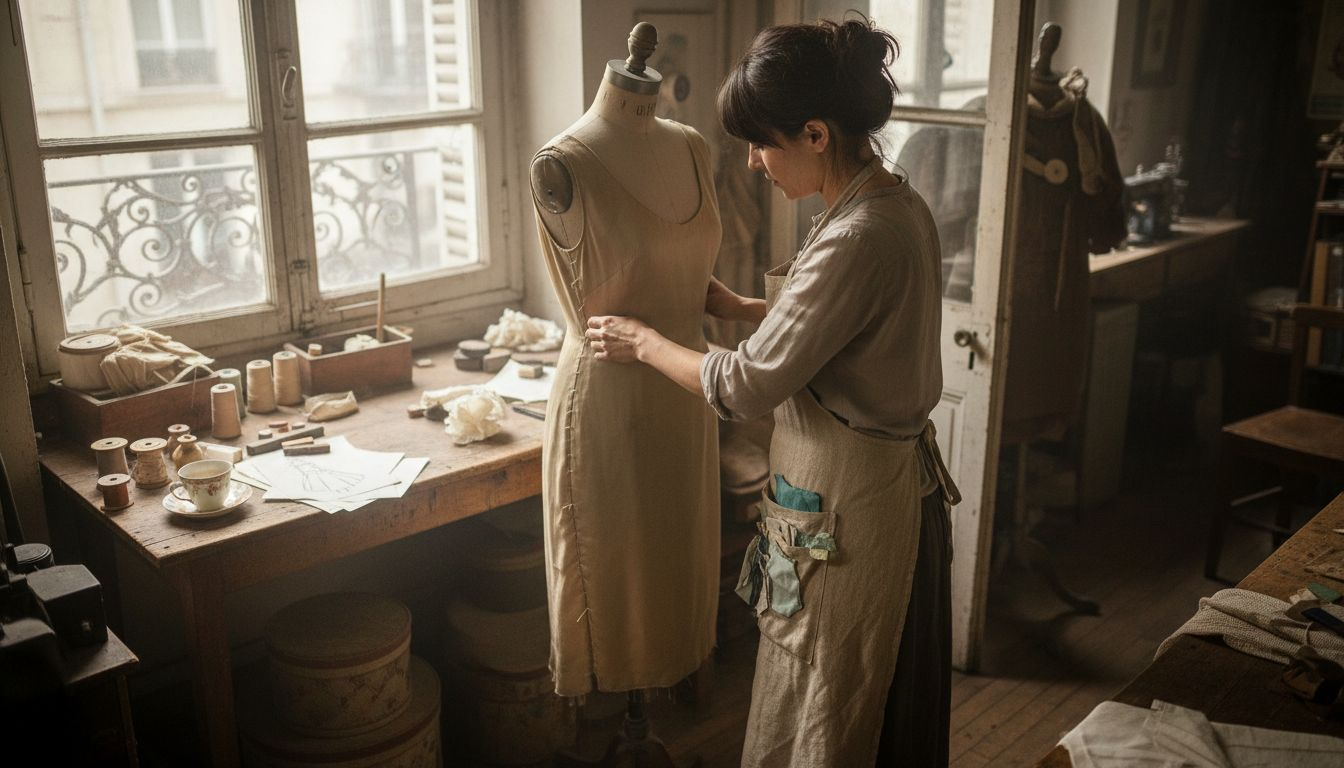
These visionary designers did more than create clothing; they crafted cultural narratives through fashion. Iconic French designers established global style standards that transcended national boundaries, making Paris the undisputed center of global fashion. Yves Saint Laurent continued this legacy by challenging traditional gender norms, introducing revolutionary designs like the women’s tuxedo suit and democratizing high fashion through ready-to-wear collections that made sophisticated style accessible to broader audiences.
Pro tip: Study the design philosophies of iconic French fashion designers to understand how truly transformative fashion can be beyond mere aesthetic trends.
French and Italian Fashion Leadership Compared
Fashion leadership dynamics between France and Italy reveal a complex narrative of artistic excellence and cultural innovation. While both nations have profoundly influenced global fashion, their approaches and strengths represent distinct yet complementary philosophical approaches to design and style. French fashion traditionally emphasizes haute couture’s artistic expression, focusing on conceptual elegance and individual creative vision, whereas Italian fashion prioritizes exceptional craftsmanship, material quality, and sophisticated ready-to-wear designs.
Paris has consistently maintained its reputation as the spiritual home of haute couture, where fashion transcends mere clothing to become a form of artistic statement. French designers like Chanel and Dior have historically positioned fashion as a narrative of cultural transformation, creating garments that symbolize broader social movements. In contrast, Italian fashion centers on impeccable tailoring, luxurious textiles, and a more pragmatic approach to elegance that celebrates individual body lines and practical sophistication.
The relationship between French and Italian fashion is not competitive but rather mutually enriching. Both traditions share a fundamental commitment to quality, innovation, and personal expression, albeit through different aesthetic languages. French designers tend to be more conceptual and experimental, while Italian designers excel in technical precision and material refinement. This complementary approach has allowed both nations to maintain their distinctive identities while continuously inspiring and challenging each other’s creative boundaries.
Here’s how French and Italian fashion leadership compare on key attributes:
Attribute | French Fashion | Italian Fashion |
Core Philosophy | Artistic expression and innovation | Technical mastery and craftsmanship |
Design Focus | Haute couture and conceptual elegance | Ready-to-wear and material excellence |
Signature Strength | Creative vision, impactful tailoring | Luxurious textiles, immaculate fit |
Cultural Approach | Social communication, trend-setting | Practical elegance, body-focused styles |
International Influence | Paris as global fashion capital | Milan as leader in high-end production |
Pro tip: Appreciate fashion as a nuanced cultural dialogue by understanding the unique design philosophies of different national traditions.
French Fashion Today: Style and Occasions
Modern French fashion embodies timeless elegance through a sophisticated approach that seamlessly blends classic principles with contemporary sensibilities. Today’s French style transcends traditional categories, creating a fluid aesthetic that celebrates individuality, quality, and understated refinement. Women navigate various occasions with an innate sense of adaptability, choosing pieces that reflect personal identity while maintaining an effortless, polished appearance.
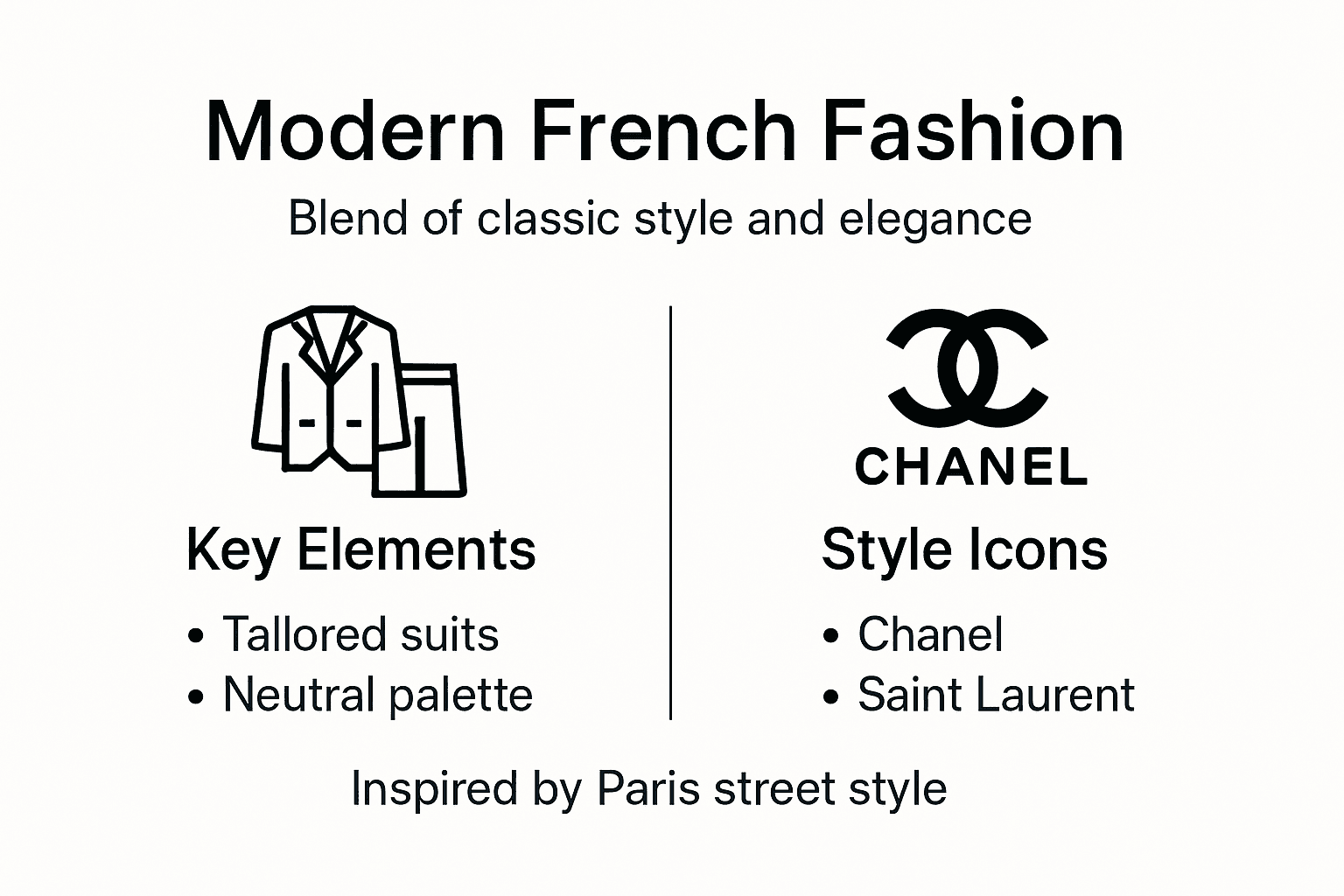
The contemporary French wardrobe prioritizes versatility across different settings. For professional environments, tailored blazers, crisp white shirts, and well-fitted trousers create a powerful yet elegant statement. Evening occasions demand more dramatic interpretations—think sophisticated cocktail dresses with clean lines, subtle embellishments, and impeccable tailoring that emphasize grace over ostentation. Casual settings reveal perhaps the most quintessential French approach: combining high-quality basics with unexpected accessories that transform simple outfits into distinctive expressions of personal style.
Beyond specific garments, French fashion today represents a philosophy of dressing that values quality over quantity, comfort over conformity, and individual expression over trendy excess. The focus remains on investing in well-crafted pieces that transcend seasonal fluctuations, creating a wardrobe that tells a personal narrative. Luxury is understood not through ostentatious displays but through exceptional materials, precise cuts, and an inherent understanding of how clothing interacts with the wearer’s body and personality.
Pro tip: Cultivate a French-inspired wardrobe by prioritizing versatile, high-quality pieces that can be mixed and layered across multiple occasions.
Elevate Your Wardrobe with Timeless French Elegance
French fashion teaches us that true style is about investing in artistry and quality that lasts beyond trends. If you seek to embody the legacy of timeless elegance and sophisticated craftsmanship highlighted in this article, discover curated collections designed to celebrate individuality and refined taste. Experience the perfect balance of classic Parisian allure and modern versatility through pieces crafted with care and heritage.

Explore exclusive dresses, bags, shoes, and accessories at Vivien Lauren that echo the principles of French fashion: subtle details, impeccable tailoring, and enduring style. Shop now to enjoy free UK shipping on orders over £80 and multiple payment options including interest-free installments. Begin your journey toward a wardrobe that reflects true elegance and personal expression by visiting Vivien Lauren today.
Frequently Asked Questions
What defines French fashion principles?
French fashion principles are characterized by a commitment to quality, innovation, and timeless design. It emphasizes meticulous craftsmanship, elegant simplicity, and individual expression, turning clothing into a form of art.
How has French fashion influenced global style?
French fashion has historically set global style trends through iconic designers and the establishment of haute couture. It has continuously transformed clothing into a cultural narrative, reflecting social dynamics and movements.
Who are some early influential designers in French fashion?
Key early designers include Charles Frederick Worth, who founded haute couture, Coco Chanel, known for her revolutionary styles that liberated women’s fashion, and Christian Dior, who introduced the ‘New Look’ celebrating femininity.
What is the significance of quality in French fashion?
Quality is paramount in French fashion, where investing in fewer, high-quality pieces reflects personal elegance. It also emphasizes comfort and individual expression, moving away from fleeting trends to create timeless wardrobes.
Recommended


