
Protect High Value Clothes: Care Label Meanings and When to Go Gentler
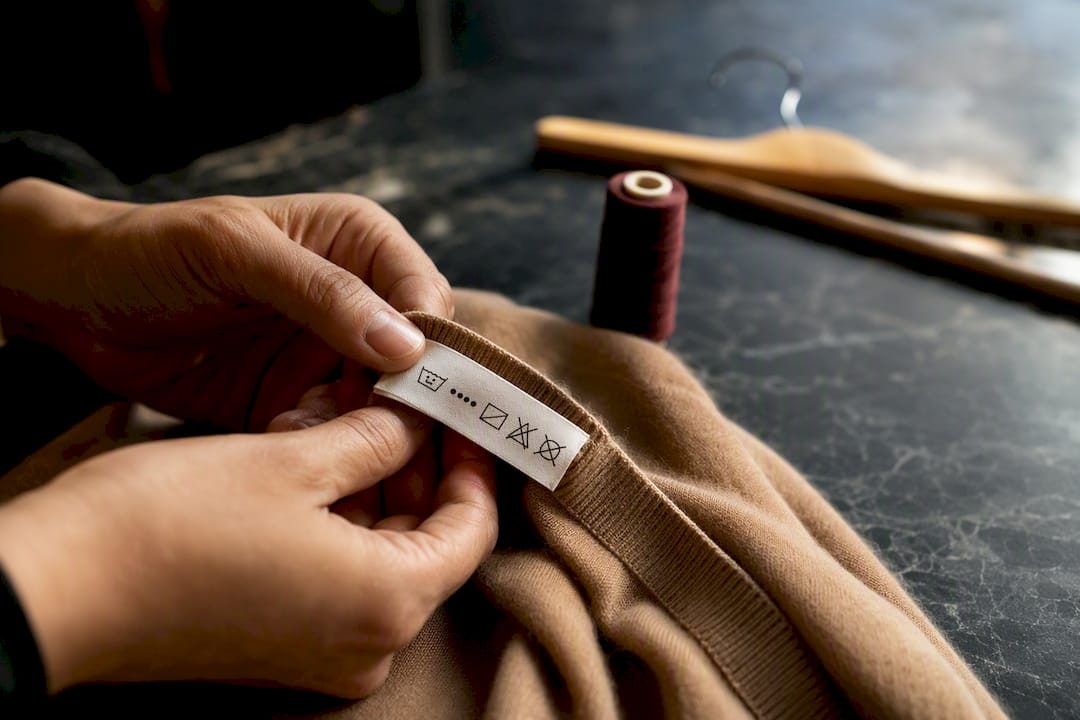
Care labels are the manufacturer’s pictogram shorthand for the safest way to wash, bleach, dry, iron, or professionally clean a garment. Each of the five symbol families sets a maximum allowable treatment, never a mandate, so choosing a gentler method within that limit is almost always the wiser move. When a label is missing, torn, or unreadable, treat the piece gently, or better yet, ask a specialist before you touch it.
The boring bit, that matters to the endurance of your wardrobe: making it Timeless - Vivien Lauren.
Treat maximums on care labels as a ceiling, not a target, and always opt for gentler methods than the instructions permit.
Avoid machine washing or tumble drying delicate, embellished, or structured garments, and favor hand washing or flat drying whenever possible.
Follow the strictest symbol when symbols conflict, and use professional cleaning only for specific stains, repairs, or structural resets.
Spot-test cleaning agents on hidden areas before treating visible stains to prevent irreversible damage.
Provide your dry cleaner with detailed information about stains and fabric structure to minimize cleaning risks and prolong garment life.
Table of Contents
What Care Labels Mean at a Glance
Before you decode every dot and bar, it helps to know what each symbol family is asking of you. Think of this as your first line of defense against a ruined cashmere sweater or a warped silk blouse.
Tub icon: shows the maximum wash temperature and cycle. A crossed-out tub means hand wash or professional cleaning only.
Triangle: governs bleach. Empty means any bleach is fine; two diagonal lines mean non-chlorine only; a cross means no bleach, ever.
Square: covers drying. A circle inside means tumble drying is allowed, with dots setting the heat; horizontal lines mean line, drip, or flat drying.
Iron: dots correspond to heat settings, and a crossed iron means skip it entirely, steam included on some labels.
Circle: the professional cleaning family, with letters indicating which solvents a dry cleaner may use.
One dot always means the coolest or gentlest setting in that family; a crossed symbol is an absolute stop, not a friendly suggestion. If two symbols on the same label seem to disagree in strictness, the stricter one wins, and the same goes for choosing between the label’s maximum and a gentler alternative. When in real doubt, this guide’s detailed sections below will walk you through it, or hand the piece to a professional cleaner who has seen it before.
Washing Symbols: The Tub, the Dots, and the Bars
The washtub icon is the one symbol nearly everyone recognizes, yet almost nobody reads correctly. A plain tub with water means machine washable; a tub with a hand inside means hand wash only; a crossed-out tub means no water at all, full stop.
Inside or beneath that tub, numbers or dots tell you the temperature ceiling, while bars underneath dictate how roughly the fabric can be agitated. A single dot generally corresponds to a cold wash around 30°C, two dots to warm around 40°C, and progressively more dots up toward hot washes near 60°C or higher for sturdy cottons and linens. One bar underneath the tub calls for a reduced or gentle cycle, and two bars call for an even more delicate, low-spin cycle, often the setting labeled “delicates” on a modern machine.
Locate the tub icon first and confirm the maximum temperature indicated by the number or dot count.
Check for bars beneath the tub. No bar means a normal cycle is fine; one or two bars mean gentle or delicate only.
If the tub shows a hand, skip the machine entirely and wash by hand in cool water with a mild detergent.
When no bars or numbers appear at all, default to the coolest, gentlest option your machine offers.
Pro Tip: For anything silk, cashmere, or heavily embellished, wash inside a mesh bag on your machine’s gentlest cycle even when the label technically permits more, and always choose the coldest water option listed. A label’s maximum is a ceiling, not a target, and a milder treatment than specified is almost always acceptable and often the far kinder choice for fabric that took a craftsman weeks to construct.
Drying Symbols: Tumble, Line, or Flat
The square is the drying family’s home base, and inside it you will usually find either a circle, meaning tumble drying is permitted, or a set of lines, meaning air drying only. A circle with one dot inside allows low heat; two dots allow medium; and a circle with a cross through it forbids the tumble dryer entirely.
Outside the circle, the lines tell a different story about how to air dry, not whether:
A single horizontal line inside the square means line dry, hung on a rod or hanger.
A curved line near the top corner signals drip dry, meaning hang it while still wet rather than wringing it out first.
A horizontal line positioned in the middle of the square means flat dry, essential for knitwear that would otherwise stretch out of shape under its own wet weight.
Skip the tumble dryer altogether on structured jackets, beaded or sequined pieces, and anything with bonded seams or fusible interfacing. Heat and tumbling can shrink linings faster than the outer shell, leaving a garment that looks collapsed from the inside even when the exterior seems fine.
Ironing Symbols: Reading the Dots Correctly
The iron pictogram uses the same dot logic as the wash tub, just applied to heat. One dot signals a cool iron suited to synthetics like acetate and polyester; two dots call for a medium setting appropriate for wool and mixed blends; three dots permit a hot iron, generally reserved for cotton and linen. A crossed-out iron means no ironing at all, including steam, which some people forget carries real heat of its own.
Always press delicate silks and wools from the reverse side, or use a clean cotton pressing cloth as a buffer.
Metallic threads, sequins, and elastic waistbands should never meet direct heat; work around them or send the piece to a specialist presser instead.
When a garment shows no ironing symbol at all, test a hidden seam allowance on the lowest heat setting before pressing anything visible.
Bleaching Symbols and Safer Stain Alternatives
The triangle is the smallest symbol on most labels and the one people ignore most often, usually right before a favorite blouse comes out blotchy. An empty, unmarked triangle means any bleach, chlorine included, is fair game. A triangle with two diagonal lines inside restricts you to non-chlorine, oxygen-based bleach only. A triangle with a cross through it means no bleach whatsoever.
For stains on garments that forbid bleach, reach for an oxygen-based stain remover and always spot-test on an inside seam first.
Chlorine bleach strips dye molecules indiscriminately, which is exactly why it can dull or yellow the rich, saturated colors typical of fine Italian-dyed fabrics.
When a stain persists after gentle spot treatment, a professional cleaner has solvent options a home laundry room simply doesn’t.
Professional Cleaning Symbols: Briefing Your Dry Cleaner
A circle is the universal signal for professional cleaning, and the letter inside it tells your dry cleaner which solvent family is safe. “P” allows a broader range of professional solvents, “F” restricts the cleaner to petroleum-based solvents only, and “A” permits any solvent, a designation you will see less often outside commercial settings. A bar beneath the circle, exactly as with washing, means the cleaner must use a gentler mechanical action and shorter cycle.
A crossed-out circle means the item should never go to a dry cleaner and must be cared for by hand or not at all.
Heavily beaded, fur-trimmed, or structurally boned pieces often need a specialist cleaner beyond a standard high-street shop.
Tell your cleaner about any prior stains, repairs, or loose trim before drop-off; a five-minute conversation prevents most cleaning mishaps.
Making Sense of Dots, Bars, and Crosses Together
Dots and bars answer two different questions, and conflating them is where most laundry mistakes start. Dots always answer “how hot,” while bars always answer “how roughly.” A crossed symbol overrides both, functioning as an absolute prohibition rather than a suggestion to proceed with caution.
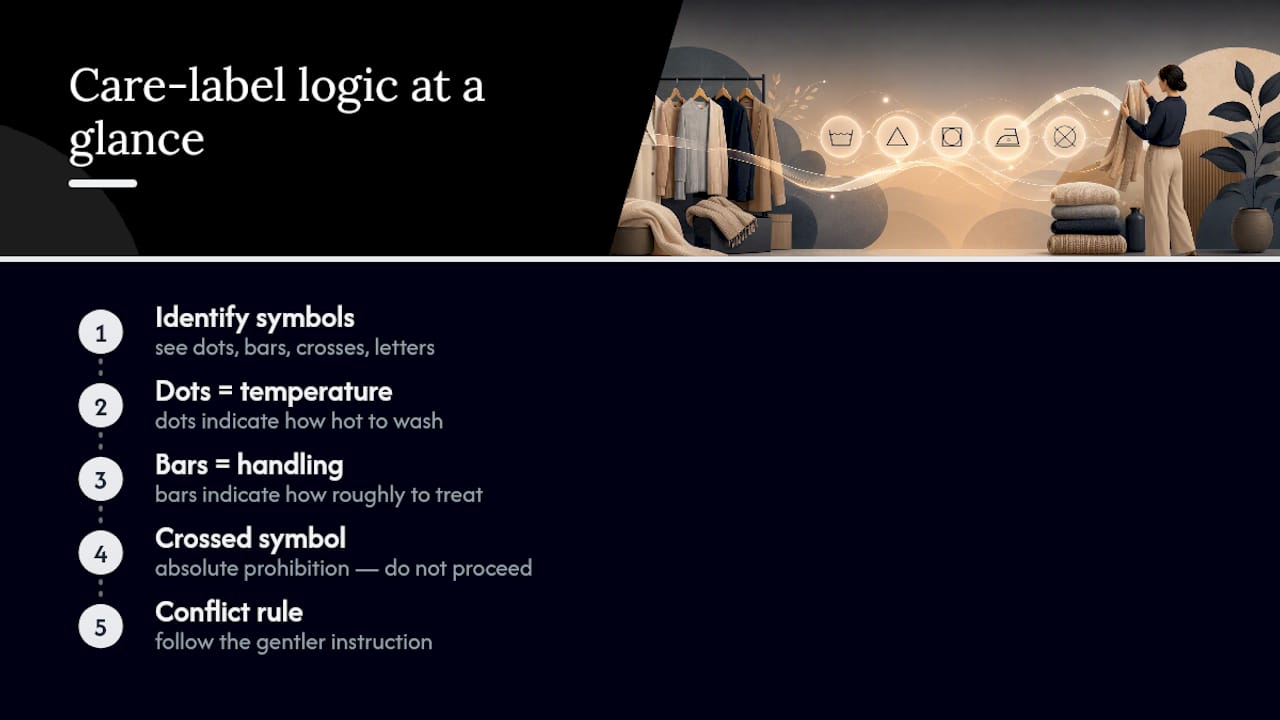
Letters, meanwhile, tend to show up only in the professional cleaning circle, and their exact meaning can shift slightly by region or era of manufacture, particularly on older or imported pieces. When two symbols on one label seem to pull in different directions, the rule of thumb is simple: follow whichever instruction is gentler. A garment forgives an overly cautious wash far more readily than it forgives a wash that pushed past its limit.
Vivien Lauren’s Rules for Preserving High-Value Garments
Treat every care label’s maximum as a last resort, not a starting point. A tailored jacket rated for machine washing on delicate will still outlast its label if you hand wash or dry clean it instead, since frequent machine agitation is what breaks down canvassing and shoulder structure long before the outer fabric shows wear.
Spot-test before you spot-clean. Dab a hidden seam with your chosen cleaner, wait a few minutes, and check for color change or texture shift before treating a visible stain. Air garments on a wide hanger between wears rather than sending them straight to the wash; this alone cuts down how often delicate fibers face water or solvent at all, which matters given that dry cleaning and repair costs accumulate over a garment’s lifetime and factor directly into its true cost per wear.
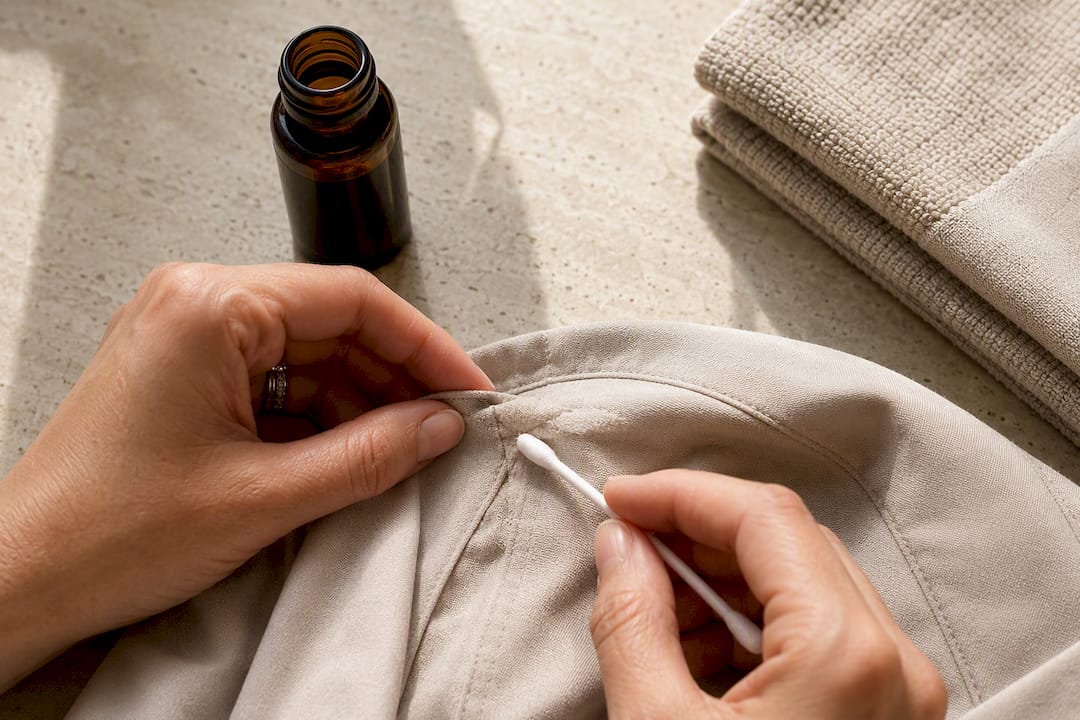
Pro Tip: Reserve professional cleaning for structural resets, beading repairs, or genuine stains, and ask your cleaner specifically for their gentlest solvent cycle rather than assuming standard service is the only option. Our luxury fashion care guide covers the full preservation routine we recommend for pieces meant to last decades, not seasons.
Why Ignoring Care Labels Actually Costs You
Manufacturers selling textiles in most markets are legally required to provide at least one safe cleaning method on the label, so what you’re reading isn’t a suggestion born of caution alone; it reflects testing the brand actually performed. Ignoring that instruction, whether by using hot water on a cold-wash-only piece or tumble drying something meant to lie flat, can cause damage no repair reverses: shrinkage, warped shoulders, bled dye.
Retailers frequently deny returns or warranty claims once a garment shows signs of improper care, so keep a simple record for expensive pieces, noting wash dates and any professional services performed.
An Editorial Take on Reading Labels the Right Way
Most laundry guides treat care labels as a rulebook to obey to the letter. That framing misses the point entirely. A label states a ceiling, the harshest treatment a garment can survive without the manufacturer taking on liability, not a floor you’re obligated to meet. The conventional advice to “just follow the symbols” quietly assumes every reader wants speed and convenience over longevity, which is a reasonable assumption for a £15 cotton t-shirt and a poor one for a hand-finished wool coat.
Where the standard advice falls shortest is on frequency. Nobody asks how often to wash something, only how. But the real preservation gains come from washing less, airing more, and treating professional cleaning as a considered decision rather than a default. If you take one thing from this guide, let it be that: read the symbols to know your limit, then aim well beneath it. Your most expensive pieces will outlast the trend cycles they were bought to survive.
— Vivien Lauren.
Sources
For symbol standards and legal background, see Understanding Care Labels and the Laundry symbol reference on Wikipedia. For leather-specific guidance, our handbag and shoe care guide covers cleaning routines symbols don’t address.
Ready to build a wardrobe designed to age gracefully rather than fight your washing machine? Browse Vivien Lauren’s curated collections for handcrafted Italian pieces made to reward the kind of careful attention this guide describes, with free UK shipping on orders over £80 and international shipping above £300.
FAQ
What Are the Five Basic Care Label Symbols?
The five core families are the washtub (washing), triangle (bleaching), square (drying), iron (ironing), and circle (professional cleaning), each showing the maximum safe treatment for that method.
What Happens if I Ignore Care Labels?
Ignoring a care label can cause shrinkage, color bleeding, or structural damage that’s often irreversible, and it can also void a retailer’s return or warranty policy if improper care is evident.
What Should a Care Label Include?
A care label must show at least one safe method for washing, bleaching, drying, ironing, or professional cleaning, using standardized symbols or written instructions that give a reasonable basis for the claim.
Are Care Labels Legally Required?
Yes, manufacturers selling textiles and clothing in many markets are legally required to attach a label listing at least one safe cleaning method, even when other safe methods also exist.
What Does a Hand Wash Only Symbol Mean?
A washtub icon with a hand inside means the item should only be washed by hand in cool water, since machine agitation risks damaging its fibers or structure.
What Does the “Do Not Tumble Dry” Symbol Look Like?
It’s a square with a circle inside crossed out by an X, meaning the garment must air dry instead, typically on a line, flat surface, or hanger depending on the accompanying line symbol.
Recommended
This fashion piece has been authored for you by Chloe. On behalf of Vivien Lauren. Vivien Lauren. Luxury. Craftsmanship that's Proudly Italian. Vivien Lauren. Proud to Style.
