
Role of Made in Italy in fashion: a luxury woman's guide
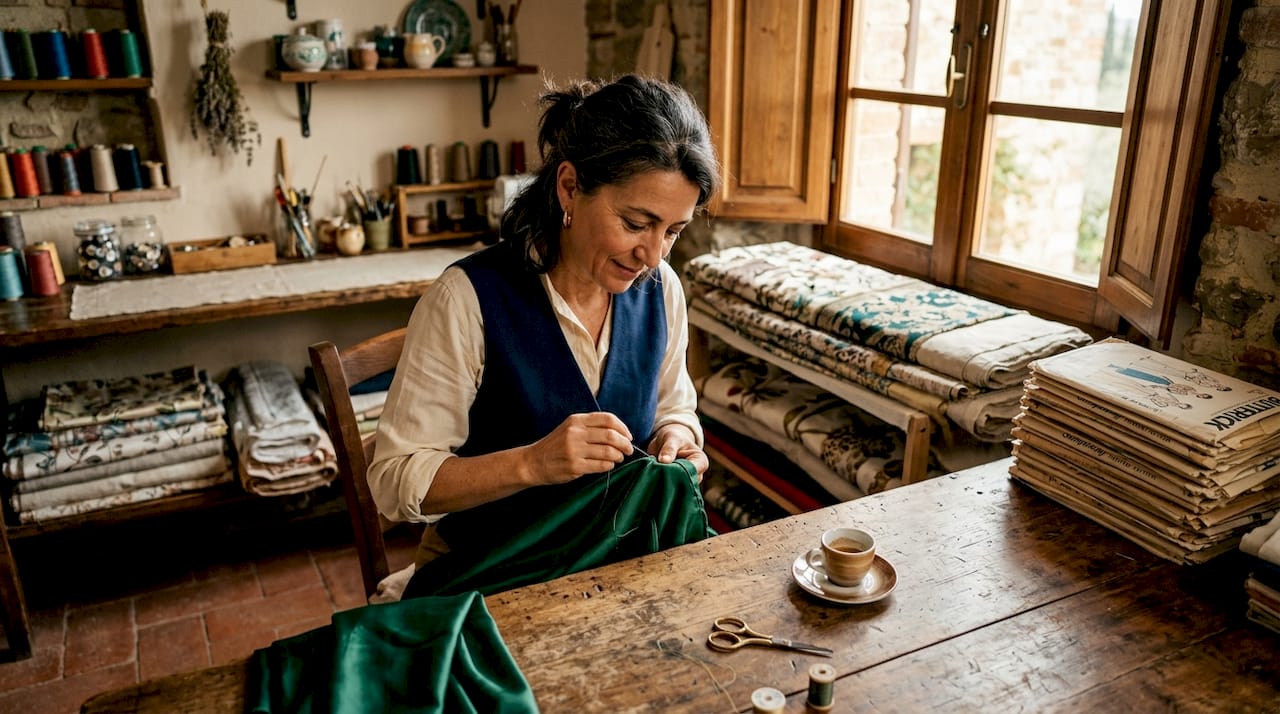
The endless allure of Italian Style, Fine Quality, attention to intricacies of Design, Lasting Beauty. Luxury. Craftsmanship. Exclusivity.
The concept of “Made in Italy” has evolved from a simple geographic label to a symbol of expertise rooted in craftsmanship, tradition, and regional specialization. Modern regulations and suppliers’ transparency confirm genuine Italian production, emphasizing human skill, provenance, and sustainability. Authentic Italian luxury now depends on verifiable supply chains, artisan knowledge, and a cultural system that values lasting quality over mere origin.
There is a quiet revolution happening in the world of high fashion, one that touches the very heart of what we understand the role of made in italy in fashion to truly mean. For decades, that small label sewn into a silk lining or embossed on a leather sole carried the weight of geography above all else. But something has shifted, and understanding this shift is, we believe, one of the most rewarding things a discerning woman can do before she invests in her next exquisite piece. This article traces that evolution, from historical foundations to modern regulations, from craftsmanship philosophies to the practical art of buying well.
Table of Contents
The evolution of ‘Made in Italy’: from geography to expertise
How Giorgini’s 1951 fashion shows shaped Made in Italy’s luxury legacy
EU geographical indications and rules protecting Made in Italy authenticity
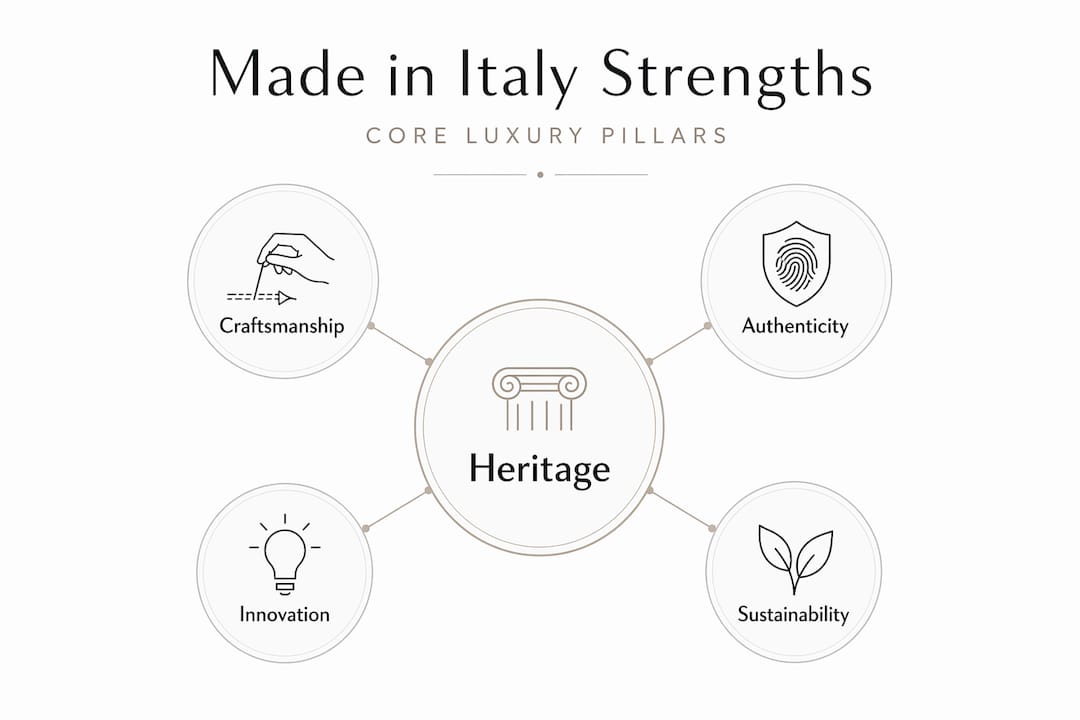
Craftsmanship and sustainability: the modern pillars of Made in Italy luxury
Decoding ‘Made in Italy’ for luxury fashion buyers: what to look for
Why the true strength of Made in Italy is its evolving knowledge system
Key Takeaways
Point | Details |
Made in Italy meaning | The label now represents deep expertise and craftsmanship more than just geographic origin. |
Historical legacy | Giorgini’s 1951 shows unified Italian fashion and created a global platform for luxury craftsmanship. |
EU protection | Strict geographical indication rules ensure authenticity and enforce quality linked to Italy. |
Modern craftsmanship | Luxury brands combine traditional skills with sustainability and supply-chain traceability. |
Buyer guidance | Look beyond the label for proof of Italian production steps and transparent provenance. |
The evolution of ‘Made in Italy’: from geography to expertise
For much of the twentieth century, what is made in italy fashion seemed simple enough to define: goods produced within Italy’s borders carried the label, and the label carried prestige. Yet the reality was always more nuanced, and globalization made that nuance impossible to ignore. Supply chains stretched across continents, production steps moved offshore, and the question of authenticity grew more urgent with every passing season.
What emerged from this complexity was, we think, something far more compelling than a purely geographic claim. As one analysis frames it, the strength of “Made in Italy” lies less in where things are made, and more in the system of knowledge that makes them possible. This is a profound reframing. It shifts our gaze from the map to the craftsperson’s hands, from borders to accumulated generations of skill.
The Made in Italy significance now rests on qualities that cannot simply be replicated by moving a factory to a lower-cost country:
Embodied knowledge: Techniques passed from master to apprentice across centuries, living inside the gestures of artisans who cannot always describe what they know in words.
Local material ecosystems: Italian tanneries, textile mills, and lacemakers form interlocking networks that sustain one another’s excellence.
Aesthetic culture: A shared visual language, refined over generations, that gives Italian-made objects their unmistakable sense of proportion and restraint.
Regional specialization: Tuscany for leather, Como for silk, Naples for tailoring. Each district carries its own concentrated expertise, irreplaceable in its specificity.
Understanding the artisan craftsmanship behind Italian luxury is therefore not merely an aesthetic exercise. It is an act of appreciation for a living knowledge system, one that speaks to the identity of Italian fashion in the most honest way possible.
“Made in Italy is not a stamp of origin. It is a certificate of a civilization of making.”
This is why, when you hold a truly Italian-made garment, you sense something that transcends the fabric itself. You are holding the distillation of a place, a people, and an irreplaceable way of seeing the world. Exploring luxury fashion artisanship and its lasting value reveals just how deeply this idea runs.
How Giorgini’s 1951 fashion shows shaped Made in Italy’s luxury legacy
To appreciate the role of Italian brands on the global stage, we must travel back to Florence, 1951. Giovanni Battista Giorgini, a buyer and cultural entrepreneur with an extraordinary instinct for opportunity, gathered a group of Italian designers for a collective presentation at his own home, Villa Torrigiani. American buyers attended. The response was immediate and transformative.
What Giorgini understood, with remarkable clarity, was that Italian fashion needed to present itself as a system, not a collection of isolated talents. He recognized that credibility in the international luxury market required infrastructure as much as beauty. His shows demonstrated, in a language buyers could trust, that Italy could deliver. As historical accounts confirm, Giorgini’s shows were not merely an aesthetic showcase, but a true infrastructure for international relationships, making craftsmanship and production reliability legible to the global market.
The sequence of what those shows accomplished is worth tracing carefully:
Unifying Italian designers under a single presentation, replacing fragmented individual approaches with a coherent national identity.
Establishing production credibility, signaling to international buyers that Italian ateliers could meet the quality and timeline demands of global commerce.
Differentiating Italian style from Parisian haute couture, carving out a distinct aesthetic identity rooted in wearability, femininity, and exquisite material sensibility.
Creating repeatable infrastructure, a template for seasonal international presentations that persists, in evolved form, in Milan’s fashion weeks to this day.
Italian fashion did not simply emerge. It was architected, deliberately and intelligently, as a global system of value.
This is why the identity of Italian fashion carries such remarkable coherence across brands and generations. It was built, from that first Florentine evening onward, as a shared proposition, and Italian timeless elegance remains its most enduring gift to the women who wear it.
EU geographical indications and rules protecting Made in Italy authenticity
Understanding the expertise behind Made in Italy leads us naturally to examine the regulations that now protect and enforce these luxury standards. The European Union has established a framework of geographical indications (GI protection), a system that legally ties a product’s quality and reputation to its place of origin, preventing misuse of prestigious labels.
In practical terms, EU policy requires that at least one production step occurs in Italy and that the product’s quality is essentially attributable to its geographic origin to qualify for GI protection. Additionally, the GI protection scheme establishes detailed rules covering registration, specifications, and enforcement to ensure authenticity and build consumer trust.
What this means for you, as a discerning buyer, is substantial:
Registered Italian fashion products must meet documented quality standards tied to their origin.
Producers must maintain records proving that critical steps happened within the designated region.
The European Union Intellectual Property Office (EUIPO) oversees enforcement, giving the framework genuine legal teeth.
Brands seeking GI status must submit production specifications, subjecting themselves to external scrutiny rather than self-declaration alone.
Protection element | Requirement | Benefit to buyer |
Geographic production | At least one step in Italy | Confirms genuine Italian connection |
Quality linkage | Quality tied to geographic origin | Validates craftsmanship provenance |
Registration | Documented specifications submitted | Creates accountability and transparency |
Enforcement | EUIPO oversight and controls | Reduces risk of counterfeit or misleading labels |
For women who view fashion as a timeless luxury investment, this regulatory framework is genuinely reassuring. It means the Made in Italy luxury market is not simply a marketing claim. It is, increasingly, a legally protected and verifiable promise.

Craftsmanship and sustainability: the modern pillars of Made in Italy luxury
With strong legal protection now framing the Made in Italy landscape, the question becomes how leading Italian luxury brands are choosing to live up to that promise in 2026. The answer, for the most thoughtful among them, lies at the intersection of ancient craft and modern transparency.
Consider Salvatore Ferragamo, one of Italy’s most storied houses. Ferragamo’s leather mapping and supplier declarations exemplify tracing raw-material origin to reinforce craftsmanship narratives amid EU sustainability rules. In concrete terms, this means the brand can tell you not only that a bag was made in Tuscany, but where the leather itself was sourced, tanned, and treated. This level of transparency is not a compliance exercise. It is a celebration of the entire chain of Italian excellence.
The impact of Italian craftsmanship expressed through traceability connects directly to the values of a new generation of luxury buyers:
Women who want their purchases to carry genuine meaning, not simply a prestigious name.
Consumers who understand that authentic slow fashion is, by its nature, sustainable, because it is made to last.
Style lovers who see their wardrobe as a curated collection of objects with stories, not merely items to be worn and replaced.
As research consistently affirms, Made in Italy acts as a promise of authenticity, craftsmanship, durability, and style, reflecting slow and meaningful consumption preferences.
Brand approach | Traditional model | Modern traceability model |
Material origin | Unspecified | Mapped and documented |
Production steps | Label declaration only | Verified and registered |
Sustainability claims | Marketing language | EU-compliant documentation |
Consumer confidence | Brand reputation alone | Transparent supply chain |
Pro Tip: When researching an Italian luxury purchase, look specifically for brands that publish supplier or material provenance information. This is the clearest signal that their craftsmanship narrative is backed by genuine practice rather than heritage marketing alone.
Exploring the world of sustainable Italian luxury fashion and understanding why Italian leather holds its value across decades are worthy starting points for any woman building a wardrobe with real intention.
Decoding ‘Made in Italy’ for luxury fashion buyers: what to look for
Having explored the historical, regulatory, and ethical dimensions of Made in Italy, we arrive at the most practical question: how does one actually identify the genuine article? Because, as we have seen, the label itself tells only part of the story.
Discerning buyers should verify that key production steps like cutting, assembly, and finishing happen in Italy, supported by traceability and documentation. Here is a framework for doing exactly that:
Ask about production steps. Specifically: cutting, assembly, and finishing. These are the human-intensive processes that embed Italian craftsmanship into the object itself.
Request or research supply-chain documentation. Leading brands now publish supplier lists, material origins, and production certifications. If this information is entirely absent, that is worth noting.
Look for regional provenance signals. A Florentine leather bag from a named tannery, a Como silk dress with weaver attribution. Specificity is the language of authenticity.
Assess finishing quality with your own hands. Seam construction, lining choice, hardware weight, the regularity of hand-stitching. These details whisper the truth that labels cannot always convey.
Beyond the practical steps, consider the following signals when evaluating any Made in Italy luxury piece:
Artisan attribution: Does the brand name or acknowledge the craftspeople involved?
Material transparency: Is the leather, silk, or wool sourced from named Italian suppliers?
Heritage documentation: Does the brand have a traceable history of Italian production, not merely Italian inspiration?
Certification presence: Are GI or equivalent quality certifications displayed or available on request?
Pro Tip: The most revealing question you can ask a luxury retailer is not “Is this Made in Italy?” but rather “Which steps of production took place in Italy?” The specificity of the answer will tell you everything you need to know.
Understanding how to select timeless fashion with real discernment, and appreciating why luxury apparel stands apart from the ordinary, are skills worth cultivating for any woman who takes her wardrobe seriously.
Why the true strength of Made in Italy is its evolving knowledge system
Here is the perspective we hold, shaped by years of close engagement with Italian fashion and the women who love it most: Made in Italy is not, and has never been, a fixed destination. It is a conversation, one that Italy has been having with itself, and with the world, for generations.
The mistake most commentators make is treating the label as a static mark, either valid or fraudulent, authentic or compromised. But this misses the animating reality. As current thinking on the subject confirms, the brand’s future strength lies in projecting Italian identity through expertise and capabilities that are unreplicable, shifting the emphasis from geography to human skill. That is not a weakening of the concept. It is its most honest and durable expression.
Think of it this way: a piece of music does not lose its Italian soul because the concert hall changes location. What matters is the tradition, the training, the sensibility of the musicians performing it. Italian fashion operates by a similar logic. The craftsmanship embedded in artisan-made Italian luxury pieces carries its origins in every stitch, regardless of where the thread was spun.
We believe that women who understand this are better equipped, not just as buyers, but as genuine appreciators of fashion as a form of cultural expression. They do not chase labels. They seek the living knowledge behind them. And in doing so, they find something far more exquisite: a relationship with clothing that is intelligent, intentional, and deeply personal.
Explore exclusive Made in Italy fashion with Vivien Lauren
If this journey through Italian craftsmanship, heritage, and modern luxury has stirred something in you, that quiet but insistent desire for beauty that is real and lasting, then you already understand what Vivien Lauren exists to offer.
At Vivien Lauren, every piece in our curated collection reflects the spirit of genuine Italian artisanship: the kind where skill is passed down, not printed on a tag. From the flowing lines of our elegant midi and occasion dresses to the considered craftsmanship of our handmade woven leather bag, and the refined architecture of our classic women’s shoes, each item is chosen because it tells a true story. We invite you to explore, to touch, and to invest in fashion that honors both the woman who wears it and the hands that made it.
Frequently asked questions
What does ‘Made in Italy’ really mean in fashion today?
It represents a system of expertise and craftsmanship deeply rooted in Italian culture, not simply the geographic origin of the product, with the emphasis now firmly on human skill and cultural knowledge embedded in local ecosystems.
How do EU rules protect the authenticity of Made in Italy products?
The EU requires that at least one production step occurs in Italy and that the product’s quality is directly linked to its geographic origin, enforced through strict registration, specifications, and EUIPO oversight.
How do luxury brands prove genuine Italian craftsmanship today?
Leading brands use supply-chain tracing and material provenance mapping, and Ferragamo’s leather documentation is a prime example, ensuring transparency and authenticity that aligns with EU sustainability requirements.
What should I look for when buying a Made in Italy luxury fashion piece?
Confirm that key Italian production steps, specifically cutting, assembly, and finishing, occurred in Italy, and prioritize brands that offer transparent supply-chain documentation rather than label declarations alone.
Recommended
This fashion guide has been written for you by Sammy Li. On behalf of Vivien Lauren. Luxury. Craftsmanship. That's Proudly Italian. Vivien Lauren. Proud To Style.
