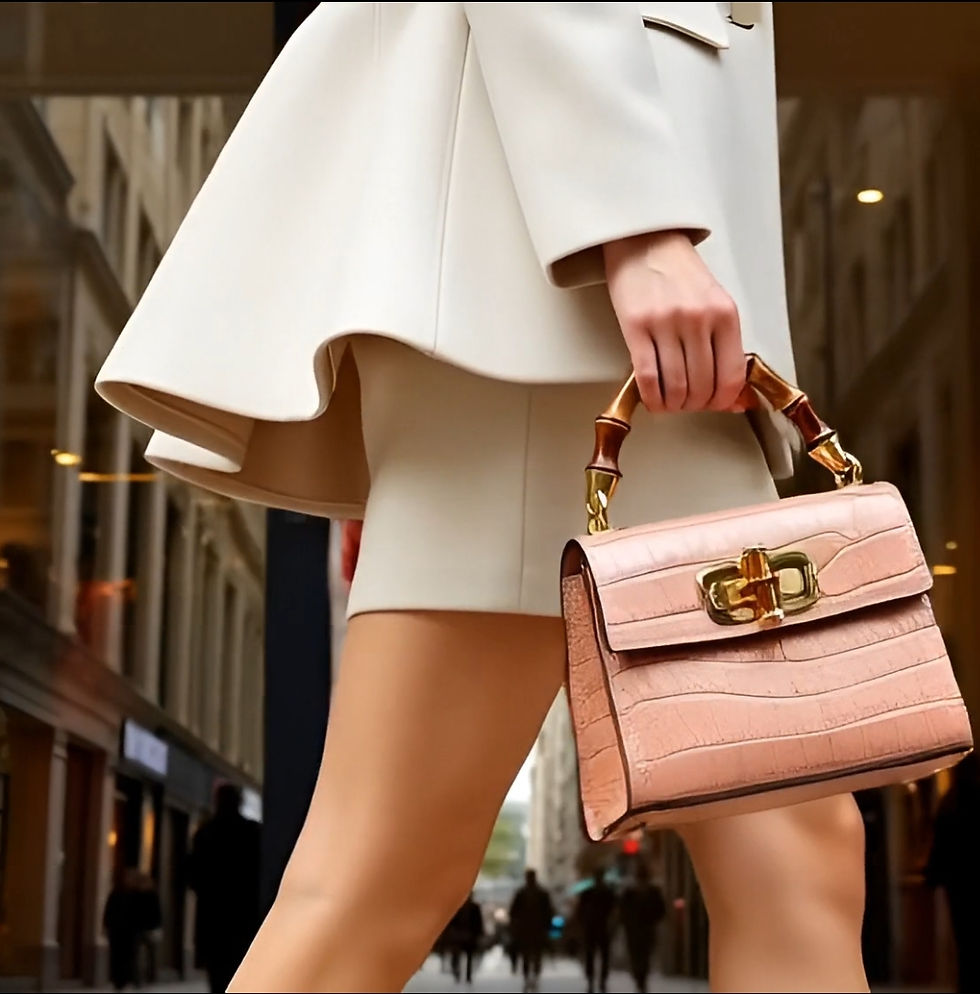
Sustainable luxury fashion guide: Italian style, 70% less impact
Updated: May 15

Sustainable Luxury at Vivien Lauren. Slow Fashion, Timeless Chic Elegance -Artisanal Craftsmanship. Italian Heritage.
Authentic Italian sustainable luxury focuses on ethical labor, low-impact materials, and local craftsmanship.
Recognized brands like Rifò and Artknit Studios exemplify genuine sustainability with transparent practices.
Sustainable luxury emphasizes quality, provenance, and artisan storytelling over superficial eco-labels.
There is a persistent myth that fashion can be either luxurious or sustainable, never both at once. We believe that is one of the most limiting ideas in modern style, and Italian fashion is quietly disproving it with every hand-stitched seam and vegetable-tanned hide. The most exquisite craftsmanship in the world has always been rooted in respect: for materials, for makers, and for the garment’s long life ahead. This guide will walk you through exactly what makes Italian luxury fashion genuinely sustainable, how to recognize the real thing, and how to build a wardrobe that is as ethically grounded as it is breathtakingly beautiful.
Table of Contents
Key Takeaways - sustainable luxury fashion guide
Point | Details |
True luxury meets sustainability | Italian brands blend heritage techniques with eco-friendly practices and ethical labor for authentic luxury. |
Demand for authenticity is rising | Discerning shoppers value clear provenance and real craftsmanship, not just green labels. |
Practical shopping is key | Look for artisan signatures, certified materials, and transparent sourcing to ensure a truly sustainable purchase. |
Invest for long-term value | Sustainable Italian luxury pieces retain worth, style, and exclusivity season after season. |
What makes luxury fashion sustainable?
Sustainability in fashion is far more nuanced than swapping conventional cotton for recycled polyester. To understand what is sustainable fashion in its truest sense, we must look at the entire lifecycle of a garment: from the field where fibers are grown, to the atelier where hands shape them, to the wardrobe where they are cherished for decades.
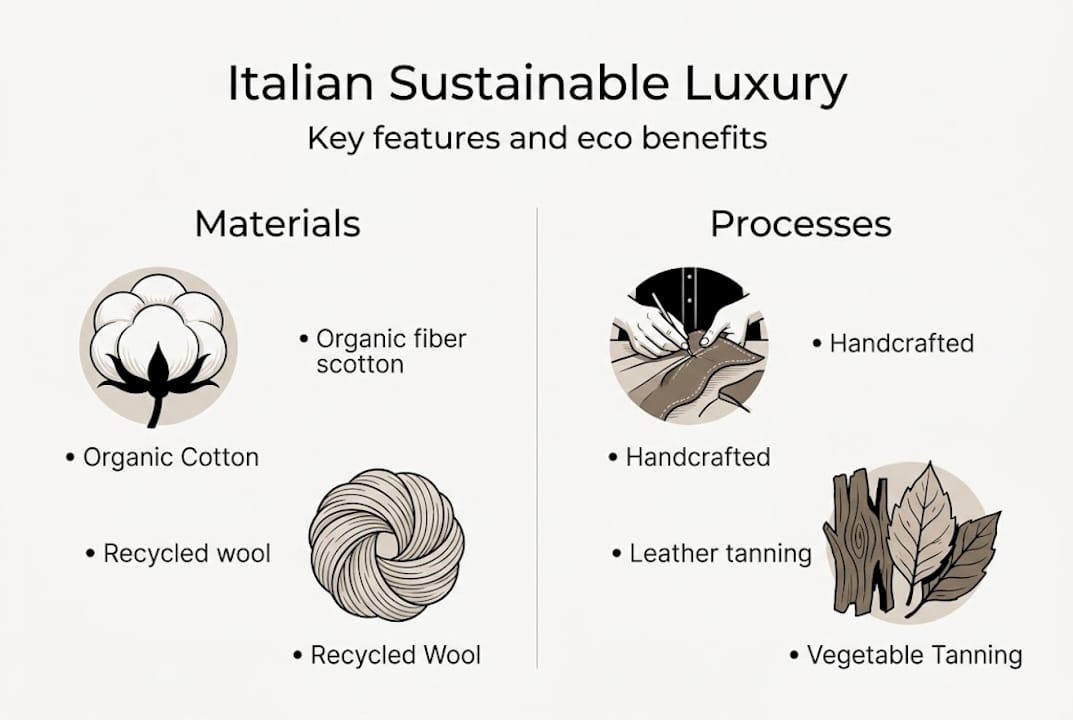
In the Italian tradition, sustainability is not a recent trend but an extension of deeply held values. It rests on three interconnected pillars:
Ethical labor: Artisans are compensated fairly, work in dignified conditions, and pass skills down through generations rather than training replacements for a factory floor.
Low-impact materials: Certified natural fibers, organically grown wool, and chemical-free tanning processes replace the aggressive industrial inputs of conventional manufacturing.
Local, small-scale production: Proximity between material sourcing and production reduces transportation emissions and supports regional economies that have woven (quite literally) their identity into the fabric of Italian culture.
Vegetable tanning stands as one of the most celebrated examples. This ancient Tuscan process uses plant-derived tannins rather than chromium salts, producing leather that is richer, more durable, and entirely biodegradable. Vegetable tanning and local artisans are among the key sustainability methods distinguishing authentic Italian makers from fast-fashion imitators.
The distinction from greenwashing matters enormously here. A brand that prints ‘eco’ on packaging while outsourcing production to low-wage facilities with zero environmental oversight is not sustainable luxury. True Italian sustainable fashion, by contrast, invests in artisan craftsmanship in luxury as the very foundation of its ethical commitment. That investment shows in the quality of every finished piece.
“The most responsible garment is one made so well that it never needs to be replaced.” This is the quiet philosophy behind Italy’s finest ateliers, and it is what separates enduring elegance from disposable style.
Hallmarks of sustainable Italian luxury brands
Knowing the principles is one thing. Recognizing the brands that embody them with genuine integrity is another, and that discernment is where personal style becomes truly powerful.
Good On You rates several Italian brands as ‘Good’ or ‘Great’ for sustainability, using criteria that assess labor rights, environmental practices, and animal welfare. Among the standout names are Rifò, which operates a circular model by recovering discarded cashmere and wool and giving them new life, and Artknit Studios, whose entire collection is built on certified local fibers and transparent supply chains.
Brand | Sustainability approach | Key materials | Aesthetic appeal |
Vivien Lauren | Hides from cow and sheep processed into beautiful colored Italian leathers | Italian Leathers | Timeless, Elegant, Chic Luxury - Slow Fashion. Italian Heritage, Artisanal |
Rifò | Circular: recycles discarded textiles | Recovered cashmere, recycled wool | Modern, minimal |
Artknit Studios | 100% lower-impact, certified local | Organic cotton, traceable wool | Clean, versatile |
Slowear | Slow production, ethical sourcing | Italian linen, certified cotton | Classic, refined |
Progetto Quid | Social enterprise, upcycled fabrics | Deadstock fabrics, natural fibers | Vibrant, artisanal |
These brands invite you to explore top sustainable brands that marry ethical practice with genuine aesthetic appeal, a combination that is rarer and more rewarding than it sounds.
Certifications to look for include GOTS (Global Organic Textile Standard), OEKO-TEX, and the B Corp certification. When a brand holds these, it has submitted to third-party auditing rather than simply declaring itself responsible.
Pro Tip: Genuine artisan work almost always has a story attached to it. Ask the brand where a piece was made, by whom, and with what materials. If the answer is vague or rehearsed, treat that as a signal. Authentic makers are proud of their process and eager to share it.
The hallmark of handcrafted Italian leather and textile work is precisely this openness: an invitation to understand, not just admire.
Exclusive materials and methods redefining luxury
Having identified the top players, let us explore the exceptional materials and processes powering their collections, because the choice of material is where luxury and sustainability intersect most beautifully.
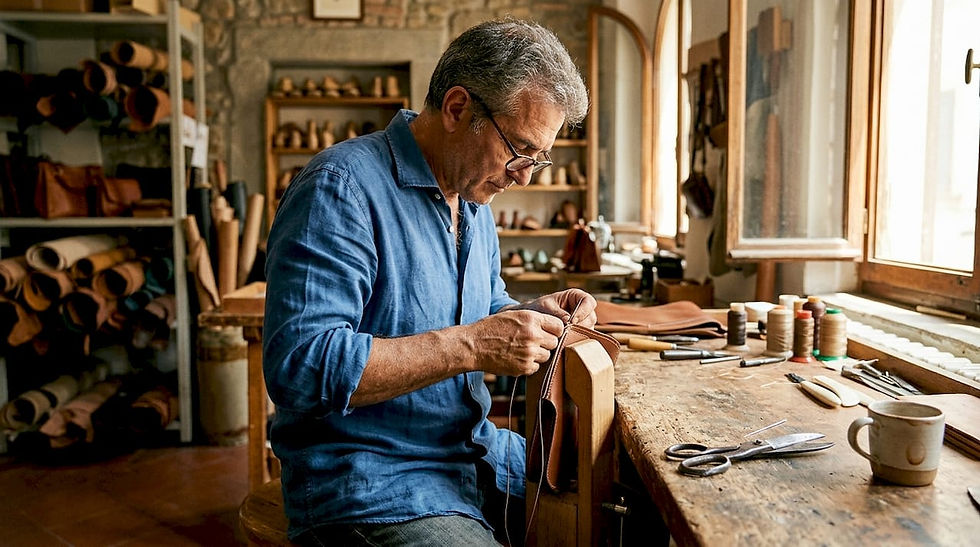
Vegetable-tanned leather is the cornerstone of responsible Italian leather goods. The process takes weeks rather than days, using bark extracts from oak and chestnut trees to gradually transform raw hides into leather of extraordinary depth and resilience. The leather develops a patina over years of wear, becoming more beautiful rather than degrading.
Material | Environmental impact | Durability | Biodegradability |
Vegetable-tanned leather | Low: plant-based, no heavy metals | Very high | Yes |
Chrome-tanned leather | High: chromium pollution risk | High | No |
Recycled cashmere | Very low: diverts textile waste | High | Yes |
Conventional cashmere | High: water-intensive, overgrazing | High | Yes |
Artknit Studios uses 100% lower-impact materials and certified local fibers, setting a measurable standard that many brands claim but few actually meet.
Beyond leather, here is how Italian makers are redefining what luxury materials mean:
Recycled cashmere is recovered from pre-consumer and post-consumer textile waste, then re-spun into yarns of notable softness without new grazing pressure on the environment.
Certified organic cotton is grown without synthetic pesticides, protecting both soil health and the wellbeing of farming communities.
Responsible silk is sourced through practices that minimize environmental strain, and you can learn more about sustainable silk sourcing as a genuine marker of elevated taste.
Bio-based fibers such as TENCEL and Bemberg are derived from renewable wood pulp in closed-loop processes that recover solvents rather than releasing them.
Lab-grown gemstones in fine jewelry carry the same visual brilliance as mined stones with a fraction of the ecological footprint, redefining ‘precious’ for a new generation of discerning buyers.
The decision to invest in an Italian leather investment piece made through these methods is, ultimately, a decision to own something the world will be better for.
How to buy sustainable luxury: What every style lover should know
To put these insights into practice, here is how you can confidently shop for sustainable Italian luxury fashion, moving from admiration into action with clarity and intention.
The modern discerning buyer possesses something previous generations of luxury shoppers rarely had: access to information. Use it. Italian consumers with higher income and education willing to pay premiums for bio-based, eco-conscious clothing understand intuitively that quality always has a cost, and that cost is worth bearing when the piece will last a lifetime.
Here is a practical guide to vetting any brand before you invest:
Verify certifications. GOTS, OEKO-TEX, and B Corp status require documented proof. Look for these on brand websites and confirm their validity on the certifying organization’s own registry.
Trace the supply chain. Responsible brands disclose where materials are sourced and where garments are sewn. If that information is absent, ask directly.
Assess the material story. Vague language like ‘natural fabrics’ or ‘eco-friendly’ without specifics is a warning sign. Genuine makers name the fiber, its origin, and the process.
Examine construction details. Hand-finished seams, natural-horn buttons, and vegetable-tanned linings are not marketing language; they are verifiable details you can feel and see.
Consider longevity. A timeless fashion selection is always more sustainable than trend-driven purchasing, regardless of what a label claims.
Pro Tip: Before buying new, consider the Italian vintage market. Authentic vintage luxury from Italian houses retains its value precisely because it was built to endure. You are not compromising on elegance. You are deepening it.
The essence of Italian style has always been precisely this: choosing fewer, better things and wearing them with the ease of someone who knows exactly why they chose them.
Sustainable luxury: Style, status, and the evolving consumer
Finally, let us step back and see how your sustainable choices fit into the bigger picture of Italian luxury and evolving consumer attitudes, because something genuinely significant is shifting in the world of high fashion.
The woman buying Italian luxury in 2026 is not the same buyer she was a decade ago. She is informed, intentional, and quietly unwilling to separate beauty from conscience. She understands that authentic sustainability and craft, not greenwashing, are what distinguish a meaningful purchase from a merely expensive one.
The traits of today’s luxury buyer are worth naming clearly:
She prioritizes provenance over prestige, wanting to know the hands that shaped what she wears.
She values durability as a form of sophistication, understanding that disposability is the opposite of luxury.
She is drawn to transparency, expecting brands to speak plainly about their practices.
She sees exclusivity not in limited-edition marketing but in the irreplaceable quality of true artisan work.
She recognizes that status is increasingly expressed through knowledge, not just by the name on a label.
The collaboration between emerging Italian indie brands and heritage houses is one of the more quietly exciting developments in this space. The Portofino luxury blueprint and the aesthetic influence of Italian yacht design on fashion illustrate how deeply Italian identity and responsible elegance are intertwined, each one reinforcing the other across decades and disciplines.
Sustainability is not disrupting Italian luxury. It is returning it to its oldest, most authentic self.
Why true sustainable luxury is about more than eco-labels
There is a temptation, understandable and very human, to simplify sustainable luxury into a checklist. Find the right certifications, choose the branded eco-fabrics, follow the approved brands, and consider the matter resolved. We have seen this approach, and while it is not without value, it misses the deeper truth that Italian fashion has always understood.
Real luxury is not assembled from credentials. It is cultivated through patience, provenance, and a genuine relationship with the things you own. The value of artisan investment lies not in the label stitched inside but in the centuries of skill expressed in each cut, each finish, each considered detail. A master saddler in Tuscany does not need a green certificate to prove her work is responsible; the leather that outlives three generations speaks for itself.
Our honest advice is this: slow down. Build your collection over years, not seasons. Learn the difference between a brand that talks about craftsmanship and one whose hands demonstrate it. Status, in the truest sense, belongs to the woman who knows exactly what she owns and why it matters.
Step into sustainable Italian luxury with Vivien Lauren
Ready to experience sustainable Italian glamour for yourself? Here is where to begin.

At Vivien Lauren, we curate handcrafted pieces that honor both the Italian tradition of exquisite making and the modern woman’s desire to dress with conscience. From sustainable occasion dresses that carry the grace of slow fashion to eco-friendly fashion accessories shaped by artisan hands, every piece in our collection is chosen for its longevity, its beauty, and its story. We believe that the most elegant wardrobe is one built with intention, not impulse. Explore our curated collections and discover what it truly feels like to dress with both sophistication and soul.
Frequently asked questions
What does ‘sustainable luxury fashion’ mean in the Italian context?
It refers to designer-quality pieces crafted with ethical labor, low-impact materials, and traditional methods by Italian artisans. Local makers and ethical practices are what define this distinction from conventional luxury production.
Which Italian brands are considered leaders in sustainable luxury?
Brands like Rifò and Artknit Studios are rated highly for combining craftsmanship, circularity, and responsible materials. Rifò and Artknit Studios are among the most recognized names by sustainability rating organizations.
How can I tell if a luxury piece is truly sustainable?
Look for certifications such as GOTS or OEKO-TEX, supply chain transparency, and clear information on materials and artisan production. Certifications and transparent sourcing are the most reliable signals of genuine commitment.
Does sustainable luxury mean paying more for fashion?
Yes, because better materials and ethical labor carry a real cost, and most conscious buyers understand and accept this. Italian consumers willing to pay premiums for bio-based luxury consistently prioritize quality and ethics over price alone.
Is vintage shopping a sustainable way to buy Italian luxury?
Vintage Italian luxury is an exceptionally eco-friendly choice that also retains and often appreciates in value over time. Discounts are rare due to sustained demand, but the sustainability and enduring elegance make it deeply worthwhile.
Recommended
This fashion piece has been written and brought to you by Chloe. For Vivien Lauren. Vivien Lauren. Luxury. Craftsmanship. That's Proudly Italian. Vivien Lauren. Proud To Style.