
Carry It 15–20 Years: Vegetable Tanned Leather That Builds Patina
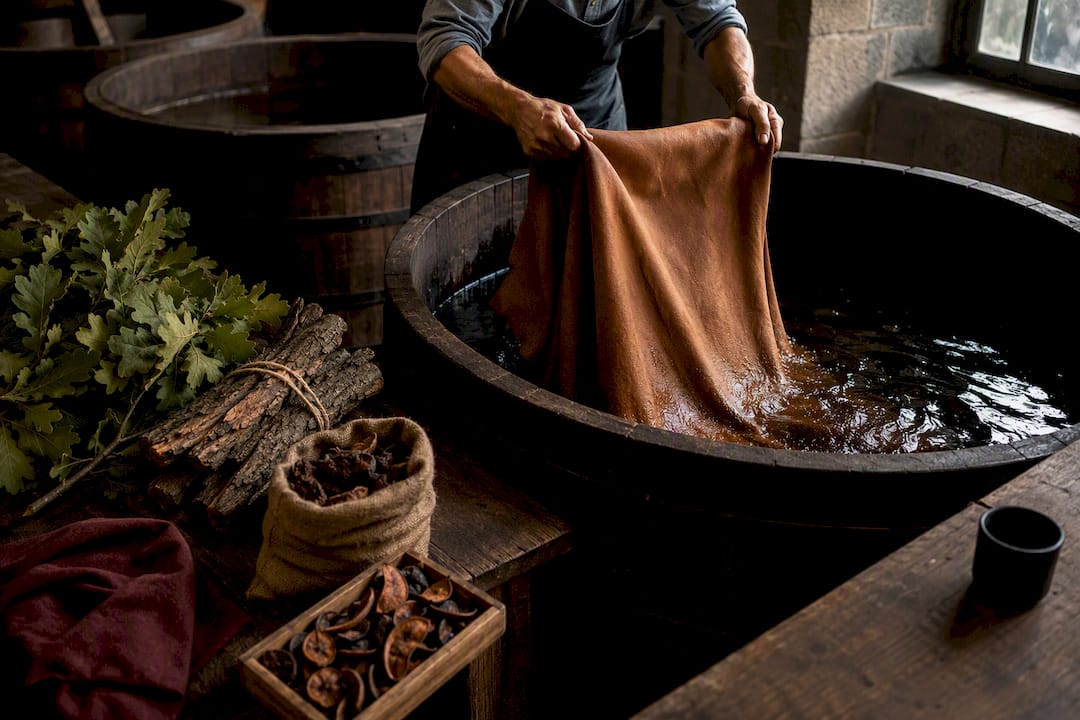
Vegetable-tanned leather is genuine animal hide cured with plant tannins instead of chromium salts, and it is the closest thing the leather world has to a living material. Buyers choose it because it ages rather than merely wears, deepening in color and softening in hand with every season it’s carried. The trade-off is real: it costs more to produce, it isn’t fully waterproof, and it demands a little patience from the person who owns it.
Yes, Leather done the green way. Vivien Lauren.
Vegetable-tanned leather is produced through a slow, weeks-to-months process that yields a richer patina and develops deep color changes over time.
Full-grain veg-tan retains the animal’s natural surface and aging qualities, while top-grain is sanded smooth but ages less uniquely.
Authentic veg-tan leather can be identified by its earthy smell, natural pores, faint markings, and water darkening, with a non-destructive test always recommended.
Compared to chrome-tanned leather, veg-tan ages beautifully with use but requires regular conditioning and is more porous and stain-prone initially.
Although eco-friendly claims are valid mainly in lifecycle terms, genuine veg-tan does produce less harmful waste but remains more expensive due to labor-intensive production.
Table of Contents
What Is Vegetable Tanned Leather, Exactly?
Vegetable tanning converts raw hide into leather using tannins extracted from bark, wood, leaves, and fruit pods, rather than the chromium sulfate baths that define modern industrial tanning. The word “vegetable” refers to this plant origin, not to any absence of animal material. The hide itself still comes from cattle or other livestock; what changes is the chemistry that stabilizes the collagen fibers and keeps the hide from decomposing.
Grade matters as much as tanning method. Full-grain veg-tan leather retains the hide’s outermost layer, complete with its natural texture, pores, and the faint scarring that proves it once belonged to a living animal. Top-grain leather has that surface sanded away and often gets a corrected finish, which smooths out imperfections but also sands away the very grain structure that develops the richest patina. When Italian leather craftsmanship is at its best, it almost always starts with full-grain hides, because that layer is where the material’s character actually lives.
Tannins themselves fall into two chemical families, and the difference shows up the moment you handle the finished leather:


Pyrogallol tannins (chestnut, oak, sumac) tend toward lighter, honey-gold tones and firmer hands, favored for structured goods like belts and saddlery.
Catechol tannins (mimosa, quebracho, willow) lean toward warmer, reddish browns and produce a slightly softer, more pliable leather often used in bags and small goods.
Blended tannin baths, mixing two or more sources, are common in commercial tanneries chasing a specific color and hand-feel.
Vegetable-tanned leather represents only a small fraction of global leather output; most commercial hides go through chrome tanning because it finishes much faster. That scarcity is part of why veg-tan carries a premium, and part of why handcrafted leather goods built from it read as investment pieces rather than disposable accessories.
How Is Vegetable Tanning Actually Done?
The process that turns a raw hide into a wallet or a tote takes several weeks at minimum, and historically it took many months. Understanding the steps explains almost everything about why veg-tan costs what it costs.
Pre-tanning preparation comes first. Raw hides arrive salted for preservation, then get soaked to rehydrate the fibers, followed by liming to loosen hair and unwanted proteins, and deliming to bring the hide’s pH back into a range the tannins can actually bond with. Skip or rush this stage and the tannin never penetrates evenly, leaving a hide with soft, weak spots.
Tanning itself happens one of two ways. Traditional pit tanning submerges hides in a sequence of pits, moving from weak tannin liquor to progressively stronger baths over weeks or months, letting the tannin migrate slowly to the hide’s core. Rotating drum tanning achieves a similar chemical result mechanically, agitating hides in concentrated tannin solution inside a rotating cylinder. Traditional pit methods can stretch toward twelve months for a single hide, while modern drum tanning compresses that timeline to a matter of weeks.
Finishing follows the tanning bath itself:
Washing removes residual tannin and loose surface material.
Fat-liquoring introduces oils that keep the fibers supple rather than brittle.
Dyeing, when used, adds color beyond what the tannin alone produces.
Oiling or waxing seals and conditions the surface.
Edge finishing (burnishing, painting, or folding) closes off raw cut edges.
Speed and character sit at opposite ends of a dial. Faster drum methods produce consistent, commercially viable veg-tan leather at scale, but slower pit tanning tends to yield deeper tannin penetration and, many tanners argue, a more complex aging character over the material’s life. Artisans running either method watch two variables closely: the pH of each bath, since tannin bonds poorly outside a narrow acidity range, and tannin concentration, since too strong a bath too early can case-harden the surface before the interior ever tans.
Pro Tip: If a leather good’s description mentions “pit tanned” specifically rather than just “vegetable tanned,” that’s usually a signal of a slower, more traditional production run, worth asking about if you’re comparing two similarly priced pieces.
Veg-Tan vs. Chrome Tanning: Which One Wins?
Neither method is universally better; they’re built for different jobs, and the honest comparison depends on what you’re buying and why.
Vegetable-tanned leather earns its reputation through patina. Because the tannin sits close to the hide’s surface fibers, exposure to light, oils from your hands, and simple friction over time deepens the color and burnishes the surface to a warm sheen that industry tanneries treat as a feature, not a flaw. Chrome-tanned leather, by contrast, is chemically stabilized to resist that kind of visible change, which suits shoes and upholstery that need to look consistent for years, but it will never develop the same living quality.
Durability and character: Veg-tan improves visually with wear; chrome-tan holds its original appearance longer but shows scuffs and cracks rather than patina.
Water and stains: Both absorb moisture, but veg-tan is more porous and stains more readily unless conditioned; chrome-tan resists water slightly better out of the box.
Price: Veg-tan almost always costs more, driven directly by the weeks-to-months production timeline versus chrome tanning’s hours-long chemical process.
Environmental profile: Chrome tanning generates chromium-laden wastewater that requires careful treatment; vegetable tanning produces organic waste that is generally less hazardous, though not impact-free.
A 2023 study on plant-extract tannins found that certain vegetable tannins can match chrome tanning on measured tear strength and elongation while reducing pollution loads such as biological and chemical oxygen demand. That’s a meaningful data point for anyone weighing eco-claims against real performance, not just marketing language.
For everyday shoes that need to survive rain without a conditioning ritual, chrome tanning is often the more practical choice. For a bag, belt, or wallet meant to be carried for a decade, veg-tan’s aging curve is the whole point.
How Can You Tell If Leather Is Really Vegetable Tanned?
Authentic veg-tan leather announces itself through a few reliable, non-destructive cues, and learning them takes less time than you’d think.
The smell comes first. Genuine vegetable-tanned hides carry an earthy, almost woody scent from the tannins themselves, distinct from the flatter, more neutral smell of chrome-tanned leather. New veg-tan also feels notably firmer and more rigid in the hand than a finished chrome piece; that firmness is temporary and softens with wear and conditioning.
Visual and physical checks help confirm it:
A raw or unfinished edge on the underside often shows the leather’s natural fiber structure rather than a painted or sealed finish.
A drop of water on unconditioned veg-tan will typically darken the spot temporarily, since the material is more absorbent than chrome-tan.
Full-grain pieces show faint natural markings and pore texture rather than a uniform, artificially smooth surface.
Heavy pigmented topcoats can mask veg-tan’s natural grain, so a piece described as veg-tan but coated thickly may not show typical aging behavior.
Watch for the term “semi vegetable tanned” or “combination tanned,” which describes leather finished partly with chrome and partly with plant tannins. It’s a legitimate category, often used to balance cost and water resistance, but it won’t patina the way full veg-tan does.
Pro Tip: Never boil, bleach, or burn a sample to “test” authenticity. Legitimate identification never requires damaging the piece; if a seller suggests a destructive test, that’s a red flag, not reassurance.
Caring for Vegetable Tanned Leather the Right Way
Veg-tan leather rewards attention, and the maintenance routine is simpler than most owners expect once you understand what the material actually needs.
Condition every few months with a beeswax-based balm or a purpose-made leather cream, applied in thin layers and buffed in. Avoid raw kitchen oils like olive oil; they can penetrate unevenly, darken permanently, and turn rancid inside the fibers over years.
If the piece gets wet, blot excess moisture immediately with a clean cloth, then let it air dry away from direct heat or sunlight, which can cause the surface to crack.
Treat stains promptly rather than waiting; oil-based stains often blend into the developing patina, while water stains and salt marks benefit from gentle conditioning once the leather is fully dry.
Reshape gently by hand if the item has softened out of shape, working slowly rather than forcing it; structural repairs like torn seams or replaced hardware are best left to a leather professional.
Burnish rough edges with a smooth, hard tool and a touch of conditioner to restore a clean, finished look on wallets, belts, and bag straps.
Our practical guide to caring for leather handbags and shoes walks through seasonal conditioning schedules in more detail if you’re building out a routine for a full wardrobe of pieces. Conditioning improves water resistance meaningfully, but it never makes veg-tan fully waterproof; treat it as showerproof at best, never as rain gear.
Are Sustainability Claims About Veg-Tan Leather True?
Vegetable tanning does reduce certain categories of chemical waste compared with chrome tanning, but “eco-friendly” is a claim worth scrutinizing rather than accepting on a hangtag. The lifecycle argument is where veg-tan actually earns its sustainability case: a well-made piece that lasts fifteen or twenty years, and can be re-conditioned and repaired rather than replaced, does more real environmental work than a manufacturing process alone can measure.
That argument cuts against many so-called vegan leather alternatives, too. Reporting from The Conversation found that many plant-based leather substitutes still rely on plastic binders like polyurethane, shortening usable lifespan and complicating recycling, which undercuts their own sustainability pitch.
Two credentials are worth learning to recognize:
Consorzio Vera Pelle Italiana Conciata al Vegetale identifies genuine Italian vegetable-tanned leather produced by member tanneries under shared quality standards.
UNI 11427, the ecoleather certification, verifies specific environmental performance indicators for leather production, distinguishing substantiated low-impact claims from vague marketing language.
For a broader look at lifecycle thinking beyond leather, this guide to reducing waste in design covers similar principles worth applying when comparing any “sustainable” material claim.
Why Vivienlauren Builds With Vegetable Tanned Leather
Every leather piece we curate reflects Italian workshops where tanning knowledge has passed down through generations, not a single production shortcut. We choose vegetable-tanned hides for select bags and accessories precisely because longevity is the promise we’re making to you: a piece that should still look elegant, and arguably better, a decade from now. Our guide to Italian leather craftsmanship explains the sourcing decisions behind that promise in more depth.
Living With Veg-Tan: What the First Year Actually Looks Like
The first three months bring the most dramatic change: a honey-gold hide deepens toward amber wherever your hands rest most, usually the handle or the corner you grip. By month six, that color shift has spread across the whole surface, and the leather has noticeably softened. Wear it in daylight when you can; UV exposure accelerates the color change. Condition it lightly every few months, not obsessively, and let the material do the rest of the work on its own.
— Vivien Lauren.
See Vivien Lauren’s Vegetable Tanned Leather Collection
Vivienlauren works with Italian ateliers that still choose vegetable-tanned hides for the pieces meant to be carried for years, not seasons. If the patina, the process, and the craftsmanship described above sound like what you want from a bag or a pair of shoes, browsing our current collection is the natural next step.

Shipping and payment options, including potential free UK shipping and international shipping thresholds, as well as installment plans, are detailed on the Vivien Lauren website at checkout. Explore the shoe collection for veg-tan detailing on classic silhouettes, or reach out through our contact page if you’d like guidance on caring for a specific leather item you already own. Either way, start by seeing what’s currently in the collection.
Sources
FAQ
Is Vegetable Tanned Leather Real Leather?
Yes. Vegetable-tanned leather is genuine animal hide; the term describes the plant-based tanning agent used, not a synthetic substitute.
What Is Vegetable Tanned Leather?
It’s leather cured using tannins from plant sources like oak bark, chestnut, mimosa, or quebracho, rather than chromium salts, resulting in a material that develops a rich patina over years of use.
Is Vegan Leather the Same as Vegetable Tanned Leather?
No, and the similar names cause frequent confusion. Vegan leather is a synthetic, animal-free material, often plastic-based, while vegetable-tanned leather is real animal hide processed with plant tannins.
What Animal Does Veg-Tan Leather Come From?
Most vegetable-tanned leather comes from cattle hide, though it can also be made from goat, sheep, or other livestock hides depending on the tannery and intended product.
Does Vegetable Tanned Leather Need Special Care?
It benefits from periodic conditioning with wax-based balms, protection from prolonged water exposure, and gentle drying if it does get wet, since it isn’t fully waterproof even after conditioning.
Recommended
This fashion piece has been written and brought to you by Chloe, on behalf of Vivien Lauren. Vivien Lauren. Luxury. Craftsmanship. That's Proudly Italian. Vivien Lauren. Proud To Style.

