
Saffiano Leather: What Luxury Buyers Must Check Before Paying Premium

Saffiano is a cross-hatch, coated leather finish prized for its structure and durability, not a single type of hide. It can be pressed onto calfskin or built entirely from synthetic material, so the finish alone tells you nothing about quality. What matters is the base underneath the pattern and the coating on top. Genuine saffiano resists scratches and water beautifully, but it trades away the soft patina that makes other leathers feel personal over time.
We are all about Genuine Italian Leather yes, obtained sustainably at the natural end of the food that is Re-use, Green Tanning. Vivien Lauren.
The quality of saffiano depends primarily on the base material and coating thickness, not just the finish or appearance.
Genuine saffiano on top-grain leather is dense, durable, and resistant to scratches and water, but it lacks the soft patina of full-grain leathers.
Synthetic saffiano may imitate the surface but often feels softer, less dense, and is less resistant to cracking or peeling over time.
To verify authenticity, check for real leather labels, examine the texture and edges, and smell for natural leather scent versus chemicals.
Saffiano is best suited for structured accessories like handbags, wallets, and briefcases that benefit from firm shape retention.
Table of Contents
What Does Saffiano Leather Mean, Exactly?
Saffiano describes a treatment, not an ingredient. Any hide, and plenty of synthetics too, can receive the diagonal cross-hatch emboss and the protective coating that give saffiano its signature texture and sheen. That distinction matters because a label reading “saffiano leather” says something about the finish, not automatically about what’s beneath it.
The name traces back to Prada, which popularized the technique in the twentieth century and turned it into a house signature associated with structured totes and clean-lined handbags. That origin story gets repeated often in fashion circles, and it holds up as the finish’s most credited commercial debut.
Here’s why the terminology trips people up:
“Saffiano” refers to the surface treatment (emboss plus coating), never the hide itself.
The same finish appears on calfskin, split leather, and fully synthetic PU or PVC.
Two bags can both say “saffiano” and differ enormously in longevity and hand-feel.
Reading past the finish name to the construction details is where real quality judgment starts.
How Saffiano Leather Is Made
Manufacturing saffiano involves a few consistent stages, though the raw materials going in can vary widely.
Prepare the base. Tanners select and treat the starting material, whether that’s calfskin, top-grain cattle hide, split leather, or a synthetic sheet.
Heat and press. The surface goes under a heated plate stamped with the diagonal cross-hatch pattern, which compresses the fibers and locks in the texture.
Apply the topcoat. A wax, resin, or polymer coating seals the surface, and this step is what gives saffiano its glossy resistance to scuffs and moisture, according to the International Leather Club.
Finish and inspect. Edges get painted or bound, and the sheet is cut for the specific product it’s destined for.
The base material choice changes everything downstream. Calfskin saffiano feels denser and holds its structure for years. A PU version might mimic the pattern convincingly on day one, then crack or peel within a season once the coating fatigues.
How Can You Tell Genuine Saffiano From Faux?
The honest answer is that no single glance settles it. You need to combine label reading with a tactile check.
Start with the product description. Terms like “calfskin,” “top-grain,” or “genuine leather” indicate an actual hide underneath the coating. Words like “PU,” “PVC,” “faux,” or “man-made material” mean you’re looking at a synthetic built to imitate the look, as noted in guidance from Vintage Leather Sydney.
Press the surface gently. Genuine leather-based saffiano has a firmer, denser give than many synthetic versions, which may feel softer or more plastic-like.
Check the edges. Painted or bound edges with clean stitching suggest careful construction; rough or fraying edges are a red flag regardless of material.
Notice the smell. Leather carries a faint, warm, natural scent even under a coating; synthetics often smell chemical or flat.
Weigh the price against the claim. A “genuine leather” saffiano bag priced dramatically below market norms deserves a second look.
Pro Tip: If a retailer’s listing doesn’t specify the base material, ask directly for the fabric composition or spec sheet before you buy. A reputable seller will have that answer ready.
Durability: The Real Pros and Cons
Saffiano earns its reputation for a reason. The sealed coating makes it genuinely resistant to scratches and water, and it holds its shape far better than soft, unstructured leathers, according to Tanner & Thread. Surface dirt wipes away easily, which is part of why it became the go-to choice for structured handbags and daily-carry wallets.
The trade-offs are just as real. Saffiano doesn’t develop the rich patina that makes other leathers feel like they’re aging alongside their owner, and some wearers describe its firm hand-feel as closer to a rigid, almost plastic-like surface than a supple hide, per Beaufort Leather.
The quality gap is wider than most shoppers expect. High-grade saffiano built on top-grain hide with a thick, well-applied coating rarely cracks. Lower-quality bases or thin coatings are almost always where failure starts, and that’s true regardless of what the label says, per the International Leather Club.
Scratch and scuff resistance: strong across genuine and most synthetic versions.
Water resistance: strong, thanks to the sealed topcoat.
Shape retention: excellent, which is why it suits structured silhouettes.
Patina development: essentially none.
Repairing deep scratches that penetrate the protective coating down to the base material is generally difficult or impossible.
How Should You Clean and Store Saffiano Leather?
Routine care for saffiano is refreshingly simple, largely because the coating does most of the protective work for you.
Wipe the surface with a soft, slightly damp cloth after regular use, then dry it immediately with a separate dry cloth.
Use a soft brush to lift dust that settles into the cross-hatch grooves, a step recommended in care guidance from TeknisKill.
Skip leather conditioners entirely. The sealed finish generally won’t let them penetrate, so conditioning oils tend to sit on the surface rather than absorb.
For oil or ink stains, blot immediately rather than rubbing, and take the piece to a leather specialist if the mark doesn’t lift, since dye transfer and deep stains often need professional attention.
Store the piece upright or gently stuffed with tissue paper, away from direct sunlight and heat, to help it keep its structured shape between wears.
Avoid alcohol, acetone, harsh detergents, and abrasive sponges. All of them can strip or dull the topcoat, and silicone-heavy polishes can leave a residue that attracts more dust than it removes.
Pro Tip: Keep a dedicated microfiber cloth just for your saffiano pieces. It prevents cross-contamination from other cleaning products lingering in a shared cloth. For a deeper look at safe products, our guide on choosing a cleaner for leather walks through what to reach for and what to avoid.
Which Bag Styles Suit Saffiano Best?
Saffiano shines on anything that benefits from a crisp, held silhouette. It’s the reason structured totes, boxy handbags, and briefcases so often carry this finish, since the coating keeps corners sharp and surfaces smooth through daily handling, a pattern confirmed by Bagsplaza’s review of common applications.
Structured handbags and totes: the rigidity works with the design, not against it.
Wallets and cardholders: high scratch exposure in pockets and bags makes the resistance genuinely useful.
Travel goods and briefcases: shape retention through repeated packing and handling is a real advantage.
Where saffiano falls short is anything meant to drape or move softly, like slouchy hobo bags or garments. The same stiffness that protects a wallet’s corners will fight against a design that wants fluid movement.
Vivien Lauren’s Notes on Sourcing Saffiano Well
As an online retailer built around Italian craftsmanship and slow fashion, Vivien Lauren approaches leather goods with an emphasis on transparency about what’s actually in a piece. Our writing on Italian leather handbag craftsmanship and on why Italian leather anchors timeless luxury reflects that same standard.
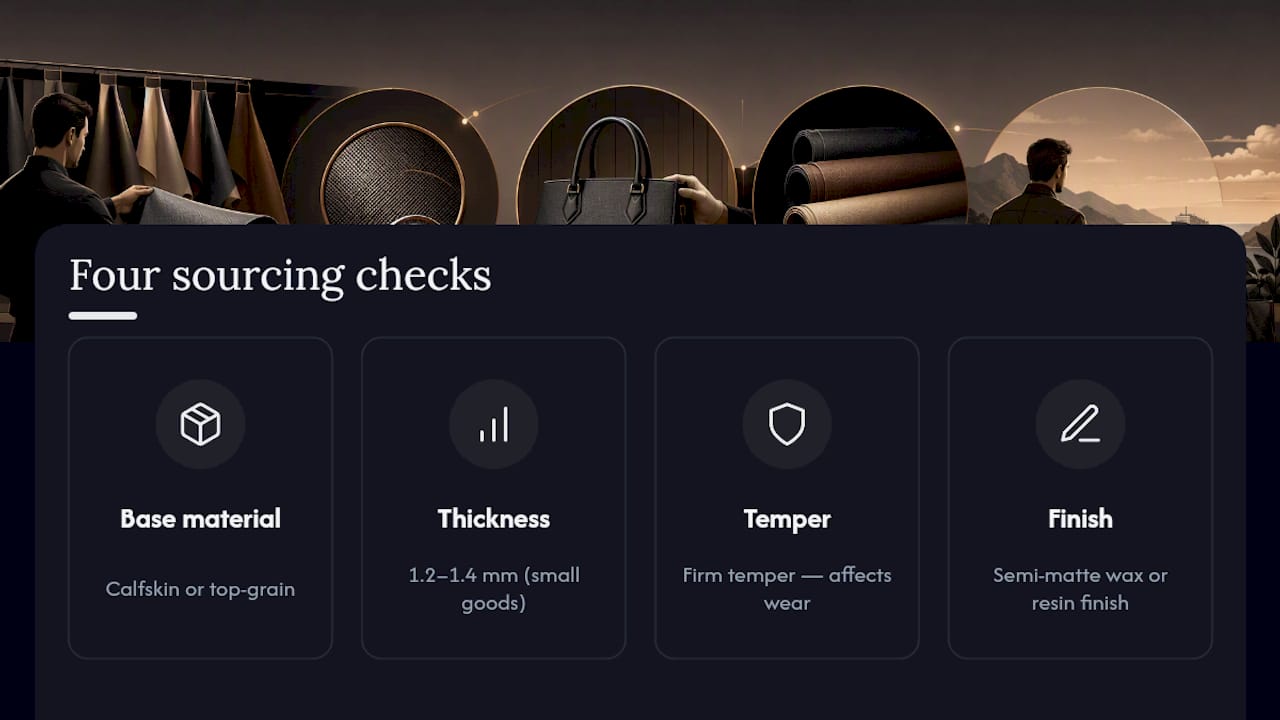
If you’re commissioning or vetting a saffiano piece, ask for specifics: base material (calfskin or top-grain), thickness in the 1.2 to 1.4 millimeter range for small goods, a firm temper, and a semi-matte wax or resin finish. Those four details, more than the word “saffiano” itself, predict how the piece will wear.
When Is Saffiano the Smarter Luxury Buy?
Saffiano makes sense for anyone who wants a structured piece that stays neat with minimal effort, rather than one that softens and darkens with age the way a full-grain leather does. If you’re drawn to the romance of patina, a piece that tells the story of every year you’ve carried it, saffiano isn’t the right material, and that’s a legitimate preference, not a flaw in the leather.
Before paying a premium, always verify the base material and construction. The finish name promises structure and resistance. It doesn’t promise the leather underneath.
— Vivien Lauren.
Browse Vivien Lauren’s Curated Leather Accessories
Vivien Lauren offers products with Italian craftsmanship and transparent material labeling, so customers can learn what’s actually in the pieces, not just what finish sits on top of them. The curated selection favors quality construction over trend-chasing, meaning every wallet, tote, or cardholder has been chosen for how it wears years from now, not just how it photographs today.

If you’re weighing a saffiano-finish piece against something softer and more traditionally grained, browse our fashion accessories collection to compare styles side by side. Have a question about base material, thickness, or finish before you commit? Reach out to our customer service team directly, and if you’d rather explore the full range of what we carry, start at Vivienlauren and take your time deciding what belongs in your wardrobe.
Sources
FAQ
Is Saffiano Leather Real Leather?
It can be. Saffiano is a finish that’s applied to genuine calfskin or top-grain hide as often as it’s applied to synthetic PU or PVC, so check the product description for terms like “calfskin” or “genuine leather” rather than assuming from the name alone.
What Are the Cons of Saffiano Leather?
The main drawbacks are a firm, sometimes plastic-like hand-feel, a total lack of patina over time, and real difficulty repairing the piece once the protective coating is scratched through to the base.
Is Saffiano Leather Good Quality?
Quality depends entirely on the base material and coating thickness rather than the finish name itself. Saffiano built on a genuine top-grain hide with a well-applied topcoat rarely cracks, while thin coatings over cheap bases are where most failures happen.
Which Is Better, Pebbled Leather or Saffiano Leather?
Neither wins outright. Saffiano offers more structure and scratch resistance thanks to its coated cross-hatch surface, while pebbled leather typically feels softer and can develop more character over time, so the better choice depends on whether you want rigidity or a more relaxed hand-feel.

Recommended
Luxury Italian Leather Handbags | Signature Collection handmade in Italy | Vivien Lauren
This fashion article has been written and brought to you by Nancy. On behalf of Vivien Lauren. Vivien Lauren. Luxury. Craftsmanship. That's Proudly Italian. Vivien Lauren. Proud To Style.
