
Aniline Leather Care for Luxury Buyers: Condition Every 6–12 Months
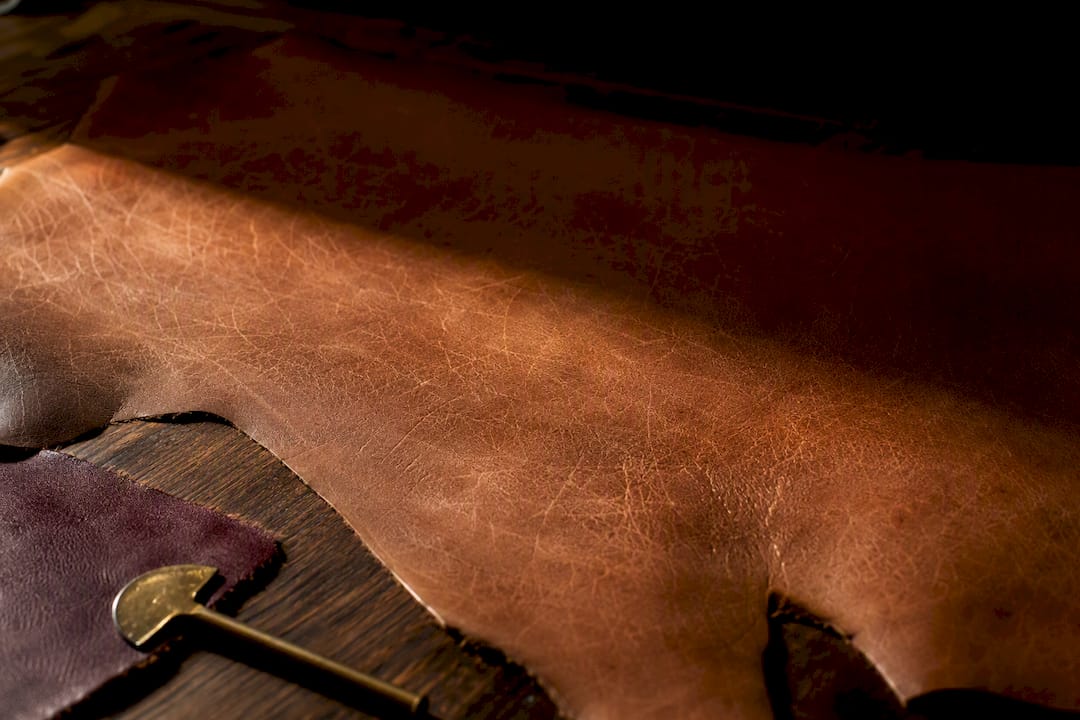
Aniline leather is hide dyed exclusively with transparent, soluble dyes rather than opaque surface pigment, so every natural mark on the skin stays visible. It’s the most honest leather you can own: soft, breathing, and unmistakably alive under the hand. That honesty comes with a price: Aniline absorbs almost everything it touches, so a wine spill or an afternoon in direct sun can mark it permanently. This guide covers how it’s made, how to identify it, and how to keep it beautiful for decades.
Honest Leather - Care for Aniline.
Aniline leather is made from full-grain hides dyed with soluble dyes that penetrate deeply, allowing natural marks and grain to remain visible.
Its delicate surface is highly susceptible to stains, UV fading, and scratches because it lacks a protective topcoat that could shield against everyday damage.
Identifying genuine aniline requires water-drop, fingernail, and raking-light tests, but semi-aniline can only be distinguished through careful inspection and testing.
Proper maintenance involves gentle cleaning with pH-neutral products, regular conditioning, and prompt stain removal, with a strict avoidance of harsh chemicals or household solvents.
Buying aniline leather requires checking for explicit mention of full or semi-aniline finishes, full-grain quality, and clear care instructions, recognizing its premium price reflects raw hide scarcity.
Table of Contents
What Makes Aniline Leather Different From Other Finishes
Most leather finishes work by sealing the surface with a layer of pigment and protective coating, essentially painting over the hide’s natural texture. Aniline leather skips that step entirely. The soluble dye penetrates deep into the fiber structure instead of sitting on top of it, which means the hide’s pores, veining, and even faint scars remain visible rather than hidden.
That transparency demands near-perfect raw material. Tanneries select full-grain hides, the uppermost, unaltered layer of the skin, because any sanding or buffing to remove imperfections would strip away the very texture aniline is meant to showcase.
Run your hand across a genuine aniline piece and you’ll notice:
Open, breathable pores rather than a sealed, plastic-like surface
A warmth to the touch within seconds, unlike the coolness of heavily coated leather
Faint natural markings, insect bites, wrinkles, subtle color variation, left intact rather than concealed
How Aniline Leather Is Made and What Regulation Protects Buyers
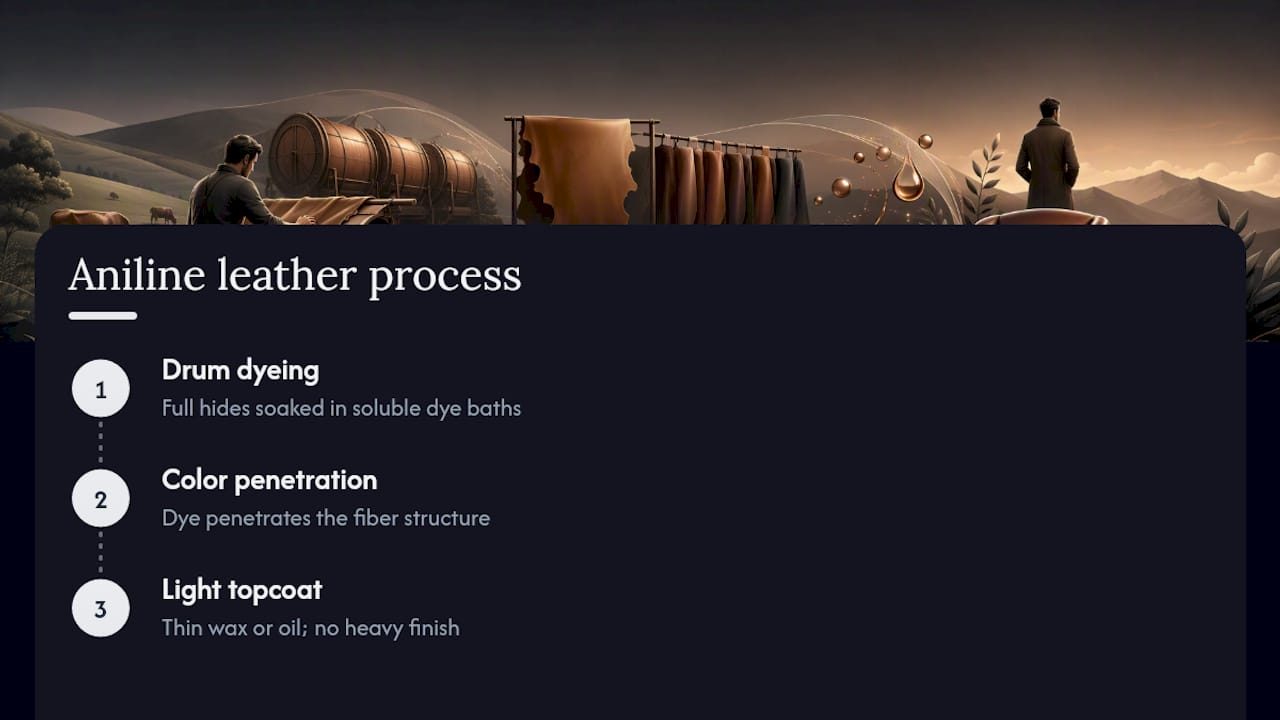
Tanneries dye aniline leather in large rotating drums, soaking full hides in soluble dye baths until the color penetrates completely through the fiber, then finishing with little more than a light wax or oil topcoat rather than a thick protective layer. That absence of a heavy topcoat is exactly why the surface stays so soft and reactive to touch, and so vulnerable to everything else.
Hide selection drives the economics of the category. Only a small percentage of hides, often cited at under 5%, are clean enough to qualify, since there’s no pigment to mask scars, brand marks, or uneven grain. That scarcity is the real reason aniline pieces carry a premium price.
On the regulatory side, DIN EN 15987 formally defines aniline leather in Europe and caps how thick any surface finish can be before the leather no longer qualifies for the name. Buyers in the EU also benefit from REACH regulation, which restricts certain azo compounds in dyes, a meaningful safeguard given that historical associations with “aniline dye” toxicity have little to do with what’s used in tanneries today.
How Do You Tell Aniline From Semi-Aniline or Pigmented Leather?
Three finishes dominate the aniline family, and they perform very differently once they leave the shop floor. Full aniline (also called pure aniline) carries no pigment at all. Semi-aniline adds a very light pigment coat over the aniline dye, gaining some stain and fade resistance while sacrificing a little of that raw, breathing texture. Pull-up aniline is treated with waxes and oils that shift color and lighten visibly when the leather is stretched or creased, a look many buyers actively seek out.
Before you clean or condition anything, three simple tests tell you what you’re actually working with:
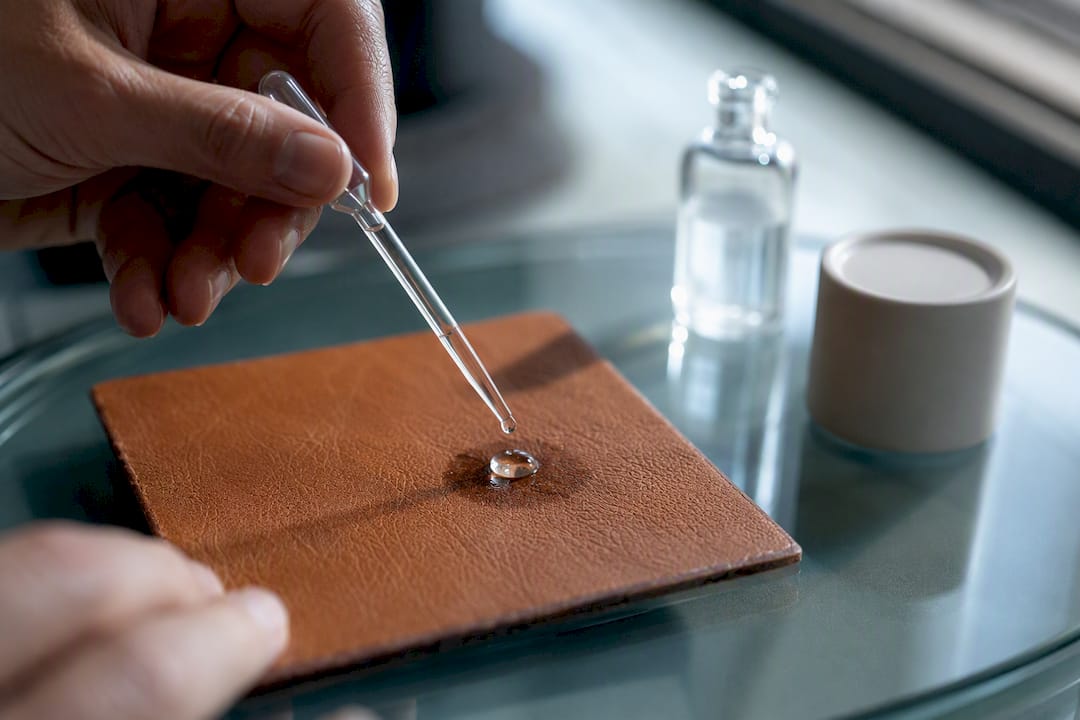
Water-drop test: place a small drop of water on an inconspicuous area. Aniline darkens almost immediately as it absorbs the moisture; pigmented leather beads the water on the surface.
Fingernail test: press a fingernail gently into the surface. Aniline and semi-aniline show a temporary color change or indentation; heavily pigmented leather resists any mark.
Raking-light inspection: angle a lamp low across the surface. Natural grain variation and texture read as authentic aniline; a uniform, flat sheen suggests a printed or embossed grain pattern.
Pro Tip: Test on the underside of a strap or an inside panel first. A splash test on the front of a handbag you haven’t confirmed is a risk you don’t need to take.
Results aren’t always black and white. Some semi-aniline pieces absorb water slowly enough to look deceptively like pigmented leather at first glance, so give the water-drop test a full sixty seconds before drawing a conclusion.
The Real Trade-Off: Beauty Versus Vulnerability
Aniline’s appeal is almost entirely sensory. The surface softens with handling, and the hide develops a genuine patina over years of use, a deepening of tone and a mellowing of texture that no factory finish can replicate. Many owners treat that evolving character as the entire point of owning it.
The downsides are just as real:
Stain absorption: oils, ink, and dyes from denim or dark fabrics soak in fast and can be nearly impossible to lift once set
UV fading: sunlight bleaches aniline noticeably faster than pigmented leather, sometimes within a single season of window exposure
Abrasion sensitivity: because there’s no protective topcoat, scuffs and scratches show more readily on bags and furniture arms that see daily contact
If you live in a bright, sun-filled home, entertain often, or want a piece that shrugs off toddlers and red wine, semi-aniline or a fully pigmented finish will serve you better. If you want a bag or a chair that tells the story of how you actually live, aniline is worth the extra attention.
How Do You Clean and Maintain Aniline Leather?
Treat aniline the way you’d treat fine silk: gently, consistently, and with products made for the job, not whatever happens to be under the sink.
Dust weekly with a soft, dry cloth and keep pieces away from direct sunlight and heating vents, since both accelerate drying and fading.
Clean only with pH-neutral, aniline-specific formulas applied to a barely damp microfiber cloth. Blot in gentle circular motions rather than rubbing, which can push a stain deeper into the fiber.
Condition every six to twelve months with a leather-specific conditioner to replace natural oils lost to handling and air exposure.
Never use alcohol, household solvents, silicone oils, coconut oil, or beeswax. Each either strips natural oils, leaves a sticky residue, or darkens the surface unevenly.
Emergencies call for speed over cleverness. Blot fresh spills immediately with a dry cloth, absorbing rather than wiping, since dye sits inside the fiber rather than on the surface, which means most surface-level fixes simply don’t reach the problem. Oil-based marks often respond to a light dusting of cornstarch left overnight before brushing away. Ink and water rings, on the other hand, tend to need a professional restorer, especially on a handbag or an heirloom piece you’re not willing to risk.
Pro Tip: Keep a small, labeled sample swatch of any new conditioner and test it on an inconspicuous seam allowance 24 hours before applying it to the visible surface.
Our practical guide to caring for leather handbags and shoes walks through cadence and product choices in more depth, and pairing the right leather cleaner with the right conditioning schedule is the single biggest factor in how gracefully an aniline piece ages.
Where Aniline Leather Shows Up and What to Check Before Buying
Aniline turns up most often in three categories: luxury upholstered furniture, where its softness rewards the hand and its patina rewards the eye; handcrafted handbags, where the natural grain signals genuine full-grain construction; and select garments and small leather goods, where breathability matters against the skin.
Before you buy, check the product description for a few specifics:
Explicit language stating “full aniline,” “pure aniline,” or “semi-aniline,” not just “genuine leather,” which tells you almost nothing about the finish
Evidence the hide is full-grain, since top-quality provenance and careful hide selection are what justify the premium price
Clear care instructions from the seller, along with a stated return or repair policy in case the piece doesn’t match expectations
Budget accordingly. Aniline pieces from reputable Italian workshops typically sit well above pigmented equivalents, and that premium reflects genuine hide scarcity rather than markup for its own sake. Go in expecting the leather to change color and texture over years of wear, because that transformation is the reward, not a flaw.
Vivien Lauren’s Perspective on Aniline Leather in Curated Fashion
I return to aniline leather again and again for a simple reason: it refuses to fake anything. A pigmented hide can hide a lifetime of flaws; aniline demands the tannery start with something close to perfect. When we source Italian leather pieces for our collections, that transparency is part of the appeal, not a liability to manage around. What I ask of every customer in return is patience with the care routine, because a conditioned, well-loved aniline bag will outlive almost anything mass-produced, scars and all.
— Vivien Lauren.
Curated Italian Leather at Vivienlauren
Our selection includes handcrafted Italian leather accessories with documented provenance, so customers know what finish they’re buying and how to maintain it for years. Each piece is accompanied by care guidance tailored to its specific leather, and support is available if questions arise after delivery.

If you’ve read this far, you already understand what separates a piece worth keeping from one that’s simply available. Browse our Italian leather handbags and crossbody styles to find a piece whose grain, patina, and story will only grow richer with use.
Sources
FAQ
Is Aniline Leather Genuine Leather?
Yes. Aniline refers to the dyeing method, not the material itself. It’s genuine, typically full-grain leather dyed with soluble dyes that leave the natural surface visible, as opposed to leather coated in opaque pigment.
What Are the Disadvantages of Aniline Leather?
Its lack of protective coating makes it prone to staining, UV fading, and surface scratches, and because dye sits within the fiber rather than on top of it, many marks resist simple at-home fixes.
How Good Is Aniline Leather?
It offers the softest hand-feel and most authentic appearance of any leather finish, developing a rich patina over time, though that quality comes paired with real vulnerability to everyday wear.
Can You Clean Aniline Leather?
Yes, but only with pH-neutral, aniline-specific cleaners on a barely damp microfiber cloth, blotting rather than scrubbing, and conditioning every six to twelve months to keep the surface supple.
Recommended
This fashion guide has been authored for you by Nancy. On behalf of, Vivien Lauren. Vivien Lauren. Luxury. Craftsmanship. That's Proudly Italian. Vivien Lauren. Proud To Style.

