
Black Tie Optional for Women: What to Wear to a Formal Event
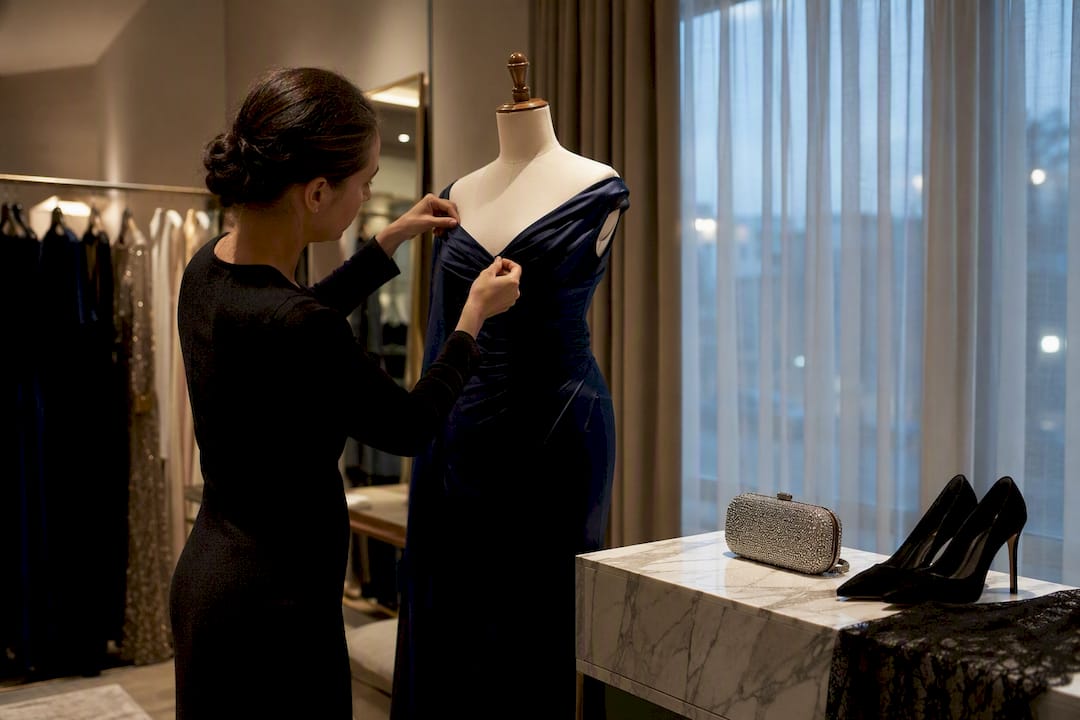
When an invitation reads “black tie optional,” it asks women to choose between a floor-length gown and an equally elevated alternative, never anything casual. Think satin, silk, velvet, or a tailored suit in a formal cut. Not sandals, not sundresses, not anything you’d wear to brunch.
Do: wear a floor-length gown, a luxe cocktail dress in a formal fabric, or a tailored suit or jumpsuit. Don’t: reach for sandals, casual fabrics like jersey or linen, or anything mini-length or daytime in feeling. If your dress runs shorter, evening fabric, statement jewelry, and a proper heel do the heavy lifting toward formality.
Pro Tip: A knee-length dress reads black-tie-optional the moment you swap in a beaded clutch, a cuff of crystal jewelry, and satin pumps. Fabric and accessories, not hemline, are what signal the room you belong in.
Key Takeaways
Black-tie-optional dressing for women succeeds when the fabric, cut, and accessories signal formal evening intent, regardless of whether the piece is a gown, cocktail dress, or tailored suit.
Point | Details |
Gown is the safe default | A floor-length gown in satin, silk, or velvet meets every black-tie-optional expectation without question. |
Shorter dresses need help | Midi and cocktail dresses read formal only with luxe fabric and statement accessories added in. |
Avoid casual fabrics and shoes | Linen, denim, sandals, and sneakers instantly undercut an otherwise formal outfit. |
Color and season matter | Dark or jewel tones work year-round; lighter silks suit summer, velvet suits winter. |
Vivienlauren offers ready pieces | Italian-crafted gowns, midi dresses, and accessories at Vivienlauren cover every black-tie-optional build discussed above. |
Table of Contents
What Does Black Tie Optional Mean for Women?
“Black tie optional” tells guests the hosts want a formal evening, but they aren’t requiring a floor-length gown or tuxedo to get in the door. The wording exists to soften a strict dress code without lowering the room’s atmosphere: a gown remains the most polished choice, and a sophisticated cocktail dress or dark, tailored suit is a fully acceptable substitute, according to the Emily Post Institute.
That single word, “optional,” is doing quiet work. It removes the requirement, not the standard.
Stylists note that “optional” refers only to the tuxedo or gown requirement, not to a drop in overall formality. Guests can experiment with silhouette and still be expected to read as intentionally, evening-ready dressed, according to wedding stylist Anny Choi.
The etiquette rule of thumb is simple:
When you’re unsure, dress up rather than down.
Consider the venue and the time of day before you consider your closet, as advised by resources like Black Tie Catering in Los Angeles: A Planner’s Guide.
Save true daytime pieces, however elegant, for daytime events.
Black Tie vs. Black Tie Optional: What’s the Real Difference?
Black tie asks men for tuxedos and women for full-length evening wear, no exceptions. Black tie optional keeps that formal target in view but widens the lane to reach it.
Black tie: tuxedo for him, gown for her, no substitutions expected.
Black tie optional: tuxedo or dark formal suit for him; gown, elevated cocktail dress, or tailored suit for her.
Decision rule: an evening ballroom, a couple in formal wear themselves, or a five-star venue all push you toward the gown. A summer garden reception with an early start time gives a luxe cocktail dress or dressy jumpsuit more room to breathe.
If you decline the full gown, cocktail attire becomes your floor, not a casual fallback.
Which Outfits Work for Black Tie Optional?
Three categories cover nearly every black-tie-optional invitation you’ll receive, and each one has its own styling logic.
Floor-length gowns
A gown remains the safest, most universally correct choice, and the fabric matters more than the silhouette. Satin, silk, velvet, and heavy chiffon all read as evening-appropriate; cotton or jersey never will, no matter how well they’re cut. A subtle slit or long sleeve keeps a gown feeling current without sacrificing formality, and dark or jewel tones (emerald, sapphire, wine) are the safest palette. Vogue notes that white, ivory, and head-to-toe pastels are best avoided at any wedding-adjacent event unless the invitation says otherwise.
Elevated cocktail and midi dresses
Midi-length is acceptable when the fabric and finish do the formal work a full hemline would otherwise do. A structured midi dress in satin or a beaded, embellished cocktail dress both clear the bar, especially when paired with a proper evening shoe rather than a daytime sandal. Fashion director Linda Cui Zhang has pointed out that a well-accessorized cocktail dress in luxe fabric can stand alongside a gown without looking underdressed.
Jumpsuits and tailored suits
A jumpsuit or a sharply tailored trouser suit in silk crepe or a wool-silk blend is a legitimate black-tie-optional choice, provided it’s cut close and finished with a heel, not a flat sandal. A cropped tuxedo jacket or a jeweled belt at the waist gives a jumpsuit the structure a gown gets for free.
Four concrete builds to picture:
A sequin ruched gown in deep emerald, worn with a single cuff bracelet and minimal earrings so the dress stays the focus.
A velvet maxi dress with long sleeves for a winter evening wedding, paired with a small metallic clutch.
A beaded jumpsuit with a plunge neckline, finished with strappy heels and drop earrings.
A three-piece silk suit in midnight navy, worn with pointed pumps and delicate gold jewelry.
Seasonally, swap heavier velvets and wool blends for lighter silks and chiffons come summer, and keep the same rule of dark, saturated color regardless of temperature. Brides confirms that lighter fabrics are fine in warmer months as long as they’re still elevated, not casual.
Pro Tip: If your dress or suit already has embellishment, sequins, beading, or metallic thread, keep jewelry minimal. If the garment is a clean, unadorned silhouette, that’s where statement earrings or a cuff earn their keep. Rarely do both deserve to compete for attention at once.
What Should You Never Wear to a Black Tie Optional Event?
A handful of items instantly undercut an otherwise formal look, no matter how expensive the rest of your outfit is.
Casual fabrics like linen, denim, or cotton jersey read as daywear regardless of cut.
Day dresses, however polished, belong at brunch, not an evening reception.
Sandals or flip-flops are the single fastest way to look underdressed next to a gown.
Sneakers, styled or not, don’t belong in a black-tie-optional room.
Neon or loud prints pull focus from the formality of the event.
Overly revealing cuts (extremely low necklines, exposed midriffs) read as nightclub, not gala.
One exception worth noting: embellished flats are acceptable if the rest of the outfit is unmistakably formal, structured fabric, evening jewelry, a proper clutch or cute mini bag.
How Do You Accessorize a Black Tie Optional Look?
Your accessories are where “formal” either gets confirmed or quietly undone. A small evening clutch or structured minaudière is the standard; a large tote reads office, not gala, no matter what’s inside it!
For shoes, dressy heels or polished pumps are the default, and embellished flats work when the rest of the look is clearly evening. Skip anything casual or rubber-soled entirely.

For jewelry, Vogue and Brides both point to darker, richer tones as the safer seasonal bet, and that same logic extends to metals: pearls and soft golds read timeless, while crystal and mixed metallics lean more modern. Choose one statement piece or a set of delicate layered pieces, rarely both at once.
For outerwear, a formal stole, a silk shawl, or a cropped evening jacket keeps you warm without breaking the formality; a puffer coat does not. Hair and makeup should complement, not compete: a polished updo, a soft smoky eye, or a classic red lip all read as intentional rather than trying too hard.
Before you leave the house, run a quick checklist: gown or elevated alternative on, dressy shoes on, one statement accessory chosen, wrap in hand, done.
How Do You Decode an Invitation’s Dress Code Wording?
Invitations don’t always say “black tie optional” outright, and the variations matter.
“Black tie encouraged” or “black tie preferred” signals hosts want gowns and tuxedos but won’t turn anyone away for a formal cocktail look instead.
“Black tie invited” functions almost identically to “optional,” a preference stated softly.
When climate, culture, or religious dress create real constraints, a short note to the host (“Wanted to check on the dress code, is a formal cocktail dress appropriate?”) is always welcome.
Factor in the wedding’s time of day: an evening reception generally calls for more formality than an afternoon one, even under the same wording.
Three Vivien Lauren Stylist Looks for Black Tie Optional
Three builds, three different comfort levels, all reading unmistakably formal.
The classic gown build: a floor-length satin or silk gown in a jewel tone, finished with delicate gold jewelry, a small structured clutch, and a strappy metallic heel.
The elevated midi build: a beaded or structured midi dress, styled with statement drop earrings, satin pumps, and a beaded clutch to carry the formality the shorter hemline needs.
The tailored alternative: a silk trouser suit or a sleek jumpsuit, paired with pointed pumps, a cropped evening jacket for cooler venues, and one strong jewelry moment at the ear or wrist.
Pro Tip: Choose one piece built to travel across seasons, a silk slip gown that layers under a shawl in winter and stands alone in summer, and you’ll pack lighter for every destination wedding on your calendar.
Why Timeless Pieces Outperform Trend Pieces at Black Tie Events
Black-tie-optional invitations reward guests who dress with intention rather than trend chasing, and in my experience, the pieces that photograph best a decade later are almost always the simplest ones: a well-cut gown, a tailored suit, a fabric with real weight to it. Fast, trend-driven pieces tend to look dated within a season, while a well-made silk or velvet piece only gets better with wear.
Pro Tip: I always recommend investing in one exceptional gown or suit over three fast-fashion dresses. It earns its place in your closet for every formal invitation that follows.
Shop the Look for Your Next Black Tie Optional Event
Building a black-tie-optional wardrobe doesn’t require a closet full of one-time purchases, it requires a small number of pieces made well enough to wear for years. Vivienlauren’s curated collections lean into exactly that philosophy: Italian-crafted evening gowns and occasion dresses, tailored pieces, and finishing accessories built from techniques passed down through generations of Italian ateliers, not mass production.

If a gown is your direction, the dresses collection covers everything from structured midi styles to full-length silk. If your outfit needs finishing, the accessories shop carries evening stoles, and shoulder wraps, a handmade taupe shawl solves the outerwear question for cooler venues without breaking the formality of the look. For the bag itself, Italian leather minaudière and crossbody styles fill in the structured, small-format pieces a black-tie-optional evening calls for. Start with Vivien Lauren’s full collection and build outward from whichever piece you need most.
Sources
Guidance drawn from the Emily Post Institute, The Knot, Vogue, Brides, Elle, and MasterClass. See full citations linked throughout this article.
FAQ
What are some good black-tie-optional dresses for women?
A floor-length gown in satin, silk, or velvet is the top choice, followed by a beaded midi dress or a structured cocktail dress in an evening fabric.
What is the dress code for a black-tie event for women?
Full black tie calls for a floor-length gown with no substitutions expected, while black-tie optional allows an elevated cocktail dress, midi dress, or tailored suit as an alternative.
What is the difference between black tie and black-tie optional?
Black tie requires a gown or tuxedo outright; black-tie optional keeps that same formal atmosphere but permits a dressy cocktail look or tailored suit in its place.
What should women avoid wearing to a black-tie event?
Skip casual fabrics like denim or jersey, sandals or sneakers, mini or daytime dresses, and anything in neon or loud prints, since each one reads too informal for the room.
Can you wear a jumpsuit to a black-tie-optional event?
Yes, a well-tailored jumpsuit in a formal fabric like silk crepe, finished with dressy heels and statement jewelry, is an accepted black-tie-optional alternative to a gown.
Recommended
This fashion piece has been written for you by Shona White. On behalf of Vivien Lauren. Vivien Lauren. Luxury. Craftsmanship. That's Proudly Italian. Vivien Lauren. Proud To Style.
