
Master the Leather Belted Jacket: Style Guide 2026
Updated: 6 hours ago

The onset of Autumn and the winter season, is when women tend to go looking at their wardrobe and thinking the same thing many elegant women think each season. You have coats for warmth, blazers for polish, and perhaps a few trend-led jackets that felt exciting for a moment. Yet you still don't have that one piece that sharpens everything it touches.
A fine leather belted jacket often becomes that piece.
It can turn simple trousers into an outfit. It can give a soft dress more presence. It can make a woman feel composed before she has even chosen her jewellery. That's why this jacket has such lasting power in European fashion. It offers structure without stiffness, femininity without fuss, and authority without heaviness.
The challenge is that many women are now shopping in a market crowded with oversized shapes. They look dramatic on a hanger and editorial in a photograph, but they often fail the true test of elegance. They don't define the body. They don't frame the waist. They don't always flatter.
A well-cut leather belted jacket does the opposite. It honours the line of the body in the way Italian style does best. Not by squeezing or restricting, but by guiding the eye to proportion, balance, and graceful shape.
The Search for a Timeless Statement Piece
A woman tries on three jackets in one afternoon. The first is fashionable but shapeless. The second is beautifully soft but oddly cropped, so it cuts the torso in the wrong place. The third has the right authority, but the hardware is too aggressive for daywear. She leaves with nothing, not because she is indecisive, but because she already knows what elegance feels like.
She wants a jacket that does more than cover. She wants one that composes.
That is the quiet appeal of the leather belted jacket. It doesn't rely on novelty. It relies on line, material, and restraint. The belt creates intention. The leather brings depth. The cut gives the body definition, which is why the style remains relevant long after louder trends have faded.
Its cultural staying power is not accidental. Leather jackets first gained popularity among bikers in 1928, and mainstream adoption surged in the 1950s, according to Buffalo Jackson's history of leather jacket popularity. Those origins matter because they explain why the jacket still carries both function and confidence. Yet in women's luxury fashion, the belted version softens that heritage into something more refined.
The broader category remains powerful as well. The global leather jackets market was valued at $73.8 billion in 2025 and is projected to reach $122.6 billion by 2034, with biker jackets holding a 34.2% share and generating $25.2 billion in revenue in 2025, according to Dataintelo's leather jackets market report. Those figures tell us something useful. This is not a passing niche. It is a mature, enduring category, and the belted variation sits close to its most recognisable style language.
A timeless jacket should solve more problems than it creates. It should make dressing easier, not more complicated.
For the modern woman who prefers polished elegance, the leather belted jacket answers a very practical question. How do you wear leather and still look refined? The answer is shape. Not excess detail. Not bulk. Shape.
Understanding the Art of the Silhouette
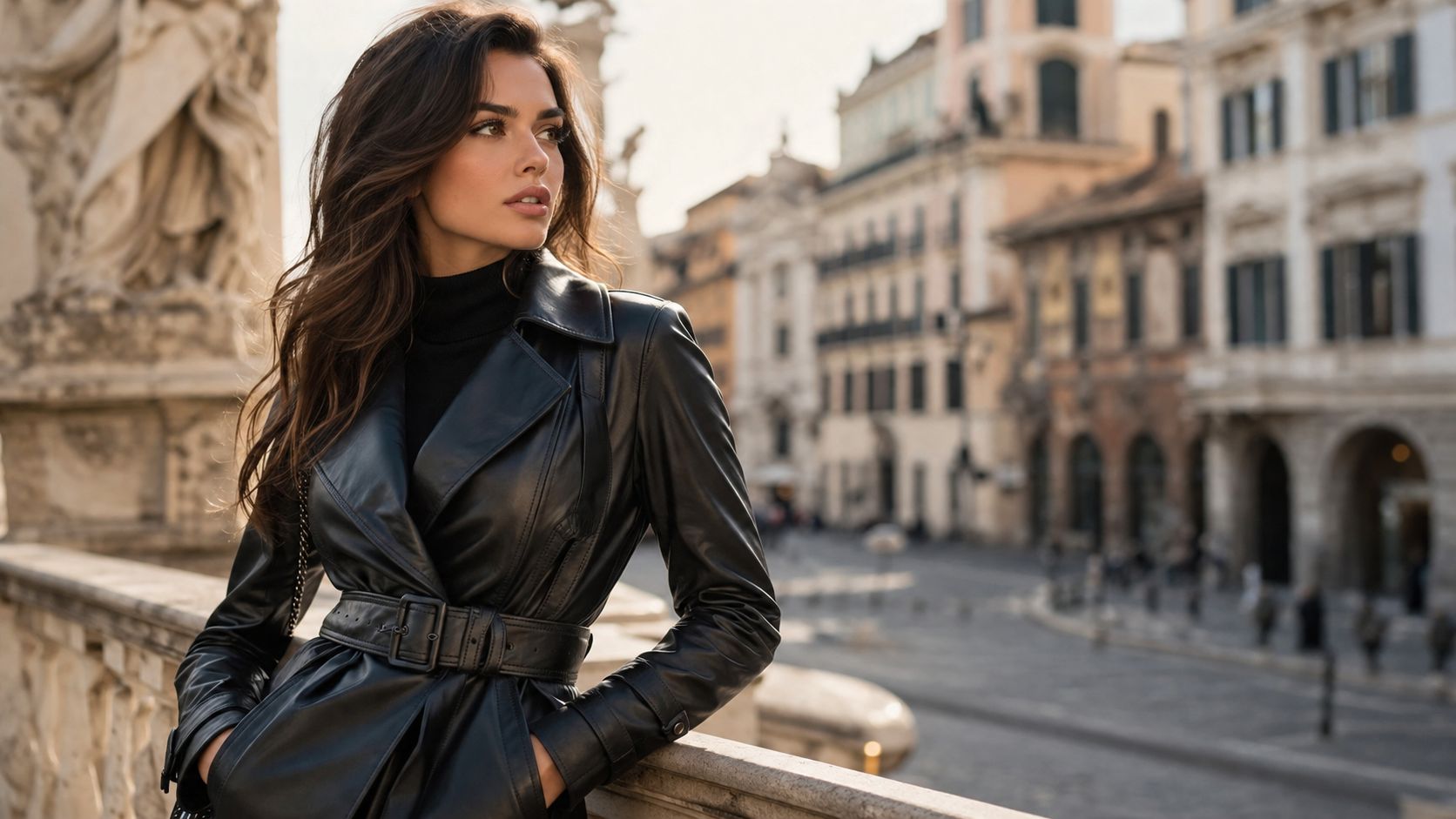
The most important thing to understand about a leather belted jacket is simple. Its purpose is not merely to close. Its purpose is to sculpt.
In Italian style, silhouette always comes before decoration. A jacket earns its place not because it has dramatic lapels or oversized shoulders, but because it creates a clean visual line from shoulder to waist to hem. The belt is the device that makes this possible. It turns leather into architecture.
Why the waist matters
In 2025 European street style, belted leather jackets, whether trench or cropped, explicitly cinch the waist to create a polished, feminine silhouette aligned with Italian couture's focus on waist definition and elegant structure, as noted in this review of European leather street style. That distinction matters. The same material can look severe or graceful depending on whether it follows the body or ignores it.
An oversized leather layer can look modern, but it often spreads visual weight across the torso. A belted cut draws the eye inward. That is why it looks composed with heels, elegant flats, or a slim knit dress. It restores proportion.
If you already favour garments that celebrate shape, you'll notice the same principle in pieces such as Thread Theory dresses, where the waist is not an afterthought but the centre of the design.
The belt as a design instrument
Many women treat the belt as optional. In a fine jacket, it shouldn't be.
Try these simple observations when you next stand before a mirror:
Tie it loosely first so you can see the natural drape of the leather before deciding how much definition you want.
Shift the knot or buckle slightly off-centre if a direct centre fastening feels severe on your frame.
Watch the side view rather than the front only. The most elegant cinch creates shape from profile as well.
Check the back line. The belt should create contour, not drag the jacket into folds.
Practical rule: If the belt creates bulk at the front, the issue is often the jacket's cut, not your body.
Italian structure versus loose volume
Often, readers become confused, thinking a fitted silhouette must feel rigid. It doesn't. A good leather belted jacket offers movement while preserving line. The goal isn't tightness. The goal is visual clarity.
British outerwear traditions often celebrate utility, weather resistance, and a more rugged attitude. Italian fashion, by contrast, tends to treat outerwear as part of the whole composition of a woman's figure. That's why the belted jacket feels so at home in an Italian wardrobe. It doesn't interrupt elegance. It strengthens it.
The Hallmarks of Italian Craftsmanship
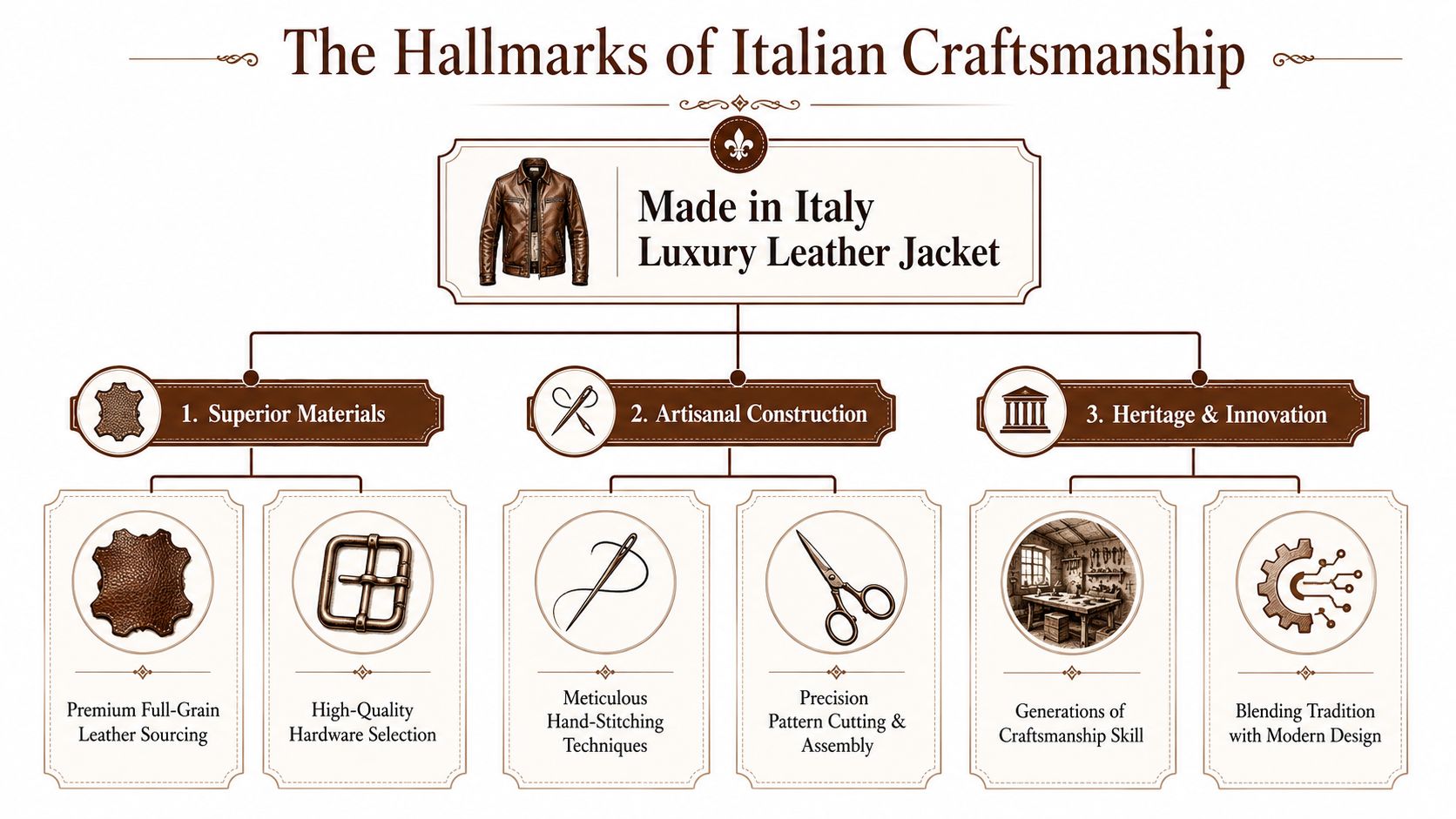
A belted leather jacket shows its pedigree before you read a single label. The clue is not only the shine of the hide or the name inside the collar. It is the way the leather falls, the calm precision of the stitching, and the way the belt defines the waist without puckering the body of the jacket.
That last point matters especially now. Many jackets on the market are cut for volume first and shape second. Italian craftsmanship follows a different discipline. It treats the jacket as architecture for the body, with the waist as a deliberate line, not an afterthought.
Italy earned that reputation through centuries of material knowledge and decorative skill. During the 15th century, Italian silk and velvet manufacturers developed advanced weaving methods for complex designs, a historical foundation for the Made in Italy tradition of technical precision and artistic refinement in women's fashion, as outlined in this history of European fashion. In leather, the same principle applies. Beauty must be built, not added later.
What to examine first
Begin with the hide. Lambskin usually feels softer and more fluid, which suits a belted jacket meant to trace the figure with grace. Calfskin has more firmness and gives a cleaner outline, rather like the difference between a silk blouse and a crisp cotton poplin shirt. Neither is automatically better. The better choice depends on whether you want softness around the waist or a more sculpted result.
Then study the finishing with a patient eye.
Look at the grain. Fine leather has natural variation and depth. A surface that looks overly uniform can read synthetic, even when it is not.
Run your hand across the skin. Good leather feels supple, but it should also feel alive and resilient, not thin or spongy.
Test the hardware. The buckle, zip, and snaps should have clean movement and satisfying weight.
Inspect the lining. A good lining helps the jacket slide neatly over silk, knitwear, or a dress, instead of catching and disturbing the line.
Check the stitching. Seams should be even, closely controlled, and especially tidy around the belt loops, pocket corners, and closure points.
For a broader view of how these standards carry across accessories, this guide to luxury Italian footwear is useful. The same eye for proportion, finish, and material quality runs through the best Italian shoes and jackets alike.
Why construction changes the silhouette
A belted jacket is judged at its points of tension. The waist seam, belt loops, side seams, and fastening area all work harder than they do on an unbelted style. If those areas are poorly built, the jacket loses the very thing that makes it desirable. The waist starts to droop, the front pulls out of balance, and the belt no longer frames the body cleanly.
That is why technical details matter. Urban Leather Jackets' belted leather jacket specifications describe full-grain lambskin with a density of approximately 0.9 g/cm³ and tensile strength above 20 MPa, with an integrated waist belt allowing adjustment across a 15–25 cm range without structural deformation. The same source notes abrasion resistance up to 5,000 cycles under BS EN 13785 testing for premium full-grain leather.
Translated into dressing-room language, that means the jacket should keep its line after repeated cinching. A well-made belt does not merely close the jacket. It shapes it, again and again, without warping the front panels.
Fine construction shows itself in motion. Sit down, stand up, re-tie the belt, and the jacket should return to a clean waist-defined line - Vivien Lauren.
A buyer's eye for excellence
In a shop, use a quiet, disciplined test rather than relying on first impressions.
Lift the jacket by the collar and watch how the body hangs. A well-cut piece falls evenly.
Fasten and release the belt twice to check whether the buckle moves cleanly and the loops stay flat.
Press lightly at the waist seam and along the side seams. These areas should feel secure and well supported.
Turn back the cuff or sleeve edge slightly to inspect how neatly the interior is finished.
Step back and assess the whole composition. In a superior jacket, the leather, belt, lining, and hardware feel as though they belong to one idea.
If you want more context on material quality and why certain hides age with such beauty, this article on why Italian leather is the key to timeless luxury offers a helpful explanation.
A Guide to the Perfect Fit and Cut
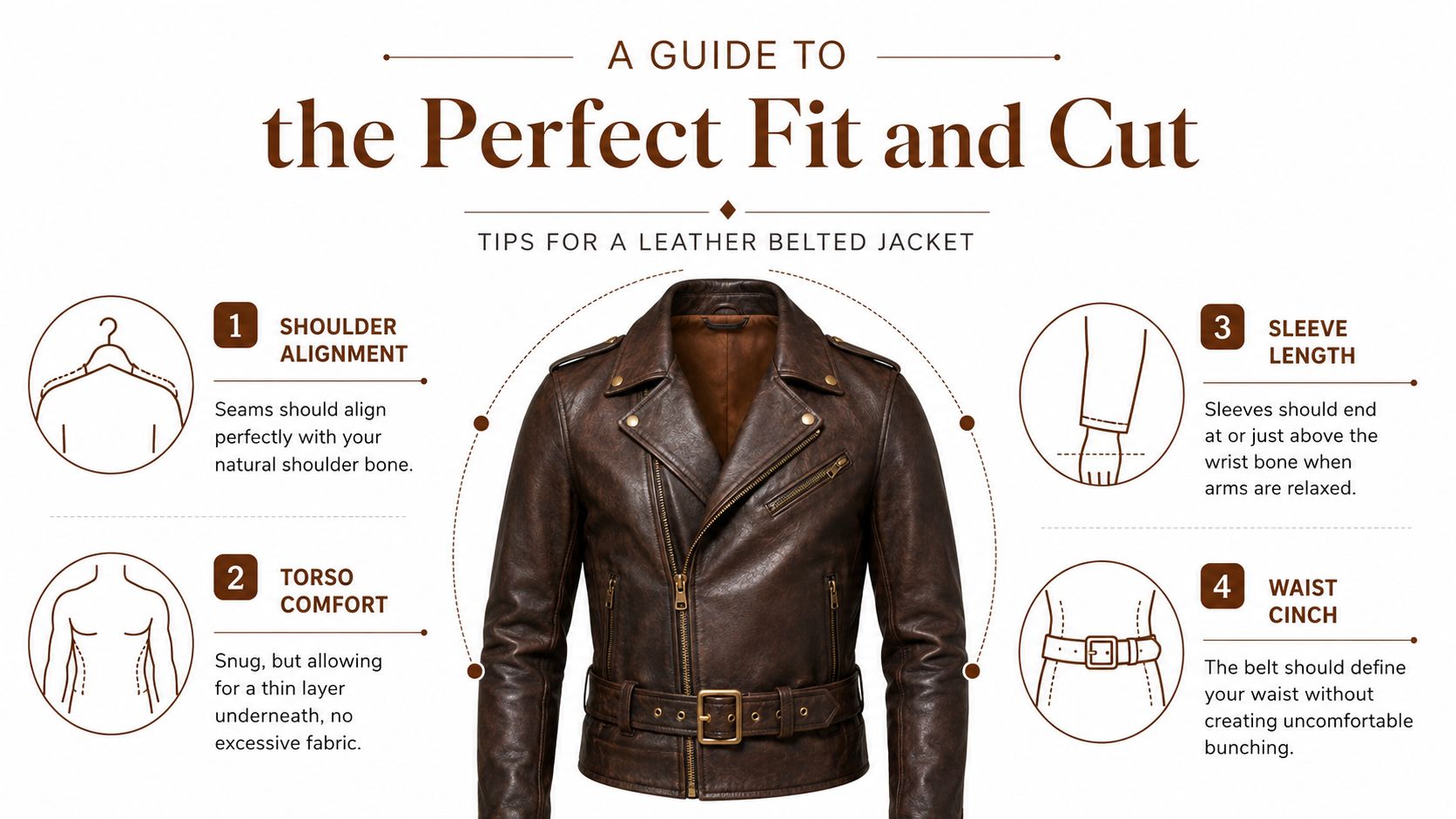
A beautiful jacket in the wrong fit becomes a burden. You tug at the sleeves, adjust the collar, and keep wondering why it never looks as elegant on you as it did on the rail.
Fit starts at the shoulders. If the shoulder line is wrong, nothing below it will settle properly.
Italian women's leather jackets are handcrafted in genuine leather with sizes ranging from 38 (US 8) to 46 (US 16), reflecting luxury standards built around flattering silhouettes and artisanal quality, according to Leonardo Shoes' women's leather jacket collection. Even if your exact size differs by maker, this gives you a useful frame of reference. Italian sizing tends to respect shape rather than drown it.
The four fit points that matter most
Use the mirror with discipline. Look from the front, side, and back.
Shoulders The seam should sit on your natural shoulder bone. If it falls down the arm, the jacket will look borrowed. If it sits too far inward, the upper body will feel cramped.
Bust and torso The jacket should skim, not strain. You should be able to wear a fine knit or silk blouse underneath without the front pulling.
Sleeves The ideal sleeve ends at or just above the wrist bone when your arms are relaxed. Too long looks heavy. Too short can make an otherwise luxurious jacket feel skimpy.
Length Cropped styles sharpen the waist quickly. Hip-length cuts feel classic and versatile. Longer belted styles can be magnificent, but only when the waist placement is exact.
How to use the belt well
Many women miss the elegance of the piece. They buckle the belt wherever it lands, then blame the jacket.
Try this instead:
Fasten the jacket lightly.
Find your natural waist with your hands, not your eyes.
Position the belt there, then adjust the body fabric outward with a small sweep of the palms.
Step back and check whether the line from bust to waist to hem feels continuous.
If the belt pinches while the torso blouses above it, the jacket is either too big through the body or belted too tightly. Vivien Lauren.
Small signs of a flattering cut
A good cut gives you confidence without making itself obvious. Watch for these signs:
The back stays smooth when you walk.
The lapels lie flat instead of springing open.
The belt defines rather than compresses.
The hem stays balanced and doesn't ride up at the front.
The ideal result is not “fitted” in the restrictive sense. It is poised. You should feel that the jacket belongs to you.
How to Style Your Leather Belted Jacket

Styling becomes easy once you stop treating the leather belted jacket as an edgy extra and start treating it as a tailoring piece. That shift changes everything. You don't throw it on. You compose around it.
This matters even more now because trend coverage has leaned heavily toward volume. Vogue and Luisaviaroma have both confirmed oversized bombers and cocoon shapes as key Fall/Winter 2025 to 2026 trends, yet women still search for practical advice on belting oversized leather without adding bulk, as discussed in Luisaviaroma's leather jacket trend report. The problem is that “wear it loose” is not useful advice for a woman who wants elegance. She needs definition.
Professional elegance
For work, the jacket should function like a refined blazer with more depth.
Choose a clean leather belted jacket in black, deep brown, or rich cognac. Wear it over a silk blouse or fine knit with structured trousers. Keep the belt neat rather than dramatic. A moderate cinch is usually enough for daytime polish.
A few combinations work consistently well:
Straight-leg trousers and a cream blouse for meetings, especially when you want authority without severity
A narrow midi skirt and heeled ankle boots for gallery visits, lunches, or client presentations
A monochrome knit column underneath when you want the jacket to supply all the structure
If you often dress for evening events after work, pairing the jacket with a dress silhouette similar to those shown in this cocktail dress styling guide helps create an easy transition.
Evening sophistication
At night, the jacket becomes more sensual and more precise. The belt can be tied a touch closer to the body, and the layers beneath should become cleaner.
Try it with a satin midi dress, a slim black dress, or a fluid skirt with a fine-gauge knit. Let the jacket bring the shape and let the rest of the outfit stay calm. Elegant earrings, a compact bag, and sleek shoes are enough.

Luxury Handmade in Italy Pashmina Scarf designed by Vivien Lauren 
Patent Finish and Italian Leather - Handmade Pump by Vivien Lauren 
Model in Vivien Lauren Leather Coat, Leggings and Luxury Bag
The smartest evening styling often comes from subtraction. If the jacket has presence, the rest of the outfit should whisper.
For events, avoid adding too many hard details at once. If the jacket has polished hardware, skip chunky necklaces. If the leather is glossy, keep the shoes refined rather than busy.
Styling the Belted Leather Jacket Day to Night
Element | Professional Elegance (Work) | Evening Sophistication (Events) |
|---|---|---|
Base layer | Silk blouse or fine knit | Satin dress or slim monochrome dress |
Bottom half | Tailored trousers or midi skirt | Fluid midi skirt or dress-only silhouette |
Belt styling | Light cinch, tidy fastening | Stronger waist definition, cleaner front line |
Shoes | Pumps, refined boots, elegant loafers | Heels, sleek ankle boots, dressy flats |
Accessories | Structured tote, discreet jewellery | Compact bag, statement earrings, minimal extras |
Overall effect | Controlled, intelligent, polished | Feminine, sculpted, quietly dramatic |
If your jacket is slightly oversized
You don't need to abandon it. You need to control its volume.
Push the belt slightly higher if the jacket's waist placement sits too low.
Open the neckline by turning back the lapels a little more.
Keep the underlayer slim so the outer shape has room to speak.
Use vertical continuity with a tonal dress or knit underneath.
The result should feel Italian in spirit. Elegant line, deliberate waist, no unnecessary fuss.
Investing Wisely and Ensuring Longevity
A good leather belted jacket earns its place slowly, like a well-made handbag or a pair of shoes you reach for year after year. The key question is not whether the first price feels high. It is whether the jacket keeps its line, its softness, and its authority after repeated wear.
That matters even more if you prefer a defined Italian silhouette. An oversized jacket can hide small flaws because volume disguises weak structure. A belted jacket cannot. It has to hold shape at the waist, sit cleanly through the shoulder, and recover well after fastening and unfastening the belt. If those elements fail, the whole idea of refined elegance begins to collapse.
A wiser way to judge value is simple. Look for a piece you will still want to wear when the current appetite for slouchy proportions has passed. A jacket with clean lapels, a convincing waist, and disciplined hardware usually outlasts one built around novelty.
What to check before you buy
Use this checklist as you would use a curator's eye in a vintage showroom. Start with structure, then finish with practicality.
Leather quality Choose leather with natural depth, a smooth hand, and enough body to keep its shape without feeling stiff or cardboard-like.
Belt performance Fasten the belt and study the line it creates. It should shape the waist clearly and neatly, not bunch the front or pull the side seams out of balance.
High-wear areas Inspect the belt loops, buckle attachment, armholes, and side seams. These areas work hardest, rather like the hinges on a fine cabinet.
Lining and interior finish A well-finished lining helps the jacket slip on cleanly and reduces strain when worn over knitwear or tailoring.
Styling range Choose a cut that works with dresses, skirts, and trousers. A timeless jacket should serve your wardrobe, not demand a separate one.
Resistance to trend fatigue Strong shape ages better than gimmicks. Excess hardware, extreme cropping, or exaggerated bulk often dates faster than a precise, feminine cut.
How to care for it properly
Leather rewards consistency.
Store the jacket on a shaped hanger so the shoulders remain balanced and the belt area does not crease awkwardly. Give it space in the wardrobe. Leather needs air, and a crowded rail can flatten the very waist definition you bought it for.
If the jacket gets wet, let it dry naturally and keep it away from radiators or direct sun. Heat can harden the leather and disturb the surface finish. For day-to-day upkeep and product guidance, this guide to cleaner for leather offers a sensible starting point.
Condition sparingly, not constantly. Too much product can leave the surface heavy or greasy, especially on smoother skins.
Buy the jacket that still looks correct when trends begin to look exaggerated - Vivien Lauren.
A great leather belted jacket asks for discernment at the start and care afterwards. In return, it offers something rare in modern wardrobes. Shape, polish, and dependable elegance that remains feminine without chasing fashion.
For women building a wardrobe around timeless sophistication, Vivien Lauren offers a curated perspective on elegant dressing, from refined occasion wear to Italian-crafted accessories that complement a beautifully cut leather jacket. Explore the collection if you want pieces that favor flattering silhouettes, classic style, and lasting quality over short-lived trends.

This fashion guide has been authored and brought to you by Sammy Li. For Vivien Lauren. Vivien Lauren. Luxury. Craftsmanship. That's Proudly Italian. Vivien Lauren. Proud To Style.


