
Leather Coat Jacket: A Guide to Timeless Elegance

The Luxury Tote Bag By Vivien Lauren in Bamboo Pochette, handles & Italian Leather Lady models Ultimate Leather Wear by Vivien Lauren 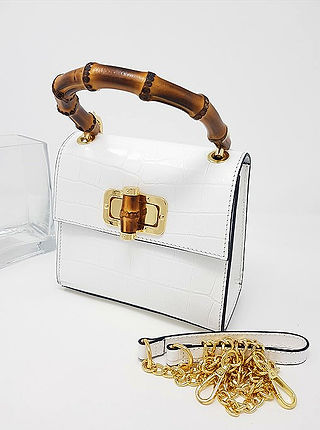
Luxury Mini Leather Bag by Vivien Lauren 
Model Wears Ultimate Block Color in White with Vivien Lauren Mini Bag 
Luxury Handmade Glass Court Shoe by Vivien Lauren
Layout of Outfit Inspiration - Leather Jacket, Shoes, Luxury Italian Leather Bags by Vivien Lauren
Luxury in Leather. Vivien Lauren. Unapologetically Feminine.
You're probably in the same position many women reach after years of buying “good enough” outerwear. Your wardrobe works, but it doesn't yet have that one decisive piece. The one that sharpens a simple knit, carries a dress through an evening booking, and makes denim look intentional instead of incidental.
A leather coat jacket often becomes that piece. Not because it's loud, and not because it's trendy, but because it brings structure, polish, and a certain quiet confidence that few fabrics can match. It's a power piece.
The challenge is choosing one that suits a real life in the UK, where a crisp autumn morning can turn damp by lunch and where elegance matters just as much as practicality. Or in the middle East, where 10 months is definite hot summer! Sizzling.
The Enduring Allure of the Leather Coat Jacket
The women who wear leather best rarely treat it as a costume. They use it the way they use a beautifully cut coat or a refined handbag. As a finishing layer. As a signature. A confidence imparting piece! As the piece that gives shape to the rest of the wardrobe.
That's why a leather coat jacket has such staying power. It doesn't rely on novelty. It relies on line, texture, and presence.
The history matters here. The modern leather jacket's silhouette was standardised in the 1910s and 1920s, growing out of early aviation and rooted in British and European military wear. That practical beginning established the jacket as a garment built around utility and durability, which is part of why it has remained relevant in luxury womenswear for well over a century, as outlined in this history of the leather jacket's evolution.
Why heritage still matters

A jacket with this kind of lineage behaves differently in a wardrobe from a trend-led purchase. It has already survived shifts in proportion, mood, and subculture. It has moved from functional uniform to fashion icon without losing its essential identity.
That's rare.
A strong leather jacket always gives more than one thing. It gives warmth, yes, but it also gives definition: Vivien Lauren.
For women dressing with intention, that heritage translates into ease. A clean leather blazer works over well-fitted trousers because the garment started with purpose. A longer leather coat jacket pairs with a fine knit dress because the material naturally holds shape. Even when the styling is soft, the foundation remains disciplined.

The emotional shift a good one creates
I've seen the same pattern repeatedly. A woman tries on several jackets that are technically fine, but none changes the way she stands. Then she finds the right one. The shoulders sit cleanly, the sleeve finishes in the right place, and the leather moves with her rather than against her. The reaction is immediate. She doesn't ask whether it's fashionable enough. She asks where she'll wear it first.
That's the difference between buying outerwear and choosing a wardrobe anchor.
If you enjoy the craftsmanship and permanence behind well-made leather goods, Vivien Lauren's piece on the timeless elegance of handcrafted leather in fashion is a useful companion read.
Understanding Exquisite Leathers and Finishes
The leather itself determines almost everything. How the jacket falls. How warm it feels. How quickly it softens. Whether it becomes more beautiful with age or merely more worn.
If you only remember one shopping principle, make it this: don't buy a leather coat jacket by appearance alone. Gloss can be added. Softness can be exaggerated in styling photography. Quality usually reveals itself through touch, finish, edge work, and construction.
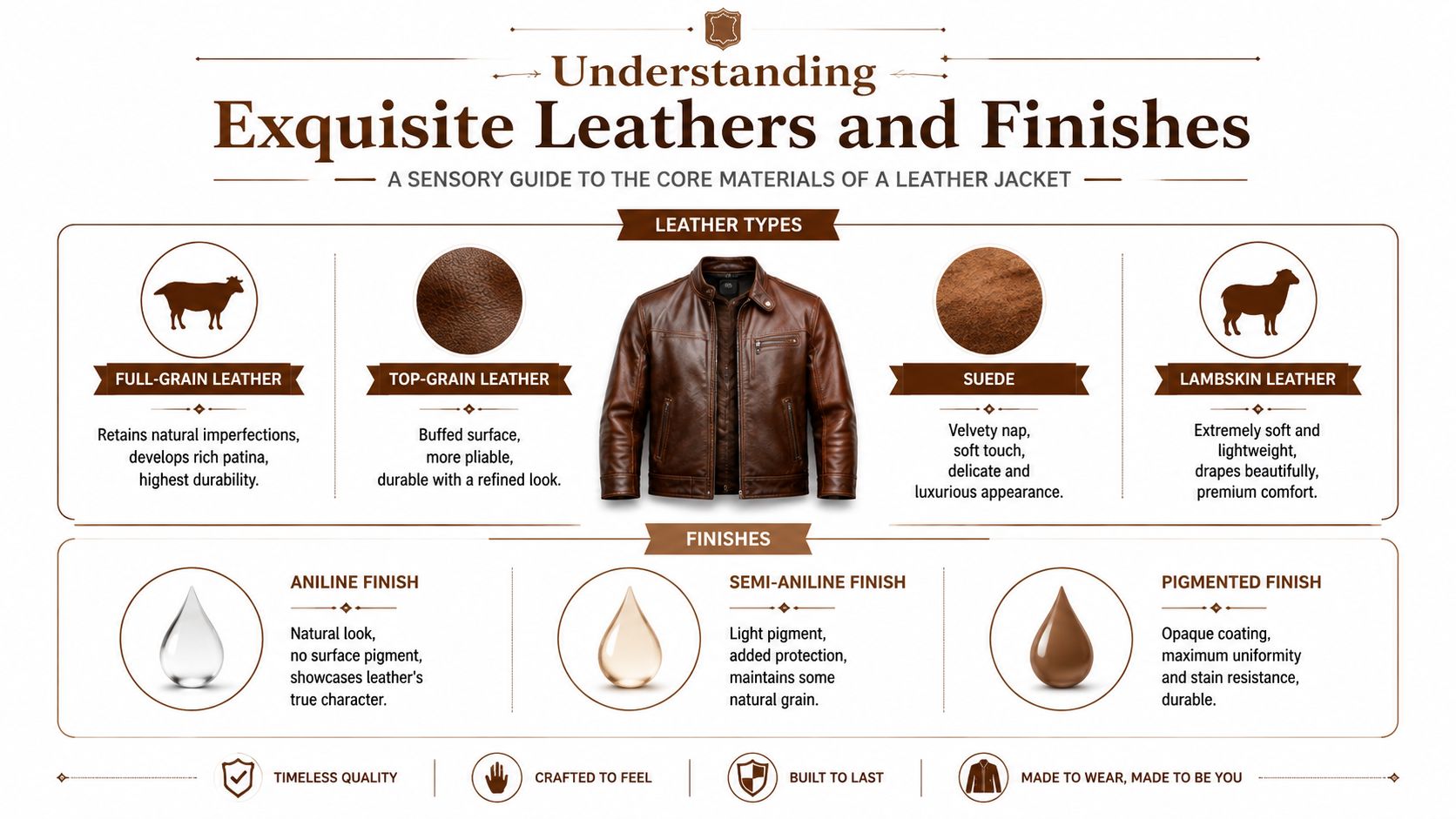
How different luxury leathers behave
For women's outerwear, the most useful way to think about leather is not by technical jargon first, but by drape and temperament.
Leather type | How it feels | How it wears | Best for |
|---|---|---|---|
Lambskin | Very soft, smooth, light in the hand | Drapes beautifully, feels refined, needs more mindful wear | Elegant blazers, fitted jackets, evening-friendly pieces |
Calfskin | Slightly firmer, polished, structured | Balances softness with resilience | Smart everyday jackets, cleaner tailored silhouettes |
Goatskin | More textured, often a little springier | Practical, durable, less delicate in feel | Transitional outerwear, less precious day use |
Suede | Velvety surface, soft visual depth | Luxurious but more weather-sensitive | Dry-day wear, occasion layering, indoor-outdoor dressing |
Lambskin is usually the one clients fall for first because it feels indulgent immediately. Calfskin often proves the wiser choice for women who want one jacket to work hard across weekday and weekend dressing. Goatskin is less often romanticized, but it can be very sensible if you value substance and wearability.
What finish tells you
The finish affects both appearance and maintenance. A jacket can be cut from good leather and still feel disappointing if the finish is too heavy or artificial.
Look for these cues:
Aniline finish gives a more natural look and allows the character of the leather to show.
Semi-aniline finish offers a balance of visible grain and added protection.
Pigmented finish creates a more even surface and can be practical, but too much 9coating may flatten the richness of the leather.
Practical rule: The more a jacket depends on a glossy surface to impress you, the more closely you should inspect the underlying material and seams.
Full-grain, top-grain, and the luxury language around them
You'll often see terms like full-grain and top-grain in product descriptions. In practice, what matters most is whether the jacket feels honest in the hand and well finished in the details. A better hide usually has depth rather than plastic smoothness. The surface should feel supple, not slick.
High-grade leather, particularly leather presented as Italian, is often judged by attributes such as a supple hand-feel, precise edge finishing, and overall consistency. Vegetable tanning is commonly associated with higher-end leather because it's viewed as producing durable, luxurious hides suitable for outerwear. A notably low price on a jacket marketed as “Italian leather” can be a warning sign that the hide selection or construction isn't of the same calibre, as discussed in this guide to Italian leather quality and craftsmanship signals.
For a more style-led perspective on material quality, Vivien Lauren's article on why Italian leather is tied to timeless luxury is worth reading.

What to ask before you buy
Whether you're in a boutique or shopping online, ask direct questions.
What hide is this made from. Lamb, calf, and goat won't wear the same way.
How is the surface finished. You want clarity on whether the look is natural, lightly protected, or heavily coated.
How should it be cared for. A seller who can't explain aftercare usually isn't selling with true product knowledge.
Can I see close images of edges and seams. Fine leather with poor finishing won't stay elegant for long.
Choosing a Silhouette for Your Style and Climate
The most flattering jacket isn't always the one with the most dramatic shape. It's the one that suits your proportions, your diary, and the weather you dress in.
In the UK, that weather question matters more than many style guides admit. A leather jacket is often most useful as a transitional piece, not a deep-winter substitute for a substantial wool coat. Guidance on lining weight, layering room, and resistance to changeable conditions is more practical for UK buyers than fashion labels alone, especially given the country's frequent rainfall and modest temperatures, as noted in this piece discussing leather jackets and the UK's maritime climate.

The three silhouettes worth considering
A first investment usually comes down to three shapes.
The leather blazer
This is the easiest route into elegance. A leather blazer reads polished, urban, and assured. It slips naturally into a work wardrobe and layers well over silk blouses, fine merino knits, and slim roll-necks.
It tends to suit women who want their leather coat jacket to behave like tailoring. If your wardrobe already leans towards straight trousers, midi skirts, loafers, or heeled boots, this shape will integrate quickly.
The refined biker
A biker jacket can absolutely be elegant, but only when the detailing is controlled. Too many zips, belts, epaulettes, or high-contrast hardware can make it feel casual very fast.
Choose this silhouette if you like contrast in your wardrobe. It works especially well for softening feminine pieces and adding intent to simple basics. The key is restraint. Cleaner lines usually give you far more wear.
The leather trench or longer coat jacket
This is often the most overlooked and, for many women, the most refined. A longer leather coat jacket offers coverage, presence, and a strong vertical line. It's particularly useful in the UK because it accommodates layering more easily than a cropped jacket and feels more considered over dresses and tailoring.
If you want one leather piece that can move from weekday appointments to dinner, a longer, clean-cut shape often outperforms the classic cropped biker.
Matching the shape to your life
A silhouette has to answer practical questions.
Commute-heavy routine. Choose room through the shoulders and enough sleeve space for a fine knit underneath.
Mostly driving. A shorter blazer or neat biker is often easier and less bulky.
Workwear first. Look for minimal hardware and a smooth front that sits well open.
Dress-led wardrobe. A longer line usually flatters better over hemlines and avoids cutting the body in the wrong place.
Climate details that matter more than trend names
For UK wear, focus on function disguised as elegance.
Detail | What works | What usually doesn't |
|---|---|---|
Lining | Light to moderate lining for layering flexibility | Very heavy lining that limits seasonality |
Fit | Enough room for a knit or shirt | Skin-tight cuts that only work over thin tops |
Length | Hip-length or longer for more weather versatility | Very cropped lengths if you need practical coverage |
Finish | Slightly protective finish for regular wear | Very delicate surfaces if you're often outdoors |
Color | Black, espresso, deep brown, or oxblood for longevity | Novel shades that only suit a narrow wardrobe |
The best silhouette is the one you'll reach for on a cool spring evening, a mild autumn day, and any in-between moment when wool feels too heavy and a trench feels too light.
How to Identify Exceptional Quality
A luxury leather coat jacket should look calm. No puckering. No strained seams. No flimsy zip pulling the front off balance. Quality often appears as a lack of fuss.
That's because good makers do much of the important work before the jacket even looks like a jacket. In luxury construction, they inspect each hide for flaws, may test the pattern in fabric before cutting leather, and thin the leather at seams through skiving so the garment sits flatter and carries less bulk. Those steps matter because leather doesn't tolerate repeated reworking the way woven cloth does, as explained in this overview of handmade leather jacket craftsmanship.
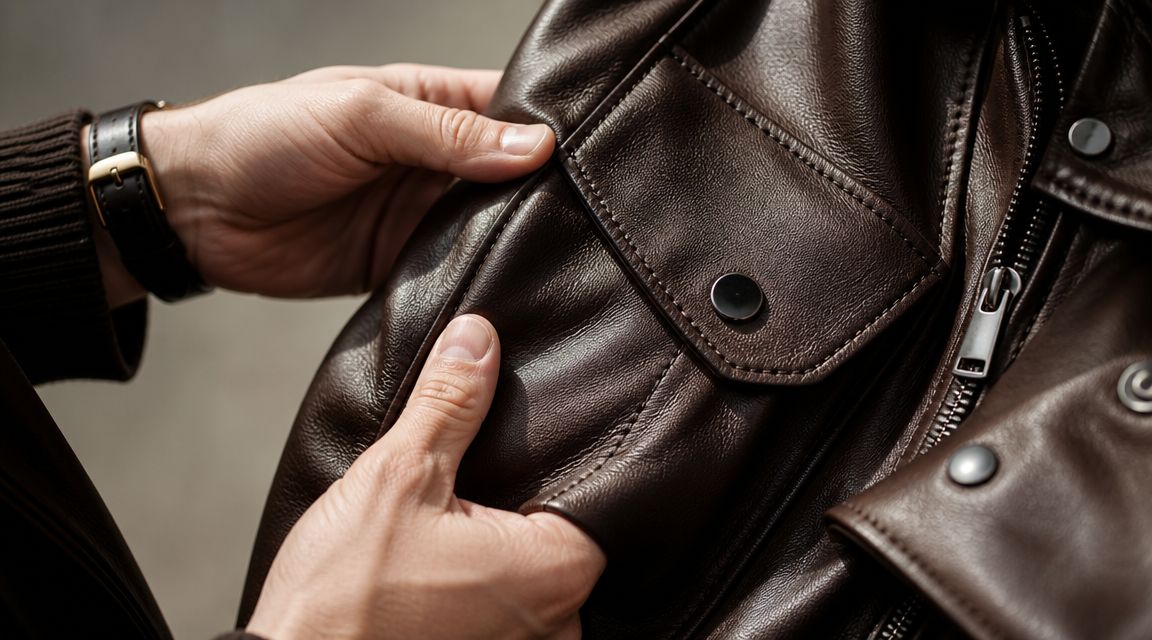
Your in-person inspection routine
Use this order. It keeps emotion from overtaking judgement.
Start with the hide Hold the jacket by the shoulder and let it drop naturally. The leather should fall with some grace, not collapse into limpness or stand away stiffly unless the style is deliberately structured.
Inspect the seams Seams should look even and controlled. Pay attention to underarm joins, pocket edges, side seams, and the collar stand. Bulky seam ridges usually signal weaker handling.
Check the hardware Zips, press studs, buckles, and pulls should feel substantial and move smoothly. The metal shouldn't look lightweight or tinny against the richness of the leather.
Look at the edges Edge finishing tells you a great deal. Clean edges, especially around plackets, cuffs, and pocket openings, suggest a more disciplined manufacturing process.
What to assess online
You can still spot warning signs from product photography if you know where to look.
Zoom in on stitch regularity. Uneven spacing usually won't improve in person.
Study the sleeve attachment. Twisting or drag lines around the armhole often indicate poor pattern balance.
Look for close shots of texture. If every image is distant, the seller may be avoiding scrutiny.
Read care notes carefully. Serious leather sellers usually provide them.
A well-made jacket should look composed from every angle, not only from the front-facing campaign image.
Signs of quality and red flags
Strong sign | Why it matters |
|---|---|
Supple hand with substance | Suggests a better balance between softness and durability |
Neat, consistent stitching | Helps the garment hold shape over time |
Balanced pattern lines | Improves movement and elegance when worn open or closed |
Well-finished interior | Shows care beyond what's immediately visible |
Red flag | Why to pause |
|---|---|
Overly shiny surface | Can disguise weaker leather or a heavy synthetic-looking finish |
Very low price for a luxury claim | Often points to compromises in hide or construction |
Bubbling at seams | Suggests poor handling or imbalance in assembly |
No care guidance | Usually means weak product knowledge |
If you want a clearer distinction between materials before buying, Vivien Lauren's comparison of fake leather versus real leather is a practical reference.
Styling Your Leather Jacket for Any Occasion
A leather coat jacket earns its place when it moves beyond casual dressing. The woman who gets the most from hers doesn't save it for one mood. She uses it across the week.
For work
A leather blazer is one of the smartest substitutes for a standard jacket if your office dress code allows for personality within polish.
Wear a black or deep brown leather blazer over a white cotton shirt or an ivory silk blouse. Add well-fitting charcoal trousers or a fluid midi skirt, then finish with loafers or a sleek ankle boot. The contrast is what makes it work. Structured leather against soft fabric, precise jacket against relaxed drape.
Keep jewelry spare. A watch, small hoops, perhaps one ring. The jacket is already supplying texture and authority.
For weekends
Weekend leather dressing should feel easy, not overly considered. A slightly relaxed leather coat jacket or a pared-back biker particularly suits this approach.
Try this formula:
Base layer with a fine knit or ribbed jersey top
Lower half in dark denim, cream jeans, or structured wool trousers
Footwear with clean trainers, loafers, or block-heel boots
Accessories in one polished element such as a structured bag or silk scarf
The mistake I see most often is competing attitudes. If the jacket says modern and sharp, don't pair it with too many distressed or heavily embellished pieces. Let one item provide the edge.
Soft knitwear and a leather jacket make each other look better. One adds ease, the other adds line.
For evening
Leather is superb in the evening because it can tone down formality without making a look feel unfinished.
A longer leather coat jacket draped over a slip dress or a column-shaped knit dress works beautifully for dinners, gallery events, and smaller celebrations. If the dress is fluid, choose a jacket with a clean shoulder. If the dress is structured, let the jacket be softer.
Three combinations I return to often are:
Black leather blazer + bias-cut satin midi + pointed heels Elegant, direct, and useful when you don't want to wear a traditional evening coat.
Chocolate leather coat jacket + fine black polo neck dress + knee boots Excellent for colder months when you still want the line of a dress.
Minimal biker + silk camisole + wide-leg structured trousers A balanced look for dinners where you want confidence without overt formality.
Color decisions that increase versatility
If this is your first serious purchase, choose a color that already belongs in your wardrobe.
Wardrobe tone | Strong jacket color |
|---|---|
Mostly black, grey, navy | Black |
Cream, camel, taupe, chocolate | Deep brown or espresso |
Soft neutrals with warm metals | Oxblood or rich tan-brown |
The elegant route is consistency. A leather coat jacket should sharpen your existing style, not ask you to build a new persona around it.
Your Investment The Purchase and Lifelong Care
A leather coat jacket earns its place over years, not over one good outfit. In the UK, that matters. A piece may need to handle a cold morning commute, a damp afternoon, and dinner later the same day without losing its shape or polish.
Buy with that reality in mind.
The first decision is not trend, and it is not branding. It is whether the jacket fits your life as well as your frame. A beautiful cut that only works over a silk blouse will frustrate you by November. One with enough room for a fine knit or light tailoring will work much harder across the year.
Final buying checks
Before you commit, test the jacket as you would wear it.
Try it on with real layers. In British weather, a jacket often has to sit over merino, cashmere, or a thin blazer.
Move through ordinary gestures. Sit, drive, reach forward, and put your hands in your pockets. Good leather should follow the body, not fight it.
Check it in natural light. Leather can read cooler, shinier, or flatter in studio photography than it does outdoors.
Read the returns and aftercare policy carefully. Clear policies usually reflect a retailer that understands the product.
Ask where and how the leather should be cleaned or conditioned. A vague answer is usually a warning sign.
A sensible route is buying from a retailer with a clear point of view and proper customer support. Vivien Lauren is a UK boutique with collections selected by in-house stylists, along with immediate dispatch, pay-in-3 interest-free instalments, and qualifying free shipping options.
Care habits that protect the piece
Leather responds best to steady, restrained care. Too little attention leaves it dry and tired. Too much product can mark the surface, soften the structure, or clog the grain.
Keep the routine simple:
Hang it on a broad, shaped hanger so the shoulders stay clean and balanced.
Let damp leather dry naturally in a well-ventilated room, away from radiators and direct heat.
Store it away from strong sunlight to reduce fading and dryness.
Condition it occasionally, not constantly, and always test any product on a discreet area first.
Give it space in the wardrobe so the sleeves and body do not crease under pressure from heavier coats.
If you want a sound care baseline, Vivien Lauren's guide to caring for leather handbags and shoes covers habits that translate well to fine leather clothing too.
I usually give clients one simple rule. Wear the jacket often, but never neglect it after bad weather. If it gets caught in light rain, dry it properly, brush off surface marks gently, and let it rest before wearing it again. That small discipline makes a visible difference over time.
A good leather coat jacket should soften where you move, gain character at the cuffs and seams, and still look refined after repeated wear. That is what makes it worth the investment. It becomes part of your wardrobe, not a piece you keep hidden for the rare perfect day.
This Fashion Piece on Luxury Leather Fashion, has been authored for you by Shona White. On behalf of Vivien Lauren. Vivien Lauren. Luxury. Craftsmanship. That's Proudly Italian. Vivien Lauren. Proud To Style.
