
Fake Leather vs Real Leather: An Elegant Guide
Updated: Apr 27

At Vivien Lauren we believe that you can have a beautifully designed Leather Bag in exciting color. It does not have to look drabby and ugly or like a school satchel/backpack.
You are standing in front of two handbags.
One is immaculate, sleek, and attractively priced. The other costs more, feels richer in the hand, and seems to carry a different promise altogether. Both may look polished on a screen. Both may suit a fitted coat, a silk blouse, or an elegant pair of heels. Yet the choice between them is not solely aesthetic.
For women building a refined wardrobe, fake leather vs real leather is a question of ownership. How will the piece feel after a long workday? How will it wear through seasons of dinners, travel, meetings, and special occasions? Will it become more personal with time, or more tired?
A well-chosen accessory should do more than complete an outfit. It should support the way you dress and live. It should feel beautiful in the moment, but also justify its place in your wardrobe years later.
The Choice Between Enduring Charm and Fleeting Fashion
A woman buying a handbag for work believes she is making a practical purchase. In truth, she is making a curatorial decision.
She may choose a structured tote for daily use, hoping it will sit neatly with blazers, dresses, and winter coats. Or she may select a top-handle bag for events, wanting something that conveys calm confidence rather than trend-chasing. The material determines whether that bag will become a signature piece or a short-lived compromise.
A synthetic finish can look convincing at first glance. Under boutique lighting or in an edited product photograph, it may appear smooth and smart. Yet luxury is not only visual. It lives in touch, weight, movement, and how a piece settles into your routine. This is why women who value lasting style pay close attention to material before they consider colour.
There is also a wider philosophy at play. Some wardrobes are assembled around price points and passing fashion. Others are edited with care, restraint, and a preference for pieces that hold their beauty over time. The second approach leads to fewer regrets.
Small leather goods reveal the same principle. The refined style and durability of leather cases show how even an everyday object changes in character when made from a material designed to wear in, not wear out.
Tip: If a bag already feels like a compromise before you buy it, it rarely becomes a favourite later.
Women drawn to considered dressing respond to brands with a clear point of view, and the story behind a boutique matters as much as the item itself. A closer look at Vivien Lauren’s approach to timeless fashion curation shows why craftsmanship, elegance, and longevity continue to matter in modern wardrobes.
A Sensory Guide to Telling Real from Fake Leather
The quickest way to understand fake leather vs real leather is to stop looking at labels for a moment and use your senses.
Material truth rarely hides for long. A synthetic surface may imitate grain, but it struggles to imitate warmth, depth, and movement. Genuine leather reveals itself in subtle ways.

Feature | Real leather | Fake leather |
|---|---|---|
Touch | Warm, supple, slightly varied | Cooler, smoother, often more uniform |
Surface | Natural grain with irregularity | Repeated pattern or very even finish |
Edges | Fibrous, raw, layered look | Smooth, sealed, plastic-like edge |
Scent | Rich, earthy, natural | Chemical or plastic odour |
Response to handling | Softens and moulds | Can feel stiff or overly coated |
Start with the hand feel
Touch the bag, especially on the body, the handle, and the flap.
Real leather tends to feel alive in the hand. It has give, but not a spongy artificial softness. It warms against the skin and shows slight variation across the surface. One area may feel smoother, another more textured.
Faux leather feels more consistent. That uniformity can seem neat, but it comes with a coated, slightly plastic sensation. The surface may feel cold at first touch or slick.
This matters in daily wear. Real leather’s porous, hygroscopic structure allows it to absorb 10 to 20% of its weight in water and achieve vapor transmission rates of 10 to 15 g/m²/24h, while faux leather is below 1 g/m²/24h, which is why real leather feels more breathable and less sticky in use (Buffalo Jackson).
Look for irregularity, not perfection
Luxury buyers are taught to admire a flawless finish. With leather, a little irregularity is the better sign.
Examine the grain closely. Real leather has natural inconsistency. The pores and grain shift rather than repeating in a perfect pattern. Fake leather presents a stamped texture that looks even across the whole bag.
The same principle appears in other luxury categories. If you appreciate the craft of telling real from fake materials, you understand that authenticity reveals itself in the fine details, not the obvious ones.
Check the edges and the underside
This is one of the most useful boutique tests.
Turn the bag and inspect the cut edges or any exposed underside. Real leather shows a more natural, fibrous structure. It can look raw or layered, even when finished beautifully. Fake leather has cleaner, sealed edges that appear coated and manufactured.
Also watch how the material bends. Genuine leather tends to crease. Faux leather may fold with a sharper, more artificial line.
Practical advice: Ask to handle the bag rather than judging it from a hanger or shelf. Movement tells you more than appearance.
Trust the way it wears on the body
A material can pass a visual test and still fail in real life.
When you tuck a bag under your arm or hold it by the top handle, real leather settles. It feels less rigid, less resistant. A synthetic bag may keep its shape in a way that looks tidy on display but awkward in motion.
This is noticeable with shoes. A style such as these platform mules in suede-look Aegean blue can show how finish and feel shape the wearing experience, even before durability enters the conversation.
The Durability Debate An Investment in Longevity
The difference between fake leather and real leather becomes most obvious after the first season of regular use.
A handbag lives a demanding life. It is set on desks, carried through rain, lifted by the same handles, opened at the corners, and brushed against coats, jewellery, and car seats. Materials reveal their limits under repetition, not ceremony.

What regular use tests
Women focus on appearance at purchase, but durability depends on stress points.
The following areas age first:
Handles and straps where weight pulls repeatedly
Corners that rub against surfaces
Fold lines near flaps and zip openings
Base panels that absorb pressure and abrasion
Real leather performs better in these areas because its structure is different at fibre level. It flexes, which helps it resist the kind of splitting that spoils the look of a bag long before its owner is ready to part with it.
Benchmark data indicates real leather products maintain structural integrity for 10 to 20 years with regular use, versus 2 to 5 years for faux leather. Real leather’s tensile strength is 15 to 25 MPa, compared with 5 to 10 MPa for faux leather (Rolford Leather).
That is not an abstract laboratory distinction. It explains why one bag softens while another begins to split at the handle base or crack along a fold.
Why faux leather often fails at the corners
Synthetic leather relies on a plastic-based surface layer over a backing. At first, that layered structure can look smooth and and convincing.
But corners, strap attachments, and flap bends put the coating under stress. Once that top layer starts to fatigue, the surface can stiffen, crack, or peel. Repair is difficult because the issue is not superficial wear. The material itself is breaking down.
Real leather wears differently. Instead of losing a top film, it tends to show use through softening, creasing, and deepening colour. These signs can be managed with care and conditioning.
Daily elegance depends on resilience
A luxury bag should not require a perfect lifestyle.
It should cope with commuting, lunch meetings, quick weekends away, and evenings out. If a material looks pristine when handled, it is not serving a modern wardrobe well.
This is why many seasoned buyers prefer a structured leather tote over a synthetic alternative for work. A piece such as a hard cow leather tote bag suits regular use because the material itself is built for strain, shape retention, and repetition.
Maintenance matters, but material matters more
It is true that faux leather can be easy to wipe clean. That convenience appeals to many shoppers.
Yet low maintenance should not be confused with long life. A bag that asks little day to day but cannot recover from cracking is still a short-term purchase. Real leather may ask for occasional conditioning, but it rewards that attention by remaining supple and serviceable.
Key takeaway: If you carry the same bag several times a week, durability should outrank novelty.
The wardrobe logic behind the investment
Elegant wardrobes rely on reliable foundations.
A woman may enjoy occasional trend pieces, but the bags she reaches for need to earn that repetition. They must support polished dressing without creating friction through visible wear, sagging, or surface damage after a brief period.
The distinction between fake leather and real leather stops being a style debate and becomes a practical one. The better material is the one that lets you live while keeping its dignity.
The Aesthetics of Ageing Developing Patina Versus Peeling
Not all ageing is unattractive.
Some materials collect beauty as they move through life with you. Others decline. This is one of the sharpest differences in fake leather vs real leather, and one of the most important for women who value visual refinement.

Real leather gains character
A good leather bag rarely looks exactly the same after a year of use.
The handles may soften. The colour may deepen where the hand touches it most. The surface can develop a gentle sheen that was not present on the first day. This evolution is patina, and it is one of the reasons genuine leather feels personal rather than generic.
Patina does not mean neglect. It is not grime, damage, or disorder. It is the visible record of use on a natural material that responds to touch, light, movement, and time.
For a woman with a classic wardrobe, this matters aesthetically. A bag that develops depth can sit beside cashmere, wool suiting, silk, and polished footwear. It begins to look owned in the best sense of the word.
Fake leather does not mature gracefully
Synthetic materials rarely patinate. They deteriorate instead.
The finish may become dull or shiny in the wrong places. Creases can whiten. Corners can scuff in a way that exposes the artificial nature of the surface. Once peeling begins, the bag loses all visual authority.
This is the problem with buying for the first month rather than the third year. A bag may appear tidy and current at the start, but if its ageing process is ugly, it will soon undermine a styled outfit.
Choose pieces that become more yours
When clients build a wardrobe with intention, they want their accessories to feel more distinctive over time, not less.
That is where a handmade bag earns its keep. A design such as the Vivienne Classic leather handmade bag suits this philosophy because it invites long ownership. It is not only something to wear. It is something to live with.
Styling note: A aged leather bag looks better with tailoring, knitwear, and occasion dressing than a synthetic bag that appears flat and factory-finished.
The visual test after two years
If you are undecided, ask a simple question.
Would you rather own a bag that shows a softer finish, a richer tone, and signs of genuine use, or one that risks flaking, stiffness, and visible breakdown? For most elegant wardrobes, the answer is immediate.
Calculating The True Cost of a Handbag
Price matters. It should.
But a stylish buyer benefits from looking beyond the opening number on the tag. The true cost of a handbag is shaped by how long it remains wearable, how it is used, and whether it still looks polished after repeated wear.
The problem with judging value at checkout
Faux leather is attractive because the first payment feels comfortable. It is often up to 75% less expensive than real leather at initial purchase, which explains its appeal (Straits Research).
Yet lower entry cost is not the same as better value.
If a synthetic bag loses its finish, cracks, or peels early in its life, it forces another purchase. Then another. The wardrobe begins to absorb repeat spending on items that never settle into long-term service.
Cost per wear changes the conversation
Luxury buyers use a simple private calculation. Not to remove pleasure from shopping, but to make pleasure more intelligent.
Ask:
How often will I carry it?
Will it work across weekday and occasion dressing?
Will I still want to carry it when it shows use?
A genuine leather bag scores better because the material remains attractive in ownership. A faux bag can still be useful, but it tends to perform best when bought for limited wear or a brief style moment rather than as a wardrobe pillar.
When spending more is more disciplined
A high-quality leather handbag may ask for patience at the point of purchase. But if it continues to work for years, that is not extravagance. It is disciplined buying.
By contrast, replacing bags that no longer look smart can become the more expensive habit in practical terms. It creates visual inconsistency in the wardrobe. A woman who dresses with intention prefers to rely on fewer, better accessories rather than a rotating series of near-replacements.
Practical rule: If the bag is meant to be a daily companion, buy for endurance. If it is for a short-lived colour trend or a single season’s novelty, lower commitment can make sense.
Navigating Ethical and Environmental Considerations
Ethics in fashion rarely fit neatly into slogans.
The phrase “vegan leather” can sound straightforward, but the material conversation around fake leather vs real leather is more complex than many labels suggest. A thoughtful buyer benefits from looking at origin, lifespan, regulation, and end-of-life impact together.
Real leather is not automatically irresponsible
Leather production does involve processing, and buyers should take that into account.
In the UK context, the Environment Act 2021 places leather tanning within a regulatory framework tied to REACH compliance for hazardous chemicals (UK legislation). That does not make every leather product equal, but it does mean regulated production standards matter.
For a woman who prefers to buy less and keep pieces longer, responsibly made real leather can align with a lower-turnover wardrobe philosophy. Longevity is part of sustainability. A bag worn for many years avoids the churn of constant replacement.
Faux leather avoids hides, but not environmental trade-offs
Synthetic leather appeals to many shoppers because it avoids animal-derived material.
That is a valid value-based choice. But it comes with its own questions. Many faux leathers are petroleum-based, and concerns around microplastic shedding have become harder to ignore. The material may be more difficult to reconcile with a long-life wardrobe if its useful life is short.
The environmental discussion therefore cannot stop at whether an item is animal-based or not. It must ask how that item will be replaced, what it is made from, and what remains when it wears out.
Ask better questions than the label provides
A discerning buyer does well to ask:
What the material is made from
How long is it likely to remain beautiful and functional
How is it finished or treated
Does the brand explain craftsmanship and sourcing clearly
Am I buying for years, or for a moment
These questions are more helpful than accepting any marketing term at face value.
Balanced view: Ethical shopping means choosing the option whose full life cycle best matches your values, not the option with the simplest wording.
Personal values still lead the final decision
Some women will decide that avoiding animal-derived materials is their highest priority.
Others will prioritise longevity, repair potential, and natural ageing. Neither decision should be made casually. What matters is honesty about the trade-offs. Elegant buying is not about appearance. It is about clarity.
A Buyer's Guide for Your Elegant Wardrobe
A handbag should support your wardrobe the way excellent shoes do: consistently, and without asking to be replaced every season.
That requires more than choosing the prettiest shape. It requires buying with enough discernment to know which pieces deserve long-term space in your collection.

What to inspect before you buy
Start with the body of the bag.
Run your hand over the surface and check whether the material feels rich, pliable, and varied rather than coated and flat. Reputable UK tanneries work with leather in a wide range of thicknesses, and some cowhides reach 5 to 6mm, which reflects the inherent durability and substance of the material (Billy Tannery).
Then inspect the construction:
Stitching: It should look even, tight, and deliberate, especially around handles and corners.
Hardware: Clasps, feet, rings, and zips should feel weighty and secure rather than tinny.
Lining: A good lining protects use. A poor one sags, snags, or cheapens the whole experience.
Handle attachment: Stress points should appear reinforced and thoughtfully finished.
Base structure: The bottom of the bag tells you whether it was built for carrying or only display.
Match the material to the role
Not every bag in a wardrobe needs the same lifespan.
A black or tan work tote, a refined evening bag, or an everyday crossbody merits genuine leather because these pieces repeat across many outfits and occasions. They become part of your visual identity.
A synthetic piece may still have a place. Perhaps it is a bold seasonal colour, a playful clutch for a specific event, or a trend-led silhouette you enjoy without expecting long ownership. The problem is not faux leather itself. The problem is assigning it the wrong job.
Buy fewer better foundations
Elegant wardrobes look expensive because they are edited, not because they are excessive.
A woman with one made leather tote, one polished evening bag, and one dependable day bag is better dressed than someone with many bags that all begin to fail at the surface. Material consistency brings calm to a wardrobe.
Care habits that protect beauty
Once you buy well, care should be simple and regular.
For real leather:
Store it properly: Keep the bag upright when possible and avoid crushing it under heavier items.
Use a dust bag: This helps protect the finish when not in use.
Condition occasionally: Enough to maintain suppleness, not to over-saturate the leather.
Wipe gently: Use a soft dry or damp cloth rather than harsh cleaners.
For faux leather:
Keep it away from heat: Excessive dryness can worsen stiffness.
Clean lightly: A soft cloth is sufficient.
Watch fold points: These show fatigue first, so avoid overstuffing.
Avoid it completely: The best is to just completely avoid this.
Buyer’s note: The most elegant bag is the one you can carry without feeling you must protect it from ordinary life.
The final decision rule
If you want a bag that becomes part of your signature style, real leather is the stronger choice.
If you want a temporary fashion accent and understand its limits, faux leather can be reasonable. The key is not to confuse a short-term purchase with a long-term investment. Luxury dressing depends on knowing the difference.
Frequently Asked Questions - fake leather vs real leather
How should I clean real leather and fake leather
Real leather benefits from a light touch. Wipe it with a soft cloth and avoid aggressive cleaners. Occasional conditioning helps preserve suppleness.
Fake leather is simpler to clean day to day. A soft damp cloth is enough. Do not scrub around seams and fold lines.
Can fake leather be repaired
Sometimes, but to a limited extent.
Small cosmetic issues may be disguised, but peeling and cracking are difficult to solve because the synthetic surface layer is breaking down rather than scuffed. Repairs rarely restore the original finish in a convincing way.
Does real leather always feel more comfortable
In many cases, yes. As covered, real leather handles breathability and moisture far better than faux leather, which is one reason it feels better in prolonged wear.
This matters for pieces worn close to the body or carried through changing weather.
Is vegan leather automatically the more sustainable choice
No. The answer depends on what the material is made from, how long it lasts, and what happens when it wears out.
Some buyers choose faux leather for ethical reasons linked to animal-derived materials. Others choose real leather because they value longevity and a lower replacement cycle. The more sustainable choice is the one whose full life cycle best matches your values and buying habits.
Which is better for a timeless wardrobe
For core accessories, real leather supports a timeless wardrobe.
It tends to age with grace, suit repeated wear, and remain convincing across many seasons. Faux leather is better reserved for short-term trends or occasional experimentation rather than foundational pieces.
If you are refining your wardrobe with greater care, Vivien Lauren offers a beautifully curated perspective on timeless womenswear, classic shoes, and handcrafted Italian leather bags designed for elegant, lasting style.
Recommended
Luxury Italian Leather Bags Designed by Vivien Lauren:
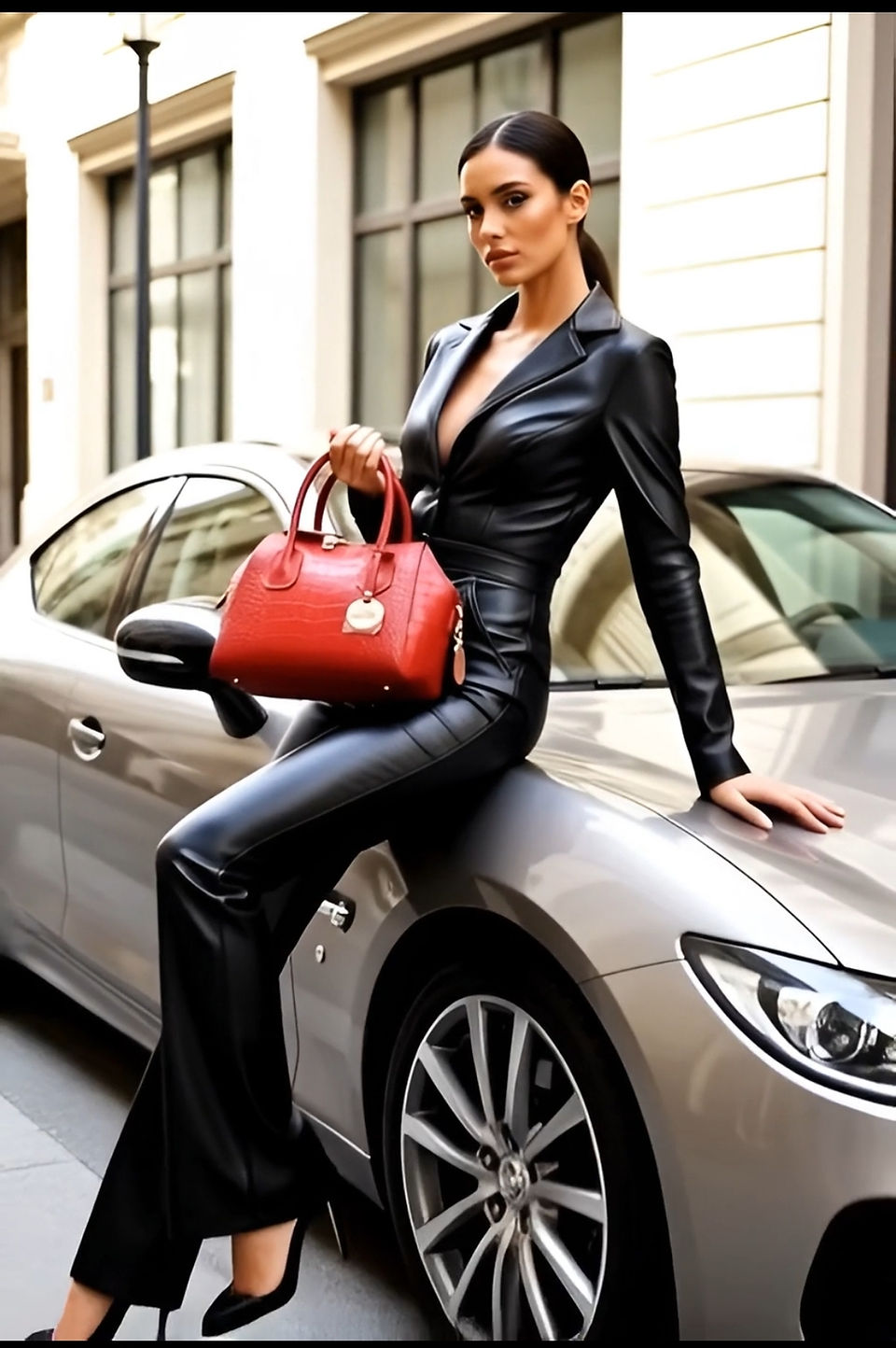
The Luxury Viviana Handbag - Timeless Elegance by Vivien Lauren 
The Luxury Vivienne Italian Leather Bag by Vivien Lauren 
In Hot Pink - Luxury Mini Bag by Vivien Lauren 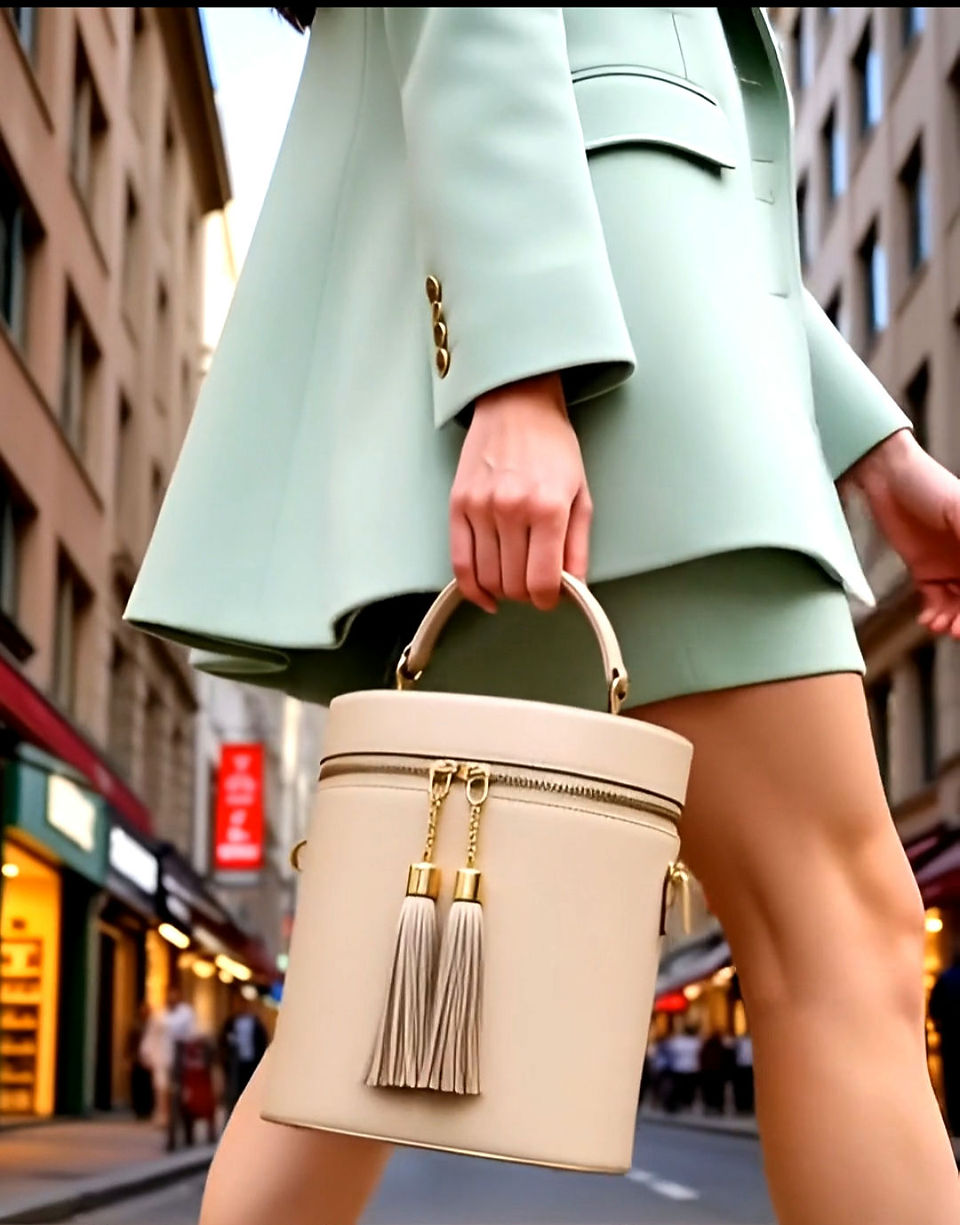
Luxury Supple Soft Italian Leather Bucket Bag 
The ultimate Bucket Bag - Luxury Leather Collections Handmade in Italy by Vivien Lauren
This fashion guide has been authored and brought to you by Chloe. On behalf of Vivien Lauren. Vivien Lauren. Luxury. Craftsmanship that's Proudly Italian. Vivien Lauren. Proud to Style.


