
What Is Italian Leather and Why It Matters
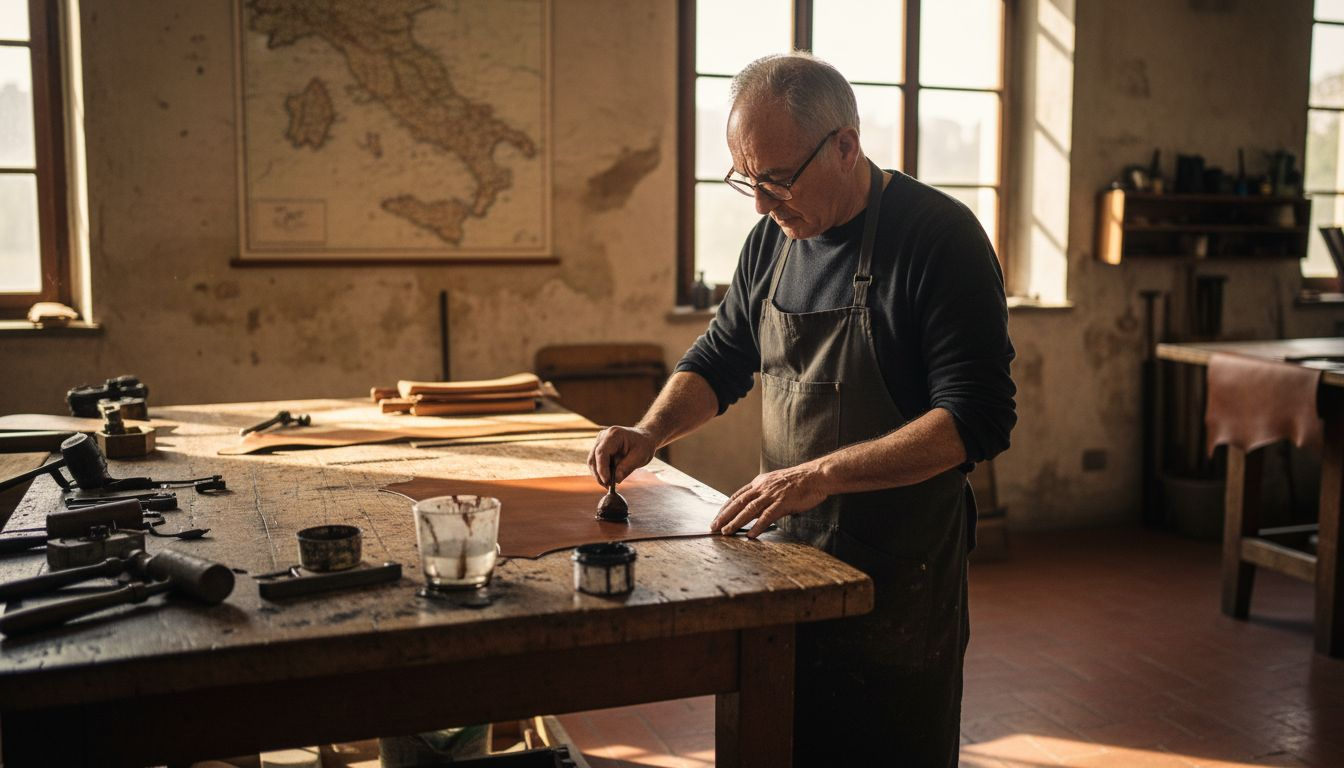
Finding a luxurious accessory that truly reflects your individuality can feel like a challenge. Italian leather stands apart for its blend of tradition and modern artistry, especially in regions like Tuscany, Florence, and Milan. The process behind Italian leather craftsmanship involves careful material selection, vegetable tanning, and masterful hand-stitching, resulting in pieces prized for lasting beauty and character. By understanding these qualities, you can invest confidently in accessories that express your personal style and offer enduring value.
Table of Contents
Key Takeaways
Point | Details |
Authenticity Matters | When assessing Italian leather, look for natural imperfections and signs of hand-finishing that indicate true craftsmanship. |
Quality Over Quantity | Italian leather is produced through traditional methods prioritizing quality, ensuring durability and unique character in every piece. |
Types of Leather | Familiarize yourself with different types of Italian leather, such as full-grain and suede, to select the most suitable material for your needs. |
Comparison with Alternatives | Italian leather outperforms most synthetic alternatives in durability, flexibility, and breathability, making it a superior choice for luxury items. |
Defining Italian Leather Craftsmanship
Italian leather craftsmanship represents a profound artistic tradition that transcends mere manufacturing - it embodies generations of skill, passion, and unparalleled attention to detail. Centuries-old regional techniques define this extraordinary practice, transforming raw materials into exquisite leather goods that are simultaneously functional art pieces.
At its core, Italian leather craftsmanship emerges from specific geographic regions with unique specialties - particularly Tuscany, Florence, and Milan. These areas have developed distinctive approaches to leather production that prioritize quality over quantity. Artisans meticulously select premium cowhide, often sourced from local Italian climates that provide optimal conditions for superior leather development.
The craftsmanship process involves several intricate stages that distinguish Italian leather from mass-produced alternatives:
Careful material selection: Choosing highest-grade leather with minimal imperfections
Traditional vegetable tanning: Using organic materials like tree bark to create durable, environmentally friendly leather
Precision cutting: Hand-selecting and carefully measuring each leather piece
Meticulous stitching: Employing specialized tools and multi-generational techniques
Rigorous quality control: Ensuring each piece meets exceptional standards
Specialized tanning methods transform raw leather into supple, resilient materials that improve with age. Unlike industrial processes that prioritize speed, Italian artisans invest weeks developing leather that becomes more beautiful and characterful over time.

Pro tip: When evaluating Italian leather, look for signs of hand-finishing like slight variations in texture and color, which indicate authentic craftsmanship.
Types of Italian Leather and Their Uses
Italian leather represents a sophisticated world of materials with nuanced characteristics that define luxury accessories and fashion. Different leather grades offer unique properties that determine their ideal applications across fashion and design industries.
The hierarchy of Italian leather begins with full-grain leather, the most premium and sought-after type. This exceptional material retains the complete grain layer, showcasing natural markings and developing a rich patina over time. Luxury handbags, high-end wallets, and premium jackets typically utilize full-grain leather due to its durability and exceptional aesthetic qualities.
Multiple categories of Italian leather exist, each with distinct characteristics:
Full-grain leather: Highest quality, unaltered surface with natural grain intact
Top-grain leather: Slightly sanded to remove imperfections, softer texture
Genuine leather: Lower-grade material created from leather layers
Suede: Soft, napped finish from underneath leather hide
Nappa leather: Ultra-soft, smooth leather often used in premium accessories
Specialized leather types emerge from sophisticated tanning processes that transform raw hides into exquisite materials. Each variation offers unique textural qualities and performance characteristics, allowing designers and artisans to select the perfect leather for specific applications.
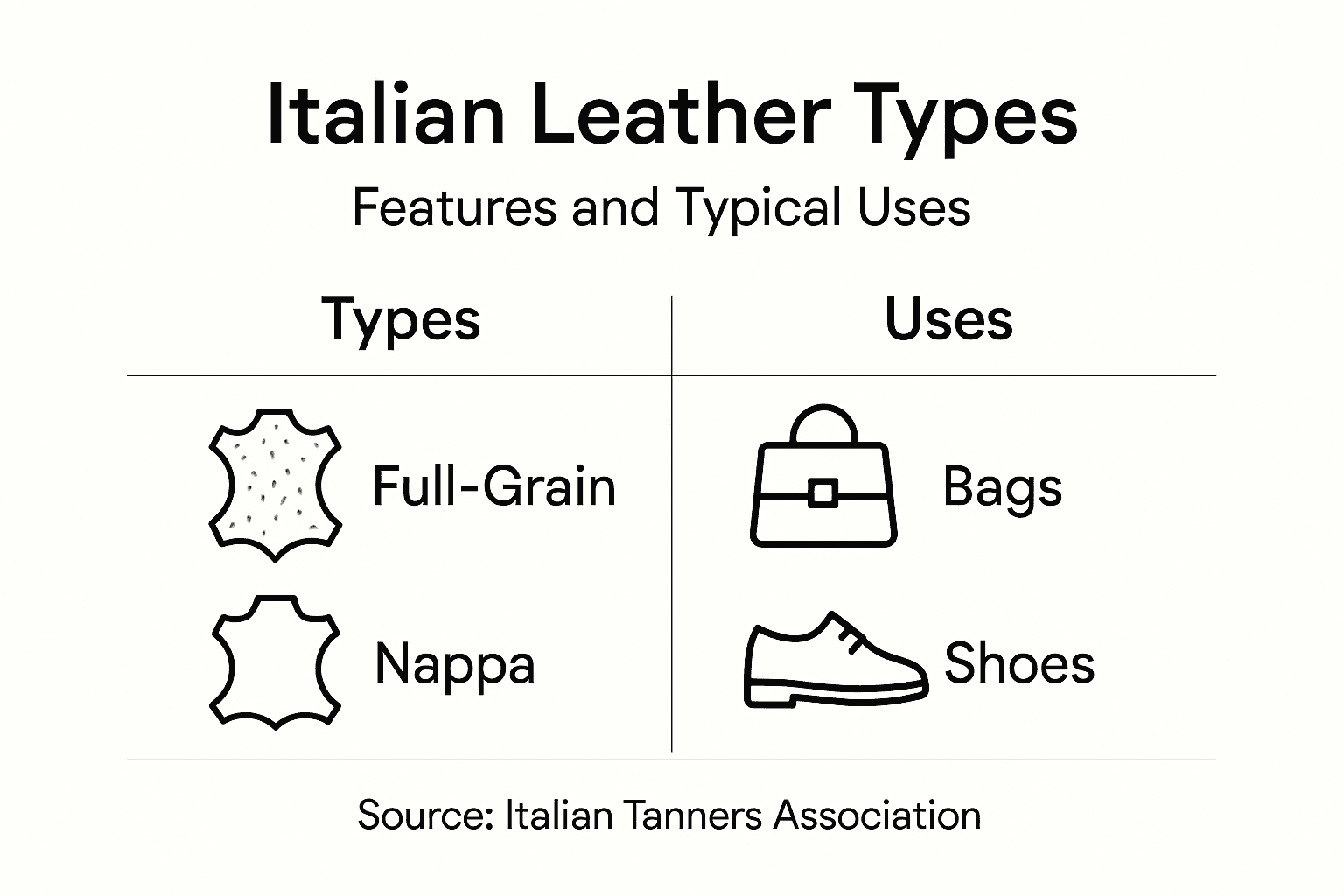
Here’s a quick overview of Italian leather types and their typical applications:
Leather Type | Common Uses | Key Attribute |
Full-grain | Luxury bags, jackets | Natural patina |
Top-grain | Fine shoes, belts | Soft, smooth finish |
Genuine leather | Casual accessories | Economical option |
Suede | Gloves, shoes | Soft texture |
Nappa | Premium wallets | Ultra-soft feel |
Pro tip: When purchasing leather goods, examine the material’s grain and texture - authentic Italian leather will show subtle, natural variations that machine-produced alternatives cannot replicate.
Qualities That Set Italian Leather Apart
Italian leather transcends ordinary leather production through an extraordinary commitment to quality and tradition. Traditional tanning techniques represent a sophisticated artisanal process that transforms raw hides into exceptional materials with unparalleled character and durability.

The hallmark of Italian leather quality lies in its meticulous selection and processing. Artisans prioritize full-grain hides, maintaining the leather’s natural grain and inherent strength. This approach ensures each piece tells a unique story, with natural markings and variations that machine-produced leathers cannot replicate.
Several distinctive qualities define authentic Italian leather:
Vegetable tanning: Utilizes natural tannins from tree bark
Full-grain preservation: Retains the hide’s original grain and texture
Natural imperfections: Embraces unique surface characteristics
Environmental sustainability: Employs eco-friendly manufacturing processes
Generational craftsmanship: Leverages centuries of inherited technical knowledge
Superior raw material selection transforms leather from a mere material into an emotional experience. Each piece develops a rich patina over time, becoming more beautiful and characterful with use, unlike mass-produced alternatives that deteriorate quickly.
Pro tip: Authenticate Italian leather by examining its natural variations, smooth grain, and earthy scent - true craftsmanship reveals itself in the subtle details.
How to Identify Authentic Italian Leather
Authentic Italian leather tells a sophisticated story through its unique characteristics, far beyond simple visual appearance. Subtle leather indicators reveal the true essence of craftsmanship, allowing discerning buyers to distinguish genuine articles from mass-produced imitations.
The sensory examination of Italian leather involves multiple sophisticated assessment techniques. Genuine leather exhibits natural imperfections - slight wrinkles, minor color variations, and unique grain patterns that machine-produced alternatives cannot replicate. When pressed, authentic leather wrinkles momentarily and smoothly returns to its original shape, demonstrating its superior quality and resilience.
Key identification methods for authentic Italian leather include:
Visual texture: Natural, uneven surface with visible grain variations
Touch quality: Soft, supple feel with slight irregularities
Scent profile: Rich, earthy leather aroma
Water absorption test: Slight darkening when water touches surface
Stitching examination: Slightly irregular, handcrafted stitching holes
Beyond physical characteristics, authentic certification provides additional verification. Reputable manufacturers include detailed tags or certificates indicating 100% Italian leather origin, materials used, and craftsmanship details.
Pro tip: Always request a detailed authenticity certificate and conduct a careful sensory examination before purchasing high-end leather goods.
Comparing Italian Leather to Global Alternatives
The global leather landscape reveals a complex competition between traditional Italian craftsmanship and emerging alternative materials, each with distinct performance characteristics. Comparative material studies demonstrate the remarkable technical superiority of Italian leather across multiple critical parameters.
Traditional Italian leather craftsmanship maintains unparalleled dominance through its natural fibrous structure, which provides superior durability, flexibility, and breathability. Emerging alternatives like Desserto, Kombucha leather, and Piñatex represent innovative attempts to challenge leather’s market position, but currently lack the comprehensive performance profile of authentic Italian leather.
Key comparative characteristics include:
Durability: Italian leather significantly outperforms synthetic alternatives
Flexibility: Natural grain provides superior movement and adaptability
Breathability: Organic structure allows better air circulation
Aesthetic quality: Unmatched depth, texture, and aging characteristics
Environmental impact: Traditional techniques increasingly emphasize sustainability
Emerging alternative materials like polyurethane, pineapple leaf, and fungal leather represent promising innovations. However, they currently require significant synthetic additives to approach the mechanical properties of genuine Italian leather, limiting their sustainability and performance potential.

Compare Italian leather to global alternatives across core features:
Feature | Italian Leather | Synthetic Alternatives | Plant-Based Leathers |
Durability | Lasts decades | Prone to cracking over time | Moderate, less resilient |
Flexibility | Highly adaptable | Often stiff or rigid | Flexible but delicate |
Breathability | Excellent air flow | Limited, may trap heat | Moderate, can vary |
Environmental Impact | Improved with vegetable tanning | Relies on plastics, less eco-friendly | Biodegradable, yet requires treatments |
Aesthetic Aging | Develops rich patina | Little change, looks aged | Subtle, less pronounced |
Pro tip: When evaluating leather alternatives, prioritize comprehensive performance metrics over marketing claims, and consider the long-term durability and aesthetic evolution of the material.
Discover the Timeless Elegance of Italian Leather Craftsmanship
Understanding the unmatched quality and heritage behind Italian leather reveals the true value of every handcrafted piece. If you seek leather goods that tell a story of generations of skill and premium materials, it is essential to choose products where authenticity meets artistry. At Vivien Lauren, we celebrate this tradition by offering exclusive collections featuring leather accessories made in Italy with meticulous craftsmanship and sustainable vegetable tanning methods.

Experience the richness of full-grain and Nappa leather perfected over centuries. Shop now to elevate your wardrobe with exceptional bags, shoes, and accessories that develop a unique patina, reflecting your own journey. Visit Vivien Lauren today and embrace the luxury of genuine Italian leather backed by timeless elegance and modern sophistication. Enjoy free UK shipping on orders over £80 and flexible payment plans for your convenience.
Frequently Asked Questions
What is Italian leather craftsmanship?
Italian leather craftsmanship is a long-standing artistic tradition that focuses on meticulous skill and attention to detail, resulting in high-quality leather goods that blend functionality and artistry.
What are the different types of Italian leather, and what are their uses?
There are several types of Italian leather, including full-grain, top-grain, genuine leather, suede, and nappa leather, each with distinct properties and typical applications ranging from luxury handbags to casual accessories.
How can I identify authentic Italian leather?
You can identify authentic Italian leather by examining its natural imperfections, unique grain patterns, earthy scent, and checking for slight irregularities in stitching. A water absorption test can also help verify authenticity.
Why is Italian leather considered superior to other leather alternatives?
Italian leather is considered superior due to its natural durability, flexibility, breathability, and aesthetic quality, which evolve beautifully over time, unlike many synthetic alternatives that may lack these attributes.
Explore our Signature Luxury Leather Collections on Vivien Lauren
Recommended
Gallery of handpicks for you: luxury leather fashion statement pieces by Vivien Lauren:

Cute mini bag in Emerald Green by Vivien Lauren 
The Classic Insignia Vivienne Bag by Vivien Lauren 
Classy Dolaro Woven & Leather Bag by Vivien Lauren 
Cute mini bag in Luxury Cocco Leather 
Nude slipper with textile upper & leather insole by Vivien Lauren 
Flat pom pom mules by Vivien Lauren
This fashion piece on the Master Craftsmanship of the Italian artisan on Leather have been brought to you by Nancy De Rienzo. On behalf of Vivien Lauren. Vivien Lauren. Presenting the Italian Master Craftsmanship passed down over generations. Vivien Lauren. Luxury. Craftsmanship that's Proudly Italian. Vivien Lauren. Proud To Style.


