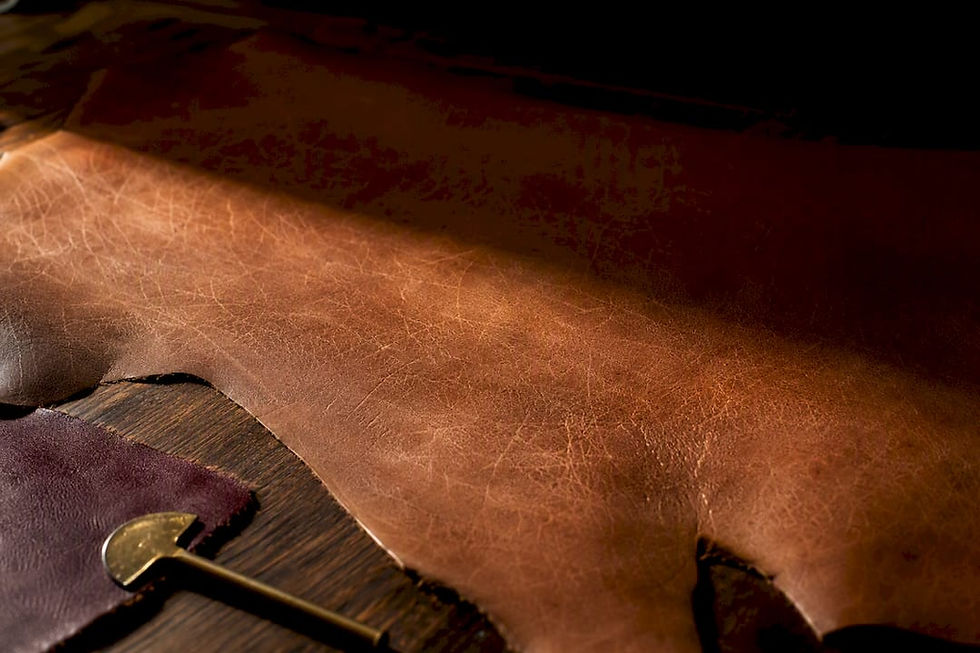
Over a Decade: Luxury Buyers' Tanning and Care for Nappa Leather
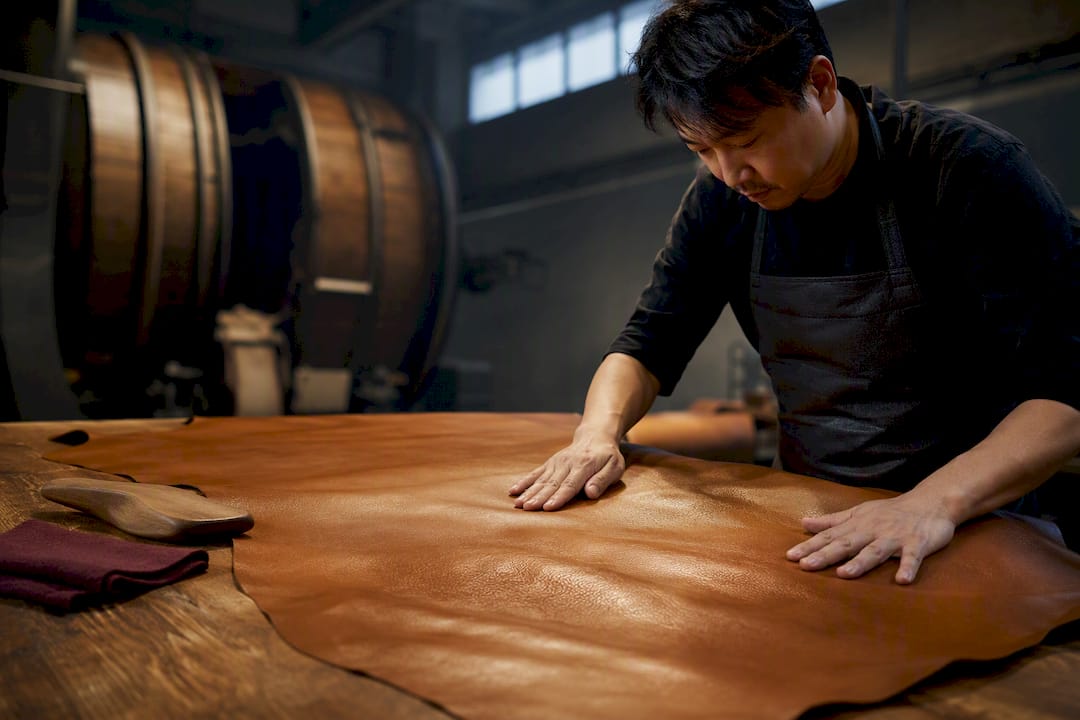
Nappa leather is a category name, not a species or a factory standard, for exceptionally soft, full-grain or top-grain leather usually tanned from calf, lamb, or kid hides. The label describes a feel more than a fixed formula, which is why quality varies so widely between houses. When it is done well, nappa becomes the buttery, drape-heavy material behind the world’s finest handbags, jackets, and car interiors, but that same open, delicate surface means it demands real care.
Luxury Italian Leather. Curated Collections by Vivien Lauren.
The term nappa leather describes a feel rather than a fixed quality, meaning its quality and price can vary widely between brands.
Most high-quality nappa leather comes from chrome-tanned, full-aniline or semi-aniline finishes, which require careful care, conditioning, and storage to maintain.
Genuine nappa retains natural pores and imperfections, with full-grain offering the best quality, while lower grades and treated leathers mimic the texture artificially.
Authentic nappa is more vulnerable to scratches and stains due to its open-pore surface, making it better suited for luxury handbags, gloves, and jackets than for heavy-use items.
Sustainability considerations include looking for tanneries certified by the Leather Working Group, as chrome tanning has environmental impacts that conscious buyers should scrutinize.
Table of Contents
What Is Nappa Leather, and Where Did the Term Come From?
Nappa is the industry’s shorthand for leather that has been tanned and finished specifically to maximize softness, rather than a single hide type or a legally protected grade. The Napa leather entry on Wikipedia confirms there is no single technical test that qualifies a hide as “nappa.” Any tannery producing sufficiently soft, full-grain or top-grain leather can call it that, which is precisely why a nappa handbag from one house can feel dramatically different from one at a rival label.
The name traces back to Napa, California, where tanner Emanuel Manasse developed a soft-tanning process in the late nineteenth century. What began as a proprietary technique tied to a specific place eventually became a generic industry term, the way “champagne” once meant a region before it slid, in casual use, into meaning any sparkling wine. Nappa followed a similar arc: a place name that dissolved into a descriptor.
That history matters to anyone shopping today, because it explains a peculiarity you will run into constantly on product pages and in boutiques:
“Nappa” tells you almost nothing about the hide’s origin, species, or tanning chemistry on its own.
A tag reading “genuine nappa leather” can describe a $200 accessory or a $4,000 handbag, since the term covers a feel, not a fixed quality tier.
Variants like “nappa-style,” “faux nappa,” or “nappa finish” often signal a coated or synthetic material trying to borrow the name’s cachet.
The word appears across fashion, automotive upholstery, and furniture, so context always matters more than the label alone.
Understanding that ambiguity is the first real skill in shopping for nappa leather goods. The word opens a conversation about quality; it does not close one.
How Nappa Leather Is Made: From Hide to Finish
Nappa’s signature softness comes from a specific sequence of choices, starting with the hide itself. Calf, lamb, and kid goat skins dominate premium nappa production because younger animals produce thinner, tighter, more elastic hides with a finer grain structure than mature cattle hide. That elasticity is what lets the finished leather fold, slouch, and drape rather than hold a stiff shape.
Tanning comes next, and here the choice of method shapes everything downstream. Most nappa leather goes through chrome tanning, which uses chromium salts to stabilize the hide’s collagen fibers quickly and produces a notably softer, more flexible result than traditional vegetable tanning, according to Hoplok Leather’s guide to nappa production. Vegetable tanning, by contrast, tends to yield a firmer, more structured leather better suited to belts or boot soles than to a slouchy shoulder bag.
Once tanned, the hide is dyed and conditioned through aniline dyeing and fatliquoring, a process that works oils and fats back into the fibers to restore suppleness lost during tanning. The finishing stage is where quality diverges most sharply:
Full-aniline leather receives dye only, with no protective topcoat, preserving natural pores and the most authentic hand-feel but leaving the surface highly exposed to stains.
Semi-aniline leather gets a light protective coating over the same dyeing process, trading a small amount of natural texture for meaningfully better stain resistance.
Pigmented leather is coated more heavily with an opaque finish, sacrificing some of nappa’s signature softness for a surface that shrugs off scuffs and spills far more easily.
Nappa’s core trade-off in one line: the less a hide is coated, the softer and more luxurious it feels, and the more careful you need to be with it.
Full-Grain, Semi-Aniline, and Other Quality Distinctions Worth Knowing
Not all nappa leather sits on the same shelf, and the differences show up the moment you run a hand across it. Full-grain nappa retains the complete outer layer of the hide, including natural pores and minor imperfections, and represents the top of the quality range because nothing has been sanded away or corrected. Top-grain nappa has had a thin layer buffed off to even out the surface, still genuine and still soft, but slightly less textured and slightly less expensive.
Within those grades, finish level acts almost like a second quality axis. A full-aniline, full-grain nappa handbag is about as close as you get to the platonic ideal of the material: minimal processing, maximum tactile richness. A pigmented, top-grain nappa jacket sits further down the spectrum, more practical for daily wear but noticeably firmer to the touch.
Spotting quality before you buy comes down to a handful of physical cues:
Run your fingers across the surface. Genuine full-grain nappa shows slight, irregular pore patterns rather than a perfectly uniform texture.
Press gently into the leather. It should yield and slowly return to shape, not stay dented or feel plastic-firm.
Check the smell. Real, well-tanned leather carries a warm, slightly oily scent; a sharp chemical odor usually signals heavy synthetic coating.
Look at the edges and seams, where lower-grade splits and corrected leathers often reveal a uniform, almost printed grain pattern that real hide does not produce.
Be wary of split leather, the lower layers cut from a hide after the premium top-grain has been removed, then heavily coated and embossed to mimic a grain pattern. According to Tanner & Thread’s breakdown of nappa types, these constructs lack the same durability and aging characteristics as genuine full-grain or top-grain nappa, even when they carry a similar name on the tag. “Nappa-style” is the phrase to watch for. It is a marketing hedge, not a quality claim.
Softness, Durability, and Where Nappa Leather Performs Best
Nappa earns its reputation through three qualities working together: exceptional softness, a supple drape that lets a bag or jacket move with the body rather than against it, and a breathability that heavier, more heavily finished leathers rarely match. Over years of handling, well-cared-for nappa also develops a gentle patina, a softening and subtle color shift that many collectors consider part of the material’s appeal rather than a flaw.
Those same qualities dictate where nappa shows up across the luxury market:
Handbags and small leather goods, where softness and a refined hand-feel are the entire point of the purchase.
Gloves, where thinness and flexibility matter more than raw abrasion resistance.
Jackets and outerwear, where drape determines whether the garment looks tailored or stiff.
Car interiors and upholstered furniture, where breathability and a plush surface justify the premium over vinyl or coated alternatives.
The trade-off is durability. The Tanner & Thread analysis notes that nappa’s open-pore surface, particularly in full-aniline finishes, makes it more vulnerable to scratches and stains than heavily coated leathers designed for rough use. That does not mean nappa is fragile. A well-made nappa handbag, properly conditioned and stored, can last well over a decade. It means nappa asks for a different kind of attention than a tough, pigmented briefcase leather does, and buyers should set expectations accordingly rather than treating every leather good as interchangeable.
How to Spot Real Nappa Leather (and Dodge the Imitations)
Marketing copy is generous with the word “nappa.” Your senses, used deliberately, are the best filter you have against a hide that only borrows the name.
Touch it first. Genuine nappa has a warm, slightly yielding hand-feel, almost like pressing into firm dough, that synthetic “nappa-style” materials rarely replicate convincingly.
Smell it. A faint, oily, animal warmth is normal. A sharp plastic or chemical smell is a strong sign you are looking at a coated synthetic or a heavily corrected split.
Look for natural inconsistency. Real hide shows subtle variation in pore size and grain pattern across a single panel; perfectly uniform texture across an entire bag is a red flag.
Ask the seller direct questions. Where did the hide originate? Is it chrome-tanned or vegetable-tanned? What finish level (full-aniline, semi-aniline, pigmented) is it? A seller who cannot answer is not sourcing carefully.
Check the warranty and return policy. Houses confident in their leather typically back it with clear aftercare guidance and a real repair or return path.
Watch for a few specific warning signs: a listing that says only “genuine leather” with no mention of hide origin or tanning process, a price that feels dramatically low for the described finish, or a surface with an obvious plastic-like sheen that suggests heavy pigmentation dressed up as premium nappa.
Pro Tip: If a product page uses the word “nappa” but never specifies the animal source or finish level, treat that silence as information. Reputable makers are rarely shy about the details, because those details are exactly what justify the price.
Caring for Nappa Leather: Cleaning, Conditioning, and Storage
Nappa rewards routine, gentle attention far more than occasional deep intervention. A handbag that gets wiped down and conditioned every few months will outlast one that sits untouched for years and then gets an aggressive cleaning after a stain sets in.
Dust and wipe regularly. Use a soft, dry cloth to remove surface dust before it works into the grain, and keep the bag away from sharp jewelry, rough fabrics, and long stretches of direct sunlight, which dries and discolors aniline finishes.
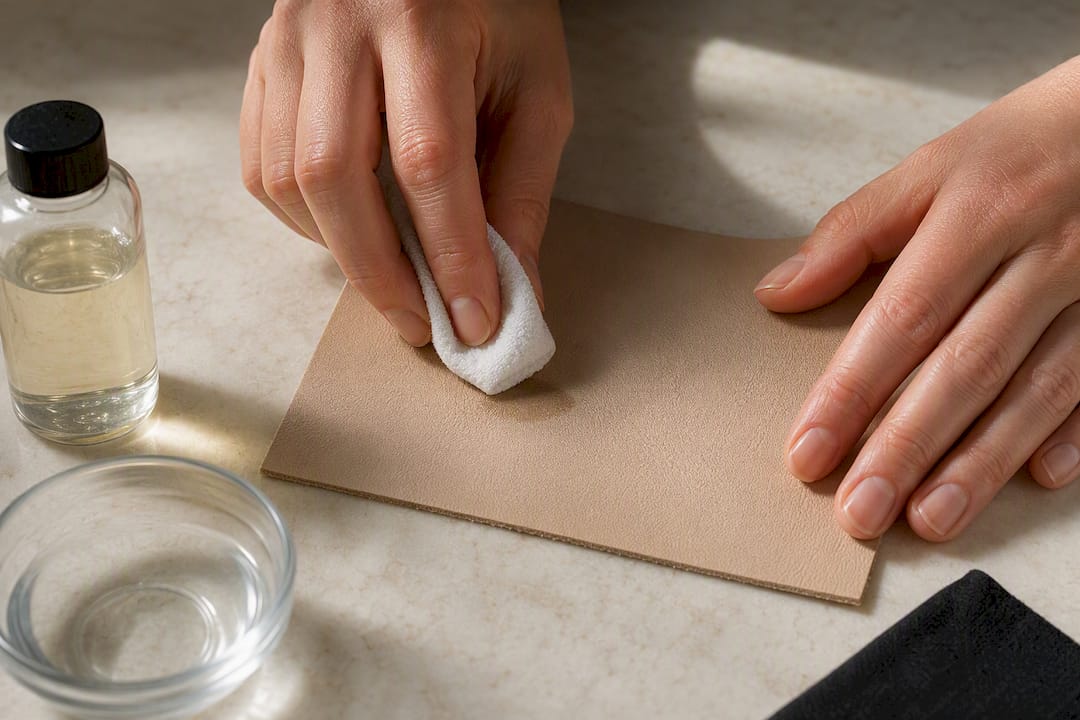
Test any cleaner before applying it. Dab a small amount on an inconspicuous area, such as the inside of a strap, and wait to confirm there is no color shift or texture change. Specialist leather cleaners consistently outperform household solvents or wipes, which can strip natural oils from the fatliquoring process, a point The Shoe Care Shop’s nappa care guide makes explicitly.
Clean with a blotting motion, not a scrub. Apply cleaner to a soft cloth rather than directly to the leather, and blot rather than rub, working in small sections.
Condition on a regular schedule. Full-aniline and semi-aniline finishes benefit from conditioning every few months to replace oils lost to handling and air exposure; pigmented finishes need it less often because the coating itself provides some protection.
Treat stains immediately. Blot liquid spills right away rather than letting them sit, and resist the urge to apply heat, which can set a stain permanently into an open-pore finish.
Store with structure and airflow. Keep bags in breathable fabric dust bags, stuffed lightly with tissue to hold shape, and never sealed in plastic, which traps moisture and encourages mildew.
For anyone building a longer-term care routine, a detailed leather cleaner guide and a broader handbag and shoe care guide walk through product recommendations in more depth than a single section can cover.
Pro Tip: If a stain does not lift after gentle blotting and a proper leather cleaner, stop. Aggressive home remedies on full-aniline nappa cause more damage than most stains ever would, and a professional leather restorer can usually recover what a determined amateur cannot.
What to Check Before You Buy Nappa Leather Goods
Match the finish to how the piece will actually live. A full-aniline nappa clutch that spends evenings in a clean bag deserves that soft, exposed finish; a nappa tote carried daily on transit and set on countertops needs the added resilience of a semi-aniline or pigmented surface.
Inspect stitching, hardware, and edge finishing closely. These details are a reliable proxy for how much care went into the leather itself.
Ask directly about aftercare guidance and whether the seller offers repair or restoration support down the line.
Weigh total cost of ownership rather than sticker price alone: a nappa piece that costs more upfront but ages gracefully with modest conditioning often beats a cheaper alternative that degrades within a season.
Genuine, properly tanned nappa typically costs more than lower-grade “genuine leather” precisely because it uses the outer hide layers with minimal correction, a distinction Hoplok Leather ties directly to nappa’s superior tactile quality and usable lifespan.
The Environmental Reality Behind Nappa Leather Production
Chrome tanning, the process behind most nappa’s softness, carries genuine environmental costs, including chemical runoff and water use, that shoppers increasingly want to understand rather than ignore. Nappa can absolutely be a long-lived, low-waste material when a single well-made bag replaces a decade of cheaper purchases, but that durability argument only holds if the tanning itself is handled responsibly.
The clearest signal to look for is certification through the Leather Working Group (LWG), an auditing body that rates tanneries on water use, chemical management, and energy efficiency. Sourcing from LWG-rated facilities is a meaningful sustainability marker precisely because nappa production has no single environmental standard built into the word itself, a gap noted in guidance from Hoplok Leather. Chrome-free tanning alternatives exist and are gaining ground, though they remain less common in mainstream nappa production.
For the conscious buyer, the practical takeaway is straightforward: ask where a hide was tanned and whether that tannery holds environmental certification, the same way you would ask about hide origin or finish level. A brand willing to answer that question is usually a brand worth trusting with the rest of your questions too.
An Editorial Take: Why Vivien Lauren Treats Nappa as a Craft Decision, Not a Marketing Word
We have never treated “nappa” as a word to slap on a product description and walk away from. Every hide we consider gets evaluated on finish level first, because a full-aniline nappa meant for an evening clutch and a semi-aniline nappa meant for a daily tote are, functionally, two different materials wearing the same name. Our sourcing leans on Italian ateliers where tanning knowledge has passed through generations, not just supply contracts, which is the only way we have found to guarantee consistency between one season’s handbags and the next.
Before anything reaches a listing, we check the same things we would tell you to check yourself: pore texture, hand-feel, edge finishing, and whether the aftercare instructions we provide actually match how the leather behaves in daily use. It is a slower way to build a collection. It is also the only way we know that produces pieces worth keeping for years, not seasons.
— Vivien Lauren.
Shop Handcrafted Nappa Leather Bags at Vivien Lauren
Vivienlauren sources handcrafted leather handbags where the finish level, hide origin, and construction are chosen with the same scrutiny outlined throughout this guide, rather than left to a vague “genuine leather” label.

The collection is selected based on how the leather feels and ages, reflecting a standard of quality discussed in this article. Orders over £80 within the UK ship free, and Vivien Lauren offers interest-free installment plans at checkout for larger pieces, along with a straightforward returns process if a bag is not the right fit. If you want to see the standard in practice, browse the current leather bag collection or take a closer look at a piece like the handmade woven leather bucket bag to see finish and construction details up close before you decide.
Sources
FAQ
Is Nappa Leather Real Leather?
Yes. Nappa refers to genuine full-grain or top-grain leather, typically from calf, lamb, or kid hides, tanned and finished for exceptional softness rather than a synthetic substitute.
What Are the Downsides of Nappa Leather?
Its open-pore, minimally coated surface makes it more prone to scratches and stains than heavily finished leathers, and full-aniline nappa in particular needs regular conditioning to stay supple.
Is Nappa Leather From Pigs?
Not typically. Most nappa comes from calf, lamb, or kid goat hides, chosen for their fine grain and elasticity; pigskin is occasionally used but is far less common in premium nappa goods.
Is Nappa Leather Goat?
It can be. Kid goat is one of the standard hide sources for nappa, alongside calf and lamb, and goat-based nappa is often prized for its lightness and fine grain texture.
Recommended
This fashion piece has been written for you by Chloe. On behalf of Vivien Lauren. Vivien Lauren. Luxury. Craftsmanship. That's Proudly Italian. Vivien Lauren. Proud to Style.