
What defines exclusive fashion? Luxury, craft, and true value
Updated: Sep 29

True exclusivity in fashion combines deliberate scarcity, exceptional craftsmanship, and authentic storytelling beyond mere price tags and marketing. Recognizing transparent production limits, skilled artisanry, and heritage ensures a meaningful and enduring investment in luxury pieces. Genuine exclusivity enriches personal style by fostering lasting connection and authentic self-expression.
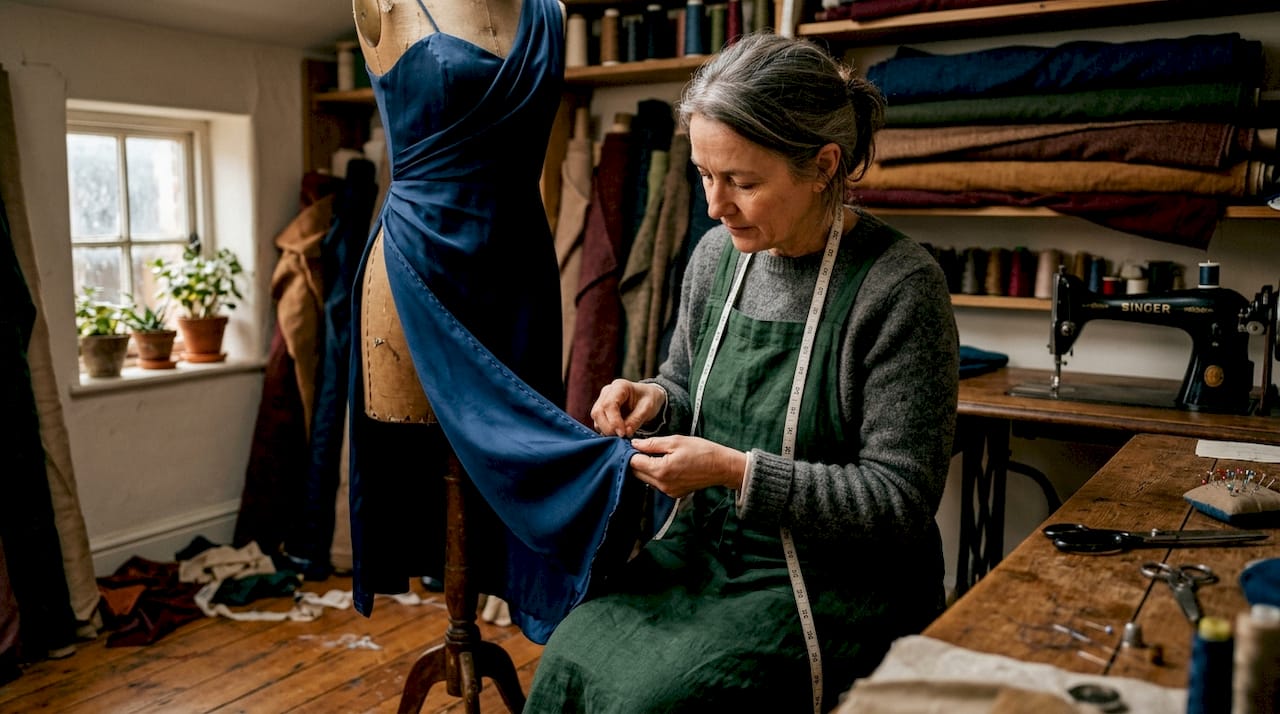
The True value of Luxury lies in Craftsmanship - Vivien Lauren.
There is a persistent misconception that exclusive fashion is simply a matter of price tags and waiting lists. Many women assume that if something costs enough, or if fewer people can access it, then it must be genuinely exclusive. But this is, at best, a partial truth, and at worst, a distraction from what really matters. True exclusivity in fashion is a layered, nuanced quality, one that blends deliberate scarcity, extraordinary craftsmanship, and transparent authenticity in a way that no marketing campaign alone can manufacture. This article invites you to move beyond the surface, to understand the real forces behind exclusive fashion, and to leave with the practical knowledge to make choices that are both inspired and informed.
Table of Contents
Scarcity and access: How limited availability creates allure
Craftsmanship and timelessness: The heart of true exclusivity
Beyond scarcity: Heritage, authenticity, and the meaning of exclusivity
Evaluating exclusivity: Benchmarks and a decision guide for buyers
A fresh perspective: Why meaningful exclusivity is worth seeking out
Key Takeaways
Point | Details |
Exclusivity isn’t just scarcity | True exclusive fashion relies on a blend of limited access, authenticity, and brand heritage rather than artificial shortages. |
Craftsmanship is essential | Skilled handwork, lasting value, and attention to detail set exclusive fashion apart from mass-market goods. |
Transparency protects buyers | Luxury brands must clearly communicate limitations and substantiation, helping you avoid misleading exclusivity claims. |
Heritage matters | Artisan knowledge and brand story deeply influence exclusivity beyond price or hype. |
Use benchmarks wisely | Check production limits, craftsmanship documentation, and claim transparency when evaluating exclusive fashion. |
Scarcity and access: How limited availability creates allure
Once we recognize the confusion around exclusivity, the first element to address is how luxury brands use scarcity and access to create allure. Scarcity, as a strategic concept in luxury fashion, is far more deliberate than it appears from the outside. The most admired houses in the world do not simply run out of stock. They deliberately limit production and control the channels through which their pieces reach the world, protecting not just their revenue, but the very integrity of their brand identity.
Understanding the fashion exclusivity mechanisms at work helps us appreciate that scarcity is a strategic tool, not a marketing gimmick. When a house produces only two hundred of a particular silk gown, or releases an accessory exclusively through a single boutique in one city, that decision is rooted in the desire to maintain cultural and emotional weight. The rarity creates longing, yes, but it also signals a commitment to quality over volume.
However, it is equally important to recognize that scarcity and exclusivity differ in a fundamental way. A brand can artificially restrict supply without ever offering genuine exclusivity. Numbers alone do not confer distinction. What separates meaningful scarcity from a clever marketing ploy is the transparency behind the limitation and the substance that justifies it. Consumer trust, we know, depends on brands communicating honestly about why their pieces are limited, whether that explanation rests on production capacity, artisan hours, or material rarity.
Here is what to look for when evaluating scarcity claims:
Documented production limits with clear reasoning (material scarcity, artisan capacity)
Controlled distribution channels rather than broad retail availability
Consistent communication about why access is restricted
A legacy of deliberate restraint across multiple collections, not just a one-time tactic
Scarcity type | Driven by | Signal |
Authentic | Material rarity, artisan hours | Trust, long-term value |
Manufactured | Marketing strategy | Short-term buzz |
Incidental | Supply chain limits | Neutral, context-dependent |
The secrets of timeless style are often rooted precisely in this kind of principled restraint, the understanding that a piece is worth waiting for, not because hype demands it, but because the work behind it requires time.
Craftsmanship and timelessness: The heart of true exclusivity
Scarcity draws attention, but exclusivity truly begins to reveal itself in the craft behind every stitch and detail. Craftsmanship is not decoration. It is not a gold button added to elevate a garment’s perceived value. It is the accumulated knowledge of skilled hands, the precision of practiced technique, and the irreplaceable human judgment that decides, with each motion, how a fabric should lie or where a seam should breathe. As confirmed by research into the fashion industry, craftsmanship is a core pillar of exclusive fashion, bringing timeless value, authenticity, and expert skill that mass-market production simply cannot replicate.

What makes craftsmanship genuinely exclusive is that it resists easy imitation. A machine can replicate a silhouette. It cannot replicate the intuition of a Florentine leather artisan who adjusts pressure mid-stitch, or the eye of a Milanese seamstress who knows that a particular weave of silk demands a slightly different tension. This is why understanding timeless elegance and quality as a buyer means learning to ask not just “who made this?” but “how was it made, and why does that matter?”
True timeless style also resists the relentless pressure of seasonal trends. An exclusively crafted piece does not arrive in spring and vanish by autumn. It is designed and constructed with a kind of intentional longevity, built to move gracefully from one decade to the next. Consider the following principles for identifying genuine craft-driven timelessness:
Material integrity: The fabric, leather, or fiber should improve or age with dignity rather than deteriorate quickly.
Finishing details: Look for hand-stitched edges, interior quality that rivals the exterior, and considered closures.
Design restraint: Genuinely timeless pieces avoid gratuitous embellishment; every element serves a purpose.
Maker transparency: The brand should be able to tell you who made the piece, where, and through which process.
Wear evidence: A truly well-crafted garment reveals its quality through repeated wearing, not just on first inspection.
“The value of a truly exclusive piece is revealed not in the moment of purchase, but in the years of wearing that follow. Craft is the quiet commitment a maker offers to your future self.”
Pro Tip: When assessing a luxury garment, turn it inside out. The quality of interior seams, lining attachment, and finishing tells you more about genuine craftsmanship than any exterior label. A beautifully finished interior is a hallmark of artisan-driven exclusivity.

Knowing the art of timeless fashion selection starts precisely here, with this intimate scrutiny of the object itself. And for those drawn to accessories, the world of handcrafted leather offers perhaps the clearest illustration of how heritage technique elevates an everyday object into an enduring possession.
Feature | Artisan-crafted piece | Mass-market piece |
Construction | Hand-finished, individual | Machine-standardized |
Materials | Premium, traceable | Commercial grade |
Longevity | Decades with care | Seasons |
Maker story | Known, documented | Anonymous |
Resale value | Retains or grows | Depreciates quickly |
Beyond scarcity: Heritage, authenticity, and the meaning of exclusivity
Understanding craftsmanship gives clarity, but the real test of exclusivity goes deeper than materials and methods. It touches story, heritage, and authenticity. We live in an era where the word “exclusive” is applied liberally, from fast-fashion capsule collections to celebrity collaborations that produce millions of units. The word has been stretched. Reclaiming its meaning requires looking beyond what a brand says and examining what it can actually demonstrate.
Heritage is one of the most powerful and least imitated markers of genuine exclusivity. When a fashion house has maintained a particular dyeing technique across generations, or when a family of artisans has refined a weaving process over a century, that accumulated knowledge becomes non-replicable in any meaningful timeframe. As fashion scholars observe, exclusivity can emerge from heritage knowledge and craft non-replicability, making scarcity alone a visibility tactic rather than a true marker of distinction.
Here is what authentic exclusivity looks like beyond scarcity:
Traceable heritage: The brand can name its origins, its founding artisans, and its evolving techniques.
Cultural rootedness: The piece reflects a specific place and tradition, not just a generalized “luxury aesthetic.”
Documented process: Photographs, films, or third-party verification of how items are made.
Consistency across time: The brand’s values and methods remain coherent from collection to collection.
It is also worth understanding the difference between haute couture and other forms of exclusive fashion, because the distinction matters. Haute couture is a regulated designation, formally tied to criteria set by the Chambre Syndicale de la Haute Couture in France. A house cannot simply call its work haute couture because it wishes to. The title requires specific production methods, workshop standards, and a minimum number of skilled employees. This is not a semantic distinction. It is a structural one, with real legal and cultural weight.
Pro Tip: Before purchasing a piece marketed as “exclusive” or “artisan-made,” ask the brand directly whether they can provide documentation of their production process or maker credentials. A genuinely exclusive brand will answer this question with pride, not evasion.
Understanding artisanship in luxury fashion allows you to move through the shopping experience with a discerning eye, one capable of separating the genuinely exceptional from the aspirationally branded. And when you begin to see these distinctions clearly, you also begin to appreciate the lasting power of elegant fashion not as nostalgia, but as a deeply practical and joyful way of living with beautiful things.
Evaluating exclusivity: Benchmarks and a decision guide for buyers
With an understanding of what underpins exclusivity, it is time to turn to practical tools you can use when shopping for your next luxury piece. The marketplace is full of compelling claims. What separates a well-informed buyer from one who is simply seduced by presentation is the ability to apply clear, repeatable benchmarks to any purchase decision.
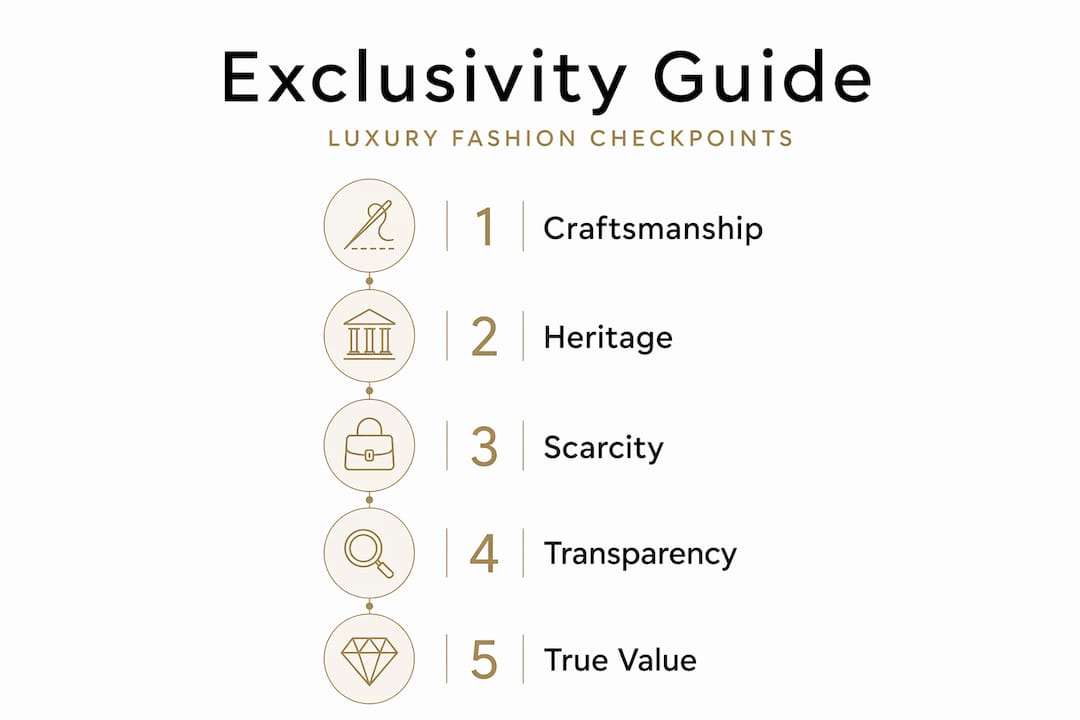
Legitimate evaluation of exclusivity requires examining production limits, documented craftsmanship and heritage, and the transparency of the brand’s communication. These benchmarks are not arbitrary; they reflect consumer protection principles and the standards that the most reputable luxury houses hold themselves to voluntarily.
Use this step-by-step guide when assessing any exclusive fashion piece:
Verify production limits: Ask how many pieces were produced and whether that number is documented publicly or by request.
Investigate the supply chain: Where were the materials sourced? Where was the piece made? By whom?
Assess the craft story: Is there a named artisan, atelier, or specific regional technique involved?
Look for third-party recognition: Awards, press features from credible fashion publications, or certifications add credibility.
Examine the resale market: Genuinely exclusive pieces tend to hold or grow their value over time. Check platforms specializing in pre-owned luxury.
Read the return policy and guarantees: A brand that stands confidently behind its craftsmanship will offer meaningful assurances.
Benchmark | Green flag | Red flag |
Production transparency | Documented, available on request | Vague or unavailable |
Craft documentation | Named artisans, verifiable methods | Generic “handmade” claims |
Brand heritage | Years or decades of consistent craft | Recent, trend-driven emergence |
Resale value | Stable or appreciating | Rapid depreciation |
Consumer reviews | Specific praise of quality and longevity | Focused only on aesthetics |
Reading a thoughtful luxury fashion investment guide can deepen your ability to make these assessments with both confidence and pleasure. And when you are ready to consider specific pieces, understanding the principles behind choosing durable fashion ensures that your investment is one you will celebrate for years.
A fresh perspective: Why meaningful exclusivity is worth seeking out
After absorbing the benchmarks and the definitions, it is worth pausing to ask the deeper question: why does any of this matter to you personally? We believe exclusivity is only truly meaningful when it serves your sense of self rather than a desire to signal status to others. The woman who buys a beautifully crafted Italian dress because it moves with her body, because the color was chosen by an artisan who understood light and fabric together, because she knows it will accompany her for the next fifteen years, that woman is engaging with fashion in its most elevated form.
What most shoppers miss when chasing fleeting trends is the quiet joy of ownership that deepens over time. A piece that was genuinely exclusive when you acquired it does not lose that quality. It accrues meaning. It becomes part of your personal narrative. This is what the power of timeless luxury actually feels like from the inside, not the momentary thrill of acquisition, but the sustained pleasure of living with something beautifully made.
We also believe it is worth challenging the “collecting” mindset that overtakes many luxury shoppers. Accumulating exclusive pieces as trophies is a fundamentally different pursuit than curating a wardrobe of pieces that express who you are and how you move through the world. The former approach often leads to a closet full of beautiful objects that feel strangely hollow. The latter builds something more like a personal language, a visual and tactile expression of your values, your taste, and your sense of what endures. We invite you to pursue the latter with intention.
Curate your own exclusive style with timeless luxury
As you seek out meaningful pieces, Vivien Lauren offers collections that embody everything discussed above. Each piece in our curated selection reflects a commitment to Italian craftsmanship passed down through generations, to materials chosen for their beauty and their endurance, and to designs conceived with the kind of restrained elegance that never asks permission from a seasonal trend.

Exploring exclusive women’s fashion at Vivien Lauren is an invitation to experience this philosophy first-hand. Whether you are drawn to the fluid grace of our timeless occasion dresses or the refined detail of our artisan accessories, each piece has been selected to meet the benchmarks we have outlined together in this article. We offer free UK shipping on orders over £80 and international shipping on orders above £300, along with interest-free installment options that make thoughtful investment more accessible.
Frequently asked questions - what defines exclusive fashion
What makes an item “haute couture” instead of just exclusive?
Haute couture pieces are only produced by fashion houses authorized by the Chambre Syndicale, following strict criteria, while other exclusive items may not meet these specific regulated designation standards.
How can I tell if a fashion brand’s exclusivity claim is legitimate?
Legitimately exclusive brands clearly document limited production and explain their craft processes; transparency about exclusivity limitations and third-party recognition are the strongest signs of a trustworthy claim.
Is scarcity always a sign of quality in luxury fashion?
No, scarcity can be artificially created through marketing decisions alone; authenticity and exclusivity differ, and true quality comes from heritage, documented craftsmanship, and transparent processes rather than restricted supply alone.
Why is craftsmanship so important for exclusive fashion?
Craftsmanship ensures each piece embodies authenticity, lasting value, and irreplaceable creative expertise, which is precisely what separates true exclusives from mass-market fashion that may look similar but ages without grace.
What red flags suggest a fashion item isn’t genuinely exclusive?
Vague “limited edition” claims with no documented production numbers, absence of verifiable artisan involvement, and a lack of consistent brand heritage across collections are all signs that an item’s exclusivity claim deserves skepticism before you invest.
Recommended
This fashion piece has been written by Shona White. On behalf of Vivien Lauren. Vivien Lauren. Luxury. Craftsmanship. That's Proudly Italian. Vivien Lauren. Proud To Style.


