
Why Buy Made in Italy: The Luxury Woman's Guide
Updated: Aug 10

Choosing Made in Italy means choosing objects that carry centuries of accumulated knowledge, exquisite materials, and a cultural identity no factory shortcut can replicate. The reasons to choose Italian goods are both tangible and deeply felt: superior quality standards, a heritage of artisanal mastery passed through generations, and a direct contribution to the livelihoods of real craftspeople. Research confirms that 60% of consumers willingly pay more for authentic Italian products, with a typical premium of 10–30% across fashion, food, and furnishings, and 60% of surveyed consumers express willingness to pay this premium for authentic Italian products. At its finest, a Made in Italy label is not a marketing claim. It is a promise.
Superior quality rooted in Italy’s specialized manufacturing ecosystem
Deep cultural heritage expressed through every stitch, cut, and finish
Economic support for authentic Italian artisans and regional industries
Exclusivity and luxury status recognized by discerning consumers worldwide
Table of Contents
1. Why Italian heritage makes the difference
Italy’s cultural identity is inseparable from what it produces. Centuries of artisanal tradition, from Florentine leatherwork to Venetian glassblowing, have shaped a national philosophy that treats making things beautifully as a civic virtue, not merely a commercial act. This is not nostalgia. It is a living inheritance that informs every design decision, every material choice, every hand-finished edge.
Regional industrial districts concentrate specialized expertise, allowing knowledge to compound across generations
National pride around Italian excellence creates a collective standard that individual makers feel accountable to
The broader Italian lifestyle, its architecture, cuisine, and visual culture, feeds directly into aesthetic sensibility
Consumers increasingly value authentic Italian products as carriers of regional culture, identity, and tradition
Italy celebrates this heritage formally with National Made in Italy Day, held annually in April to honor Leonardo da Vinci’s legacy, a figure who embodied the same union of technique, creativity, and vision that defines the label today.

2. What makes Italian materials genuinely superior
The quality of a Made in Italy piece begins long before any artisan touches it. Italian manufacturers source top-tier leathers, fine wools, silk, and natural fibers with a selectivity that reflects decades of supplier relationships and an uncompromising eye for raw material integrity.
Italian full-grain leather, prized for its natural texture and durability, ages into beauty rather than deteriorating
Certifications such as PDO (Protected Designation of Origin) and PGI (Protected Geographical Indication) guarantee material provenance and authenticity
Responsible sourcing practices, increasingly embedded in Italian manufacturing culture, contribute to both product longevity and ethical credibility
Premium material selection is what separates a bag that lasts a decade from one that loses its shape in a season
Sustainability and quality are not in tension here. The same commitment to sourcing the finest leather or the most refined fabric tends to favor suppliers who treat their craft, and their environment, with care.
3. How Italian craftsmanship sets authentic pieces apart
True Italian craftsmanship is visible in the details most people never consciously notice but always feel. Clean edge paint on leather goods, stable and consistent stitching, a refined hand-feel that communicates substance rather than surface: these are the signals of an object made with patience and skill.
Multi-stage hand-finishing techniques require artisans who have spent years mastering a single discipline
Authentic pieces show no signs of rushed production: seams lie flat, hardware sits flush, linings are finished as carefully as exteriors
Italy’s over 150 specialized industrial districts create ecosystems where niche workshops collaborate, each contributing a specific mastery to the final object
“Italian Sounding” products, those that mimic Italian names and imagery without genuine provenance, are the primary threat to informed buyers
Pro Tip: When evaluating a leather piece, turn it over and examine the interior finishing. Authentic Italian artisan construction treats the inside of a bag or shoe with the same care as the outside. Rough edges, uneven stitching, or glued rather than sewn seams are immediate red flags.
4. Italian design principles that give pieces lasting appeal
Italian design occupies a rare position: it is simultaneously rooted in tradition and alert to the present. The result is a visual language that feels neither frozen in time nor chasing trends, which is precisely why Italian design delivers timeless elegance and investment value.
Balance between heritage forms and contemporary refinement defines the Italian aesthetic
Emphasis on elegance, proportion, and restrained sophistication produces pieces that transcend seasonal fashion cycles
Italian design culture draws on architecture, fine art, and culinary aesthetics, creating a cross-disciplinary richness that purely commercial design cannot replicate
A well-designed Italian piece appreciates in personal value over time, worn more confidently as it ages
This is why Italian style resonates so deeply with women who think of their wardrobe as a considered collection rather than a series of seasonal purchases.
5. Made in Italy as a symbol of refined luxury
The label carries cultural capital that extends well beyond the object itself. Wearing or carrying something genuinely Made in Italy signals an appreciation for craft, a familiarity with quality, and a preference for substance over spectacle. These are the values that define the most discerning luxury consumers.
The label’s association with elite lifestyles is reinforced by its presence in the world’s most prestigious fashion houses and auction rooms
It functions as a mark of authentic taste, distinguishing those who understand quality from those who merely display price tags
International demand for Italian “Beautiful and Well Made” goods reaches over 1.2 billion affluent consumers worldwide
Status symbolism here is not superficial. It reflects a genuine hierarchy of making, where skill and material integrity command respect
6. How Italian cuisine and lifestyle enrich the Made in Italy identity
Italy’s world-renowned food culture and its approach to living well are not separate from its fashion and craft traditions. They share the same underlying values: quality of ingredients, patience in process, pleasure in the result. When you hold an Italian leather bag, you are, in a sense, holding the same philosophy that produces a perfectly aged Parmigiano Reggiano.
Shared values of authenticity, sensory pleasure, and unhurried excellence connect Italian cuisine and Italian craftsmanship
UNESCO’s recognition of Italian cuisine as an Intangible Cultural Heritage of Humanity reinforces the idea that Made in Italy is about culture, not just commerce
Lifestyle narratives add emotional resonance to products, making them feel like an invitation into a way of living rather than a simple purchase
This cultural storytelling is what allows Italian goods to command loyalty across generations of buyers
7. Italian engineering and innovation beyond aesthetics

The advantages of buying Italian extend well beyond beauty. Italy’s manufacturing reputation encompasses advanced mechanics, pharmaceuticals, aerospace, and precision engineering, sectors where reliability and technical excellence are non-negotiable. This industrial depth reinforces consumer confidence in Italian goods across every category.
Traditional craftsmanship and technological advancement coexist in Italian production, producing objects that are both beautiful and functionally superior
Specialized industrial sectors contribute mechanical excellence that translates into durability and precision in fashion hardware, shoe construction, and accessory components
The Made in Italy model combines flexibility, quality, and innovation capacity, transforming territorial expertise into a genuine competitive advantage
Innovation here is not about novelty. It is about refining what already works until it cannot be improved further
8. How to identify authentic Made in Italy craftsmanship
Knowing why to choose Italian craftsmanship is only half the equation. The other half is knowing how to verify it, because the label alone is not a guarantee of quality or ethical production.
The legal framework matters here. Under EU rules, the “last substantial transformation” principle means a product can be labeled Made in Italy even when key components originate elsewhere. Final assembly in Italy qualifies the label, which is why material sourcing and workmanship must be evaluated independently.
Look for specific craftsmanship markers: even stitching, clean edge paint, refined interior finishing, and hardware that sits flush without wobbling
Ask brands where the decisive production steps occur: for leather goods, cutting, stitching, and finishing; for apparel, cutting, sewing, and final quality control
Distinguish authentic Italian artisanal networks from mass production by seeking transparency about the workshops and regions involved
Certifications such as PDO and PGI offer legal protection against “Italian Sounding” imitations in food; for fashion, provenance documentation and artisan workshop identification serve the same purpose
Building product knowledge about traditional Italian manufacturing techniques significantly improves your ability to value and select authentic luxury goods
Pro Tip: Ask the retailer directly which region of Italy the piece was produced in and which workshop handled the finishing. Authentic Italian brands and retailers can answer this question specifically. Vague answers like “crafted with Italian inspiration” are a signal to look elsewhere.
9. Made in Italy versus Made in France: two distinct luxury traditions
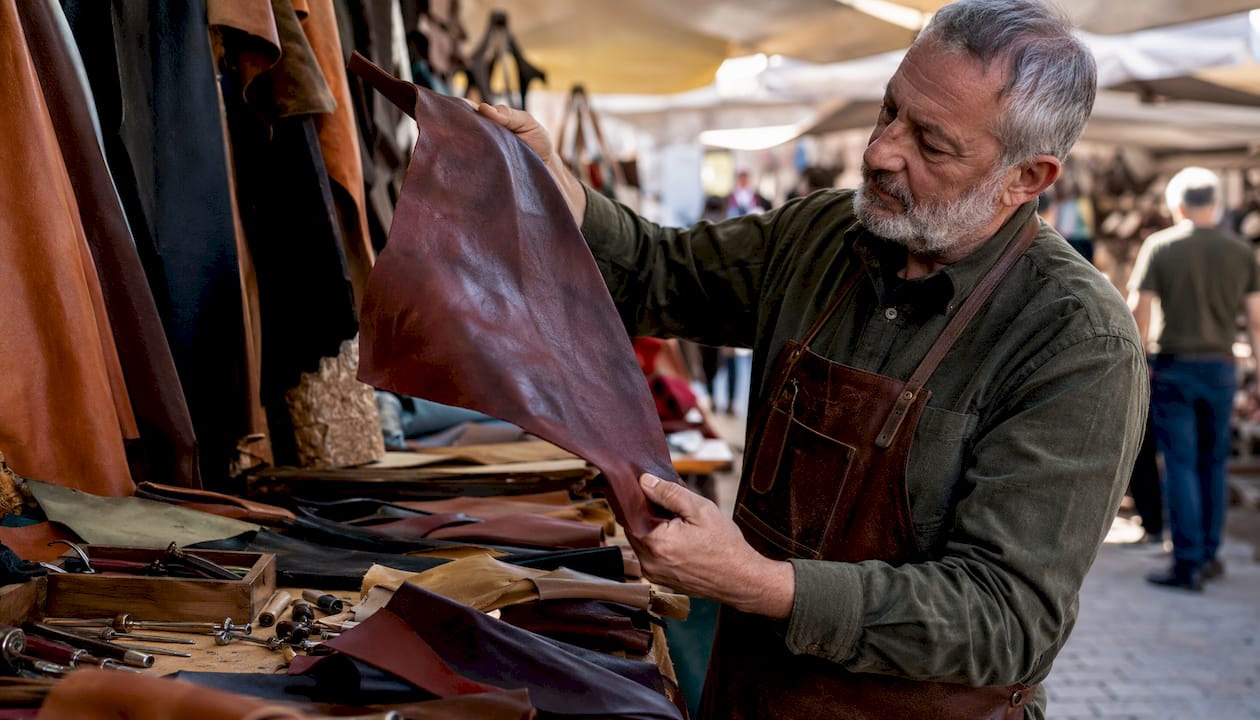
Both labels command genuine respect in the luxury world, yet they represent distinct philosophies of making. Understanding the difference helps you choose with greater clarity and appreciation.
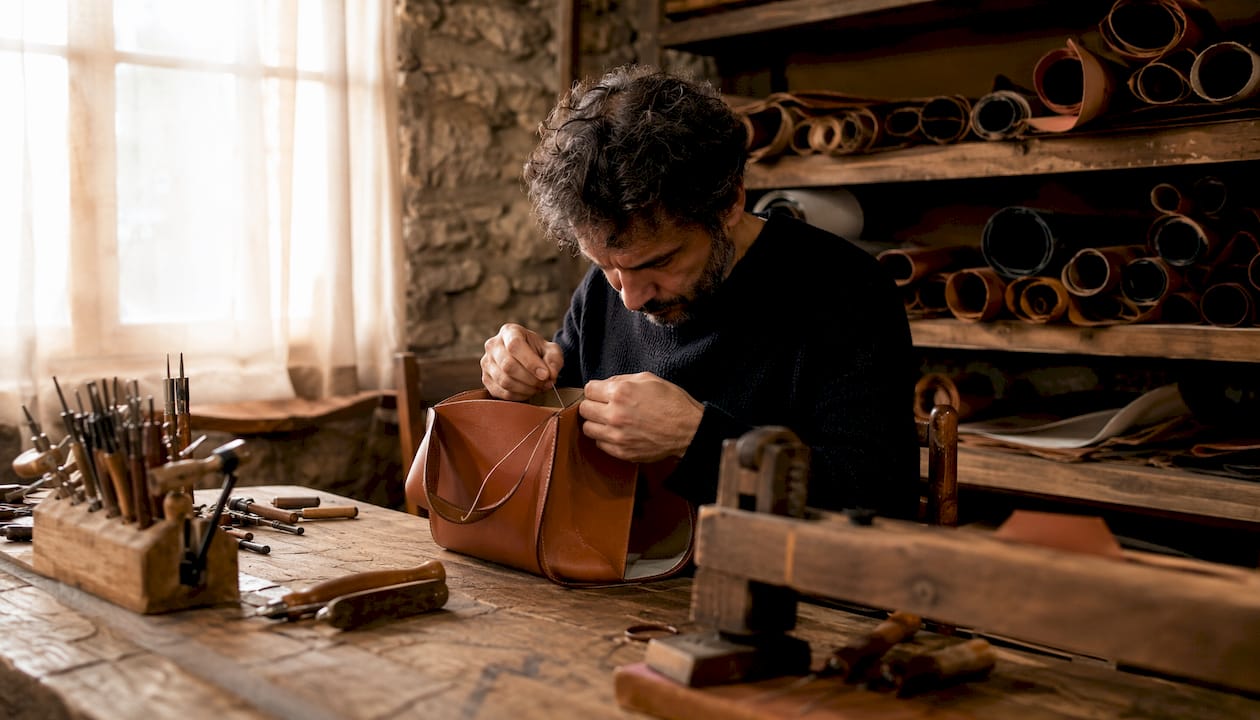
Made in Italy draws its strength from a dense network of specialized artisan districts, where small and medium workshops collaborate across production stages, producing extraordinary flexibility and customization. The Italian model is tactile, warm, and rooted in the hands of individual craftspeople whose families have worked the same materials for generations.
Made in France, by contrast, tends toward centralized production within larger ateliers, with a tradition of formal couture technique and a design language shaped by Parisian aesthetic authority. French luxury often emphasizes architectural precision and a certain cool restraint; Italian luxury leans toward sensory richness and expressive femininity.
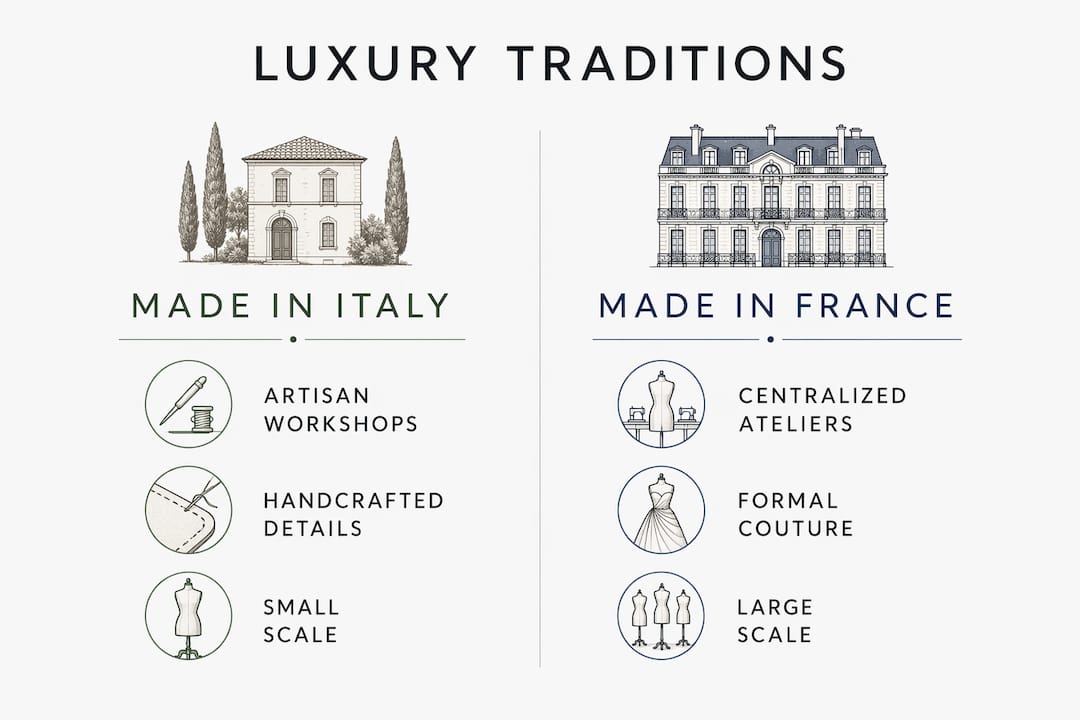
For the woman who values artisan craftsmanship as a living tradition rather than a corporate process, the Italian model offers something irreplaceable: direct connection to the human skill and regional identity embedded in every piece. Both traditions are worthy of admiration. They simply speak different languages of beauty. Learning to mix luxury pieces from different origins, chosen for their individual merit, is itself a mark of sophisticated personal style.
Vivien Lauren: where Italian craftsmanship meets curated elegance

Vivien Lauren was built for the woman who already understands that quality is not a price point. It is a philosophy. Every piece in the Vivien Lauren collections reflect the same values explored throughout this article: exquisite Italian materials, handcrafted construction passed down through generations of artisans, and a design sensibility that favors timeless femininity over fleeting trends.
The curated collection spans elegant dresses, handcrafted leather accessories, and refined footwear, each piece selected for its authenticity and its ability to be worn with equal confidence years from now. The handmade woven leather bucket bag is a particularly clear expression of this: genuine Italian artisan construction, visible in every interlaced strand, with the kind of interior finishing that separates a true luxury piece from an imitation. Visit Vivien Lauren to find your next considered addition to a wardrobe built to last.
FAQ
What does “Made in Italy” legally mean?
Under EU rules, a product qualifies as Made in Italy when the final substantial transformation of the product occurs in Italy, even if some components originate elsewhere. This means buyers should verify material sourcing and workmanship independently, not rely on the label alone.
Is Made in Italy worth the premium price?
Research shows that consumers pay a 10–30% premium for authentic Italian goods across fashion, food, and furnishings, and 60% of surveyed consumers express willingness to pay this premium. The premium reflects genuine differences in material quality, artisan skill, and product longevity.
How do I spot a genuine Italian-made piece?
Look for clean edge paint on leather, stable and even stitching, refined interior finishing, and hardware that sits flush. Ask the retailer which specific Italian region and workshop produced the piece; authentic brands answer this question directly.
What is “Italian Sounding” and why does it matter?
“Italian Sounding” refers to products that use Italian-sounding names, imagery, or packaging to suggest Italian origin without genuine certified provenance. These imitations undercut authentic Italian artisans economically and mislead buyers who are paying for quality they are not receiving.
How does Made in Italy compare to Made in France for luxury fashion?
Italy’s luxury tradition is rooted in a dense network of small artisan workshops producing tactile, expressive pieces with deep regional character. France’s tradition leans toward centralized atelier production with a more architecturally precise aesthetic. Both are genuine luxury traditions; the choice depends on which philosophy of beauty resonates most with you.
Key Takeaways
Buying Made in Italy means investing in a living tradition of artisan skill, premium materials, and cultural identity that no mass-produced alternative can replicate.
Point | Details |
Premium price is justified | Consumers pay a 10–30% premium for authentic Italian goods, and 60% of consumers express willingness to pay this premium across fashion, food, and furnishings. |
Craftsmanship is verifiable | Clean edge paint, stable stitching, and refined interior finishing are the tangible markers of genuine Italian artisan construction. |
The label has legal limits | “Last substantial transformation” rules mean Made in Italy does not guarantee full Italian material sourcing; always verify independently. |
Heritage drives global demand | — attracting over 1.2 billion affluent consumers drawn to cultural identity and style. |
Vivienlauren curates authentically | Vivienlauren offers handcrafted Italian leather accessories, elegant dresses, and refined footwear selected for genuine artisan provenance and timeless design. |
Recommended

Luxury curated Leather Handbags | Handcrafted in Italy | Signature Collection by Vivien Lauren
This fashion piece has been authored and brought to you by Sammy Li. On behalf of Vivien Lauren. Vivien Lauren. Luxury. Craftsmanship. That's Proudly Italian. Vivien Lauren. Proud To Style.

