
White Dress Pleated: Master Your Elegant Style

You are probably in the same place many women reach before an important date in the diary. You want one dress that feels polished enough for a lunch in Mayfair, light enough for a summer wedding, and refined enough to wear again without looking as though you repeated an outfit.
That is why the white dress pleated remains such a clever choice. It has presence without heaviness, movement without fuss, and a kind of quiet certainty that louder dresses rarely achieve. In a luxury wardrobe, it is less a trend piece and more a dependable signature.
The Enduring Allure of the Pleated White Dress
A woman walks into a fitting room with three questions in mind. Will it flatter me. Will it feel expensive. Will I still love it next year. A pleated white dress answers all three when the cut and fabrication are right.
White carries particular weight in British dress history. Queen Victoria's choice of a white pleated silk satin wedding dress in 1840 revolutionised UK bridal fashion, and by 1900, 92% of UK brides wore white according to Victoria and Albert Museum archival surveys cited in this history of brides wearing white dresses. What matters for modern dressing is not only the bridal reference, but what the choice represented. White signalled care, status, and intention.
That legacy still shapes how a pleated white dress is read now. It suggests composure. It photographs beautifully. It works in daylight, which many darker formal dresses do not.
For everyday clients, the appeal is usually practical rather than ceremonial. They want a dress that can handle multiple settings with small styling changes. A sharply pleated midi can move from office lunch to gallery opening with only a shoe and bag swap. A softer pleated style can feel just as right at a garden party.
Why it still feels current
Pleats keep the dress alive when you move. They catch light, create line, and give structure to white fabric, which can otherwise look flat. This is the difference between a dress that merely looks pretty on a hanger and one that looks elegant in motion.
White also gives you room to control the mood.
With tailoring: it feels crisp and metropolitan.
With metallics: it becomes occasion ready.
With flat sandals and a woven bag: it softens into relaxed chic.
A strong white pleated dress does not need overstyling. It needs restraint, good fabric, and the correct proportions.
If you are building a wardrobe around enduring pieces rather than impulse buys, it is worth browsing a tightly edited dress collection such as this curated dresses selection and assessing each option through that lens. Not novelty. Longevity.
Discerning Quality A Guide to Pleats and Fabrics
Most disappointment with a white pleated dress starts before the first wear. The fabric is too thin. The pleats look sharp in product photos but collapse by midday. The lining drags. The white turns harsh under indoor lighting. Quality is visible, but it is also technical.

Start with the pleat itself
Pleats change the entire character of a dress. Some create clean line. Others add romance or movement. Knowing the distinction saves you from buying a shape that fights your purpose.
Understanding Pleat Styles | Visual Effect | Best For |
|---|---|---|
Accordion Pleat | Fine, repeating movement with a soft fan effect | Occasion dressing, fluid midis, elegant day-to-evening wear |
Knife Pleat | Directional, crisp, elongated line | Workwear, minimalist styling, taller silhouettes |
Box Pleat | Controlled fullness and architectural volume | Skirts with presence, shirt dresses, more structured looks |
Crystal Pleat | Delicate, light-catching texture with fluid motion | Evening events, soft drape, refined statement pieces |
A few practical truths matter here.
Knife pleats look expensive when the fabric has enough body to stay aligned. In cheap cloth, they skew sideways and lose authority.
Accordion pleats are forgiving and feminine. They move beautifully, but if the fabric is poor, they can look limp rather than fluid.
Box pleats add volume. That can be elegant at the hem or through a skirt panel, but less useful across the waist if you want visual lightness.
Crystal pleats can be lovely for events, though they demand care. Their delicacy reads elevated, but mishandling shows quickly.
Fabric decides whether pleats live or die
Pleating is only half the equation. Fabric determines drape, recovery, opacity, and wearability in real life.
Fabrics that usually work well
Silk or silk blends: Best when you want a graceful fall, soft sheen, and a dress that feels unmistakably luxurious.
Chiffon with a proper lining: Excellent for movement and occasion dressing, provided the lining does not cling or twist.
Cotton blends: A sensible option for daytime wear when you want breathability and more structure.
Quality polyester blends: Useful when you prioritise pleat retention and easier maintenance over natural fibre feel.
Fabrics that need caution
A very stiff synthetic can hold a pleat, but it often creates an artificial shine that works against the elegance of white. On the other side, a fabric that is too soft can erase the pleat altogether.
This is the trade-off clients often miss. The dress that feels featherlight in hand may not hold its architecture once worn. The dress that looks beautifully pressed in a studio may feel rigid and noisy on the body.
If the dress stands away from you rather than skimming, or if the pleats flatten the moment you sit down, the fabrication is not doing enough of the work.
What to inspect before you buy
When assessing a white dress pleated style, check these points in order:
Opacity: Hold the skirt and bodice separately to the light. White must feel considered, not flimsy.
Pleat consistency: Uneven spacing reads inexpensive immediately.
Lining behaviour: A good lining supports the dress. A bad one tangles around the knees.
Seam placement: Side seams should not interrupt the visual rhythm of the pleat more than necessary.
Recovery after touch: Lightly press the pleats with your hand. They should spring back, not stay crushed.
One useful benchmark is to compare any contender with a well-cut, occasion-ready style such as this long pleated summer dress in white floral. Even if your taste runs plainer, it helps train the eye to notice balance, flow, and finish.
What works and what does not
What works is a dress where fabric, pleat, and silhouette agree with each other. A fluid pleat needs a fluid cloth. A structured pleat needs enough substance. White needs either texture, layering, or both.
What does not work is forcing one quality to compensate for another. No clever accessory will rescue a dress with poor opacity. No expensive heel will fix a collapsed pleat.
Finding a Flattering Silhouette for Your Shape
You see it often in the fitting room. A white pleated dress looks poised on the hanger, then the wrong cut makes it feel wider, shorter, or fussier on the body than it ever needed to.
Fit shows quickly in white. Pleats create movement and elegance, but they also draw the eye to proportion, seam placement, and length. For UK clients in particular, that matters. The right silhouette has to work not only for your shape, but for real wardrobes, real weather, and the way British women dress across work events, lunches, weddings, city days, and weekends away.

Many women struggle with the same question. Will the pleats flatter, or will they add width where it is not wanted? The answer usually comes down to where the pleating starts, how the waist is handled, and whether the dress keeps the eye travelling vertically.
The silhouette question to ask first
Ask one thing before anything else. Do you want the dress to define your waist, skim over it, or fall cleanly from the shoulder or bust?
That decision is far more useful than generic body-shape rules. In practice, it narrows your options fast and saves a great deal of wasted trying-on.
If you want waist definition
Choose an A-line midi, a softly belted style, or a dress where the pleats release below the waistband instead of starting across the fullest part of the midsection. That gives the torso a cleaner line before the movement begins.
This approach often suits a fuller hip, a neatly defined waist, or anyone who wants more structure through the middle. If pleats begin too high or spread straight out from the waist seam, the dress can look busy rather than elegant.
If you want ease without extra bulk
A column-adjacent shape with narrow, vertical pleating is often the smartest choice. It follows the line of the body from bust to hip, then opens slightly through the lower skirt.
I recommend this regularly for clients who want polish without cling. It feels modern, restrained, and expensive, especially in a matte crepe or soft technical fabric that keeps its line in damp UK weather.
If bust fit is the sticking point
Be careful with high empire seams and fixed waistlines. On a fuller bust, they often sit too high, pull across the front, and throw off the rest of the dress.
Instead, look for:
A shaped bodice, so the chest has room without forcing you to size up everywhere else
A V-neck or softly open neckline, which lengthens the front and reduces visual heaviness
Balanced shoulders or sleeves, which help the whole silhouette feel more proportioned
A pleated dress flatters best when the eye moves up and down the body smoothly.
Hemline matters in the UK
Midi length tends to be the most useful option for British wardrobes. It works with courts, slingbacks, ankle boots, and refined flats. It also handles our pavements, changeable weather, and mixed social calendars far better than a full-length hem.
A sweeping white dress can be beautiful for a formal event, but it quickly loses its appeal if the hem is collecting rainwater, brushing station platforms, or catching on a gravel garden path. Luxury should feel easy to wear.
If you plan to layer the dress for office use, check that the proportions still hold under tailoring. A sharp jacket such as a structured women’s blazer for polished layering can sharpen a softer pleated silhouette beautifully, but only if the waist and hem still look intentional once covered.
A better way to assess fit in the mirror
Do not stop at “it fits.” That standard is too low for a white pleated dress.
Ask these instead:
Do the pleats begin at a flattering point on my frame
Does the bodice stay smooth when I sit and breathe
Does the hem finish at a deliberate place on the leg
Does the dress move cleanly, without twisting or pulling sideways
If one of those answers is no, keep looking. In my experience, small fit irritations are rarely small once the dress is in regular rotation. They are usually the reason a beautiful piece stays in the wardrobe instead of becoming a favourite.
Styling Your Dress for Work Events and Weekends
The best white pleated dresses earn their place by adapting. One dress, worn three ways, is far more useful than three dresses each trapped in one setting.

For work
A client once needed a dress for presentations, client lunches, and a summer networking event. She did not want anything severe, but she also did not want “pretty” to overpower authority. A white pleated midi solved it.
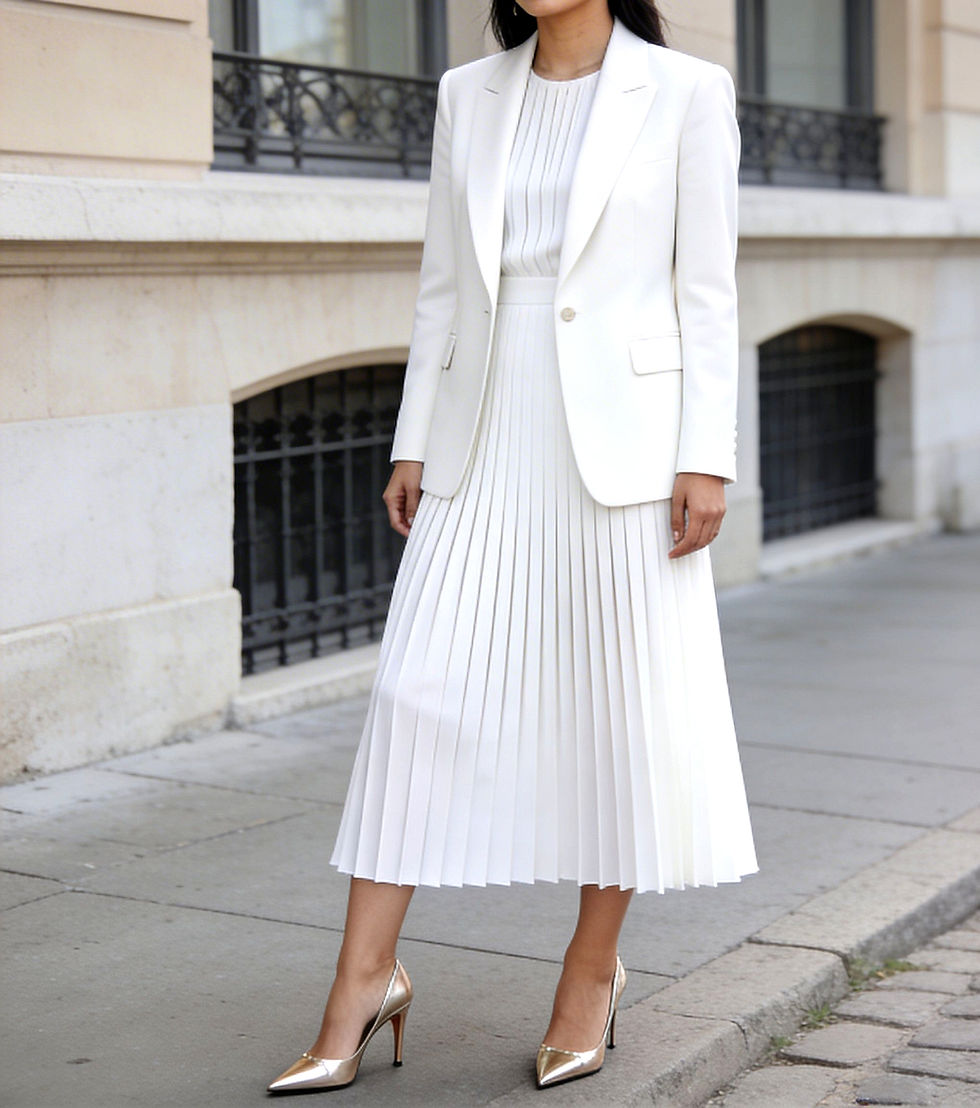
The formula was simple. Add a clean-cut blazer, a structured tote, and a pointed shoe. The blazer creates edge and discipline. The pleats keep the look from feeling corporate in the dull sense.
A polished option is a well-cut jacket such as this women’s blazer. Keep the palette quiet. Ivory, taupe, navy, or soft stone all sit beautifully against white.
For work styling, choose:
Shoes: Pointed courts, sleek slingbacks, or refined loafers.
Jewellery: Minimal metal. One pair of earrings, one watch, or one pendant.
Bag: Structured and medium-sized, never slouchy.
What does not work is adding too many competing office signals at once. A blazer, heavy necklace, oversized tote, and statement heel will crowd the dress.
For an event
For a wedding guest look, private dinner, or summer party, the same dress can become far more elevated with texture and shine.
Think in terms of contrast. If the pleats are delicate, let the accessories bring a little crispness. A metallic sandal, a sculptural earring, or a compact clutch will usually be enough. You do not need to “dress up” white with excessive decoration. White already carries ceremony.
A reliable evening formula looks like this:
Keep the neckline open. This gives jewellery room and keeps the dress light.
Add one polished metallic. Gold or silver both work. Choose one direction.
Use a dressier shoe than you think you need. Pleats move best when the hem is not dragging.
If you are attending a garden event, avoid stilettos that sink and hems that sweep. A block heel or elegant flat sandal is usually the smarter decision.
For weekends
For weekends, a white dress pleated piece proves whether it belongs in your wardrobe. Can it feel relaxed without looking underdressed? It should.
For weekends, take away polish rather than adding casual gimmicks. A cropped knit, light trench, denim jacket, or fine cardigan softens the dress immediately. Footwear should follow suit. Clean leather trainers can work with some more modern cuts, but I find flat sandals or pared-back ballet flats more convincing with luxury pleats.
Try this combination:
Outer layer: Soft cardigan or short jacket
Bag: Woven leather, raffia, or a small crossbody
Shoes: Flat sandal, espadrille, or refined trainer if the dress is simple
The quickest way to make a white pleated dress look expensive on a casual day is to keep the accessories quiet and the fabrics natural.
Dressing for the UK weather
Layering is where many outfits succeed or fail. Our climate asks more of a dress than a static product image ever will.
On cooler days, use a trench or fine wool blazer rather than a bulky coat that crushes the pleats. In uncertain weather, keep a shawl in the car or handbag. If rain is likely, avoid hems that sit too near the ground and choose shoes with enough substance for wet pavements.
The point is not to protect the dress by never wearing it. The point is to style it in a way that allows it to live.
Accessorising with Grace and Purpose
A pleated white dress already has texture. Accessories should support that texture, not compete with it. When women feel that an outfit is somehow not working, it is often because every piece is asking for attention at once.
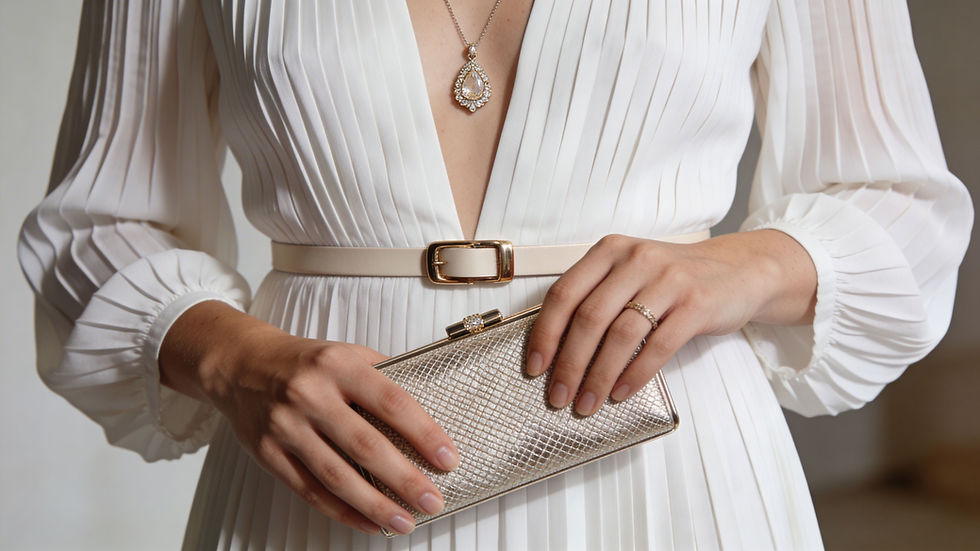
Choose one focal point
With pleats, restraint always reads more refined than abundance. Decide whether your focal point will be the shoe, the bag, or the jewellery. Then let the other elements sit a little quieter.
If the dress has a high neck or detailed bodice, skip the necklace and choose earrings. If the dress is minimalist through the front, a pendant or collarbone-skimming chain can be perfect.
For readers looking at future-facing sparkle in a considered way, top jewelry trends for 2026 offers useful visual direction on modern stones and cleaner settings that pair well with pleated whites.
Shoes should support the line
The wrong shoe interrupts the vertical movement that makes pleats flattering. The right shoe extends it.
Best choices
Pointed slingbacks: Excellent for work and events.
Simple heeled sandals: Ideal when the dress needs lift and lightness.
Elegant flats: Strong with midi lengths and daytime styling.
Less useful choices
Chunky platforms, heavy straps across the ankle, or shoes with too much visual bulk often break the line of the dress. They can make a graceful silhouette feel abrupt.
Bags need contrast of texture
A white pleated dress benefits from either structure or artisanal texture. A smooth box bag sharpens the outfit. A woven leather bag adds warmth and tactility.
A piece like this handmade woven leather bucket bag works well because it contrasts with pleats without fighting them. The weave feels intentional against the dress’s regular folds.
Jewellery rules worth following
Match the mood of the pleat: Fine pleats suit finer jewellery.
Respect the neckline: Do not force a necklace into a neckline that wants clean skin.
Repeat one finish: If your shoe trim is gold, let the jewellery echo it.
Elegant accessorising is editing. Remove one thing before you leave, and the outfit usually improves.
Preserving the Beauty How to Care for Your Pleats
A white pleated dress earns its place in a wardrobe by being worn well and cared for properly. In the UK, that usually means dealing with drizzle, crowded wardrobes, central heating, and homes that can swing from damp to overly dry within the same week. Pleats hold up beautifully when the routine is precise.
What to do after each wear
Give the dress breathing room before it goes back into the wardrobe. Hang it somewhere cool and dry, away from direct sun and away from a steamy bathroom, so any moisture, fragrance, or surface residue can lift off the fabric.
Then check the areas that usually tell the truth first:
Neckline: foundation, SPF, and perfume tend to settle here
Underarm area: residue can build before a mark is visible
Hem: pavements, rain splash, and garden events in the UK often leave faint grime
That two-minute check saves far more work later.
Washing versus dry cleaning
Luxury pleated dresses are not all cared for in the same way. Polyester pleats often tolerate careful hand washing better than silk blends, while sharply set pleats in finer fabrics usually respond best to a trusted dry cleaner who understands structured garments.
The trade-off is simple. Washing at home may feel gentler, but water temperature, mineral-heavy water, agitation, and poor drying can soften the pleat definition or leave the white looking dull. Dry cleaning costs more, yet it is often the safer choice for lined styles, silk content, and dresses with permanent pleating.
If there is any doubt, test your cleaner before there is a problem. Ask whether they have handled pleated occasionwear before, and whether they reshape pleats after cleaning rather than just pressing the dress flat.
Steaming without flattening the fold
Steam should relax creasing, not erase the dress's architecture.
Hang the dress vertically and work from a short distance, letting the steam drift through the fabric instead of pressing the steamer head into the pleats. Start at the lower section and move steadily. Stop as soon as the surface crease releases. Oversteaming is one of the fastest ways to make a crisp pleat look tired.
For a broader refresher on clothing maintenance habits, how to prevent wrinkled clothes is a helpful companion piece.
Never iron across pleats unless you know exactly how the original fold was set. A misplaced press line is difficult to correct, especially on pale fabric where every change in texture shows.
Storage that protects colour and shape
Storage matters more in the UK than many women realise. A white dress kept in an overcrowded wardrobe, pressed between heavier garments, can lose its pleat memory long before it is visibly damaged.
Use a shaped hanger that supports the shoulders cleanly. Leave enough space around the dress for the folds to hang naturally. If part of the dress must be folded for longer storage, place acid-free tissue between layers so the pleats do not crush into one another. Avoid sealed plastic covers for long periods, particularly in wardrobes prone to trapped moisture.
I also recommend checking white dresses during the off-season. A quick inspection every few weeks helps you catch yellowing, moisture issues, or pressure marks before they become set in.
Stain handling with restraint
White fabric invites panic. Panic usually makes the stain worse.
Blot the mark with a clean white cloth. Keep the area flat. Avoid rubbing, soaking, or layering on household stain removers that can leave rings or disturb the pleat setting. On silk, viscose, or any finely pleated fabric, speed and restraint are far more effective than improvisation.
A well-made pleated white dress can last for years, but only if both elements are protected. Keep the colour clean. Keep the pleats intact.
Gallery - Selection of accessories luxury handbags and classic shoes for masterng your elegant style with the white pleated dress.
Elegant White Pleated dress by Vivien Lauren 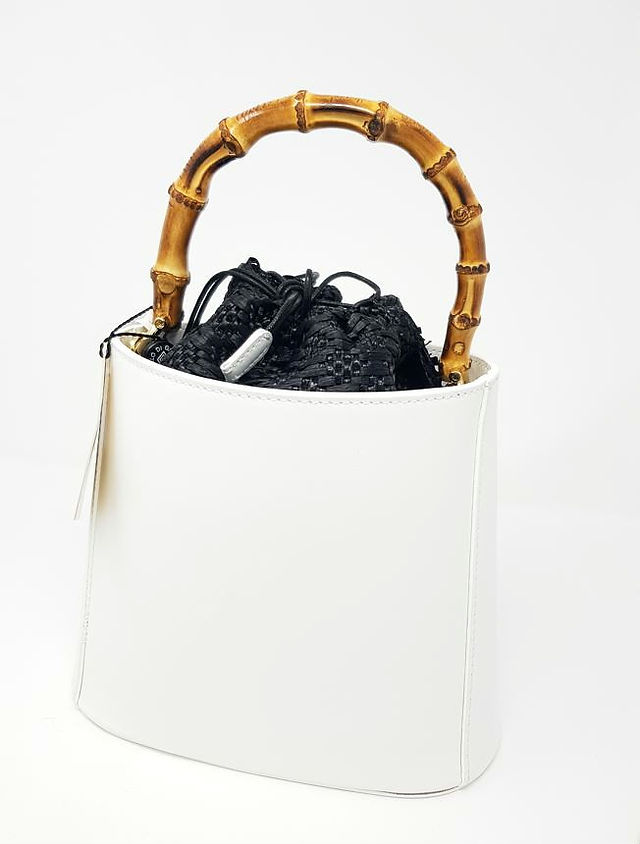
Orchid Bucket Bag with woven black pochette designed by Vivien Lauren 
In Soot Black - Pom Pom Luxury Flats by Vivien Lauren Handmade in Italian Leather Suede 
Woven pochette - Italian Leather Tote Luxury Bags by Vivien Lauren 
Black Velvet Luxury Pointy Ballet Flats designed & Handmade by Vivien Lauren
Explore the Vivien Lauren Collection for elegant pleated dresses, shawls and accessories for your next elegant style.
This fashion piece has been written and brought to you by Shona White. For Vivien Lauren. Vivien Lauren. Luxury. Craftsmanship that's Proudly Italian. Vivien Lauren. Proud to Style.


