
Women's Fashion in the Renaissance Era: Artistry and Influence
Updated: Mar 17
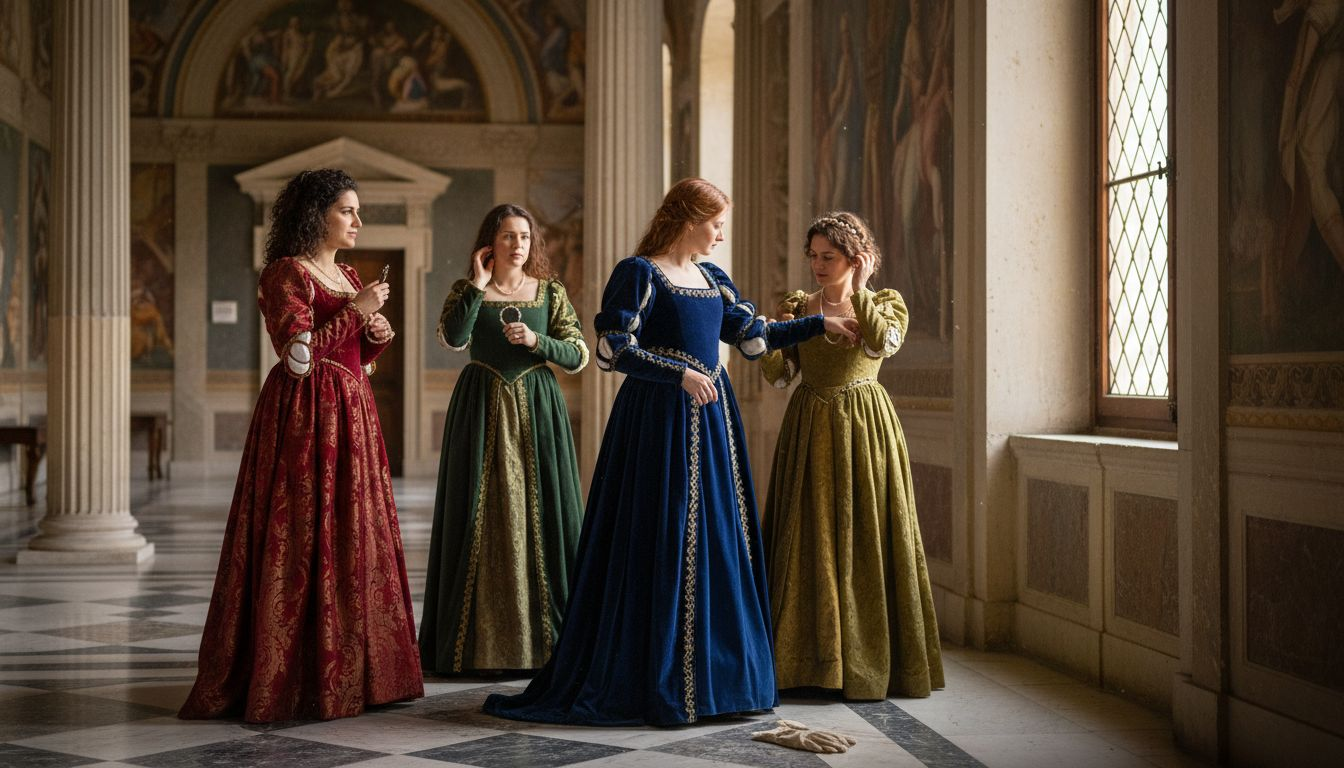
Bold statements of style once shaped the streets of Renaissance Italy, where clothing was much more than mere fabric. For women who admire luxury and timeless sophistication, uncovering the origins of personal adornment reveals why artistry and intention remain so essential. Renaissance fashion marked a cultural shift from medieval custom to modern self-expression, rooted in human creativity, elite craftsmanship, and social meaning. Discover how these historic influences continue to refine the choices in your modern wardrobe.
Table of Contents
Key Takeaways
Point | Details |
Cultural Transformation | The Renaissance marked a significant shift in human creativity, emphasizing individual agency in art and expression. |
Fashion as Social Language | Sumptuary laws shaped women’s fashion, reflecting social status and class distinctions through attire. |
Garment Evolution | The era’s focus on skilled craftsmanship and luxurious materials established a lasting influence on modern fashion. |
Legacy in Modern Fashion | Renaissance principles inspire contemporary design, emphasizing structured silhouettes and quality craftsmanship. |
Defining the Renaissance and Its Cultural Impact
The Renaissance represents far more than a historical period. It marked a fundamental shift in how humanity viewed itself and its creative potential. A significant cultural movement spanning the 14th to 16th centuries, the Renaissance emerged from complex causes including economic development and the rediscovery of ancient Greek and Roman cultures. This era fundamentally changed everything from ideology and literature to art, education, science, and religious reform.
What truly distinguished the Renaissance was its revolutionary perspective on human creativity. For centuries, people attributed all artistic and intellectual achievement to divine inspiration. The Renaissance changed that entirely. The period marked a shift in attributing creativity from divine sources to human beings, creating increased recognition of human agency in the arts, sciences, and invention. Artists, designers, and thinkers suddenly possessed the authority to create, innovate, and shape culture through their own ingenuity and skill.
This shift had profound consequences for fashion and personal adornment. When humans became recognized as the primary creators and agents of change, fashion transformed from mere functional covering into an art form worthy of study and celebration. Women’s fashion, in particular, became a canvas for expressing wealth, status, education, and artistic sensibility. The garments people wore reflected their understanding of proportion, color theory, and classical aesthetics.
The transition from medieval to modern society that occurred during the Renaissance created new social hierarchies and expectations. Fashion became a language through which women could communicate their position within these evolving structures. The intricate embroidery, luxurious fabrics, and carefully constructed silhouettes that defined Renaissance women’s clothing weren’t merely decorative. They were statements of identity, taste, and cultural participation.
Understanding the Renaissance provides crucial context for appreciating why Renaissance fashion emerged as it did. The period’s emphasis on human creativity, classical learning, and individual expression directly influenced how women dressed and presented themselves. The elegance and sophistication you admire in timeless fashion today has roots in this remarkable era of human flourishing.
Insider tip _When studying Renaissance fashion inspiration, focus on how garments reflected both the classical ideals and the innovative spirit of the period rather than simply copying silhouettes. This approach helps you extract timeless principles of elegance that remain relevant to your modern wardrobe.
Societal Rules Shaping Women’s Fashion
Renaissance women navigated a fashion landscape governed by strict rules that went far beyond personal preference. These were not casual guidelines but legally enforced restrictions designed to maintain social order. Sumptuary laws in Renaissance Italy regulated clothing to reflect social status, with officials actively enforcing these rules at social gatherings. What you wore announced your place in society, your wealth, and even your moral character. Violations could result in fines or public humiliation.
The core purpose of these laws was controlling imitation and competition between social classes. Wealthy families feared that upwardly mobile merchants and artisans would wear fabrics and styles previously exclusive to nobility. By restricting who could wear silk, velvet, and jeweled embellishments, authorities attempted to keep visual distinctions sharp and unmistakable. This created a rigid hierarchy where fashion became a language of class boundaries.
Women experienced these restrictions more intensely than men. Upper-class women wore tight bodices and full skirts, garments that required servants to dress and restricted movement. These impractical clothes signaled that a woman did not need to work. Lower-class women, by contrast, prioritized functionality. They wore simpler garments without restrictive undergarments, keeping their bodies free for labor in fields and workshops.
These sumptuary laws reveal something crucial about Renaissance fashion. The elegance and artistry we admire were not simply aesthetic choices. They were performances of power, wealth, and social legitimacy. Every seam, every fabric choice, every color carried meaning and consequence.
Understanding these restrictions helps explain why Renaissance fashion developed as it did. The exquisite craftsmanship, the carefully constructed silhouettes, and the luxurious materials were not merely beautiful. They were declarations of status in a society where appearance determined opportunity and respect.
Here’s a summary comparing women’s fashion across Renaissance social classes:
Social Class | Typical Garments | Key Fabrics and Colors | Social Meaning |
Upper Class | Tight bodices, full skirts | Silk, velvet, jewel tones | Displayed wealth and leisure |
Middle Class | Fitted bodices, moderate skirts | Wool, fine linen, muted shades | Signaled aspiration and respectability |
Lower Class | Simple dresses, loose garments | Coarse wool, earth tones | Showed practicality, readiness for work |
Pro tip When drawing inspiration from Renaissance styles today, focus on how the structures and details communicated sophistication rather than replicating the restrictive aspects. Modern elegance captures the artistry and intention without the limitations that governed women’s choices centuries ago.
Signature Styles and Garment Evolution
Renaissance women’s fashion followed a distinctive silhouette that became the era’s defining visual signature. Women’s gowns featured tight bodices paired with full skirts, a combination that required masterful construction and quality materials. This shape did more than flatter. It communicated wealth, refinement, and adherence to ideals of femininity that Renaissance society valued. The silhouette itself became a statement of identity shaped by age, gender, and social rank.
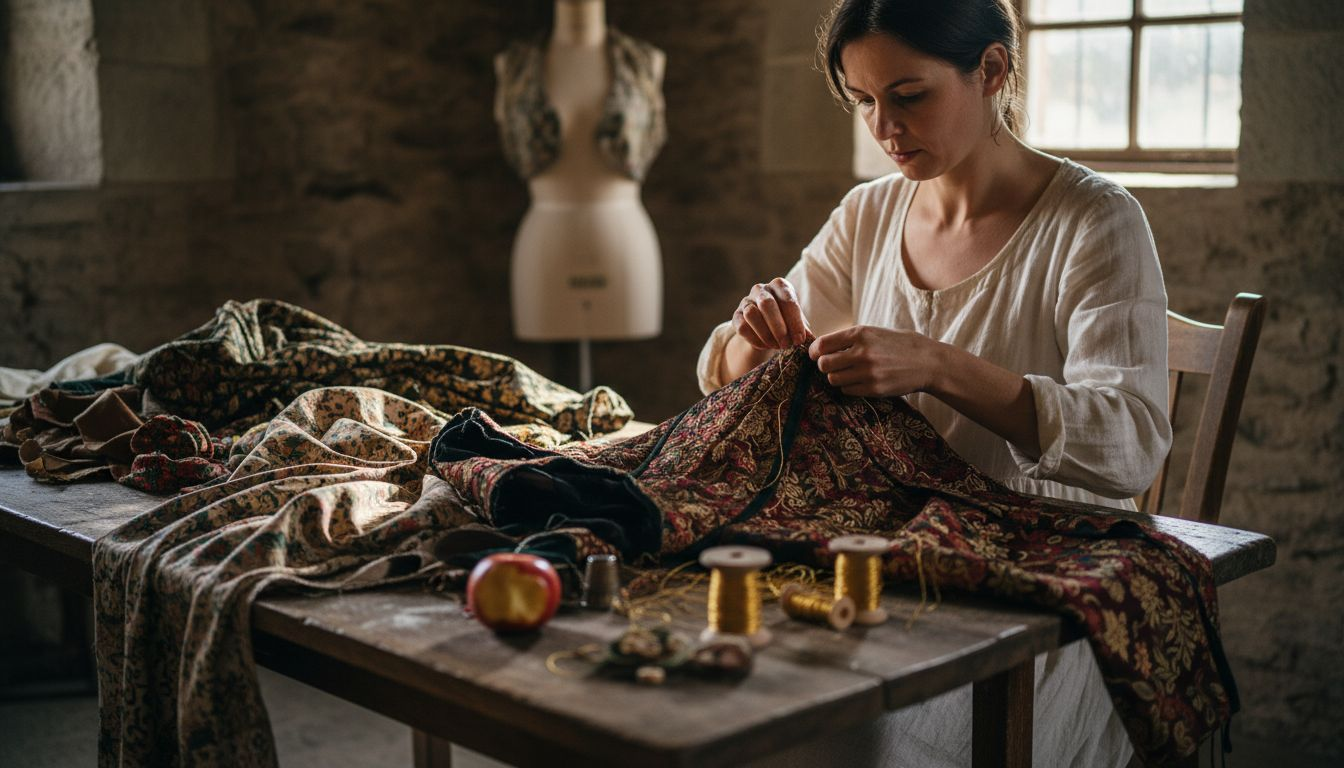
The evolution of these garments reflected changing tastes and technological advances in fabric production. As trade routes expanded and textile manufacturing improved, luxurious fabrics, intricate embroidery, and vibrant colors became hallmarks of elite fashion. A woman’s dress could feature hand-stitched patterns using gold thread, layered silk in multiple colors, and details that took months to complete. These pieces were investments in both materials and labor.
Color itself carried symbolic weight. Rich purples, deep crimsons, and luminous golds signaled status because the dyes cost a fortune. Lower-class women wore earth tones and muted hues created from cheaper, local dyes. This visible hierarchy through color and embellishment meant that Renaissance fashion literally wore its class distinctions on its sleeve.
The construction methods deserve attention. Tight bodices required boning, internal structure, and precise tailoring. Full skirts needed yards of fabric gathered and sewn with exactitude. This complexity meant that truly fashionable Renaissance women relied on skilled seamstresses, often from specialized guilds. The garment itself became a collaboration between designer, craftsperson, and wearer.
What fascinates about Renaissance garment evolution is how form followed function and status simultaneously. The impractical silhouette actually served a purpose: it displayed that a woman could afford not to work. Yet the garments were also genuinely beautiful, achieving elegance through precision and proportion that influenced fashion for centuries afterward. Understanding sartorial elegance and personal style helps us appreciate how Renaissance women used fashion as both constraint and canvas.
Pro tip Study how Renaissance garment construction achieved its distinctive shape through strategic layering and boning rather than simply copying the silhouette. This understanding helps you select modern pieces that capture the essence of Renaissance elegance without replicating historical limitations.
Craftsmanship and Fabric Innovations
Renaissance fashion represented a pinnacle of skilled artistry where tailors approached their work with the precision of sculptors. Fashion was treated as an art form involving skilled craftsmanship and tailoring, with garments created while considering bodily proportions, movement, and how fabrics would respond to light. Every seam, every gather, every placement of embellishment served both aesthetic and structural purposes. The tailor’s knowledge transformed raw materials into wearable masterpieces.
The fabrics themselves underwent remarkable innovation during this period. Silk production advanced dramatically, allowing for greater variety in weight, sheen, and drape. Tailors experimented with layering different textiles to create depth and movement in garments. The interplay of fabrics inspired what designers called polychrome effects, where multiple colors and textures worked together to create visual richness. A single gown might combine velvet, silk damask, linen, and gold brocade in carefully orchestrated combinations.
What truly revolutionized Renaissance fashion was how innovations made style accessible beyond the ultra-wealthy. New materials like ribbons, knitted stockings, imitation pearls, and light silks allowed broader social classes to participate in fashion. A merchant’s daughter might afford fine accessories to mix with quality but less expensive base garments. Creative layering and strategic use of embellishment meant that fashionable presentation became possible across economic strata.
Color played roles that went far beyond decoration. Dyes were expensive, complex, and sometimes toxic to produce. The colors a woman wore communicated her family’s resources, her husband’s status, and sometimes even political allegiances. Renaissance dyers developed techniques to achieve unprecedented vibrancy and permanence in fabrics. These weren’t casual choices but deliberate expressions of power and identity.
The craftsmanship standards were uncompromising. Hand-sewn seams had to be invisible. Embroidery required years of training to master. Understanding slow fashion and craftsmanship principles helps modern women appreciate why Renaissance garments remain objects of admiration. Each piece required investment of time, skill, and materials that reflected genuine artistic vision.
Pro tip When selecting garments today, examine the construction quality and fabric composition the way a Renaissance tailor would have. Look for hand-finished details, natural fiber content, and evidence of skilled craftsmanship that mirrors the intentionality of Renaissance fashion.
Fashion Legacy and Modern Interpretations
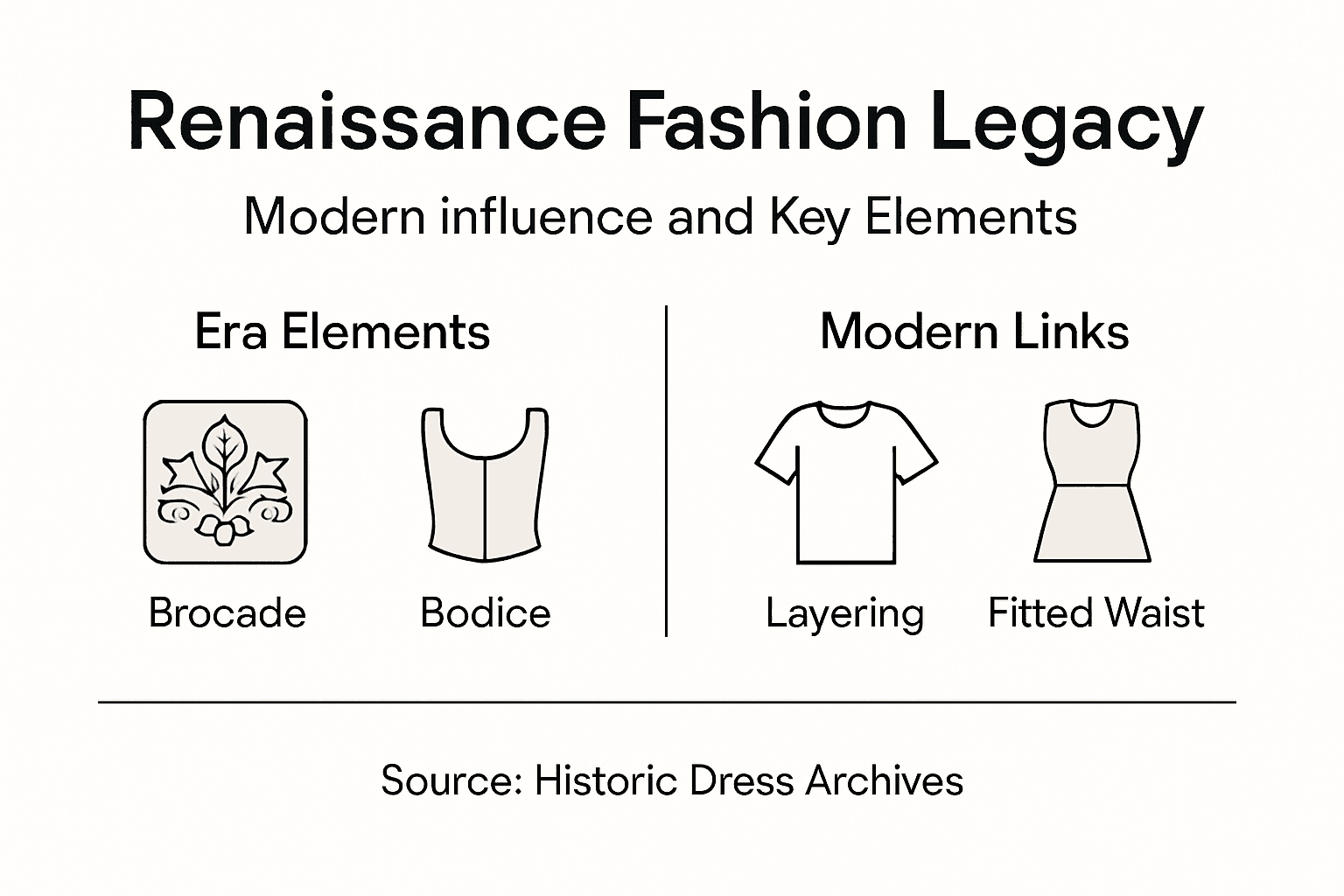
The Renaissance left an indelible mark on fashion that extends far beyond historical museums and academic study. Renaissance fashion continues to influence modern design through iconic silhouettes such as the hourglass figure created by corsetry and farthingales. Designers today draw inspiration from the opulence and craftsmanship concepts that defined this era. Walk into any luxury fashion house and you’ll spot echoes of Renaissance elegance: structured bodices, rich fabrics, meticulous embellishment.
What’s remarkable is how Renaissance innovations democratized fashion across social classes. Innovations in materials and style permeated beyond elite classes, influencing popular taste and shaping the broader experience of fashion into modernity. This phenomenon set a precedent: fashion could simultaneously serve the wealthy as a status marker while allowing broader access through clever material choices and styling. That tension between exclusivity and accessibility persists in contemporary fashion.
Modern designers frequently reference Renaissance silhouettes when creating collections. The concept of the fitted bodice paired with voluminous skirts resurfaces seasonally. Luxurious fabrics and ornate details conceived in this era inspire contemporary pieces that balance historical reverence with contemporary practicality. Designers integrate opulence into modern wardrobes without the historical restrictions that made movement difficult.
The craftsmanship philosophy of the Renaissance remains deeply relevant. Contemporary luxury brands emphasize handwork, quality materials, and construction methods that honor artisanal traditions. When a modern garment features hand-stitched details or hand-finished seams, it echoes the Renaissance commitment to excellence. This connection between past and present gives timeless fashion its enduring appeal.
For fashion-conscious women aged 25 to 45, understanding this legacy transforms how you approach your wardrobe. Why classic fashion endures becomes clearer when you recognize the Renaissance principles embedded in truly elegant pieces. You’re not simply buying clothes. You’re participating in a centuries-long conversation about beauty, craftsmanship, and self-expression.
Explore key Renaissance fashion innovations and their modern echoes:
Innovation | Renaissance Impact | Influence on Modern Fashion |
Structured Silhouettes | Defined hourglass shapes | Inspires fitted dresses and suits |
Luxurious Textile Layering | Combined fabrics for richness | Used in formal wear and couture gowns |
Handcrafted Embellishments | Embroidery, gold threads, pearls | Seen in artisan-made luxury accessories |
Sumptuary Law Distinctions | Regulated styles by class | Inspires exclusive designer collections |
Pro tip When evaluating contemporary pieces, ask yourself whether they embody Renaissance principles: structured construction, quality materials, thoughtful proportions, and evidence of skilled craftsmanship. Pieces that reflect these values transcend trends and become the timeless investments that define sophisticated wardrobes.
Experience Renaissance Elegance in Your Modern Wardrobe
Discover how the artistry and craftsmanship of Renaissance women’s fashion can inspire your personal style today. This era taught us that true elegance comes from thoughtful proportions, quality materials, and expert tailoring rather than simply following fleeting trends. At Vivien Lauren, we embrace these timeless principles, offering carefully crafted dresses and accessories made in Italy by artisans passing down generations of skill. Each piece captures the essence of sophistication and slow fashion without the restrictive limitations of the past.

Elevate your wardrobe with designs that honor the Renaissance legacy through structured silhouettes, luxurious fabrics, and handcrafted details. Shop now to enjoy free UK shipping on orders over £80 and bring history’s most refined elegance into your life today at Vivien Lauren. Explore our curated collections and experience the perfect blend of historical inspiration and contemporary luxury.
Frequently Asked Questions - Women's Fashion in the renaissance era
What were the primary elements of women’s fashion during the Renaissance era?
Women’s fashion in the Renaissance era was characterized by tight bodices, full skirts, rich fabrics, and intricate embroidery. The style emphasized a defined hourglass silhouette, often constructed using luxurious materials that conveyed wealth and social status.
How did sumptuary laws affect women’s fashion choices during the Renaissance?
Sumptuary laws regulated what individuals could wear based on their social class, reinforcing social hierarchies. Wealthy women wore elaborate garments made from expensive fabrics, while lower-class women prioritized functionality in their clothing, reflecting their societal roles and economic status.
What role did craftsmanship play in Renaissance women’s fashion?
Craftsmanship was paramount in Renaissance women’s fashion, with skilled tailors and seamstresses using precise techniques to create garments. The attention to detail and quality of construction resulted in unique and beautiful pieces that often served as symbols of power and prestige.
How have Renaissance fashion innovations influenced modern clothing designs?
Renaissance fashion innovations, such as structured silhouettes and luxurious textile layering, continue to shape modern designs. Elements like fitted bodices and voluminous skirts frequently reappear in contemporary collections, highlighting the lasting impact of this era on today’s fashion landscape.
Recommended

This historic fashion piece on the renaissance and how it has shaped the wardrobe for the modern woman, has been written for you by Shona White. On behalf of Vivien Lauren. Vivien Lauren. Luxury. Craftsmanship that's Proudly Italian. Vivien Lauren. Proud To Style.


