
The Nautical Architect: How Italian yacht design shaped luxury fashion and Cruise apparel wear

Most people assume luxury means bold logos plastered on handbags and sneakers. Yet true sophistication whispers rather than shouts. Italian yacht design pioneered this understated elegance decades ago, and today’s quiet luxury fashion movement draws directly from those nautical blueprints. From minimalist silhouettes to artisan-crafted materials, the connection between sleek maritime architecture and refined Italian apparel reveals a shared DNA of timeless quality over fleeting trends. These long time acquired skills led to the birth of cruise apparel wear or nautical fashion in the luxury world.
Table of Contents
Key takeaways
Point | Details |
Italian yacht design principles inspire quiet luxury’s minimalism and craftsmanship | Nautical architecture’s functional elegance translates directly into fashion silhouettes emphasizing clean lines and premium materials. |
Quiet luxury favors timeless elegance over flashy branding | Subtle exclusivity replaces conspicuous logos, prioritizing craftsmanship and material excellence. |
Shared artisanal traditions unify yacht design and Italian fashion | Generational expertise in hand stitching, natural dyeing, and finishing techniques sustain both crafts. |
Sustainability is integral to both nautical and luxury fashion design | Recycled materials and slow fashion principles reflect ecological responsibility in modern Italian design. |
Practical tips help consumers identify true quiet luxury pieces | Evaluating durability, subtle details, and artisan workmanship ensures authentic investment purchases. |
Introduction to ‘quiet luxury’ and its Italian roots
Quiet luxury represents a fashion philosophy where quality craftsmanship trumps visible branding. Instead of screaming status through oversized monograms, this approach celebrates subtle sophistication. Italian design culture shaped this ethos over generations, treating every garment like an architectural masterpiece.
Italy’s deep-rooted appreciation for beauty and function extends from Renaissance art to modern yacht interiors. This cultural legacy influenced how Italian fashion houses approach luxury. They prioritize materials that age gracefully, construction techniques passed through families, and silhouettes that transcend seasonal fads.

The Made in Italy ethos treats a yacht hull and a tailored blazer with identical architectural precision. Both demand meticulous attention to proportion, material selection, and finishing. Giorgio Armani’s Maìn yacht exemplifies this philosophy, using muted palettes that blend into the sea rather than demand attention. This same restraint defines quiet luxury apparel.
Key characteristics distinguishing quiet luxury from mainstream fashion include:
Absence of conspicuous logos or branding elements
Investment in premium natural fibers like cashmere, silk, and Italian leather
Timeless silhouettes designed for decades of wear
Artisan-level construction with hand-finished details
Subtle color palettes inspired by natural environments
This philosophy contrasts sharply with flashy luxury that relies on brand recognition. Where mainstream luxury shouts, quiet luxury speaks through texture, drape, and impeccable fit. The Italian influence ensures every piece tells a story of heritage and craftsmanship rather than temporary trend-chasing.
The influence of nautical architecture on Italian luxury fashion
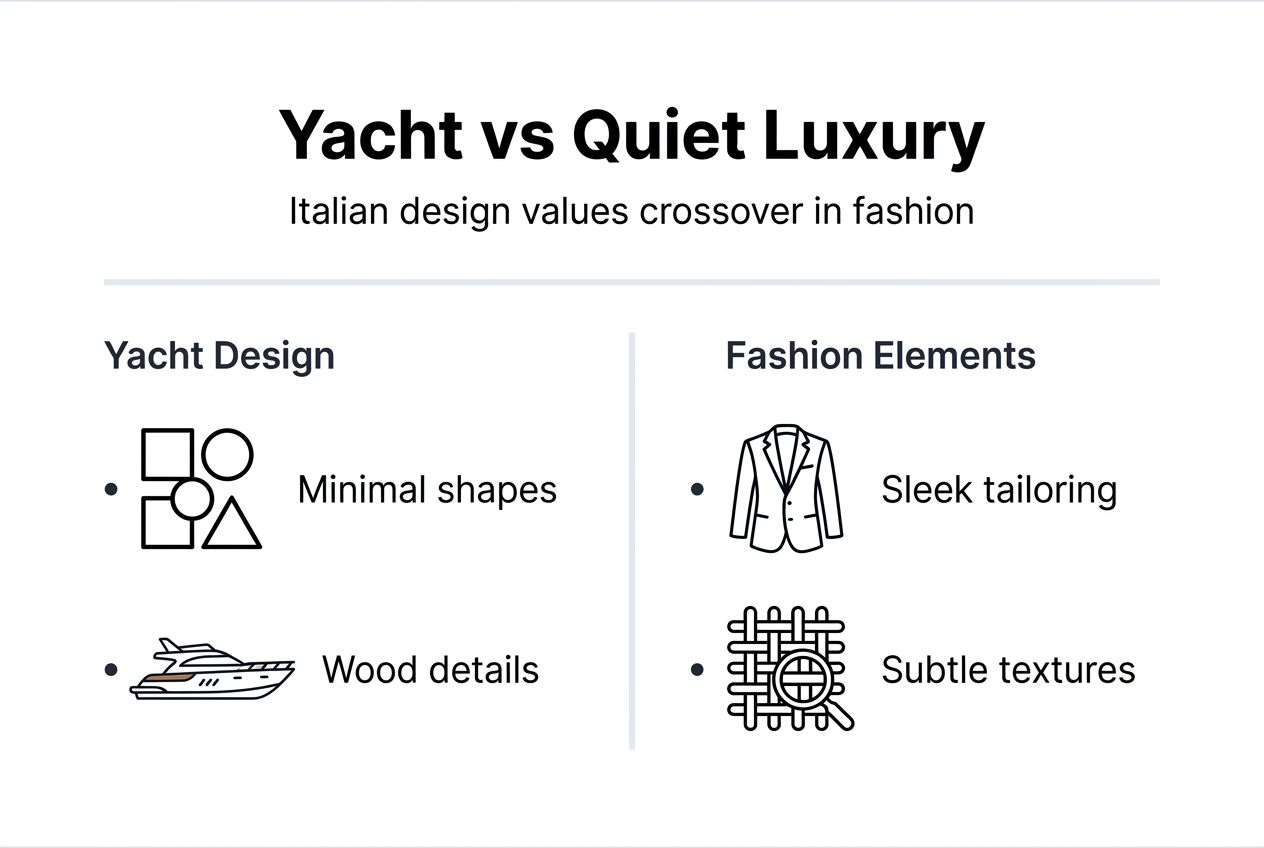
Italian yacht design pioneered minimalism long before it became a fashion buzzword. Sleek hulls demand streamlined forms where every curve serves both beauty and function. This same principle shapes Italian style’s timeless elegance, with over 85% of quiet luxury collections borrowing design elements directly from nautical minimalism.
Maritime architecture obsesses over material quality because the sea environment tests every surface. Hand-polished mahogany, supple Italian leather, and corrosion-resistant brass become non-negotiable standards. Fashion houses adopted this same rigor, sourcing fabrics that feel substantial in your hands and hardware that clicks with satisfying precision.
Color palettes from yacht interiors translate beautifully into apparel. Think navy blazers echoing deep ocean hues, cream linens matching sailcloth, and muted earth tones reflecting sun-bleached wood. These colors never scream for attention yet command respect through sophistication.
The functional elegance of yacht design influences garment silhouettes:
Clean lines without unnecessary embellishment
Strategic seaming that enhances natural body contours
Fabric choices prioritizing drape and movement
Hardware placements combining beauty with utility
Yacht Design Principle | Fashion Element | Result |
Streamlined hull shapes | Tailored blazers with minimal lapels | Sophisticated silhouettes |
Teak deck graining | Textured Italian leather bags | Tactile luxury |
Brass nautical fittings | Gold-toned clasps and buttons | Understated hardware |
White sailcloth | Crisp linen shirts and trousers | Breathable elegance |
Navy hull paint | Deep indigo cashmere sweaters | Timeless color foundation |
This cross-pollination between industries creates a visual language of refined taste. A well-designed yacht interior and a perfectly cut coat share the same DNA: form following function, materials chosen for longevity, and details finished by hand.
Craftsmanship bridging yachts and Italian fashion
The artisans building Italian yachts and those stitching luxury garments share generational knowledge passed from master to apprentice. Both crafts demand patience, precision, and an eye for microscopic imperfections. This shared heritage explains why artisan techniques emphasize durability and timelessness in both industries.
Yacht construction requires hand-laid fiberglass, custom-bent metal railings, and upholstery stitched to withstand constant motion. Fashion ateliers employ remarkably similar skills: hand-sewn buttonholes, naturally dyed fabrics requiring careful pH balancing, and finishing techniques that ensure seams lie flat for decades. These methods take exponentially longer than industrial production but create pieces that become family heirlooms.
The emphasis on durability over trends sustains both crafts financially and philosophically. A yacht built to last 50 years justifies premium pricing. A coat constructed with the same longevity deserves equal investment. This perspective challenges fast fashion’s disposable mentality.
Techniques connecting yacht building and fashion include:
Hand stitching that flexes with materials rather than creating stress points
Natural dyeing processes using plant extracts and minerals
Finishing treatments that protect without compromising texture
Quality control inspections examining every centimeter
Pro Tip: When shopping for quiet luxury pieces, examine stitching under bright light. Hand-finished garments show slight variations in stitch length, indicating artisan involvement rather than machine uniformity. Check lining attachments and interior seams—these hidden areas reveal true craftsmanship standards.
This dedication to craft means both industries resist automation. While technology assists with precision cutting or pattern development, human hands complete the work that matters most. The weight of tradition grounds modern design in proven excellence.
Nautical elements in Italian luxury apparel and accessories
Maritime textures infiltrate quiet luxury fashion in surprising ways. Rope-inspired braiding adorns handbag straps and belt details. Sailcloth-like fabrics with subtle weaves create structured jackets and trousers. These elements reference nautical heritage without resorting to costume-like anchors or stripes.

Hardware choices directly echo yacht fittings. Brass buttons resembling those on captain’s blazers add subtle warmth. Clasps designed like miniature cleats secure bags with satisfying clicks. Even zipper pulls sometimes mimic marine rope knots, connecting wearers to seafaring tradition through tactile details.
Color palettes drawn from maritime environments dominate collections. Deep navy channels midnight water. Crisp white reflects billowing sails. Sand and driftwood tones ground outfits in natural elegance. Italian fashion houses integrate these maritime textures and inspired color palettes throughout their seasonal offerings.
Specific translations include:
Leather goods featuring grain patterns mimicking teak decking
Woven textile structures echoing sailcloth construction
Metal accents using marine-grade brass and polished steel
Button placements referencing naval uniform traditions
Nautical Motif | Fashion Interpretation | Item Category |
Rope braiding | Twisted leather handles | Handbags |
Sailcloth texture | Structured linen blazers | Outerwear |
Brass cleats | Gold-toned bag closures | Accessories |
Navy hull paint | Deep indigo wool coats | Outerwear |
Teak graining | Embossed Italian leather | Shoes and bags |
White canvas | Crisp white Lace, silk, or crepe | Tops |
These subtle references allow fashion-conscious individuals to signal sophistication without literal nautical costumes. A bag with rope-inspired handles nods to maritime heritage while remaining appropriate for urban settings. The restraint distinguishes quiet luxury from themed fashion.
Coco Chanel pioneered this translation decades ago with her nautical-inspired jersey pieces. Modern collaborations like Riva x Gucci continue this legacy, applying yacht craftsmanship standards to fashion accessories. The nautical uniform—navy blazers, white linen, brass details—has been refined into today’s quiet luxury wardrobe essentials.
Common misconceptions about luxury and ‘quiet luxury’
Many consumers mistakenly equate visible logos with quality. This confusion drives purchases based on brand recognition rather than actual craftsmanship. Studies reveal 40% of luxury consumers make this error, while quiet luxury buyers reject logo-centric thinking entirely.
The logo fallacy assumes bigger branding means better construction. Reality proves otherwise. A handbag covered in monograms might use bonded leather and machine stitching. Meanwhile, an understated piece from a quiet luxury brand employs full-grain leather and hand-sewn seams. The latter costs more to produce and lasts exponentially longer.
Quiet luxury consumers prioritize subtle exclusivity over public recognition. They appreciate when fellow connoisseurs notice impeccable tailoring or recognize a particular atelier’s signature stitching pattern. This insider knowledge replaces the need for external validation through logos.
Key misconceptions include:
Luxury requires conspicuous branding to signal status
Higher prices always correlate with visible logos
Understated design indicates lower quality or value
Fashion must announce its pedigree to justify premium pricing
“True luxury whispers. Craftsmanship and material excellence outweigh brand flashiness. The most discerning buyers seek pieces that reveal their quality through touch and construction rather than visible marketing.”
This shift reflects growing consumer sophistication. As more people recognize that logo-heavy items often target aspirational buyers rather than connoisseurs, demand for quiet luxury increases. The fashion industry responds by investing in materials and techniques that justify premium pricing through inherent quality.
Educated consumers examine fabric weight, lining quality, and construction methods before considering brand names. They understand a perfectly balanced coat or a bag that ages beautifully represents better value than trendy pieces designed for single-season relevance. This knowledge transforms shopping from status-seeking into genuine appreciation for craft.
Case studies: Italian designers inspired by yacht design - Cruise apparel wear
Brunello Cucinelli exemplifies the yacht design-fashion connection. His collections showcase nautical-inspired minimalism with exceptional craftsmanship, using color palettes that mirror Italian coastal waters. Muted grays, soft blues, and warm neutrals dominate, creating wardrobes that feel like wearable architecture.
Cucinelli’s brand philosophy emphasizes humanistic capitalism, treating artisans with dignity while producing garments designed for decades of wear. This mirrors yacht building’s respect for master craftspeople and commitment to longevity. Each cashmere sweater receives the same meticulous attention as a yacht’s custom woodwork.
The designer’s Solomeo headquarters features architecture blending medieval structures with modern minimalism. This aesthetic philosophy extends to products where traditional techniques meet contemporary silhouettes. A tailored blazer might use centuries-old Neapolitan shoulder construction while offering streamlined proportions suitable for today’s tastes.

Design features reflecting yacht architecture include:
Color stories inspired by Mediterranean seascapes
Texture combinations echoing maritime materials
Hardware selections favoring brushed metals over shiny finishes
Silhouettes emphasizing fluid movement and comfort
Fabric choices prioritizing natural fibers and sustainable sourcing
Loro Piana represents another intersection of nautical influence and quiet luxury. Their obsession with raw materials—using only the finest cashmere and vicuña fibers—parallels yacht builders sourcing premium mahogany and leather. The brand’s sailing heritage informs product development, with technical fabrics performing in marine environments while maintaining elegant aesthetics.
These brands demonstrate how yacht design values integrate into fashion storytelling. Marketing emphasizes heritage, craftsmanship, and material provenance rather than celebrity endorsements or trend forecasting. Product longevity becomes a selling point, with brands offering repair services to extend garment lifespans indefinitely.
Sustainability in nautical and fashion design
Modern Italian yacht design increasingly incorporates recycled materials and eco-conscious engineering. Reclaimed teak, recycled aluminum fittings, and low-emission propulsion systems reflect environmental awareness. Sustainable material use is equally prevalent in Italian luxury fashion, with designers prioritizing natural fibers and responsible production.
Slow fashion principles align perfectly with quiet luxury’s emphasis on longevity. Rather than chasing seasonal trends, brands create pieces designed for years of wear. This approach reduces waste while delivering better value to consumers. A coat purchased today should remain stylish and functional in 2036, not relegated to landfills after one winter.
Consumer demand drives this ecological responsibility. Fashion-conscious buyers increasingly research brands’ sustainability credentials before purchasing. They want transparency about material sourcing, production conditions, and end-of-life recyclability. This mirrors yacht buyers demanding eco-certified materials and fuel-efficient designs.
Shared sustainability practices include:
Natural fiber prioritization (organic cotton, linen, wool, silk)
Vegetable tanning processes avoiding toxic chemicals
Recycled material integration without compromising quality
Local production reducing transportation emissions
Repair programs extending product lifespans
Pro Tip: Look for certifications when selecting sustainable luxury pieces. GOTS (Global Organic Textile Standard) verifies organic fiber content and ethical production. Cradle to Cradle certification ensures materials can be safely recycled or composted. These third-party validations confirm brands’ sustainability claims.
The connection between durability and sustainability proves crucial. A garment worn for 10 years has one-tenth the environmental impact per wear compared to a piece discarded after one season. Quiet luxury’s emphasis on timeless design and quality construction inherently supports ecological goals. Understanding sustainable materials helps consumers make informed choices.
Both industries also embrace circular economy principles. Yacht refurbishment extends vessel lifespans by decades. Fashion brands offer alterations, repairs, and even buyback programs for pre-owned pieces. This shift from linear consumption to circular models reduces resource extraction while maintaining luxury standards.
Practical guidance: Identifying and investing in ‘quiet luxury’ pieces
Authenticating quiet luxury requires examining details invisible in online photos. Visit stores when possible to assess fabric weight, construction quality, and how garments drape on your body. The tactile experience reveals craftsmanship standards no photograph captures.
Prioritize durability markers over trendy silhouettes. Classic cuts in premium materials outlast fashion cycles. A perfectly tailored navy blazer remains relevant across decades, while an exaggerated sleeve style dates quickly. The selection process for timeless fashion emphasizes versatility and longevity.
Subtle details distinguish genuine quiet luxury from mass-market imitations. Examine stitching consistency, lining attachment methods, and hardware weight. Authentic pieces show meticulous attention in areas most consumers never notice. Interior pockets should lie flat. Button holes should show hand-finishing traces. Seams should align perfectly across patterns.
Steps for evaluating quiet luxury investments:
Research brand heritage and production methods before shopping
Examine fabric composition labels, favoring natural fibers
Inspect interior construction including lining and seam finishing
Test hardware functionality ensuring smooth, substantial operation
Assess color timelessness—will this shade remain elegant in 5 years?
Consider cost per wear based on projected garment lifespan
Verify return and alteration policies supporting long-term satisfaction
Pro Tip: Invest in Italian leather goods reflecting nautical craftsmanship. Accessories like handbags and shoes receive daily use, making quality construction essential. Look for full-grain leather that develops patina rather than showing wear, brass hardware that won’t tarnish, and stitching patterns indicating hand work.
Building a quiet luxury wardrobe takes time and intention. Start with versatile foundations: a perfect white shirt, well-cut trousers, a cashmere sweater in a neutral tone. Add accent pieces gradually, ensuring each addition complements existing items. This curated approach prevents impulse purchases while creating cohesive personal style.
Consider provenance when investing. Italian-made pieces generally command premiums but deliver superior craftsmanship. The Made in Italy designation indicates artisan involvement and quality control standards absent in mass production. This matters for longevity and eventual resale value.
Explore curated quiet luxury fashion collections
Vivien Lauren embodies the quiet luxury ethos through elegant and classic women’s wear inspired by Italian craftsmanship and nautical design principles. Each piece reflects generational expertise passed through Italian ateliers, ensuring quality that transcends fleeting trends.

Our curated collections feature dresses in sophisticated silhouettes and accessories showcasing artisan details, all selected for timeless elegance. From green midi dresses to navy classics, every item demonstrates the subtle sophistication defining quiet luxury. Free UK shipping on orders over £80 and international shipping above £300 make investing in quality accessible.
Explore pieces that whisper rather than shout, crafted with the same precision Italian yacht builders apply to their masterworks. Your wardrobe deserves the architectural elegance that transforms everyday dressing into sophisticated expression.
Frequently asked questions
What is ‘quiet luxury’ in fashion?
Quiet luxury represents subtle, high-quality fashion emphasizing craftsmanship over conspicuous logos. This approach prioritizes timeless elegance, premium materials, and durability rather than seasonal trends or visible branding. Italian heritage and yacht design principles heavily influence this philosophy, creating apparel that signals sophistication through construction quality and understated details.
How does Italian yacht design influence luxury fashion?
Italian yacht architecture inspires fashion through minimalism, natural materials, and nautical motifs translated into apparel design. Shared artisanal traditions bolster quality in both industries, with techniques like hand stitching and natural dyeing creating durable, elegant products. Color palettes, hardware choices, and texture selections directly reference maritime design elements while maintaining subtle sophistication.
How can I identify authentic quiet luxury pieces?
Look beyond logos to evaluate craftsmanship and material quality through hands-on inspection. Seek timeless, understated designs with subtle nautical influences like rope-inspired details or maritime color palettes. Check for artisan details including hand-finished buttonholes, full-grain leather, and durable construction methods. Interior finishing quality often reveals true luxury standards invisible in exterior appearance.
Why does quiet luxury emphasize sustainability?
Durability inherently supports sustainability by reducing consumption frequency and environmental impact per wear. Quiet luxury brands prioritize natural fibers, ethical production, and circular economy principles including repair programs. This mirrors yacht design’s shift toward recycled materials and eco-conscious engineering, reflecting consumer demand for responsible luxury that doesn’t compromise quality or longevity.

Recommended
This inspiring fashion piece on Italian Craftsmanship - its reach from refined Yacht Design to Luxury Fashion, has been researched, authored and brought to you by Shona White. For Vivien Lauren. Vivien Lauren. Luxury. Craftsmanship that's Proudly Italian. Vivien Lauren. Proud To Style.


