
Satin, strings & style: the harp player's elegant fashion
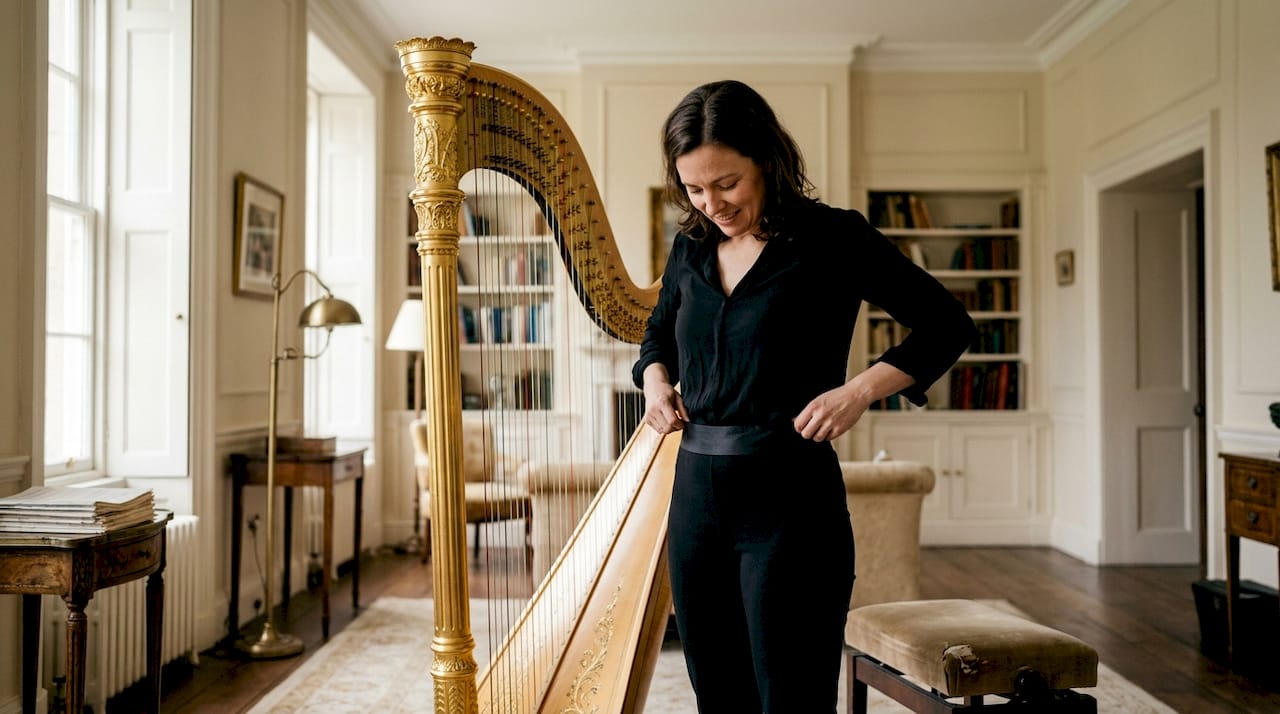
There is something almost otherworldly about watching a harpist perform. The instrument itself, ancient and towering, seems to breathe alongside its player, demanding a particular quality of presence that few other instruments require. The harp is one of humanity’s oldest instruments, with origins stretching back over 5,000 years to ancient Mesopotamia and Egypt, where early bow-shaped harps were depicted in tomb paintings and royal ceremonies. For the women who have mastered it across centuries, the harp has always called for a certain gracefulness, a quality that extends naturally into the way they dress, move, and present themselves to the world. This is the spirit we explore here: the intersection of harp-player elegance, satin craftsmanship, and the art of dressing with intention.
Table of Contents
Key Takeaways
Point | Details |
Concept over brand | Satin and Strings is a theme of elegance, not an existing fashion label. |
Materials matter | Stretch fabrics and artisanal details are essential for harp-inspired fashion. |
Movement equals elegance | Luxury style for modern women must balance visual grace with practical comfort. |
Troubleshoot for perfection | Check for fit, comfort, and washability to ensure functional luxury. |
Shop artisanal styles | Vivien Lauren offers elegant pieces and accessories reflecting harp-inspired craftsmanship. |
Defining harp-inspired elegance in luxury apparel
The harp is not merely an instrument. It is a statement of refinement. Standing nearly six feet tall, with its gilded column, sweeping neck, and forty-seven strings, the concert grand harp is itself a work of artisanal beauty. Its design evolved dramatically from those early angular forms into the ornate pedal harp we recognize today, perfected in the early 19th century by Sébastien Érard, whose double-action mechanism allowed players to access all twelve chromatic pitches. The instrument’s very architecture demands that its player embody a corresponding elegance.
Female harpists throughout history have understood this intuitively. Nicanor Zabaleta, though male, helped elevate the harp’s concert status, but it is women like Marisa Robles, Yolanda Kondonassis, and the incomparable Deborah Henson-Conant who have shaped the visual language of harp performance. Marisa Robles, celebrated for her recordings of Handel’s harp concerto and her luminous BBC Proms appearances, was frequently photographed in floor-length ivory and champagne satin gowns, their fluid silhouettes echoing the harp’s own curved lines. Yolanda Kondonassis, known for her recordings of the Ginastera Harp Concerto, has appeared on stage in deep jewel-toned silk and satin dresses, their structured bodices giving way to softly gathered skirts that allowed her arms the freedom to arc across the strings.
Deborah Henson-Conant, a harpist noted for her unique style blending substance with visual spectacle, broke convention entirely, performing in fitted black stretch ensembles that honored both movement and modernity. Her approach signaled something important: that harp performance attire emphasizes elegance, craftsmanship, and graceful movement, aligning perfectly with artisanal luxury fashion values.
The conceptual phrase “Satin and Strings” captures this beautifully. Satin represents smooth, luminous elegance. Strings evoke the intricate, hand-worked craftsmanship that defines both the instrument and the finest luxury apparel. Together, they describe a philosophy of dressing that is rooted in the essence of luxury craftsmanship and expressed through handcrafted leather in fashion and exquisite textiles.
Traditional concert wear | Modern harpist-inspired luxury |
Rigid ball gowns, heavy boning | Fluid satin, stretch silk blends |
Ornate embellishment, metal clasps | Subtle artisanal detail, no hardware |
Limited movement, formal silhouette | Freedom of movement, graceful drape |
Dry-clean only, fragile fabrics | Practical, washable luxury textiles |
Key artisanal qualities that define this aesthetic include:
Custom tailoring that honors the body’s natural movement
Hand-worked materials such as satin, silk, and fine stretch weaves
Functional elegance that never sacrifices comfort for appearance
Subtle luminosity through fabric sheen rather than heavy embellishment
Satin: its history, evolution, and role in Italian fashion
To truly understand harp-inspired fashion, one must understand satin itself. Satin is not a fiber but a weave structure, one of the oldest and most sophisticated in textile history. Originating in the Chinese port city of Zaytun (modern Quanzhou) during the medieval period, satin weaving traveled westward along the Silk Road, arriving in Italy by the 13th century. Florentine and Venetian weavers quickly recognized its commercial and aesthetic potential, refining the weave to produce the characteristic smooth, lustrous face that has defined luxury fabric ever since.
The satin weave works by floating warp threads over multiple weft threads, minimizing interlacing points and creating that signature surface sheen. Early satin was woven exclusively from silk, making it extraordinarily expensive and reserved for royalty and the church. The Industrial Revolution introduced power looms that could replicate the weave in cotton and synthetic fibers, but true luxury satin remained, and still remains, a silk affair.
Italy’s relationship with satin is deeply personal. The mills of Como, a city on the shores of Lake Como in northern Italy, became the world’s center for silk and satin production from the Renaissance onward. Today, Como silk and satin remains the gold standard for luxury fashion houses globally. Italian designers from Valentino to Versace have built iconic collections around satin’s capacity to sculpt, drape, and illuminate the female form. The fabric’s ability to catch light differently at every angle makes it uniquely suited to evening wear, where a woman’s movement becomes its own kind of performance.
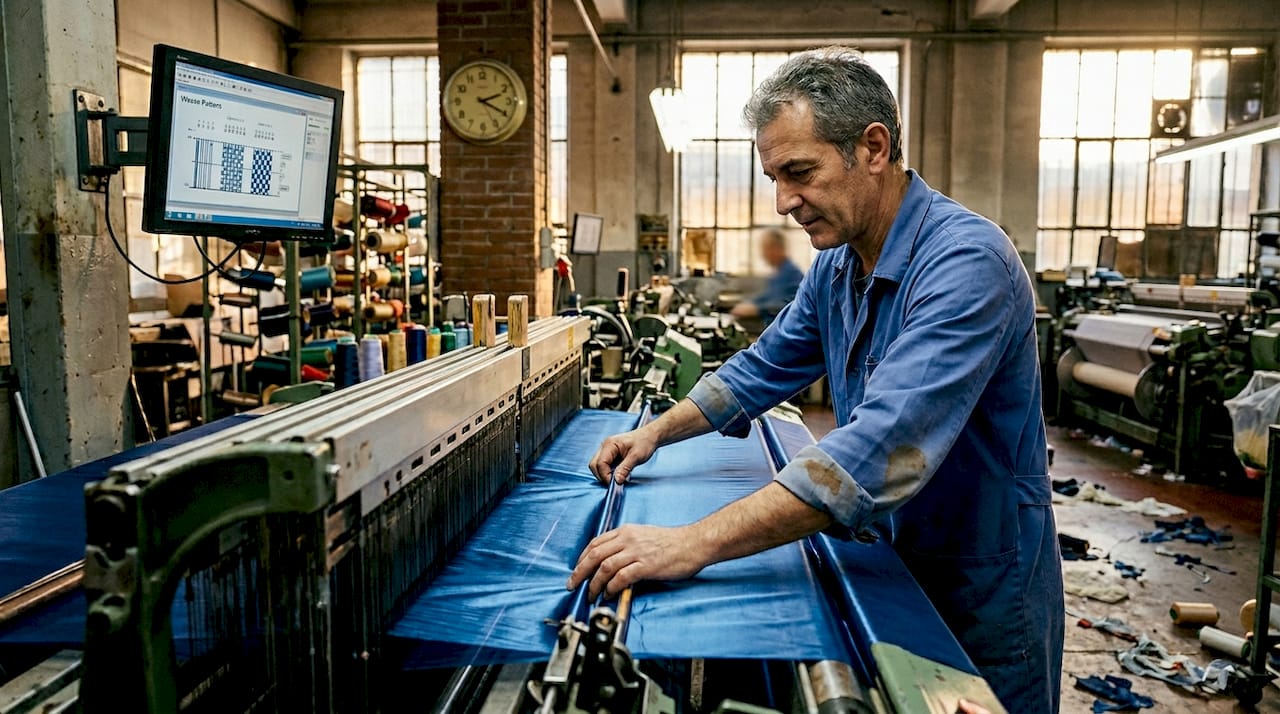
For the fashion selection for elegance that harp-inspired dressing demands, satin is not merely a material choice. It is a declaration of intent.
Essential materials and features for harp-inspired fashion
Once the essence is clear, the next step is understanding the key materials and features that make harp-inspired elegance achievable in your own wardrobe.
Harpists prioritize stretch fabrics, movement freedom, no metal parts, and machine-washable materials in performance wear, and these same priorities translate beautifully into luxury everyday dressing. The artisanal craftsmanship of fine performance wear parallels the qualities we seek in the finest apparel.
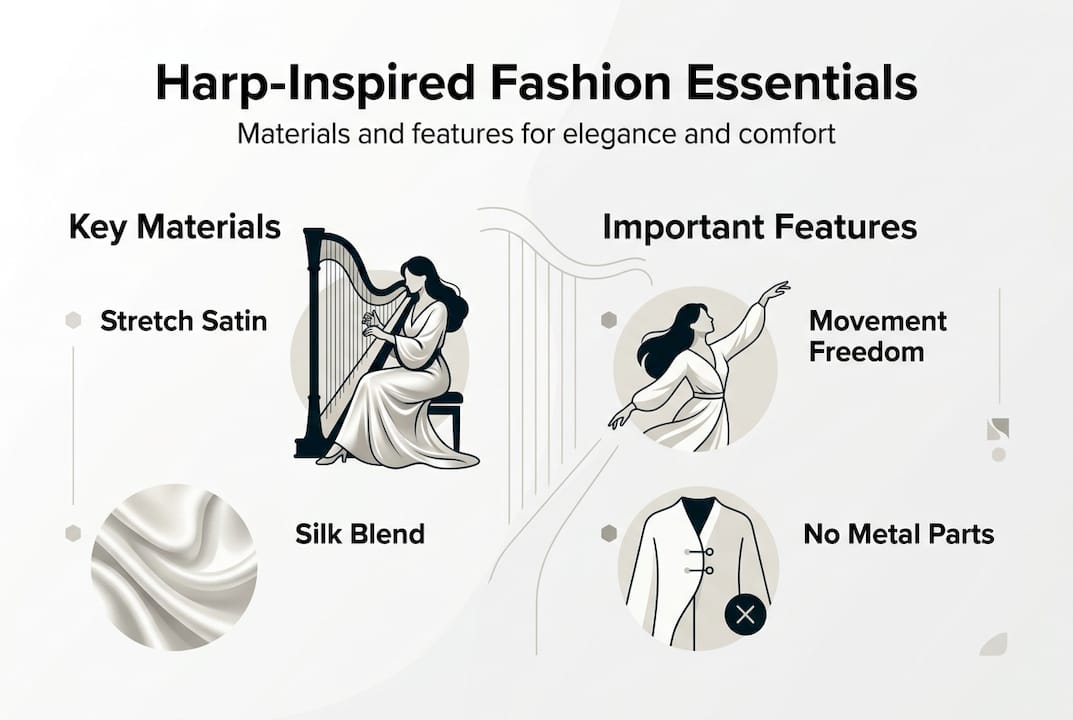
Fabric | Key benefit | Best use |
Silk satin | Luminous drape, temperature regulation | Evening wear, formal occasions |
Stretch satin | Movement freedom, body-skimming fit | Performance, dynamic events |
Silk blend | Softness with structure | Midi dresses, tailored pieces |
Matte jersey | Comfort, versatility | Daywear, transitional styling |
Top features to seek in your harp-inspired ensemble:
Freedom of movement in the shoulders and arms
No metal hardware that could snag delicate fabrics
Subtle sheen rather than heavy embellishment
Machine-washable or easy-care construction for practical luxury
Bias-cut or stretch panels for graceful silhouette
Pro Tip: Choose textiles with a subtle sheen and at least 5% stretch content. This combination delivers the visual luxury of satin with the physical ease that allows you to move, gesture, and inhabit your clothing with genuine confidence.
For guidance on preserving your elegant wardrobe, proper care of satin and silk blends is essential to maintaining their luminosity over time.
Step-by-step guide to mastering the harp-inspired ensemble
With materials chosen, here is a step-by-step breakdown for creating your own harp-inspired luxury ensemble, from foundation to finishing touch.
Begin with the silhouette. Choose a [midi dress or flowing skirt](https://vivienlauren.co.uk/post/guide-to elegant evening wear) in silk satin or stretch satin. The midi length honors the harpist’s tradition of graceful, floor-grazing elegance while remaining practical for modern life.
Consider the trouser alternative. For a more contemporary interpretation, [evening wear trouser suits](https://vivienlauren.co.uk/post/a-quietly confident guide to evening wear trouser suits for women) in satin or silk blend offer the same luminosity with added ease of movement. Wide-leg trousers in champagne or deep black satin are particularly striking.
Select your accessories with intention. Satin calls for restraint. Choose a small, structured mini bag in leather or satin-finish material. Avoid heavy chain straps or oversized hardware. A handmade woven leather piece adds artisanal warmth without competing with the fabric’s natural beauty.
Choose earrings that echo the harp’s lines. Long, slender drop earrings in gold or pearl evoke the instrument’s strings. Avoid chunky or geometric styles that interrupt the ensemble’s flowing quality.
Add a shawl or wrap in complementary silk. A fine silk or satin-edged shawl serves both practical and aesthetic purposes, softening the shoulder line and adding a layer of graceful movement to your overall presence.
Select shoes that ground the look. A pointed-toe kitten heel or a sleek satin court shoe in nude or black completes the ensemble without drawing attention away from the fabric and silhouette.
“I want to look like I have something to say, and I want to look like I know how to say it.” — Deborah Henson-Conant, on her philosophy of performance style
For further inspiration, film and fashion ensembles offer a rich visual vocabulary for translating performance elegance into everyday luxury dressing.
Pro Tip: A well-fitted black stretch satin ensemble is the single most versatile foundation for harp-inspired dressing. It works for gallery openings, evening concerts, intimate dinners, and formal events alike, adapting to each occasion through your choice of accessories.
Harpist wear trends for fashion-forward women favor customizable, comfortable black and stretch ensembles over traditional rigid gowns, prioritizing ease of movement without sacrificing visual impact.
Troubleshooting and common mistakes in harp-inspired fashion
Now that you have learned the steps for assembling your outfit, let us address the frequent mistakes that can undermine even the most carefully chosen ensemble.
Common mistakes to avoid:
Over-structuring the silhouette with heavy boning or rigid underlining that restricts natural movement
Choosing embellishments with sharp edges such as beaded fringe, metal studs, or oversized brooches that snag satin
Ignoring washability and selecting pieces so fragile they cannot be worn with ease
Overloading accessories and losing the clean, luminous simplicity that defines this aesthetic
Choosing shoes with excessive platform height that disrupts the graceful, grounded quality of the look
The performance wear principle of prioritizing stretch, movement freedom, and no metal parts applies directly here. If your outfit restricts your ability to raise your arms, turn gracefully, or sit with ease, it is working against you.
Pro Tip: Before any formal event, spend ten minutes moving freely in your chosen ensemble. Sit, stand, reach forward, and turn. If anything pulls, gaps, or restricts, address it with a quick tailoring adjustment or replace the restrictive element entirely.
For further guidance on encore elegance and comfort, the principles of performance-inspired dressing translate beautifully across all occasions that demand both beauty and ease.
Verifying your harp-inspired ensemble: elegance meets functionality
Having addressed common mistakes, here is how to verify that your final ensemble delivers the desired harp-inspired elegance without sacrificing functionality.
Feature | What to check | Why it matters |
Movement | Can you raise both arms freely? | Harp-inspired dressing honors the body in motion |
Elegance | Does the fabric catch light gracefully? | Satin’s luminosity is its defining quality |
Durability | Is the fabric resilient to an evening’s wear? | Luxury should endure, not merely impress |
Comfort | Can you wear it for four or more hours? | True elegance never causes discomfort |
Final checks before your event:
Visual appeal: Step back and assess the overall silhouette in full-length mirror light
Fabric feel: Run your hands along the satin surface. It should feel smooth, cool, and alive
Fit: Nothing should pull, gap, or compress. The ensemble should feel like a second skin
Accessory harmony: Each piece should support the whole, not compete with it
The performance wear standard of stretch, movement, and no metal parts is your ultimate checklist. When your ensemble passes every point, you have achieved something genuinely rare: timeless luxury fashion that moves with you rather than against you. For broader context on how this aesthetic fits within modern UK fashion trends, the movement toward functional luxury is one of the defining directions of contemporary elegance.
Discover harp-inspired elegance at Vivien Lauren
The philosophy we have explored here, of satin’s luminosity, artisanal craftsmanship, and the graceful freedom that the finest performance wear demands, is precisely what Vivien Lauren has built its collections around. Every piece is made in Italy, drawing on generations of craft tradition, and selected with the same discernment a concert harpist brings to her stage attire.
Explore our curated selection of harp-inspired dresses in silk satin and luxury blends, each designed to move with you and illuminate every room you enter. Pair your chosen dress with the handcrafted artisan bucket bag, a piece of woven leather artistry that echoes the harp’s own intricate construction. Complete the look with our collection of classic elegant shoes, chosen to ground your ensemble with the same quiet confidence that defines every great performance.
Frequently asked questions
Is Satin and Strings: The Harp Player’s graceful elegance an actual brand?
No, it is a conceptual theme evoking harp-inspired luxury fashion, not an established brand or recognized collection. It functions as an aesthetic philosophy rather than a commercial label.
What are the key features of harp-inspired luxury ensembles?
Satin, stretch fabrics, freedom of movement, no metal parts, and subtle artisanal details are essential, as performance wear principles confirm these priorities for both stage and everyday luxury dressing.
How do you balance elegance and comfort for performance-inspired fashion?
Choose materials with stretch and subtle sheen, avoid restrictive structures, and ensure your ensemble allows full freedom of movement, following the harpist wear trend toward comfortable, customizable luxury over rigid formality.
Can harp-inspired fashion be machine washable and practical?
Yes, modern luxury textiles allow machine-washable fabrics and refined designer details to coexist beautifully, as practical performance wear demonstrates that functionality and elegance are never mutually exclusive.
Recommended
This fashion piece has been created by Shona White. On behalf of Vivien Lauren. A fashion guide for you on the Satin Fabric. Vivien Lauren. Luxury. Craftsmanship. That's Proudly Italian. Vivien Lauren. Proud to Style.


