
Silk vs. Satin: What Every Discerning Shopper Should Know
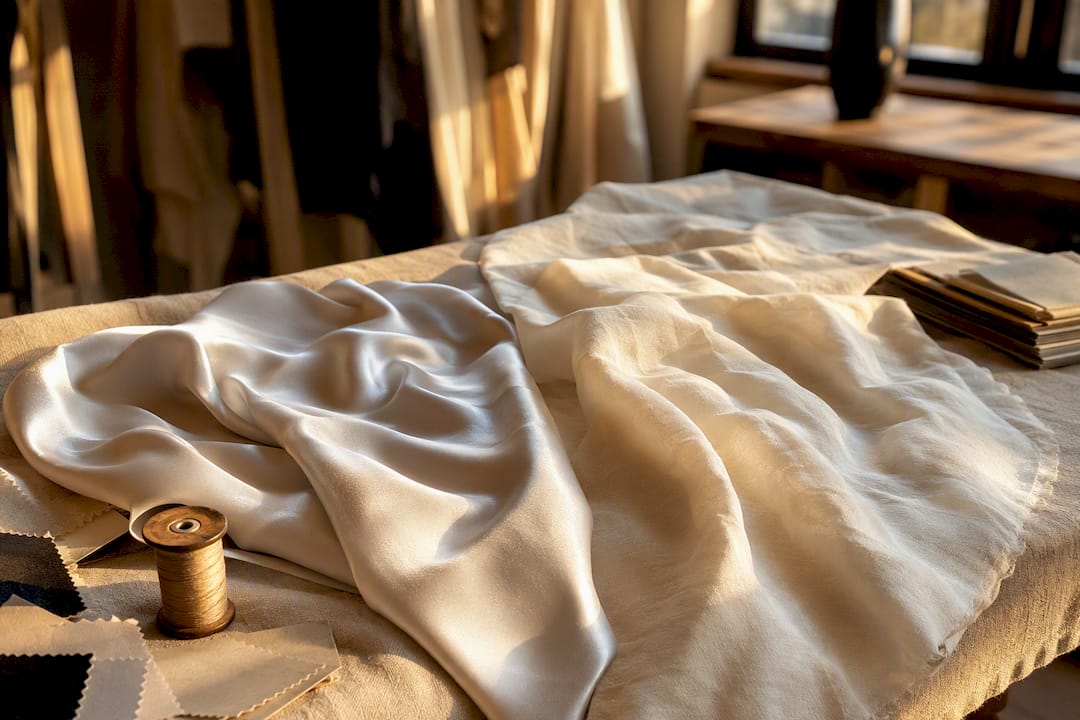
For next-to-skin comfort and true temperature regulation, real silk beats polyester satin every time; for budget and effortless care, polyester satin wins. That single distinction settles most of the confusion, but it hides a subtlety worth understanding: satin names a weave, while silk names a fiber, and the two can absolutely coexist in one exquisite garment. A dress can be silk and satin at once, or it can be pure polyester wearing satin’s glossy disguise. Before you buy, check the label for three things:
Fiber content: does it say “100% silk” or “silk satin,” or simply “satin” with no fiber named?
Momme weight: silk garments worth their price usually list a momme count (more on this shortly).
Care instructions: “hand wash cold” or “dry clean” points to silk; “machine wash gentle” usually signals a synthetic.
Key Takeaways
Silk delivers superior breathability, moisture regulation, and longevity for skin and hair contact, while polyester satin offers similar shine at a fraction of the cost and care burden.
Point | Details |
Fiber vs. weave | Silk is a natural fiber; satin is a weave that can be made from silk or synthetics. |
Check the label first | Look for “100% silk” or “silk satin” and a momme weight before trusting the word “satin” alone. |
Breathability favors silk | Silk’s moisture regain of about 11% dwarfs polyester’s roughly 0.4%, explaining silk’s cooling feel. |
Care determines lifespan | Silk needs hand washing or dry cleaning; polyester satin often survives a gentle machine cycle. |
Match fabric to use case | Choose silk for pillowcases, lingerie, and eveningwear; save polyester satin for costume or budget pieces. |
Table of Contents
Satin vs Silk: Understanding the Fiber-vs-Weave Difference
Here is where most shoppers go wrong, and it is an honest mistake: they assume silk and satin are two competing fabrics, like cotton versus linen. They are not. Silk is a natural protein fiber, spun by the mulberry silkworm into filaments so fine that it takes thousands of cocoons to produce a single bolt of fabric. Its quality is measured in momme, a weight-based unit that reflects density and durability. Higher momme, generally in the 16 to 25 range for apparel, means a heavier, more substantial silk with better drape and longer life.
Satin, on the other hand, is a weave structure, not a material at all. It is built from a “warp-faced float,” meaning the weft thread passes over several warp threads before diving under one, which is what produces that liquid, light-catching sheen. That weave can be executed in silk, polyester, nylon, or rayon, and the resulting fabric behaves entirely differently depending on which fiber built it. Silk woven this way is often called “silk satin” or charmeuse, a lightweight, fluid variant beloved for eveningwear and lingerie because it moves like water against the body. Do not confuse any of this with sateen, a similar weave built from cotton, which delivers a soft sheen without silk’s temperature-regulating properties.
Satin vs Silk Side by Side: What Actually Differs
Once you separate fiber from weave, the real comparison becomes about performance: how each fabric feels, breathes, wears, and ages.
Attribute | Silk (natural fiber) | Polyester Satin (synthetic weave) |
Fiber vs weave | Natural protein fiber, woven multiple ways | Weave structure, typically synthetic fiber |
Sheen and hand | Warm, subtle luster; soft, cool touch | Bright, uniform shine; slightly plastic feel |
Breathability | High; regulates temperature | Low; traps heat and moisture |
Care and washability | Hand wash cold or dry clean | Often machine washable, gentle cycle |
Durability and snags | Delicate; prone to snagging | More resilient to daily wear |
Typical price range | Higher, due to sericulture and processing | Budget friendly |
Best uses | Pillowcases, lingerie, eveningwear | Costume, upholstery, decorative linings |
The breathability gap is not a matter of opinion. Silk’s moisture regain sits around 11%, compared with roughly 0.4% for polyester, a figure that explains why silk pillowcases feel cool at 2 a.m. while a polyester satin equivalent can feel clammy by midnight. That moisture regain is also why silk helps skin and hair hold onto their own hydration rather than pulling it away, something no amount of synthetic sheen can replicate.
One caveat runs through every row of this table: silk satin behaves like silk, and polyester satin behaves like polyester. The weave gives you the shine; the fiber gives you everything else.
Choosing Between Silk and Satin for Pillowcases, Lingerie, and More
The right fabric depends entirely on how long it touches your skin, and how often you are willing to hand wash it.
For pillowcases, prioritize genuine silk or cotton sateen if your skin and hair spend eight hours a night against the fabric; a cotton sateen alternative retains breathability at a gentler price point if pure silk feels out of reach. Polyester satin works fine if you wash pillowcases weekly and want something that survives the dryer.
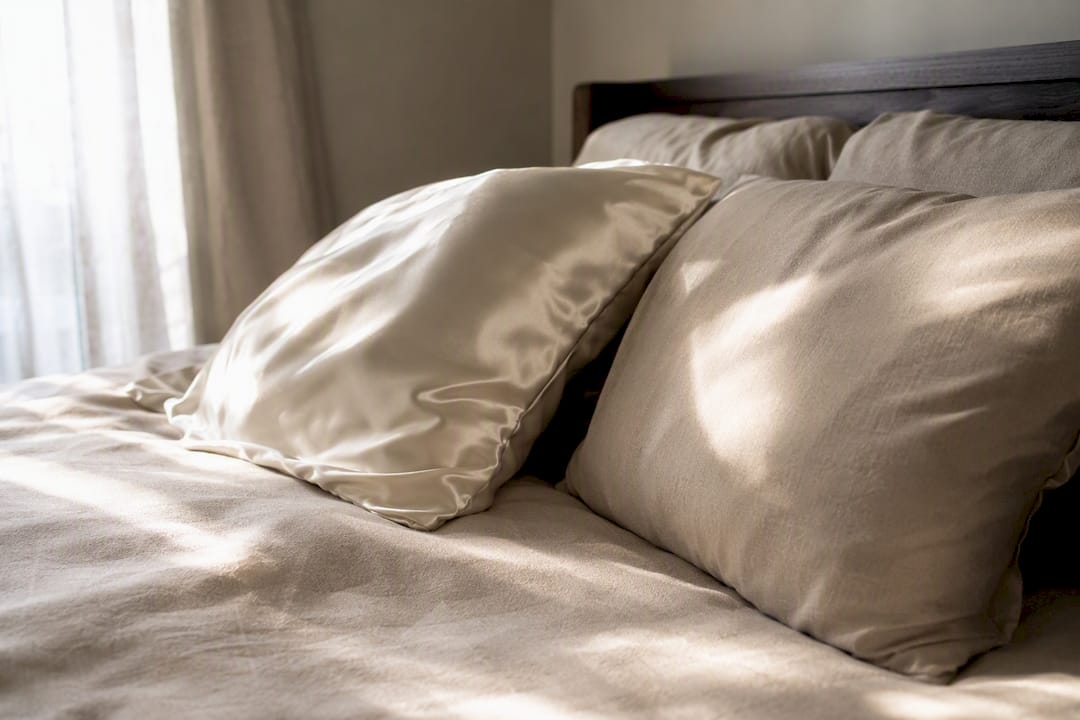
For lingerie and sleepwear, silk rewards you with comfort that lasts years, not seasons, while polyester satin suits decorative or occasion pieces you will not wear on repeat.
For eveningwear, silk charmeuse remains the gold standard for drape, which is precisely why Vivienlauren favors it in occasion dresses built for movement and light. Polyester satin has its place on a costume rack or stage, where cost and washability matter more than longevity.

For upholstery or craft projects, polyester satin’s resistance to fading and staining makes it the practical choice; silk was never meant to survive a coffee spill on a sofa arm.
Pro Tip: If you’re torn between the two for a special occasion piece, feel the fabric against the inside of your wrist. Silk warms almost instantly; polyester satin stays cool and slightly slick no matter how long you hold it.
How to Spot Real Silk Before You Buy
A few label checks and sensory cues will save you from an expensive mistake.
Read the fiber content line, not just the product name. “100% silk” or “mulberry silk” is what you want; “satin” alone, with no fiber listed, is a red flag.
Look for a momme weight. Its presence on a label is one of the strongest signals of genuine silk, since synthetic satins rarely bother listing it.
Run your fingers across the surface. Real silk has a warm, slightly irregular shimmer; synthetic satin tends toward a flatter, almost plastic uniformity.
Check the drape. Silk falls in soft, heavy folds; polyester satin often holds a stiffer, glossier shape.
Consider a burn test only as a last resort, and only on a fabric scrap you are willing to sacrifice. Silk singes and curls with a smell like burning hair, while polyester melts into a hard bead. This test destroys the sample, so it is a poor choice for anything you actually intend to keep or wear.
When any doubt remains, trust a seller who names the fiber plainly rather than one who lets “satin” do the marketing on its own.
Caring for Silk and Satin Without Ruining Either
Longevity comes down to gentleness, and the two fabrics ask for different levels of it.
Silk: hand wash in cold water with a gentle detergent, or send it to the dry cleaner if the garment is structured. Air dry flat, away from direct sun, and iron on the reverse side using a cool setting.
Polyester satin: machine washable on a gentle cycle in most cases, which is exactly why it dominates budget bedding and occasion wear that gets frequent wear. Low heat drying or air drying preserves the sheen; avoid a hot iron, which can melt the fiber’s surface.
Both fabrics: store folded rather than hung on thin hangers to avoid stretching, and treat stains immediately with cold water rather than rubbing, which can distort the weave.
For silk pieces that anchor a wardrobe for years rather than seasons, Vivienlauren’s care guidance for timeless garments walks through the finer points of preserving drape and sheen wash after wash.
Why Vivien Lauren Chooses Silk for Its Luxury Pieces
Craftsmanship is the reason silk keeps earning its place in our collections. Vivienlauren specializes in elegant, timeless women’s apparel and accessories, and silk’s combination of drape, breathability, and quiet luster suits pieces meant to be worn for years, not one season. We favor a slow fashion approach: curated, handcrafted collections made in Italy using techniques passed down through generations of artisans, rather than fast, disposable trends.
That philosophy is why our writing on silk camisoles and elegant style keeps returning to fiber content and momme weight as the details worth your attention. When a piece is built to last, the fabric underneath the sheen matters as much as the silhouette on top.
An Editorial Take on the Silk vs. Satin Debate
The conventional advice on this topic treats silk and satin as rivals, and that framing does shoppers a disservice. The real judgment call is not “silk or satin,” it is “natural fiber or synthetic fiber,” and once you see the question that way, the decision gets much easier to make with confidence.
Where most guides fall short is in treating “satin” as a marketing shorthand for luxury, when it is really just a weave pattern that says nothing about what touched the silkworm or the polyester vat. A shopper who prioritizes the fiber-content line over the word “satin” on a swing tag will make a better purchase nine times out of ten.
What should you prioritize first? The label, always. Momme weight and fiber content tell you more in five seconds than a photo ever will. Everything else, the price, the drape, the care instructions, follows logically once you know what you are actually holding.
— Vivien Lauren.
Sources
FAQ
Is satin the cheap version of silk?
No. Satin is a weave, not a fiber, and it can be made from silk itself. Polyester satin is the inexpensive version often marketed as a silk alternative, but silk satin is genuine silk.
Which is better, silk or satin?
The comparison only makes sense as silk versus polyester satin. Silk wins for breathability, skin and hair benefits, and longevity; polyester satin wins for price and easy care.
Is satin a fake silk?
Not inherently. Satin describes a weave structure that silk itself can use. The “fake silk” reputation comes from polyester satin, which mimics silk’s shine without its natural fiber benefits.
What are the disadvantages of satin?
Polyester satin traps heat and moisture rather than regulating temperature, and it can develop a plastic-like sheen over time. It also lacks the natural amino-acid benefits silk offers for skin and hair.
Recommended
This fashion guide has been authored for you by Sammy Li. On behalf of Vivien. Vivien Lauren. Luxury. Craftsmanship. That's Proudly Italian. Vivien Lauren. Proud To Style.


