
Silk and the Silk Road: Impact on Luxury Fashion
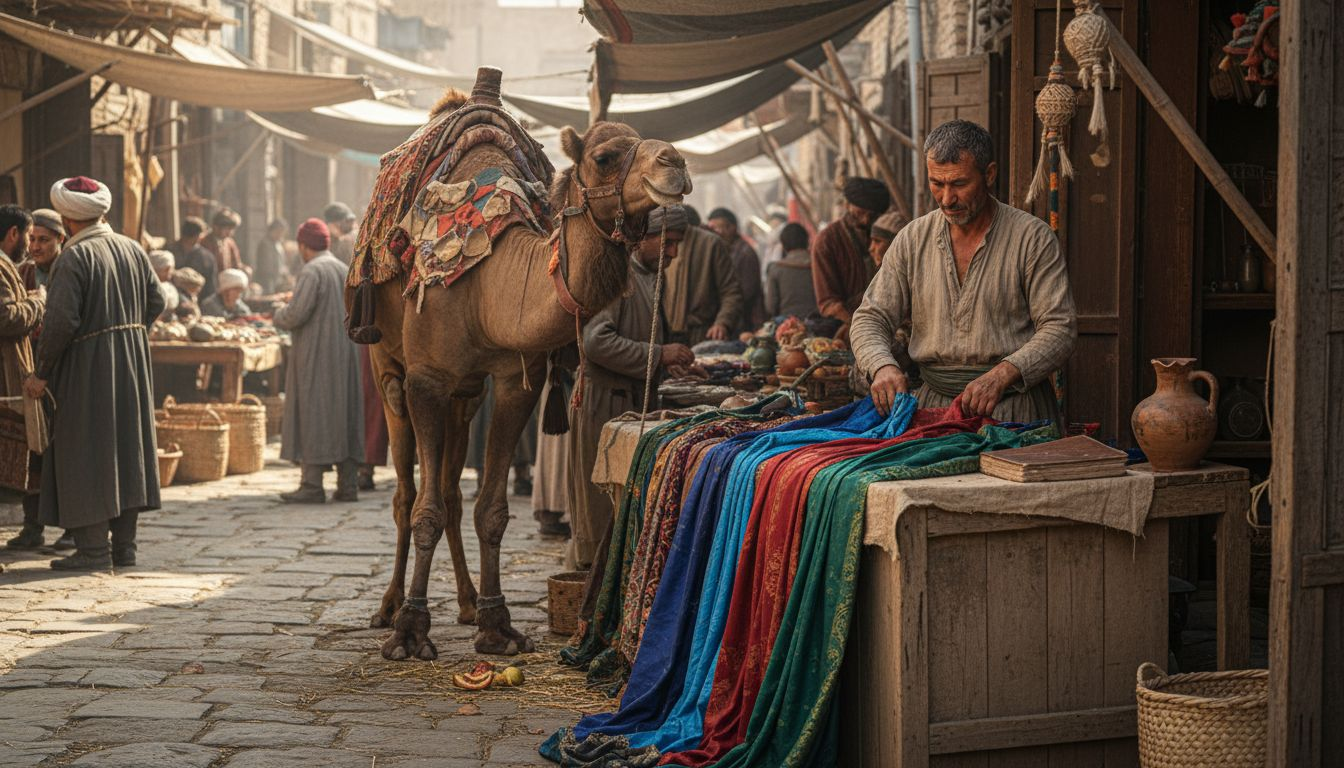
Finding garments that truly embody modern elegance and timeless quality often starts with choosing materials that have shaped global fashion for centuries. Silk, with its origins in ancient China and its journey along the legendary Silk Road, has become a symbol of refined taste and sophisticated craftsmanship. This article explores the world of luxurious fabric, from its dramatic history and cross-cultural influence to its enduring role in Italian design and sustainable innovation.
Table of Contents
Key Takeaways
Point | Details |
Silk’s Historical Significance | Originating in China over 6,000 years ago, silk became a crucial commodity in global trade, representing wealth and status through its luxurious characteristics. |
Cultural Exchange via the Silk Road | The Silk Road facilitated profound intercultural connections, enabling exchanges of goods, ideas, and technologies between diverse civilizations. |
Evolution in European Fashion | Silk transitioned from an imported luxury to a staple of haute couture in Europe, fueled by local craftsmanship and industrial innovations. |
Sustainable Silk Production | Modern silk production emphasizes sustainability by implementing recycling methods and ethical practices, merging luxury with ecological responsibility. |
Silk Origins and Its Global Appeal
Silk represents one of humanity’s most exquisite textile innovations, originating in ancient China and transforming global trade for thousands of years. This luxurious fabric emerged from an intricate process of silkworm cultivation, with its origins deeply rooted in Chinese cultural practices dating back to 4000 BCE.
The development of silk production was a closely guarded secret in China for centuries, with global silk trade networks gradually expanding across continents. Silk’s unique characteristics made it immensely desirable:
Incredibly lightweight and soft texture
Natural temperature-regulating properties
Exceptional durability despite delicate appearance
Ability to absorb moisture while maintaining breathability
Stunning natural sheen that reflects light elegantly
As trade routes like the legendary Silk Road developed, silk transitioned from a local Chinese commodity to a globally coveted luxury item. Merchants traversed thousands of miles, crossing challenging terrains and negotiating complex political landscapes, all to transport these delicate threads that represented wealth, status, and sophisticated craftsmanship.
Silk’s global appeal transcended mere fabric - it became a medium of cultural exchange, diplomatic negotiations, and economic transactions. Empires and kingdoms would trade immense resources just to acquire these precious textiles, demonstrating silk’s extraordinary value beyond its physical properties.
Pro tip: When purchasing silk items, always examine the fabric’s weight, sheen, and texture to ensure authentic, high-quality craftsmanship.
The Silk Road: Connecting Cultures and Trade

The Silk Road represented far more than a simple trade route - it was a complex network of cultural exchange that transformed human civilization for over a thousand years. Intercultural connections through trade enabled unprecedented interactions between diverse societies, spanning from Eastern Asia to the Mediterranean regions.
This intricate network of routes was characterized by several remarkable features:
Spanned approximately 4,000 miles across multiple terrains
Connected major civilizations including Chinese, Persian, Indian, and European cultures
Facilitated exchange of not just goods, but also technologies, religions, and philosophical ideas
Operated through a complex system of merchant caravans and trading posts
Enabled economic interactions that transcended political boundaries
Archaeological evidence reveals the profound impact of these trade routes. Cities along the Silk Road became vibrant multicultural centers where merchants, scholars, and travelers from different backgrounds converged. Languages merged, artistic styles blended, and technological innovations spread rapidly across previously isolated regions.
The Silk Road was not a single path but a dynamic, interconnected system of land and maritime routes. Merchants navigated challenging landscapes, crossing deserts, mountain ranges, and seas, driven by the potential for economic opportunity and cultural discovery. Economic motivations merged with human curiosity, creating a remarkable platform for global interaction long before modern globalization.
Pro tip: Study historical trade routes to understand how cultural exchange has always been fundamental to human progress and innovation.
Evolution of Silk in European Fashion
Silk transformed European fashion through a remarkable journey of cultural and technological adaptation, evolving from an exotic imported luxury to a cornerstone of haute couture. Textile production in European courts revealed how silk became a powerful symbol of wealth, status, and artistic innovation.
The evolution of silk in European fashion can be characterized by several key developmental stages:
Initial importation from Asian trade routes
Establishment of domestic silk weaving centers in France and Italy
Royal patronage supporting silk manufacturing techniques
Development of intricate weaving and printing technologies
Integration of silk into haute couture design
Major European fashion centers like Lyon in France and Venice in Italy became pivotal in transforming silk from an imported commodity to a locally produced luxury textile. Skilled artisans developed sophisticated techniques for creating complex patterns, incorporating metallic threads, and producing vibrant colors that distinguished European silk production from its Asian origins.
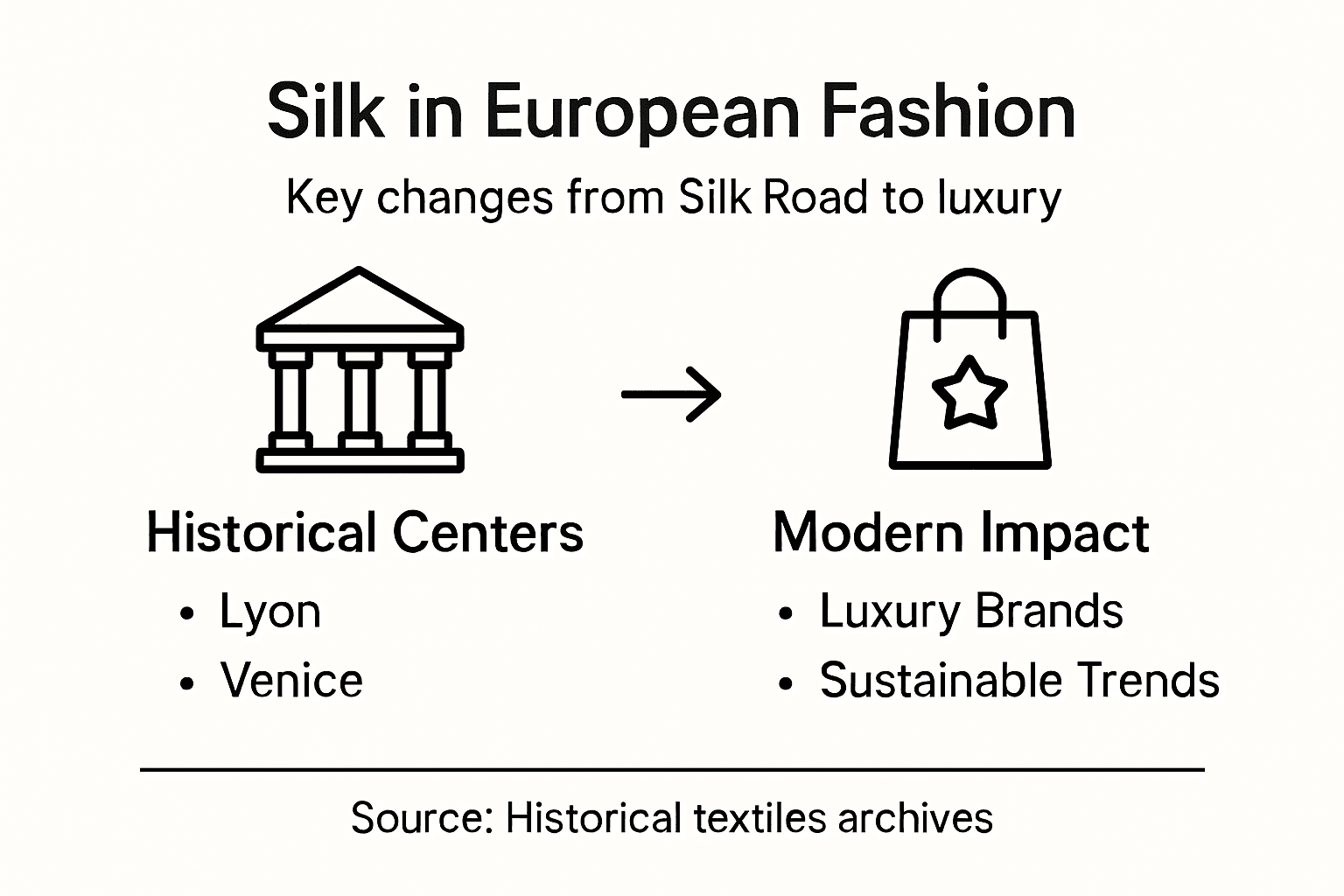
The industrial revolution further accelerated silk’s transformation, enabling more efficient production methods that democratized access to this once-exclusive fabric. Technological innovations allowed for more intricate designs, broader color palettes, and reduced production costs, making silk progressively more accessible to emerging middle-class consumers across European societies.
Here’s a quick comparison of major European silk centers and their unique contributions:
City | Key Contribution | Lasting Influence |
Lyon | Advanced weaving technologies | Established luxury standards |
Venice | Ornate pattern development | Influenced textile aesthetics |
Florence | Guild-regulated craftsmanship | Preserved artisanal skills |
Como | Modern industrial silk spinning | Pioneered mass production |
Pro tip: When selecting silk garments, examine the weave density and thread count to assess true quality and craftsmanship.
Italian Silk Craftsmanship and Luxury Symbolism
Italian silk craftsmanship represents a pinnacle of artistic and technical excellence, transforming simple threads into extraordinary luxury textiles that define global fashion standards. Renaissance silk production techniques emerged as a sophisticated art form that transcended mere manufacturing, becoming a powerful symbol of cultural prestige and economic innovation.
The unique characteristics of Italian silk craftsmanship include:
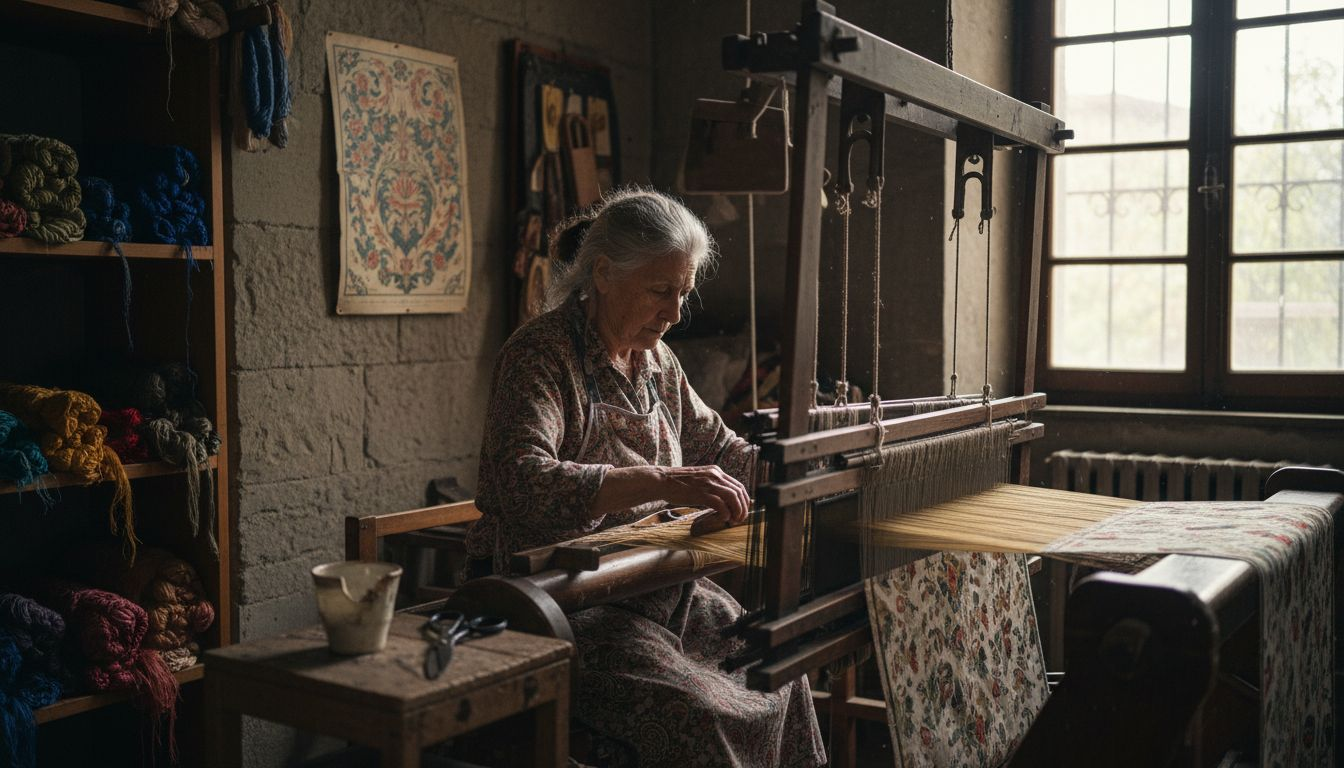
Meticulous hand-weaving techniques passed through generations
Innovative color-blending and pattern development
Incorporation of intricate metallic and embroidered details
Commitment to preserving traditional artisanal methods
Exceptional attention to texture and material quality
Historically, Italian silk production was concentrated in renowned centers like Venice and Florence, where guild systems carefully regulated and elevated the craft. Skilled artisans developed complex weaving techniques that transformed silk into more than a fabric - it became a canvas for artistic expression, with each piece telling a story of cultural heritage and unparalleled skill.
Modern Italian luxury brands continue to leverage this rich historical narrative, using silk craftsmanship as a cornerstone of their global brand identity. The storytelling around Italian silk goes beyond mere product marketing, presenting each textile as an embodiment of cultural sophistication, technological mastery, and generational expertise that cannot be replicated by mass production.
Pro tip: Invest in Italian silk pieces that showcase traditional weaving techniques and unique design elements, as these represent true craftsmanship and lasting value.
Silk’s Legacy in Modern Sustainable Fashion
As the fashion industry confronts unprecedented environmental challenges, silk is emerging as a transformative material in sustainable design. Circular economy strategies are reshaping how designers and manufacturers approach silk production, turning this ancient textile into a beacon of ecological innovation.
Key sustainable approaches in modern silk production include:
Advanced recycling techniques for silk fibers
Developing biodegradable silk-based textiles
Minimizing water and chemical usage in production
Creating closed-loop manufacturing systems
Implementing ethical labor practices
Reducing carbon footprint through innovative processing
The sustainable silk movement represents more than an environmental strategy - it’s a comprehensive reimagining of textile production. Innovative designers are exploring methods like regenerative silk cultivation, which not only reduces environmental impact but also supports local ecological systems and traditional farming communities.
Modern sustainable silk production challenges traditional manufacturing paradigms by integrating technological innovation with ecological consciousness. By reimagining silk as a renewable resource, the fashion industry is demonstrating that luxury and environmental responsibility can coexist, creating textiles that are both exquisite and environmentally intelligent.
Key sustainable innovations are shaping the future of silk production:
Approach | Environmental Benefit | Example Outcome |
Recycling silk fibers | Reduces textile waste | New fabrics from remnants |
Biodegradable textiles | Decreases landfill impact | Compostable garments |
Closed-loop manufacturing | Minimizes pollution | Reusable process water |
Regenerative cultivation | Restores soil and biodiversity | Pollinator-friendly farms |
Pro tip: When purchasing silk items, prioritize brands that transparently communicate their sustainable production methods and environmental certifications.
Discover the Timeless Craftsmanship of Silk in Luxury Fashion
The rich history and artistry of silk showcased through the Silk Road highlight the value of authentic craftsmanship and enduring elegance in luxury fashion. Just like the Italian artisans who have perfected centuries-old weaving techniques, you can now embrace that same spirit of sophistication and cultural heritage. At Vivien Lauren, every piece—from elegant dresses to exquisite accessories—is crafted to embody this legacy, marrying traditional artistry with contemporary design. Experience the allure of slow fashion that honors quality, exclusivity, and sustainable luxury.
Elevate your wardrobe with timeless silk-inspired collections and exclusive items that bring history to life. Shop now at Vivien Lauren, enjoy free UK shipping on orders over £80, and benefit from convenient payment options. Explore how heritage meets modern style and secure your place in a tradition of elegance today.
Frequently Asked Questions
What is silk, and why is it considered a luxury fabric?
Silk is a luxurious fabric known for its lightweight, soft texture and natural sheen. Its unique temperature-regulating properties, durability, and ability to absorb moisture while maintaining breathability add to its desirability.
How did the Silk Road contribute to the spread of silk and fashion?
The Silk Road was a complex network of trade routes that facilitated the exchange of silk and other goods, cultures, and ideas. It connected diverse civilizations and allowed silk to transition from a local Chinese commodity to a globally valued luxury item, impacting fashion trends across regions.
What are the key characteristics of high-quality silk?
High-quality silk typically exhibits a rich sheen, a smooth texture, and a dense weave. When purchasing silk items, examining the fabric’s weight, sheen, and texture is essential to ensure authenticity and craftsmanship.
How is silk being used in modern sustainable fashion?

In modern sustainable fashion, silk is being reimagined through advanced recycling techniques, biodegradable textiles, and closed-loop manufacturing systems. Designers are integrating environmental consciousness into silk production, making it a more sustainable material that aligns with eco-friendly practices.
Recommended
This article has been researched for you by Chloe. On behalf of Vivien Lauren. Vivien Lauren. Luxury. Craftsmanship that's Proudly Italian. Vivien Lauren. Proud to Style.

