What Is Italian Fashion? A Guide to Timeless Elegance
- Nancy De Rienzo
- Jul 10
- 8 min read
Vivien Lauren. Quality, Beauty & Style. Curated investment pieces.
Italian fashion combines skilled craftsmanship, cultural identity, and timeless style as a global luxury cornerstone. It emphasizes presenting oneself thoughtfully through fabrics like silk and cashmere, valuing harmony over branding. Renowned brands and artisans uphold these principles, shaping worldwide trends rooted in Italian philosophy and artisanal collaboration.
Italian fashion is defined as the artful union of superior craftsmanship, cultural identity, and a timeless style philosophy that has shaped global luxury for centuries. It is not merely about clothing. It is a way of presenting oneself to the world with intention, grace, and an unwavering commitment to quality. Fashion contributes roughly 5% to Italy’s GDP, which tells you everything about how deeply this industry is woven into the national fabric. Italy does not produce fashion as a commercial afterthought. It produces it as a cultural expression, one rooted in concepts like la bella figura and sprezzatura that have no true equivalent in any other fashion culture. For women who appreciate the difference between dressing well and dressing beautifully, Italian fashion offers a philosophy worth understanding deeply.
What are the historical origins of Italian fashion?
Italian fashion did not emerge overnight. Its roots stretch back to the medieval period, when cities like Florence, Venice, and Milan were already celebrated across Europe for their extraordinary textile production. Florentine silk merchants supplied the courts of France and England. Venetian lacemakers set standards of delicacy that no other region could match. These cities were not simply trading centers. They were laboratories of taste, where material excellence and aesthetic ambition developed side by side.
The Renaissance accelerated everything. Wealthy Italian patrons commissioned garments with the same seriousness they applied to painting and sculpture, treating dress as a form of art. This attitude, that clothing carries cultural and moral weight, never left Italian fashion culture.
The modern era of Italian fashion begins with a single, decisive moment:
1951: Giovanni Battista Giorgini staged the first high-fashion show in Florence, securing American retailers as buyers and announcing Italy’s arrival on the global stage.
1950–1956: Italy’s fashion exports grew by more than 150% during this period, establishing the country as Europe’s primary luxury exporter to North America.
1960s–1970s: Milan gradually replaced Florence as the center of Italian fashion, attracting designers who wanted proximity to the country’s industrial north and its sophisticated manufacturing networks.
1980s onward: Italian fashion houses expanded globally, bringing prêt-à-porter collections to a worldwide audience without sacrificing the artisanal values that defined the industry.
The transition from Florence to Milan was not a rupture. It was a maturation. Milan offered infrastructure; Florence offered heritage. Together, they gave Italian fashion a dual identity: industrial ambition grounded in artisanal soul.
What defines the style and philosophy of Italian fashion?
Italian fashion style is built on two foundational concepts that most fashion cultures lack the vocabulary to articulate. The first is la bella figura. La bella figura is the idea that presenting oneself beautifully is a social and ethical responsibility, not an act of vanity. It is about respect: for yourself, for the people around you, and for the occasion. A woman who embodies la bella figura does not dress to impress. She dresses because she understands that her appearance is a form of communication.
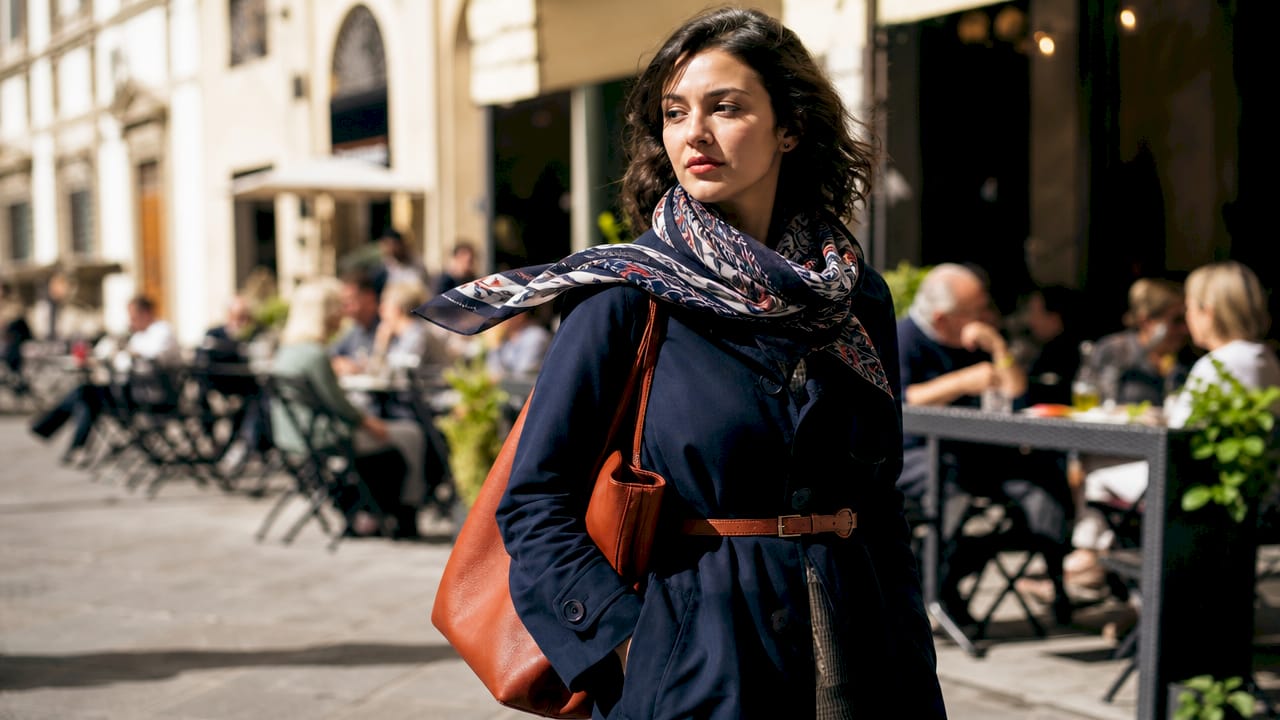
The second concept is sprezzatura. Sprezzatura is the art of studied carelessness, a deliberate effort to appear effortlessly stylish. Think of a silk blouse worn with one button casually undone, or a belt cinched just slightly off-center. These are not accidents. They are calculated gestures that project confidence without appearing to try too hard. Mastering sprezzatura takes genuine self-awareness, which is precisely why it reads as authentic.
Beyond philosophy, Italian fashion has a clear material signature:
Silk: Lightweight, luminous, and draping beautifully across the body.
Cashmere: Soft, warm, and refined in a way that synthetic fibers cannot replicate.
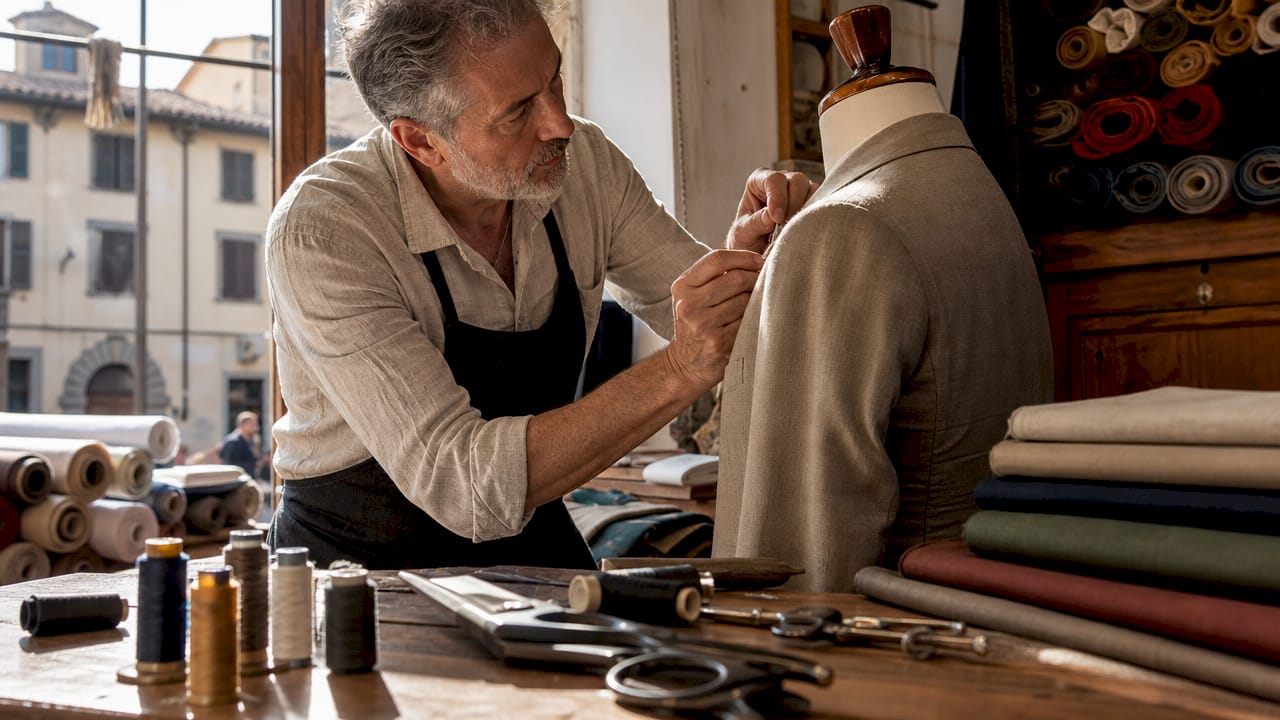
Fine wool: Structured yet supple, the foundation of Italian tailoring.
Leather: Treated with extraordinary care, especially in Florentine workshops.
Cotton: Used in its finest forms, never as a compromise fabric.
Italian luxury focuses on fabric quality and how garments fit and hang, not on conspicuous branding. This is the sharpest contrast with other fashion cultures. French fashion prizes intellectual minimalism. American fashion prizes practicality. Italian fashion prizes harmony and proportion. A garment succeeds when it flatters the body and honors the material, not when it announces its own price tag.
Pro Tip: When building an Italian-inspired wardrobe, prioritize fit above all else. A beautifully cut dress in fine fabric will always outperform a heavily branded piece that does not honor your proportions.
Who are the key Italian fashion designers and brands?
The names that define Italian fashion are not simply famous. They are institutions, each representing a distinct interpretation of the same core values.
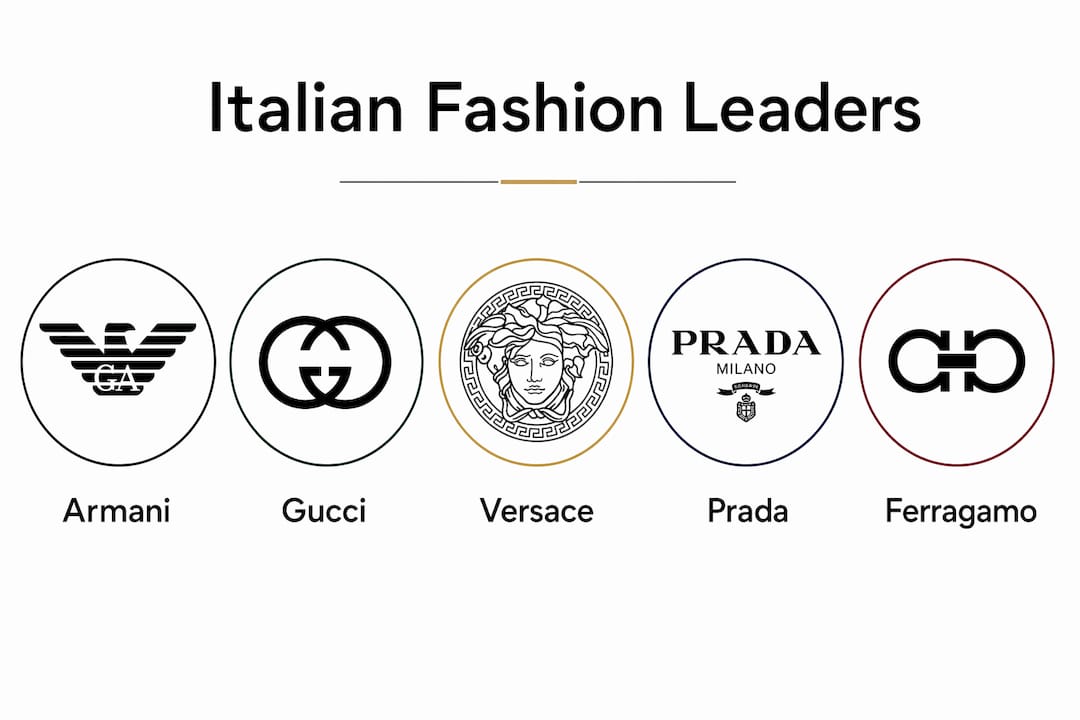
Designer / House | Founded | Signature Contribution |
Gucci | 1921, Florence | Leather goods and ready-to-wear rooted in Florentine craftsmanship |
Prada | 1913, Milan | Intellectual minimalism with exceptional fabric selection |
Versace | 1978, Milan | Bold color, sensuality, and baroque opulence |
Salvatore Ferragamo | 1927, Florence | Artisan footwear elevated to fine art |
Dolce & Gabbana | 1985, Milan | Celebration of Southern Italian femininity and richness |
Giorgio Armani | 1975, Milan | Refined tailoring and the power of understatement |
Each of these houses embodies la bella figura in its own register. Armani expresses it through restraint. Versace expresses it through abundance. The philosophy remains constant even as the aesthetic varies.
What makes Italian fashion houses genuinely different from their global counterparts is the production network behind them. High-end Italian garments are crafted through a decentralized artisanal network, with multiple family-run workshops each contributing specialized skills to a single piece. One workshop cuts the leather. Another stitches the lining. A third applies the finishing. This collaborative, generational model produces a quality that mass production cannot replicate. It also means that true Italian luxury results from artisanal collaboration, not from a single factory floor.
These designers also played a decisive role in popularizing prêt-à-porter, bringing ready-to-wear collections to a global audience while maintaining the quality standards of haute couture. That balance, accessible yet uncompromising, is one of Italian fashion’s greatest achievements.
How has Italian fashion influenced global trends?
Italy’s influence on global fashion is not a matter of soft power. It is a matter of market dominance. Italy produces nearly 78% of the world’s luxury fashion goods, a figure that reflects decades of investment in craft, infrastructure, and design education. That share of global production means that when you wear luxury, you are almost certainly wearing Italian skill, even if the label reads otherwise.
The cultural appeal of Italian aesthetics extends well beyond Italy’s borders. Milan Fashion Week consistently sets the tone for women’s fashion globally, with collections that balance contemporary relevance against timeless principles. Rome contributes its own sensibility, one of grandeur and femininity, visible in the work of designers who draw from classical art and architecture.
Current trends in Italian fashion for 2026 reflect the industry’s enduring values rather than seasonal novelty:
Quiet luxury: Understated pieces in exceptional fabrics, with no visible branding.
Artisan investment dressing: Buying fewer pieces of higher quality, aligned with the timeless fashion selection process that Italian style has always championed.
Natural fiber revival: Silk, cashmere, and fine wool returning as the preferred alternatives to synthetic materials.
Tailored femininity: Structured silhouettes that honor the body’s proportions without restricting movement.
Sustainability through longevity: Choosing pieces designed to last decades, not seasons.
These trends are not new ideas dressed in new language. They are the principles of la bella figura applied to a contemporary wardrobe. Italian fashion’s greatest influence on global style is this: it taught the world that elegance is not about spending more. It is about choosing better. Exploring timeless fashion trends for 2026 reveals how deeply Italian values continue to shape what discerning women reach for.
Key Takeaways
Italian fashion is defined by the philosophy of la bella figura, the mastery of sprezzatura, and a generational commitment to artisanal craftsmanship that no other fashion culture has replicated at scale.
Point | Details |
La bella figura as foundation | Dressing beautifully is a social responsibility in Italian culture, not an act of vanity. |
Sprezzatura over effort | Effortless elegance is carefully constructed, not accidental. |
Artisanal production network | Italian luxury garments pass through multiple specialized workshops, ensuring unmatched quality. |
Fabric over branding | Italian fashion prioritizes silk, cashmere, and fine wool over conspicuous logos. |
Global production dominance | Italy produces nearly 78% of the world’s luxury fashion goods, making it the center of global luxury. |
Why Italian fashion still speaks to me after all these years
I have spent years studying and wearing Italian fashion, and the one thing that consistently surprises people is this: Italian style is not about looking expensive. It is about looking considered. The women I admire most in Italian fashion are not the ones draped in logos. They are the ones whose silk dress fits so perfectly that you cannot stop looking, even though you cannot quite explain why.
The mistake most women make when they first encounter Italian fashion is treating it as a shopping category rather than a philosophy. They buy the label without absorbing the lesson. La bella figura asks something more demanding of you. It asks you to think about proportion, about fabric, about the relationship between your clothing and your body. That is not a shopping exercise. It is a practice.
Sprezzatura is the concept I return to most often when advising on personal style. The goal is never to look like you tried. The goal is to look like this is simply how you are. Achieving that requires more thought, not less. One beautifully cut dress in fine Italian wool will do more for your presence than a wardrobe full of trend pieces. Invest in artisan craftsmanship and you will understand immediately why Italian women rarely chase trends. They do not need to.
— Vivien
Italian-inspired elegance, curated for you at Vivienlauren
Vivienlauren was built on the same values that define Italian fashion: exquisite craftsmanship, timeless silhouettes, and a deep respect for the women who wear the pieces. Every collection reflects the belief that true elegance lives in quality materials and considered design, not in seasonal novelty.
The Vivienlauren collections include elegant dresses and refined accessories that honor the principles of la bella figura, pieces made to be worn with confidence and kept for years. Each garment is handcrafted in Italy, drawing on the same generational artisanal traditions that have defined Italian luxury since the Renaissance. If you are ready to build a wardrobe that speaks quietly and beautifully, explore the full collection at Vivienlauren.
FAQ
What is Italian fashion in simple terms?
Italian fashion is a style tradition defined by superior craftsmanship, natural fabrics, and the cultural philosophy of la bella figura, which treats dressing well as a social responsibility rather than a personal indulgence.
What makes Italian fashion different from French fashion?
Italian fashion prioritizes harmony, proportion, and fabric quality, while French fashion tends toward intellectual minimalism and conceptual design. Italian style celebrates the body; French style often abstracts it.
Who are the most influential Italian fashion designers?
Giorgio Armani, Gianni Versace, Miuccia Prada, and Salvatore Ferragamo are among the most influential Italian designers, each advancing Italian style principles through distinct aesthetic visions.
What fabrics are most associated with Italian fashion?
Italian fashion favors natural fabrics including silk, cashmere, fine wool, leather, and cotton, chosen for their quality, longevity, and the way they move on the body.
When did Italian fashion become globally recognized?
Italian fashion gained global recognition after the 1951 Florence show organized by Giovanni Battista Giorgini, which attracted American buyers and launched Italy’s luxury export industry.
Recommended
This fashion piece has been authored for you by Nancy. On behalf of Vivien Lauren. Vivien Lauren. Luxury. Craftsmanship. That's Proudly Italian. Vivien Lauren. Proud To Style.