
Couture Craftsmanship Explained: The Essence of Luxury

Finding truly exclusive, handcrafted couture can feel like an endless search for authenticity and artistry. For women who value exceptional detail and meaningful luxury, the essence of couture lies in extraordinary craftsmanship, steeped in heritage and tradition. This guide uncovers the meticulous handwork and generational skills that define Italian couture and explores how these traditions embrace sustainable luxury for a conscious, chic wardrobe.
Table of Contents
Key Takeaways
Point | Details |
Couture Craftsmanship Represents Artistic Excellence | It combines advanced techniques and traditions, resulting in garments that are not just clothing, but wearable art. |
Differences Between Haute Couture and Demi-Couture | Haute couture offers extreme customization and exclusivity, while demi-couture provides a more accessible approach with less extreme customization. |
Sustainable Couture Prioritizes Ethical Practices | This approach emphasizes creating durable garments using eco-friendly materials and promoting responsible consumer behavior. |
Italian Craftsmanship Enriches Fashion’s Legacy | Skills are passed down through generations, creating a unique emotional connection and respecting regional traditions in garment production. |
Defining Couture Craftsmanship and Its Essence
Couture craftsmanship represents the pinnacle of fashion design - a meticulous art form where creativity, skill, and tradition converge to create extraordinary garments. At its core, couture craftsmanship transcends mere clothing production, embodying a profound commitment to preserving historic textile traditions through exceptional handwork and precision.
The essence of couture craftsmanship can be understood through several defining characteristics:
Unparalleled Attention to Detail: Every stitch, seam, and embellishment is executed with surgical precision
Hand-Executed Techniques: Skilled artisans utilize generational techniques passed down through decades
Customization: Each piece is uniquely tailored to an individual’s exact measurements and aesthetic preferences
Emotional Durability: Garments are created not just for immediate wear, but as long-term artistic investments
Traditional couture craftsmanship involves an intricate process that transforms raw materials into wearable art. Designers meticulously draft patterns, select exceptional fabrics, and employ complex construction techniques that require hundreds of hours of specialized labor. These techniques often involve intricate hand embroidery, precise pattern matching, and structural engineering that elevates a garment from simple clothing to a sophisticated artistic statement.
Technological Integration: Modern couture is not static but dynamically evolving. Contemporary craftspeople are increasingly integrating digital technologies, blending traditional handwork with innovative design approaches that honor heritage while embracing future possibilities.
Couture craftsmanship is less about fashion and more about preserving a cultural legacy of human creativity and skill.
Pro tip: Recognize true couture craftsmanship by examining the interior construction of a garment - exceptional pieces reveal their quality through immaculate inner workings.
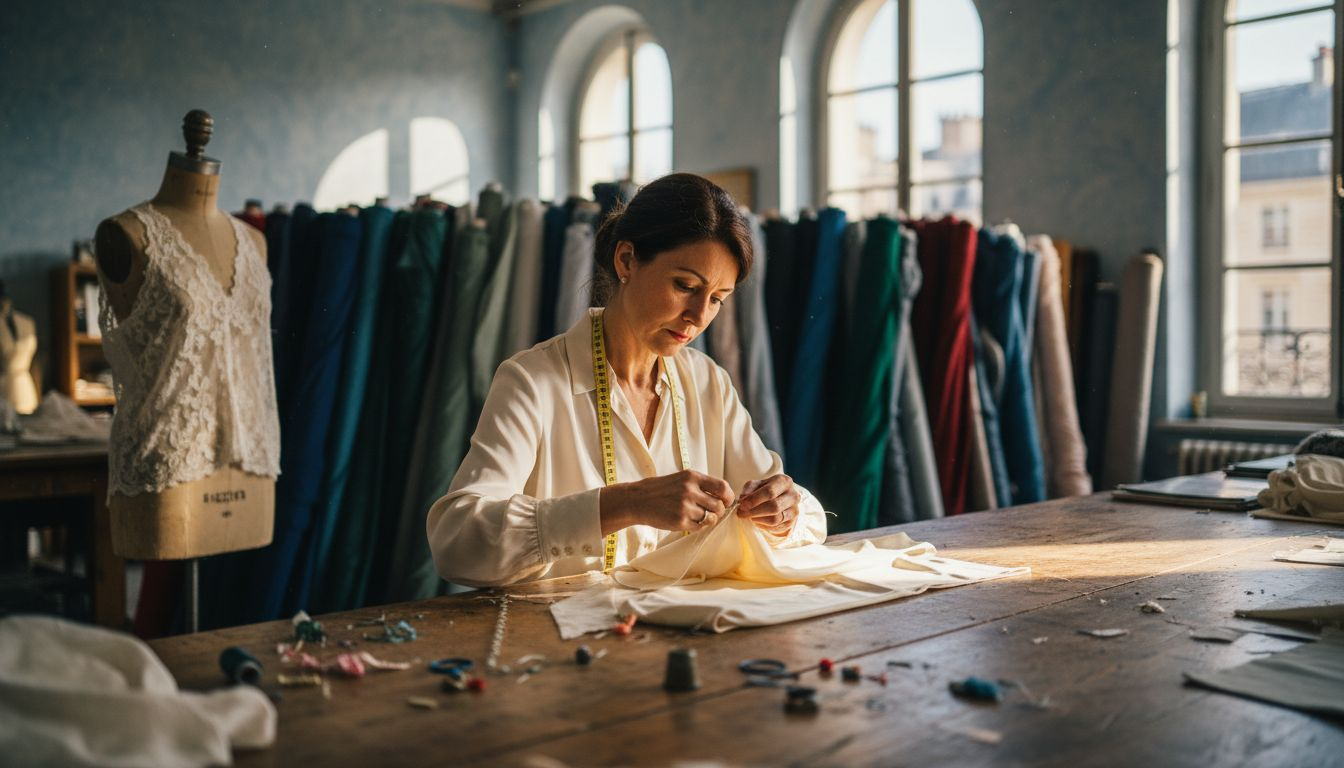
Types of Couture: Haute Couture and Demi-Couture
In the sophisticated world of luxury fashion, couture exists in distinct categories that represent different levels of craftsmanship and exclusivity. Haute couture emerges as the pinnacle of fashion design, representing an extraordinary realm where clothing transcends mere functional attire to become wearable art.
Haute couture is characterized by several distinguishing features:
Extreme Customization: Each garment is individually designed and hand-crafted for a specific client
Exceptional Materials: Utilizing the most rare and highest quality fabrics globally
Immense Labor Investment: Requiring hundreds of specialized work hours per piece
Strict Regulatory Standards: Adhering to rigorous French fashion industry regulations
Demi-couture, in contrast, offers a more accessible approach to luxury fashion. This category bridges the gap between ready-to-wear and haute couture, providing intricate, partially handmade pieces that maintain high craftsmanship standards while being more financially approachable. Demi-couture garments often incorporate similar design techniques to haute couture but with less extreme customization and lower labor intensity.
Comparative Characteristics:
Here’s how haute couture and demi-couture differ in their approach to luxury fashion:
Aspect | Haute Couture | Demi-Couture |
Client Experience | Exclusively bespoke fitting | Semi-customized fitting |
Material Selection | Only rarest, highest quality | Premium but wider selection |
Production Volume | Extremely limited—one-off pieces | Small runs, limited repeats |
Accessibility | Invitation-only, very exclusive | Broader access, less formal |
Haute Couture
Completely custom-made
Astronomical price points
Handcrafted with extreme precision
Demi-Couture
Partially customized
More affordable pricing
Combines machine and hand techniques
The true essence of couture lies not in the price tag, but in the meticulous craftsmanship and artistic vision behind each piece.
Pro tip: When evaluating couture quality, examine the interior construction - exceptional pieces reveal their artistry through immaculate inner workings.
Key Techniques and Artisan Skills in Couture
Couture craftsmanship represents an intricate dance of skill, precision, and artistic vision, where traditional artisanal techniques merge with technological innovation. Master artisans spend years perfecting techniques that transform fabric into wearable sculptures, each stitch telling a story of unparalleled dedication and expertise.
Key artisan techniques in couture include:
Hand Sewing: Executing invisible stitches and delicate seam work
Pattern Making: Creating unique, body-specific architectural designs
Fabric Manipulation: Transforming textiles through pleating, draping, and intricate folding
Embellishment Techniques: Incorporating hand embroidery, beadwork, and delicate appliqués
Each technique requires extraordinary precision and specialized skills passed down through generations. Pattern makers meticulously draft designs that follow the body’s natural contours, while embroidery artisans spend hundreds of hours creating intricate decorative elements that elevate a garment from simple clothing to a true work of art.
Technical Mastery Breakdown:
Pattern Drafting
Requires mathematical precision
Considers body movement and fabric behavior
Customized for individual client measurements
Hand Embroidery
Uses traditional and contemporary techniques
Involves multiple specialized stitching methods
Requires years of specialized training

True artisan skill is not about perfection, but about the unique human touch that makes each piece extraordinary.
Pro tip: Examine the inside of a couture garment - the quality of interior construction reveals the true mastery of its artisan.
Italian Craftsmanship and Generational Traditions
Italian craftsmanship represents a profound cultural legacy where artisanal skills are meticulously transferred across generations, transforming fashion into an art form deeply rooted in familial and regional traditions. These ateliers are not merely workshops but living repositories of cultural knowledge, where each stitch carries the whispers of ancestral expertise.
Key characteristics of Italian craftsmanship include:
Family Heritage: Skills passed directly from master to apprentice
Regional Specialization: Unique techniques specific to different Italian regions
Emotional Connection: Deep personal investment in creating exceptional pieces
Sustainable Practices: Prioritizing quality over quantity
The transmission of craftsmanship occurs through intricate, time-honored mechanisms that go beyond simple skill transfer. Young artisans learn not just technical techniques, but also the philosophical approach to design - understanding that each garment tells a story, represents a legacy, and embodies cultural identity.
Generational Knowledge Transfer Stages:
Observation Phase
Watching master craftspeople work
Understanding tool usage
Learning respect for materials
Apprenticeship Stage
Hands-on training under direct supervision
Gradual skill complexity progression
Building muscle memory and intuition
Craftsmanship is not inherited; it is a sacred knowledge carefully cultivated through patience, passion, and profound respect for tradition.
Pro tip: When purchasing luxury Italian pieces, look for subtle signs of handwork - slight imperfections often indicate genuine craftsmanship.
Sustainable Couture: Ethical Luxury and Slow Fashion
Sustainable couture emerges as a revolutionary approach to fashion, where ethical luxury is achieved through conscious design and lifecycle engagement. This philosophy transforms clothing from disposable commodities into meaningful, long-lasting artistic expressions that respect both human craftsmanship and environmental sustainability.
Key principles of sustainable couture include:
Emotional Durability: Creating garments with profound personal significance
Quality Over Quantity: Prioritizing exceptional craftsmanship
Material Consciousness: Using responsibly sourced, eco-friendly textiles
Circular Design: Enabling garment repair, adaptation, and potential recycling
Slow fashion fundamentally challenges the rapid, wasteful cycles of traditional fashion production. Designers practicing sustainable couture meticulously select materials, invest extraordinary time in construction, and create pieces that transcend seasonal trends. Each garment becomes a statement of environmental responsibility and personal values, requiring significantly more design consideration than mass-produced clothing.
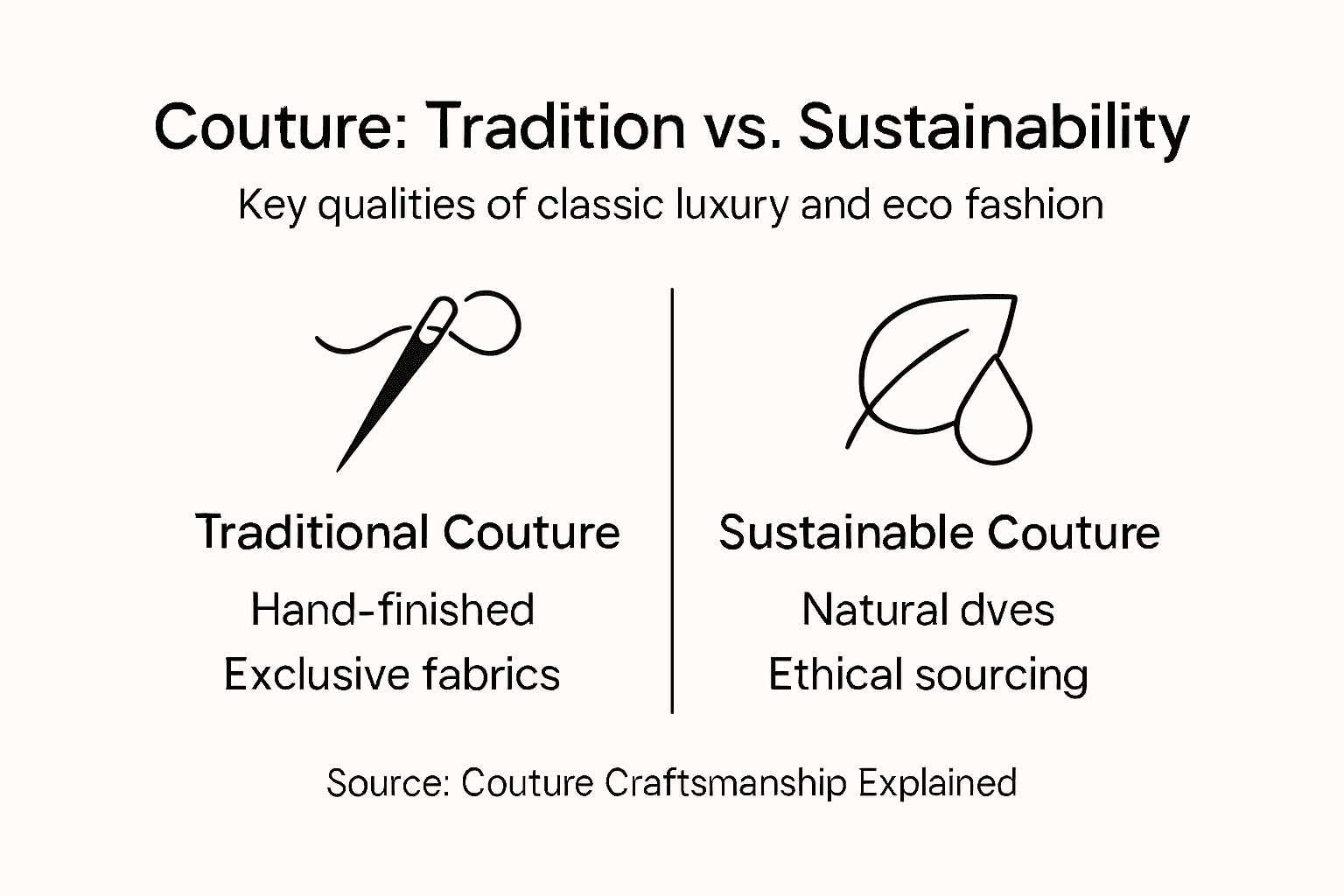
Sustainable Fashion Evolution Stages:
These are key ways sustainable couture shapes modern fashion:
Principle | Sustainable Couture Impact | Example Action |
Lifecycle Engagement | Prolongs garment lifespan | Repair and restyling |
Social Responsibility | Supports artisan communities | Fair labor practices |
Eco-Conscious Design | Reduces environmental footprint | Natural dye selection |
Consumer Education | Encourages mindful consumption | Promotes slow fashion |
Awareness Phase
Understanding environmental fashion impact
Recognizing unsustainable production practices
Developing consumer consciousness
Transformation Stage
Implementing circular design principles
Investing in high-quality, versatile pieces
Supporting ethical manufacturing processes
Sustainable couture is not a trend, but a fundamental reimagining of fashion’s relationship with human creativity and environmental stewardship.
Pro tip: Invest in versatile, timeless pieces that can be styled multiple ways, reducing overall wardrobe consumption.
Experience the Art of Couture Craftsmanship with Vivien Lauren
Discover the true essence of luxury that the article “Couture Craftsmanship Explained The Essence of Luxury” captures so well. If you value meticulous handwork, timeless elegance, and ethical slow fashion that celebrates generational Italian artistry then explore our curated collections at Vivien Lauren. Each piece reflects the dedication to exceptional materials and bespoke craftsmanship—qualities that transform fashion into wearable art.


Elevate your wardrobe today with exclusive dresses, shoes, and accessories designed to honor this rich cultural legacy. Visit https://vivienlauren.co.uk now to indulge in pieces that offer emotional durability and sustainable luxury. Enjoy benefits like free UK shipping on orders over £80 and flexible payment options, so you can invest confidently in fashion that lasts.
Frequently Asked Questions
What is couture craftsmanship?
Couture craftsmanship is a meticulous art form in fashion design, emphasizing exceptional handwork, precision, and the preservation of historic textile traditions. It transcends basic clothing production, creating extraordinary, customized garments.
What are the key characteristics of haute couture?
Haute couture is characterized by extreme customization, the use of exceptional materials, immense labor investment, and adherence to strict regulatory standards. Each piece is uniquely crafted for a specific client.
How do demi-couture and haute couture differ?

Demi-couture is a more accessible category of luxury fashion that offers partially handmade pieces, while haute couture represents fully custom-made garments. Demi-couture uses premium materials but generally requires less intense labor than haute couture.
What techniques are essential in couture craftsmanship?
Key techniques include hand sewing, pattern making, fabric manipulation, and embellishment techniques like hand embroidery. Each of these requires exceptional skill and precision, often passed down through generations.
Recommended
This article has been researched for you by Nancy. On behalf of Vivien Lauren. Vivien Lauren. Luxury. Craftsmanship that's Proudly Italian. Vivien Lauren. Proud to Style.


