
The Evolution of Haute Couture How Christian Dior Shaped Modern Refinery

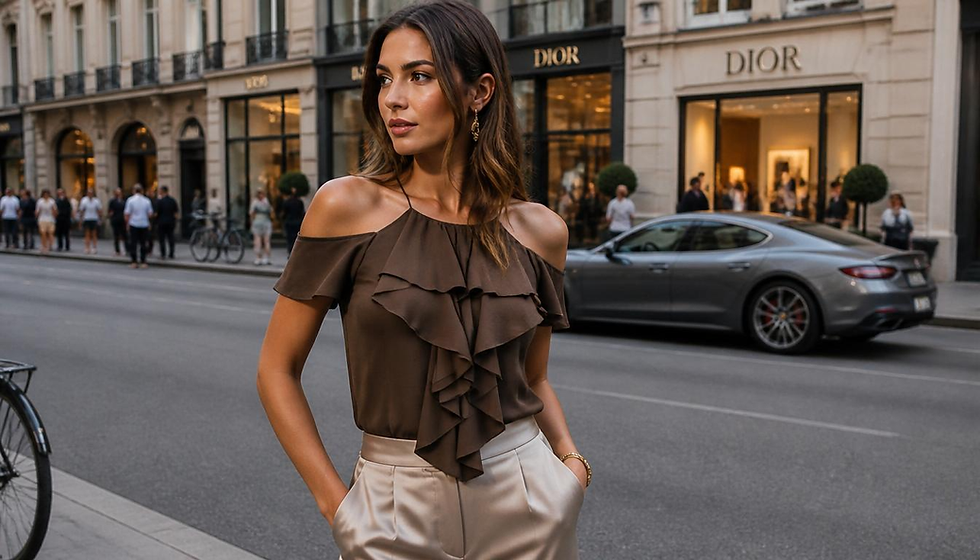
Vivien Lauren. Paying homage to Dior. The Evolution of Haute Couture How Christian Dior Shaped Modern Refinery
Christian Dior’s 1947 New Look revolutionized postwar fashion by restoring femininity, luxury, and hope through structured silhouettes. Haute couture, a protected French craft requiring specific staffing and presentation standards, provides the foundation for Dior’s enduring influence. His legacy persists in modern luxury fashion, emphasizing craftsmanship, structure, and feminine strength as timeless ideals.
The evolution of haute couture and how Christian Dior shaped modern refinement is one of fashion’s most stirring chapters, a story that begins not on a sunlit runway but in the ash-gray quiet of postwar Paris. When Dior unveiled his debut collection in February 1947, the world was still rationing fabric, still exhaling the breath it had held through six years of war. What he offered was something audacious, exquisitely feminine, and profoundly hopeful. That collection did not merely refresh a silhouette. It redefined what luxury dressing could mean, and its reverberations still echo through every atelier, every season, every carefully draped bodice you admire today.
Table of Contents
1. The evolution of haute couture and Dior’s defining place in it
2. What the regulatory framework of haute couture actually requires
3. Dior’s 1947 New Look: the collection that changed everything
6. Haute couture’s broader history and where Dior fits within it
7. The continuing life of Dior’s refinement in contemporary luxury
Key takeaways - The Evolution of Haute Couture How Christian Dior Shaped Modern Refinery

Point | Details |
Dior’s 1947 New Look was a cultural act | The collection reversed wartime austerity by restoring femininity, luxury, and optimism to women’s dress. |
Haute couture is legally protected | French regulations require ateliers to maintain at least 20 full-time staff and present two annual shows to hold the designation. |
Dior established a silhouette vocabulary | His structured shapes became templates that designers like Raf Simons and John Galliano later reinterpreted across decades. |
Couture’s history is a collective evolution | Worth, Chanel, Balenciaga, and Dior each contributed distinct chapters to the ongoing story of modern couture. |
Dior’s legacy lives in luxury fashion today | Contemporary elegant dressing still borrows from his principles of structure, femininity, and exquisite craft. |
1. The evolution of haute couture and Dior’s defining place in it
To appreciate the evolution of haute couture and how Christian Dior shaped modern refinement, you first need to understand what haute couture actually is, because the term is used far more loosely than its meaning deserves. It is not simply high-end clothing, nor a synonym for expensive. Haute couture is a legally protected designation in France, one governed by specific operational rules that have shaped the way design houses have operated since 1945.
The Federation of Haute Couture and Mode, known as the FHCM, coordinates Paris Fashion Week and acts as the institutional guardian of couture’s standards, balancing heritage with the pressures of contemporary innovation. Without that framework, the word “couture” would mean nothing more than a marketing flourish.
2. What the regulatory framework of haute couture actually requires
Few outside the industry realize how specific and enforceable haute couture’s standards truly are. French haute couture regulation, established in 1945, mandates that ateliers maintain at least 20 full-time employees and present a minimum of two annual runway collections. These are not aspirational guidelines. They are conditions of legitimacy.
The requirements cover:
Staffing minimums: At least 20 full-time atelier employees dedicated to the handcraft of garment construction.
Presentation frequency: Two annual shows with a stipulated minimum number of runway passages per collection.
Originality standards: Each piece must be made to order for private clients, with one or more fittings.
Atelier organization: The workshops must operate according to clearly defined production rules that preserve the integrity of handcraft.
Requirement | Detail |
Minimum staff | 20 full-time atelier employees |
Annual shows | Minimum of two, with required runway passages |
Client fittings | At least one fitting per made-to-order piece |
Originality | Designs must be original, not reproduced ready-to-wear |
This regulatory structure, more than a fashion label but a protected craft institution, was precisely the environment Dior entered in 1947. He did not simply create beautiful clothes within this system. He understood it well enough to use it as a platform.
Pro Tip: When evaluating whether a garment is genuinely haute couture versus couture-inspired, ask whether it was made to order with individual fittings. That single distinction separates the institution from the imitation.
3. Dior’s 1947 New Look: the collection that changed everything
On February 12, 1947, Christian Dior presented his debut collection at 30 Avenue Montaigne in Paris. The editor Carmel Snow of Harper’s Bazaar reportedly exclaimed, “It’s quite a revolution, dear Christian. Your dresses have such a new look.” The name stuck. What she witnessed was a cultural shift post-WWII, one that used fashion as a vehicle for collective emotional recovery.
The New Look silhouette was deliberately, almost defiantly feminine:
The Bar suit: A pale ivory jacket with softly padded hips and a pleated black wool skirt falling well below the knee. It became the symbol of the entire collection.
Nipped-in waists: Structured bodices that sculpted the torso into an hourglass form, in direct opposition to the boxy, utilitarian cuts of wartime dressing.
Full skirts: Generous amounts of fabric, at a time when rationing had made excess yardage almost a political statement.
Rounded shoulders: Soft, sloping lines that replaced the squared military shoulders women had worn throughout the war years.
“Dior’s 1947 collection introduced an hourglass silhouette characterized by a nipped-in waist and full skirts, reviving postwar French fashion with designs emphasizing femininity and luxury across 90 models presented on six mannequins.”
The reaction was not universally celebratory. Some women’s groups in the United States protested, arguing that the longer hemlines and constricted waists were a regression. In Paris, however, and very quickly across the world, the New Look was embraced as a declaration of hope. Fashion post-WWII shifted toward abundance and elegance, symbolizing an optimism the world had been desperately craving. Paris, which had feared losing its status as the capital of fashion to New York during the occupation, reclaimed that title almost overnight.

4. The institutional brilliance behind the aesthetic
What separated Dior from simply being a talented designer was his understanding that haute couture operated within a system, and that excelling within that system required more than beautiful sketches. The postwar tightening of haute couture regulations had created a demanding environment in which staffing requirements and presentation rules acted as a kind of crucible. Only those who could sustain that rigor would earn the designation.
Dior built his atelier accordingly. He understood that structured silhouettes required extraordinary internal labor, the kind of labor that could only be sustained by a properly organized workshop. The Bar suit, for example, required layers of canvas interfacing, hand-stitching, and multiple fittings. You do not construct a garment like that without the institutional architecture to support it. Dior’s success was, in part, a testament to his willingness to honor the full weight of couture’s requirements rather than merely its glamour.
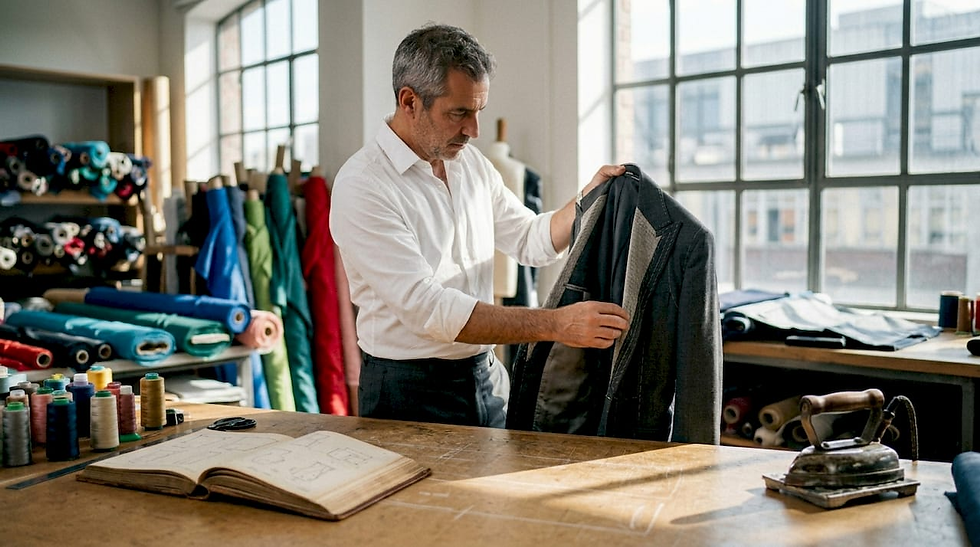
Pro Tip: Study the construction of a Dior Bar suit in person, if you ever have the chance. The interior architecture of the jacket tells you everything about why haute couture requires such rigorous staffing standards. The outside is beautiful. The inside is engineering.
5. How Dior influenced the designers who followed
Dior’s legacy in the history of haute couture is not frozen in 1947. It is a living, continuously reinterpreted tradition. Subsequent designers like Raf Simons and John Galliano revisited Dior’s signature shapes with contemporary sensibilities, each adding their own language while honoring the structural grammar Dior established.
Galliano, during his tenure at Dior in the 1990s and 2000s, pushed the New Look silhouette toward theatrical extremity, extending the drama of the hourglass into fantastical constructions that still referenced the original proportions. Raf Simons, who succeeded him, took the opposite approach: stripping the vocabulary to its most architectural and intellectual essence, creating collections that felt modern yet unmistakably Dior. The silhouette innovations Dior established became a vocabulary that successive creative directors could speak fluently, each in their own accent.
This is what makes Dior’s Christian Dior impact on fashion so singular. He did not simply create a style. He created a reference point, a shared language that the entire industry would use as shorthand for structured femininity and couture craftsmanship for decades to come.
6. Haute couture’s broader history and where Dior fits within it
Understanding Dior’s place requires a wider view of the history of haute couture, one that acknowledges the contributions of the designers who preceded and paralleled him.
Designer | Contribution | Era |
Charles Frederick Worth | Founded modern haute couture; introduced the seasonal collection model | 1858 onward |
Gabrielle “Coco” Chanel | Liberated women’s dress from corsetry; introduced jersey and sportswear codes | 1910s to 1970s |
Cristóbal Balenciaga | Elevated couture’s architecturally geometric silhouette and technical mastery | 1930s to 1960s |
Christian Dior | Restored femininity and luxury post-WWII; established the enduring silhouette vocabulary | 1947 onward |
Haute couture evolved from aristocratic dressmaking into a global cultural institution, always navigating the tension between artistic freedom and enforced standards. Worth gave it commercial structure. Chanel gave it modernity. Balenciaga gave it geometry. Dior gave it back its romance, precisely when the world needed romance most.
The modern couture evolution we observe today, with houses presenting collections that blend digital fabrication with hand embroidery, owes a significant debt to the institutional foundations Dior helped fortify. His willingness to operate within the regulatory framework, rather than around it, validated the system itself. When Dior succeeded so spectacularly, the rules of haute couture gained credibility alongside the clothes.
7. The continuing life of Dior’s refinement in contemporary luxury
The question of how Dior influenced style is not merely historical. It is immediately relevant to how we understand and appreciate luxury dressing today. The principles he established, exquisite structure, femininity as a form of strength, fabric as a medium of emotion, remain the organizing logic of the finest contemporary fashion.
You see it in the persistence of the nipped waist as a signal of formality and occasion dressing. You see it in the reverence for atelier labor that distinguishes timeless French elegance from fast fashion production. The New Look was never just about a particular hemline length. It was an argument, made in fabric and structure, that a woman’s dress could be a form of cultural expression rather than mere utility. That argument, once made, has never been fully countered.
Contemporary luxury fashion houses across Europe still organize their couture operations around the staffing and presentation standards that Dior’s generation helped normalize. And the woman who chooses a beautifully structured occasion dress today is, perhaps unknowingly, participating in a lineage that runs directly back to that February morning in 1947 on the Avenue Montaigne.
Vivien Lauren’s perspective on Dior’s dual legacy
What I find most remarkable about Christian Dior, having spent years studying and celebrating the history of elegant women’s dress, is that his genius operated on two levels simultaneously. There was the visible level: the breathtaking clothes, the sculpted silhouettes, the exquisite femininity. And then there was the institutional level, which almost no one discusses, where Dior understood that haute couture’s survival depended on its integrity as a system, not just its beauty as an aesthetic.
I’ve come to believe that what made the New Look genuinely transformative was not the fullness of the skirt or the nip of the waist. It was the seriousness with which Dior treated the act of dressing. He believed that a woman’s clothing could be an act of cultural defiance, of joy, of quiet authority. That belief, more than any specific silhouette, is what continues to inspire modern luxury fashion and the women who wear it with intention.
The lesson I take from Dior is this: refinement is never accidental. It is always the product of discipline, craft, and an unwillingness to settle for the merely adequate. That is as true for a couture atelier in Paris as it is for any woman who chooses her wardrobe with care.
— Vivien Lauren, Attainable Luxury. Empowering women through Timeless elegant Fashion.
Dress with the same intention Dior inspired
At Vivien Lauren, we believe that the principles Dior restored to women’s fashion belong in every wardrobe, not just those of couture clients. Our collections are made in Italy, drawing on generations of artisan craftsmanship, and curated to offer the modern woman precisely what the New Look once promised: clothing that honors her femininity, her sophistication, and her right to dress with genuine elegance.

The Vivienne Italian Leather Bag - Insignia From the Luxury Leather Collection By Vivien Lauren 
Flat Pom Pom Mules - Handcrafted in Italian Leather Suede Designs by Vivien Lauren 
The Glamorous supple Soft Italian Leather Bucket Bags by Vivien Lauren 
Mule Heels- Classic Elegance Crafted in Italian Velvet & Leather by Vivien Lauren Lady models Styles by Vivien Lauren
From beautifully structured occasion dresses that carry the quiet authority of couture proportions, to refined Italian leather bags that complete a look with purposeful elegance, every piece at Vivienlauren reflects our belief that luxury is not a label. It is a standard of care. Browse the full Vivienlauren collection and discover how Dior’s most enduring ideas, structure, femininity, and exquisite craft, continue to live in the clothes you wear today.
FAQ
What was Christian Dior’s most significant contribution to haute couture?
Dior’s 1947 New Look collection restored femininity and luxury to postwar fashion through an hourglass silhouette, reasserting Paris as the world’s preeminent fashion capital and establishing a structural design vocabulary that influenced couture for decades.
What are the legal requirements to be considered haute couture?
French regulations established in 1945 require ateliers to employ at least 20 full-time staff, present two annual collections with a minimum number of runway passages, and produce made-to-order garments with individual client fittings.
How did Dior influence designers who came after him?
Designers including John Galliano and Raf Simons directly reinterpreted Dior’s signature silhouettes during their respective tenures at the house, demonstrating how his structural vocabulary became a living reference point across generations of haute couture.
How does Dior’s legacy connect to modern luxury fashion?
Dior’s principles of structured femininity, atelier craftsmanship, and emotional resonance through clothing remain the organizing logic of contemporary luxury dressing, from couture collections to thoughtfully crafted ready-to-wear.
Why is the New Look considered a cultural moment and not just a fashion trend?
The New Look represented a symbolic rejection of wartime austerity, using lavish fabric and feminine structure to signal collective optimism at a moment when Europe was rebuilding. It was as much an emotional statement as an aesthetic one.
Recommended
This fashion guide has been written for you by Sammy Li. On behalf of Vivien Lauren. Vivien Lauren. Paying homage to Christian Dior. Vivien Lauren. Luxury. Craftsmanship. That's Proudly Italian. Vivien Lauren. Proud To Style.


