
What Is Italian Tailoring: A Guide to Timeless Craft
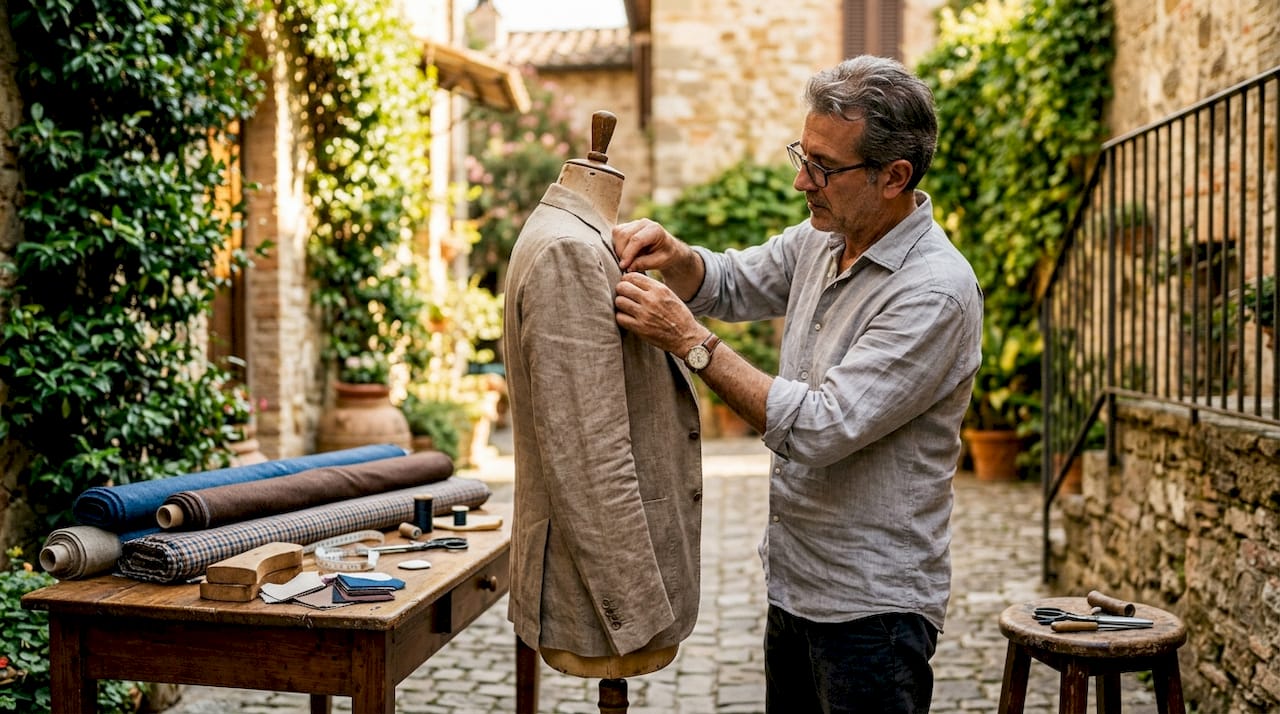
Italian tailoring is the art of constructing garments using soft, fluid techniques that honor the body’s natural shape, prioritize comfort, and produce an aesthetic of effortless elegance. Unlike the rigid, padded structures found in other tailoring traditions, Italian sartorial craft, known formally as sartoria italiana, works with the wearer rather than against her. It draws from centuries of regional artisan knowledge, from the sun-warmed workshops of Naples to the polished ateliers of Rome, producing garments that feel as beautiful as they look. For women who appreciate timeless Italian elegance, understanding this tradition is the first step toward dressing with genuine intention.
What is Italian tailoring and where did it begin?
Italian tailoring’s roots stretch back to the Renaissance courts of Florence and Milan, where skilled artisans dressed nobility in garments of extraordinary refinement. The tradition formalized across centuries, shaped by Italy’s warm climate, its culture of bella figura (presenting oneself beautifully), and a deep civic pride in handcraft. By the mid-20th century, distinct tailoring schools had emerged in Milan, Rome, and Naples, each developing its own aesthetic philosophy and construction methods.
The regional schools reflect the geography and temperament of their cities:
Naples: The most celebrated school globally, defined by soft shoulders, minimal canvas, and a relaxed silhouette born from the city’s warm, humid climate. Neapolitan tailors developed techniques that allowed garments to breathe and move freely.
Rome: The Roman tradition favors sharper cuts, greater formality, and a more structured silhouette. Roman tailoring carries an air of authority, suited to diplomatic and ceremonial occasions.
Milan and Northern Italy: Northern Italian tailoring occupies a middle ground, blending Neapolitan softness with a degree of Milanese precision. It reflects the city’s role as a global fashion capital, balancing wearability with polish.
Climate shaped construction as directly as culture did. Neapolitan tailors, working in heat that made heavy wool impractical, pioneered the use of lightweight fabrics and unlined or half-lined jackets. That practical necessity became an aesthetic signature recognized worldwide.
Key construction techniques that define Italian tailoring
The difference in tailoring styles between Italian sartoria and other traditions comes down to specific construction choices, not just visual aesthetics. Each technique serves both a functional and an expressive purpose.
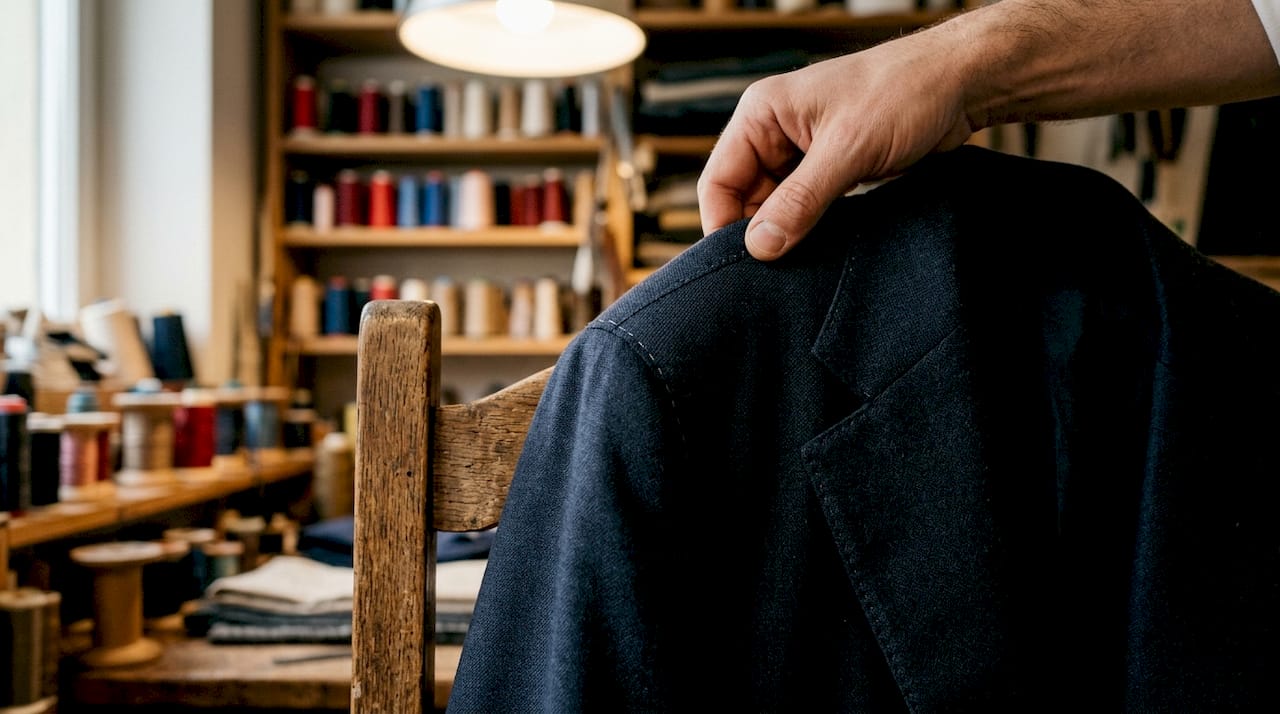
Soft shoulder construction is the most immediately visible characteristic. Italian suits use minimal to no shoulder padding, allowing the fabric to follow the natural slope of the shoulder. The result is a silhouette that reads as relaxed and confident rather than armored.
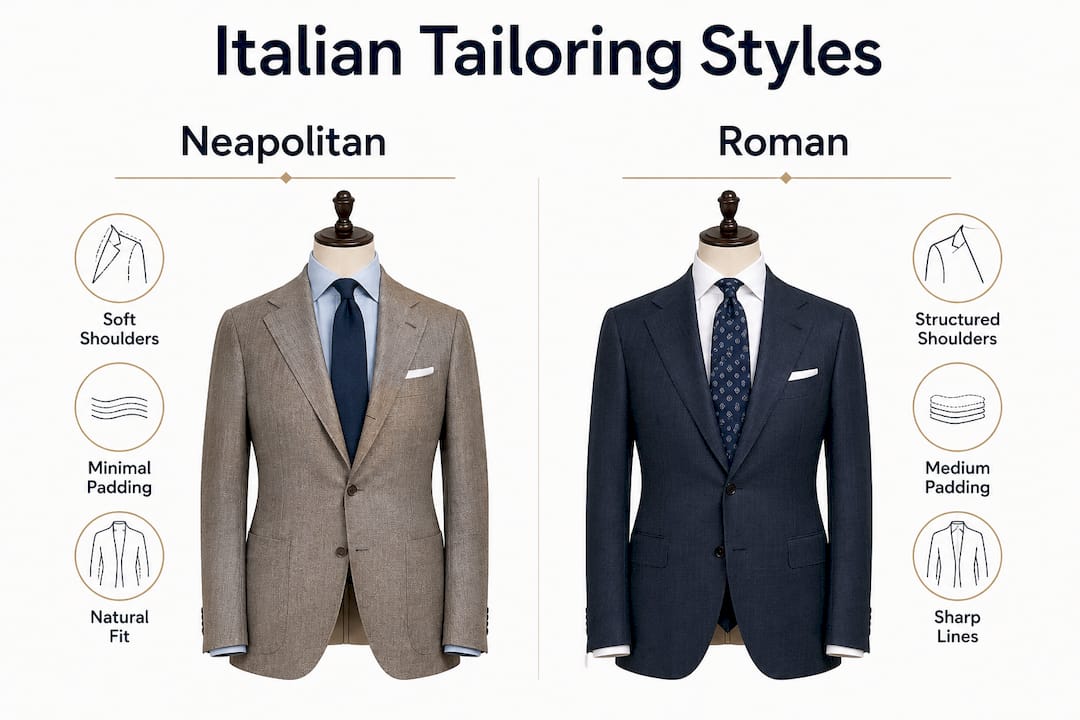
The spalla camicia (shirt shoulder) is the most technically demanding expression of this philosophy. This construction method involves hand-sewing sleeves without padding, producing a slight ripple or pucker at the sleeve head. That ripple is not a flaw. It is the deliberate mark of the highest artisanal skill, signaling that no machine produced this garment.
High armholes allow the jacket to move with the arm rather than pulling across the back. This detail, combined with soft canvas, produces the “second skin” sensation that Italian tailoring is famous for.
Fabric selection is inseparable from fit in this tradition. Neapolitan suits favor fabrics weighing 260–320 grams, using lightweight wool, linen blends, and cotton fresco for drape and breathability. Heavier fabrics would undermine the fluid silhouette that defines the style.
Jacket length follows a specific proportion: the hem aligns near the first knuckle of the thumb when the arm hangs naturally. Shorter jackets visually lengthen the leg line and present a contemporary silhouette that reads as both modern and refined.
Pro Tip: When examining a garment for authentic Italian construction, look at the sleeve head first. A slight, intentional ripple at the shoulder seam is the clearest sign of genuine Neapolitan handcraft.
The lapel roll in Italian tailoring also deserves attention. Rather than pressing the lapel flat against the chest, Italian tailors allow it to roll softly, creating a three-dimensional quality that catches light and adds depth to the garment’s front.
How do regional Italian tailoring styles compare?
Understanding the regional variations within Italian sartoria helps you choose the right garment for your lifestyle and occasion. The three schools produce genuinely different results, and the distinction matters when selecting a piece for a specific purpose.
Style | Shoulder | Structure | Best suited for |
Neapolitan | Soft, minimal padding | Unlined or half-lined | Everyday luxury, warm climates, relaxed occasions |
Roman | Defined, light padding | More structured canvas | Formal events, professional settings |
Northern Italian | Moderate, balanced | Semi-structured | Business wear, versatile dressing |
Italian tailoring’s versatility makes it the most practical choice for modern luxury wear. A Neapolitan jacket worn over a silk blouse reads as effortlessly chic at a gallery opening. The same jacket, belted at the waist, becomes a statement piece for an afternoon in the city.
The Roman style suits women who want their tailoring to project authority without sacrificing elegance. Its sharper lines and more defined shoulder create a silhouette that commands attention in boardrooms and formal receptions. Northern Italian tailoring, meanwhile, offers the most adaptable option, structured enough for professional settings, soft enough for social occasions.
Choosing between these traditions is not merely a matter of taste. Soft Italian construction flatters natural body shapes by following rather than reshaping the silhouette, making it a forgiving and flattering choice for a wide range of figures.
How Italian tailoring shapes modern luxury women’s fashion
Italian tailoring traditions have moved well beyond menswear. Contemporary women’s luxury suiting draws directly from sartorial principles developed in Naples, Rome, and Milan, translating them into garments that celebrate femininity and confidence in equal measure.
The principles that transfer most powerfully into women’s fashion include:
Fabric as the foundation of fit. Lightweight wools, linen blends, and silk-wool combinations drape against the body rather than holding it at a distance. The fabric does the work of flattering.
The relaxed shoulder as a statement of ease. A soft shoulder on a women’s blazer communicates confidence without aggression. It is the visual language of a woman who does not need armor.
Proportion and jacket length. The Italian principle of aligning jacket length to the natural thumb knuckle translates directly into women’s suiting, creating leg-lengthening proportions that feel both modern and classical.
Lining choices that honor the body. Half-lined or unlined jackets in fine fabrics move with the body through a full day, maintaining their shape without constricting movement.
Women’s Italian luxury suits represent one of the most direct expressions of this philosophy in contemporary fashion. The short trouser suit, in particular, captures the Italian instinct for proportion, pairing a precisely cut jacket with a cropped trouser to create a silhouette that is at once playful and authoritative.
The influence extends beyond suiting. Italian tailoring’s emphasis on fabric quality and construction integrity has shaped how luxury women’s fashion approaches everything from structured dresses to tailored coats. The underlying philosophy, that a garment should honor the body rather than impose upon it, is as relevant to a silk evening dress as it is to a wool blazer.
Key Takeaways
Italian tailoring is defined by soft construction, lightweight fabrics, and regional artisan traditions that produce garments honoring the body’s natural shape rather than imposing structure upon it.
Point | Details |
Soft construction is the core | Minimal padding and unlined canvassing create the signature “second skin” feel of Italian tailoring. |
Regional schools differ meaningfully | Neapolitan tailoring is relaxed and soft; Roman is sharper and more formal; Northern Italian blends both. |
Spalla camicia signals true craft | The hand-sewn shirt shoulder with its intentional ripple is the clearest mark of authentic Neapolitan artisanship. |
Fabric weight defines the silhouette | Fabrics in the 260–320 gram range produce the drape and breathability central to Italian tailoring’s aesthetic. |
Women’s fashion draws directly from sartoria | Contemporary luxury women’s suiting applies Italian tailoring’s fit and fabric principles to celebrate femininity and ease. |
Why Italian tailoring will never go out of style
I have spent years studying how garments are made, and I return to one conviction repeatedly: Italian tailoring endures because it is built on respect. Respect for the fabric, for the body wearing it, and for the time it takes to do something properly.
What strikes me most about the Neapolitan tradition, specifically, is that its most celebrated feature, the spalla camicia ripple, looks like an imperfection to the untrained eye. That is the point. It takes more skill to produce a controlled, intentional softness than to press a shoulder flat and call it finished. The ripple is a signature, not a flaw, and recognizing that distinction is what separates a woman who wears fashion from one who understands it.
I also think the difference in tailoring styles matters more for women than is often acknowledged. Structured tailoring can feel like a costume, something worn to project authority borrowed from another tradition. Italian soft tailoring, by contrast, feels like an extension of the self. It moves when you move. It breathes when you breathe. For women who want to dress with genuine confidence rather than performed confidence, that distinction is everything.
My advice: when you are considering a tailored piece, run your hand across the shoulder seam and feel whether the fabric yields or resists. If it yields, if it follows the curve of your hand rather than holding its shape against it, you are holding something made in the Italian spirit. That softness is not weakness. It is the most sophisticated thing a garment can do.
— Vivien Lauren.
Vivienlauren’s collection and the Italian tailoring tradition
At Vivienlauren, every piece in our curated collection reflects the values that Italian sartoria has championed for centuries: quality of material, integrity of construction, and a silhouette that honors the woman wearing it.
Our garments are made in Italy, drawing on craftsmanship passed down through generations of artisans who understand that luxury is not a price point. It is a standard of care. From elegant women’s fashion to carefully selected accessories, each piece is chosen because it embodies the principles of Italian tailoring: soft, refined, and built to last. If you are ready to dress with the kind of intention that Italian sartoria demands, our collection is the place to begin. Free UK shipping applies on orders over £80, and international shipping is available on orders above £300.
FAQ
What is Italian tailoring in simple terms?
Italian tailoring is a garment construction method that uses soft fabrics, minimal padding, and handcraft techniques to create clothing that fits naturally and moves with the body. It prioritizes comfort and elegance over rigid structure.
How do I recognize authentic Italian tailoring?
Look for a soft shoulder with little or no padding, a slight ripple at the sleeve head (the spalla camicia), and lightweight fabric that drapes rather than holds its shape. These details signal genuine Italian sartorial craft.
What is the difference between Neapolitan and Roman tailoring?
Neapolitan tailoring is relaxed, soft-shouldered, and informal, suited to everyday luxury wear. Roman tailoring is sharper, more structured, and formal, designed for professional and ceremonial occasions.
Why does Italian tailoring suit women’s fashion so well?
Soft Italian construction follows the natural body shape rather than reshaping it, making it a flattering and comfortable choice for women who want elegance without restriction.
Where can I buy Italian tailored garments for women?
Phase Eight offers a curated selection of Italian made dresses, and Vivien Lauren has Italian-made women’s fashion, focusing on high end fashion accessories .
Thus from these two for example you will acquire top class fashion pieces that reflect the principles of Italian tailoring, including suits, dresses, and accessories crafted by skilled Italian artisans.
Recommended
This fashion article has been written and brought to you by Nancy. On behalf of Vivien Lauren. Vivien Lauren. Luxury. Craftsmanship that's Proudly Italian.
