
Why fashion heritage matters for timeless women's style

Fashion heritage isn’t about nostalgia or dusty museum pieces. It’s about understanding why certain garments transcend trends and remain coveted decades after their creation. While fast fashion floods the market with disposable items, heritage craftsmanship offers something profoundly different: pieces that improve with age, tell authentic stories, and connect you to centuries of artisan expertise. For women seeking elegance that lasts, heritage fashion provides the foundation for a wardrobe that reflects both personal values and enduring style. This article explores why heritage craftsmanship matters for sustainability, quality, and creating a deeply personal style connection.
Table of Contents
The roots of fashion heritage: preserving timeless craftsmanship
Heritage fashion vs. fast fashion: sustainability and social impact
Craftsmanship today: training, digital innovation, and preserving heritage
Navigating cultural respect and brand value in fashion heritage
How to incorporate heritage fashion into your wardrobe sustainably
Explore Vivien Lauren’s elegant heritage-inspired collection
Frequently asked questions about why fashion heritage matters
Key Takeaways
Point | Details |
Heritage craftsmanship | Preserving centuries old techniques yields durable garments with unique character. |
Timeless durability | Handcrafted pieces require significant time and skill, producing items that last decades. |
Supports artisan communities | Buying heritage pieces directly supports livelihoods and helps sustain traditional skills. |
Slow fashion sustainability | Slow fashion prioritizes natural and recycled materials and longer lifespans to reduce waste. |
The roots of fashion heritage: preserving timeless craftsmanship
Fashion heritage centers on preserving centuries-old craftsmanship techniques that ensure durability and timeless quality in high-end apparel. These aren’t arbitrary traditions. They represent generations of refinement, where artisans perfected methods that produce garments capable of lasting lifetimes. Understanding these roots helps you recognize genuine quality when building your wardrobe.
Consider English tweed weaving, where wool fibers are interlocked using looms operated by skilled weavers who learned their craft over years of apprenticeship. Italian flannel spinning transforms raw wool into luxuriously soft fabric through precise temperature control and careful fiber alignment. Indian Gota Patti embroidery involves karigars hand-stitching metallic ribbons into intricate patterns, a process requiring extraordinary patience and precision. Each technique creates distinct characteristics impossible to replicate through industrial methods.
These processes demand significant time investment. A single handcrafted leather bag might require 40 hours of work from cutting to finishing. This dedication produces garments with structural integrity that withstands decades of wear. Natural materials age gracefully, developing patinas that enhance rather than diminish beauty. Synthetic alternatives simply deteriorate.
The artisan involvement creates uniqueness in every piece. No two hand-embroidered garments are identical. Slight variations in stitch tension, thread placement, and finishing details make each item singular. This individuality fosters emotional connections between wearer and garment that mass-produced items never achieve.
Pro Tip: When evaluating heritage pieces, examine construction details like hand-stitched seams, natural fiber composition, and finishing quality. These indicators reveal genuine craftsmanship versus marketing claims.
Heritage techniques also ensure practical benefits:
Superior durability through reinforced construction methods
Natural breathability from organic fiber composition
Timeless aesthetic that transcends seasonal trends
Repairability when minor damage occurs
Heritage fashion vs. fast fashion: sustainability and social impact
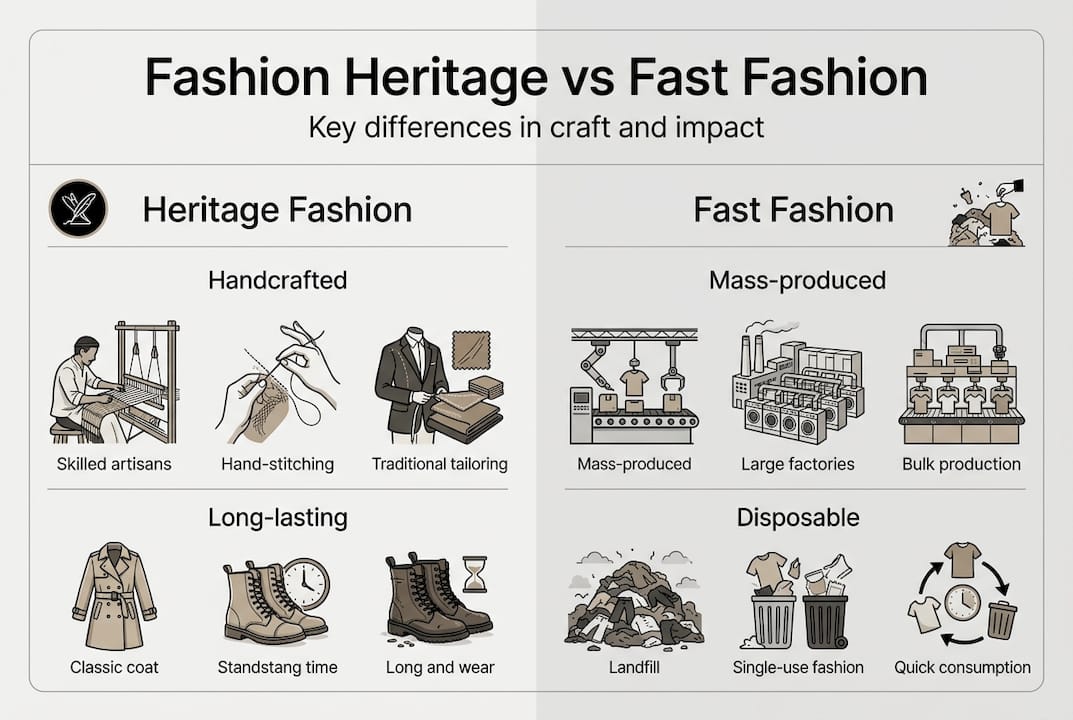
Fast fashion operates on fundamentally different principles than heritage-driven approaches. Mass production prioritizes speed and cost reduction, using synthetic materials and automated processes that enable disposability. Garments are designed for brief lifespans, encouraging constant replacement cycles that generate enormous waste.
Heritage-driven slow fashion prioritizes sustainability, reduces waste through longevity, and supports artisan communities over mass production. This approach fundamentally reimagines fashion’s purpose. Instead of chasing trends, slow fashion creates pieces meant to endure. Natural and recycled materials replace petroleum-based synthetics. Production focuses on quality that justifies higher initial investment through extended usability.
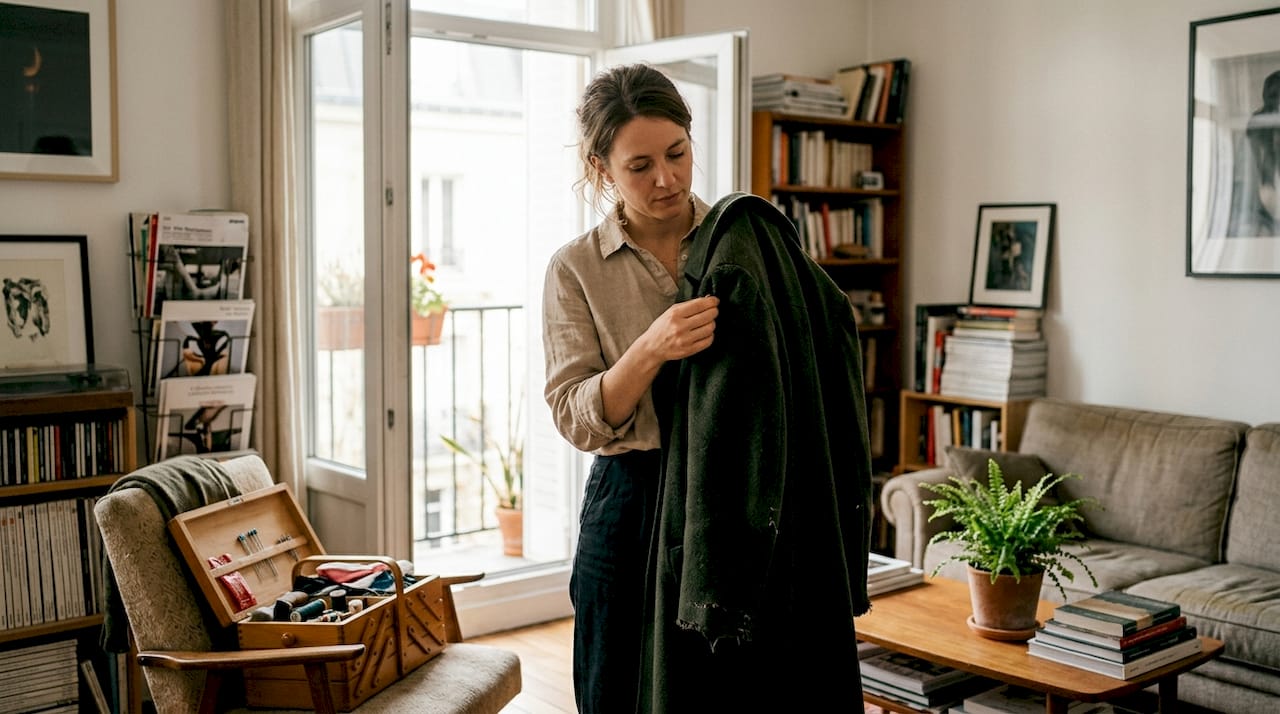
Slow fashion uses natural materials and preserves traditions while empowering communities. When you purchase heritage pieces, you directly support artisan livelihoods and help maintain cultural skills that might otherwise disappear. Karigars earn fair wages for their expertise rather than subsistence pay in factory conditions. Communities retain traditional knowledge and pass skills to younger generations.
Factor | Fast Fashion | Heritage Fashion |
Production focus | Volume and speed | Quality and longevity |
Materials | Synthetic, petroleum-based | Natural, recycled fibers |
Lifespan | Months to 1-2 years | Decades with proper care |
Artisan impact | Factory wages, skill loss | Fair compensation, preservation |
Environmental cost | High waste, pollution | Minimal waste, biodegradable |
Emotional connection | Disposable, replaceable | Personal, meaningful |
The environmental benefits extend beyond material choices. Heritage production typically occurs in smaller workshops with lower energy consumption compared to industrial facilities. Transportation distances often decrease when sourcing from regional artisans rather than global supply chains. Biodegradable natural fibers return to earth without leaving microplastic residue.
Pro Tip: Calculate cost per wear when comparing options. A $300 heritage dress worn 200 times over 10 years costs $1.50 per wear, while a $50 fast fashion dress worn 10 times before disposal costs $5 per wear.
Choosing slow fashion craftsmanship means investing in pieces that align with personal values around sustainability and ethics. You participate in a system that respects both people and planet. The emotional satisfaction of wearing something crafted with care and intention adds intangible value that transcends monetary considerations.
Consider these sustainability advantages:
Reduced carbon footprint through localized production
Elimination of microplastic pollution from synthetic fabrics
Support for biodiversity through natural fiber cultivation
Preservation of traditional ecological knowledge
Craftsmanship today: training, digital innovation, and preserving heritage
Heritage craftsmanship isn’t frozen in time. Modern methods blend traditional skills with contemporary tools, ensuring techniques remain relevant for today’s fashion landscape. This evolution preserves core principles while embracing innovation that enhances both quality and accessibility.
Prada Academy trains leather workers with extensive apprenticeship blending traditional and digital skills. Their program spans several months, combining hands-on learning with experienced masters and exposure to digital design technologies. Trainees develop muscle memory for hand-stitching while learning CAD software for pattern optimization. This dual approach maintains heritage quality standards while preparing artisans for modern production realities.
Digital craftsmanship uses 3D modeling and archival analysis for reconstruction and preservation. Museums and fashion houses employ scanning technologies to document historical garments in precise detail. These digital archives enable pattern recreation and inspire contemporary designs rooted in authentic heritage. Scientific analysis reveals construction secrets that written records never captured.
Key methodologies shaping modern heritage craftsmanship:
Hands-on apprenticeships pairing novices with master artisans for immersive skill transfer
Digital 3D modeling enabling precise pattern development and virtual prototyping
Experimental historical reconstruction using archival research to revive lost techniques
Hybrid production combining traditional hand finishing with efficient digital cutting
Scientific material analysis identifying optimal fiber blends and treatments
This evolution empowers artisans with expanded capabilities. A leather worker trained in both traditional hand-stitching and digital pattern drafting can work more efficiently without sacrificing quality. Craftsmanship training and innovation creates opportunities for younger generations to enter heritage fields with skills that command competitive compensation.
Digital tools also democratize access to heritage knowledge. Online archives allow aspiring artisans worldwide to study historical techniques. Virtual workshops connect masters with students across continents. This knowledge sharing strengthens global heritage fashion communities while respecting regional specializations.
The balance between tradition and innovation requires careful navigation. Digital efficiency shouldn’t replace the human touch that defines heritage quality. Smart integration uses technology to handle repetitive tasks while preserving hand craftsmanship for elements requiring artisan judgment and skill. A digitally cut pattern might receive hand-sewn seams and hand-applied embellishments, combining efficiency with artistry.
Navigating cultural respect and brand value in fashion heritage
Heritage fashion carries complex responsibilities around cultural representation and authenticity. While heritage craftsmanship builds powerful brand equity through genuine artisan connections, mishandling cultural elements risks appropriation that harms communities and undermines brand credibility.
Heritage enhances brand equity via halo effect but risks cultural appropriation when uncredited. The 2026 Ralph Lauren controversy over Indian Jhumka earrings illustrates this tension. The brand featured traditional Indian jewelry in their Paris Fashion Week collection, labeling pieces as “vintage accessories” without acknowledging cultural origins or collaborating with Indian artisans. This erasure sparked backlash from communities whose heritage was commodified without recognition or compensation.
Authentic heritage fashion requires transparency about origins, artisan involvement, and cultural context. When brands incorporate techniques or designs from specific cultures, ethical practice demands clear attribution, fair compensation for artisan labor, and respectful representation that honors source communities. Anything less constitutes appropriation rather than appreciation.
“True heritage fashion honors origins with radical transparency, ensuring artisan communities receive recognition and fair compensation for their cultural contributions while maintaining creative integrity.”
For consumers seeking classic fashion brand equity through heritage purchases, mindful evaluation prevents supporting problematic practices:
Verify brand transparency about artisan sourcing and cultural origins
Look for direct partnerships with communities rather than intermediary sourcing
Assess whether pricing reflects fair artisan compensation or exploitative markups
Examine marketing language for respectful representation versus exoticization
Research brand history regarding cultural sensitivity and appropriation incidents
Genuine heritage brands embrace these standards willingly. They recognize that authentic connections to craft traditions strengthen rather than threaten their market position. Transparency builds consumer trust and differentiates ethical heritage fashion from superficial trend exploitation.
The business case for cultural respect extends beyond ethics. Consumers increasingly demand accountability around sourcing and representation. Brands caught appropriating without attribution face reputational damage that undermines the heritage equity they sought to exploit. Conversely, brands demonstrating genuine commitment to artisan partnerships and cultural respect build loyal customer bases willing to invest in their offerings.
Navigating this landscape requires ongoing education and humility. Fashion heritage intersects with living cultures whose members deserve agency over how their traditions are shared and represented. The most successful heritage fashion relationships involve collaboration where artisan communities participate as partners rather than merely suppliers.
How to incorporate heritage fashion into your wardrobe sustainably
Translating heritage fashion principles into practical wardrobe choices requires strategic thinking about investment, sourcing, and maintenance. Building a collection of heritage pieces delivers lasting value when approached thoughtfully.
Start by prioritizing longevity and craftsmanship when selecting pieces. Examine construction quality through details like hand-finished seams, natural fiber composition, and reinforced stress points. Heritage garments should feel substantial without being heavy, with materials that improve through wear rather than deteriorate.
Practical selection strategies:
Source directly from artisan cooperatives or established heritage brands with transparent supply chains
Prioritize natural, durable materials like wool, silk, linen, and vegetable-tanned leather
Check sustainability indices and brand transparency reports before purchasing
Invest in versatile pieces that integrate with multiple outfits rather than statement items with limited wearability
Consider the fashion selection process that balances aesthetic appeal with practical functionality
Pro Tip: Proper maintenance significantly extends heritage piece lifespan. Invest in expert cleaning and repair services specializing in natural materials. A well-maintained heritage garment can last 30+ years, making professional care a worthwhile investment.
Care practice | Heritage fashion impact | Fast fashion impact |
Professional cleaning | Preserves fiber integrity, extends life 20+ years | Limited benefit, synthetic fibers degrade regardless |
Proper storage | Prevents damage, maintains shape and color | Minimal impact on short lifespan items |
Expert repairs | Economical, restores full functionality | Often costs more than replacement |
Seasonal rotation | Reduces wear, allows recovery between uses | Unnecessary given brief usage period |
Blending heritage pieces with contemporary wardrobe elements creates personal style narratives. A heritage leather bag pairs beautifully with modern minimalist dresses. Traditional embroidered jackets add texture to simple jeans and tees. This mixing honors craftsmanship while maintaining current aesthetic sensibilities.
Elegant wardrobe care practices preserve investment value. Store garments in breathable fabric bags rather than plastic. Use cedar blocks for natural moth protection. Rotate pieces regularly to prevent excessive wear on favorites. Address minor damage immediately before it worsens.
Consider lifecycle costs when evaluating heritage investments. A $400 heritage wool coat worn regularly for 15 years costs roughly $27 annually. Compare this to replacing a $100 synthetic coat every 2 years, totaling $750 over the same period. Heritage fashion delivers superior value through longevity.
Building heritage wardrobe foundations:
Start with versatile basics: quality leather shoes, tailored wool trousers, classic silk blouses
Add statement heritage pieces gradually as budget allows
Focus on neutral colors that maximize outfit combinations
Invest in proper storage and care tools from the beginning
Authentic heritage fashion transforms how you relate to clothing. Each piece carries stories of artisan expertise and cultural tradition. Wearing these garments connects you to broader narratives about craft, sustainability, and timeless elegance. This emotional dimension adds value that purely functional considerations never capture.
Explore Vivien Lauren’s elegant heritage-inspired collection
Your journey into heritage fashion deserves a partner committed to craftsmanship, sustainability, and timeless elegance. Vivien Lauren offers curated collections embodying the principles explored throughout this article, from artisan-made pieces to designs celebrating enduring style.
Discover green midi and navy dresses crafted with attention to detail and quality that transcends seasons. Explore fashion accessories designed to complement your heritage wardrobe while honoring traditional craftsmanship values. Each piece reflects commitment to ethical sourcing and construction quality that ensures decades of wear.
Pro Tip: Building a heritage wardrobe starts with foundational pieces from brands demonstrating genuine commitment to sustainability and artisan partnerships rather than marketing claims.
Vivien Lauren’s emphasis on slow fashion and Italian craftsmanship traditions aligns perfectly with heritage fashion principles. When you choose pieces designed for longevity and made with respect for artisan expertise, you invest in style that truly lasts.
Frequently asked questions about why fashion heritage matters
What makes heritage fashion different from regular fashion?
Heritage fashion prioritizes centuries-old craftsmanship techniques, natural materials, and artisan expertise over mass production efficiency. Each piece is made to last decades through superior construction quality and timeless design that transcends seasonal trends.
How does heritage fashion contribute to sustainability?
Heritage fashion reduces waste by creating garments designed for multi-decade lifespans rather than single-season disposability. Natural, biodegradable materials replace synthetic fibers, while localized artisan production minimizes transportation emissions and supports fair labor practices.
Can modern styles incorporate heritage techniques?
Absolutely. Contemporary designers successfully blend traditional craftsmanship with modern aesthetics through techniques like hand-finishing on minimalist silhouettes or traditional embroidery on current cuts. Digital tools enable heritage techniques to adapt to contemporary design requirements while maintaining quality standards.
How can I identify genuine heritage fashion pieces?
Examine construction details like hand-stitched seams, natural fiber composition, and finishing quality. Research brand transparency about artisan sourcing and production methods. Genuine heritage pieces show evidence of skilled handwork and use materials that improve with age rather than deteriorate.
What are common cultural appropriation pitfalls to avoid in fashion?
Avoid brands that use cultural elements without attribution or fair artisan compensation. Look for transparent partnerships with source communities rather than extractive sourcing. Be wary of marketing that exoticizes cultures or labels traditional designs generically without acknowledging origins.
Recommended
This fashion piece has been written for you by Sammy Li. On behalf of Vivien Lauren. Vivien Lauren. Luxury. Craftsmanship that's Proudly Italian. Vivien Lauren. Proud To Style.


