
27 Inspiring Examples of Handcrafted Accessories
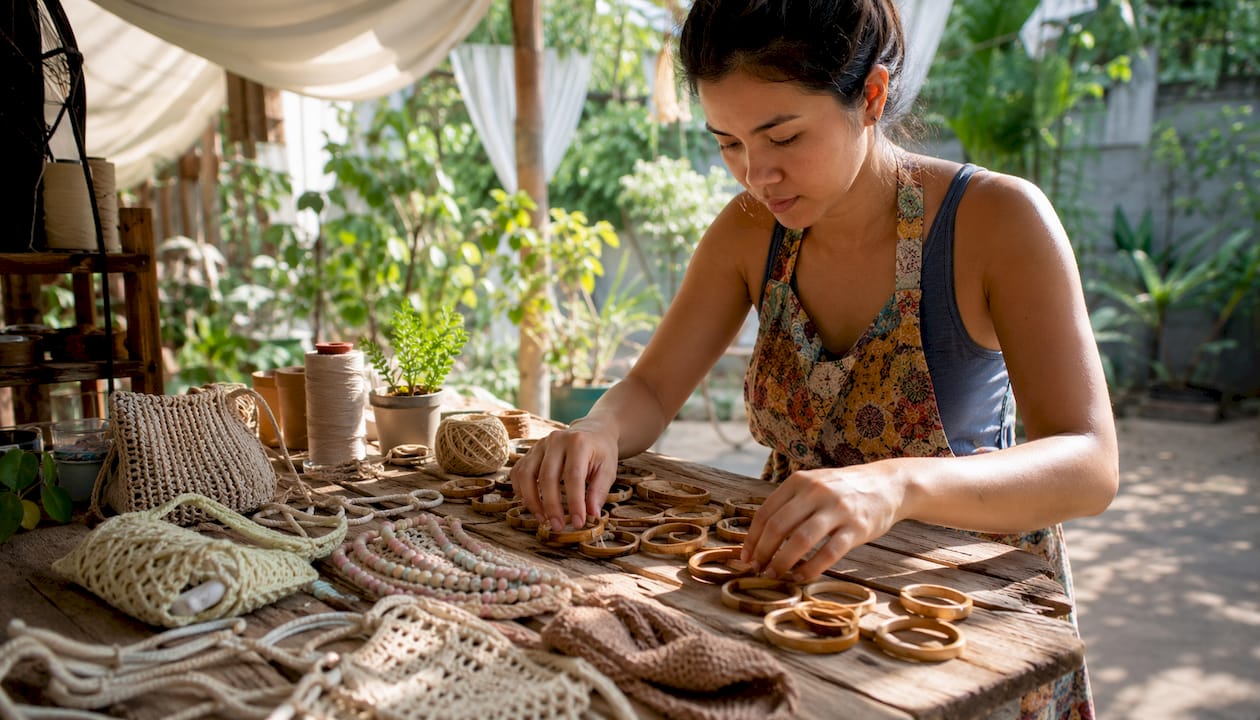
Handcrafted accessories span a remarkable range: beaded necklaces, macramé bracelets, wire-wrapped gemstone rings, polymer clay earrings, hand-stitched leather wallets, woven tote bags, hand-painted silk scarves, ceramic brooches, upcycled fabric scrunchies, and embroidered patches. This page gathers curated visual examples grouped by accessory type, with short maker notes, material and technique details, quick DIY prompts, U.S. sourcing guidance, and a brief quality checklist so you can recognize, recreate, or shop these pieces with confidence.
Jump to a category:
Jewelry: necklaces, bracelets, rings, earrings
Bags: woven totes, wooden clutches, potli bags
Textiles: hand-painted scarves, embroidered patches
Hair accessories: upcycled scrunchies
Small leather goods: hand-stitched wallets
Decorative accessories: ceramic brooches
Table of Contents
Examples of handcrafted accessories, grouped by type
The gallery below pairs each piece with its materials, technique, a styling note, and a rough price band so you can assess fit at a glance. Every item carries a maker attribution cue — look for the artist or studio name, a materials list, and a technique note on any product photo caption worth trusting.
Accessory | Materials & Technique | Styling Note | Price Band |
Beaded necklace | Freshwater pearls + gold filigree, hand-strung | Pairs with a silk blouse or open-neck dress | Medium |
Crystal bloom necklace | Crystal points + sterling silver wire, wire-wrapped | Statement piece over a simple knit | High |
Baroque pearl drop earrings | Baroque freshwater pearls + gold-fill ear wires, hand-assembled | Evening wear or elevated daywear | High |
Polymer clay earrings | Terrazzo or marbled clay, hand-sculpted + baked | Casual chic; works with linen or denim | Low–Medium |
Macramé bracelet | Cotton cord + brass rings, knotted | Stacks well with gold bangles | Low |
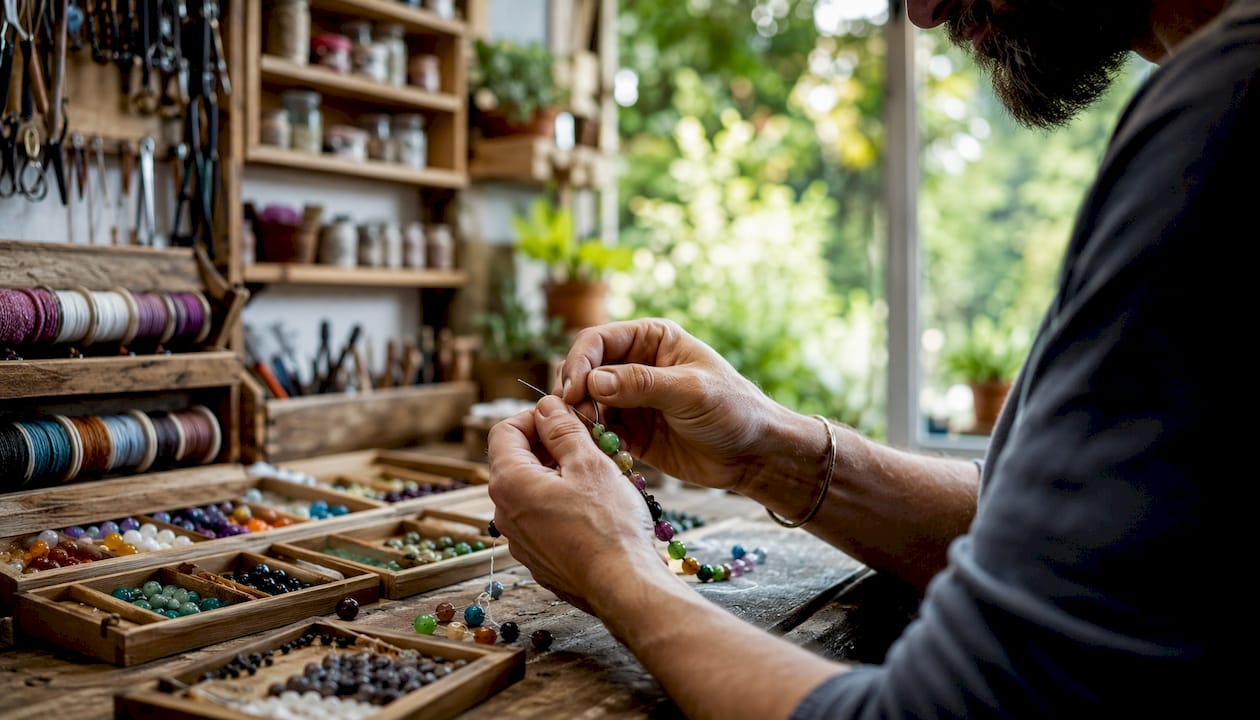
Layered crystal bracelet set | 8mm gemstone beads, hand-strung on elastic cord | Wear three strands together for texture | Medium |
Wire-wrapped gemstone ring | Crystal point + 20-gauge copper or sterling wire | Earthy or modern depending on metal choice | Medium |
Hand-stitched leather wallet | Full-grain vegetable-tanned leather, saddle-stitched | Classic gift; ages beautifully | High |
Woven tote bag | Cotton or jute, hand-loomed | Market bag or beach tote; pairs with linen | Low–Medium |
Wooden box clutch | Mango wood + raw silk lining, hand-carved | Festive or cocktail occasion | High |
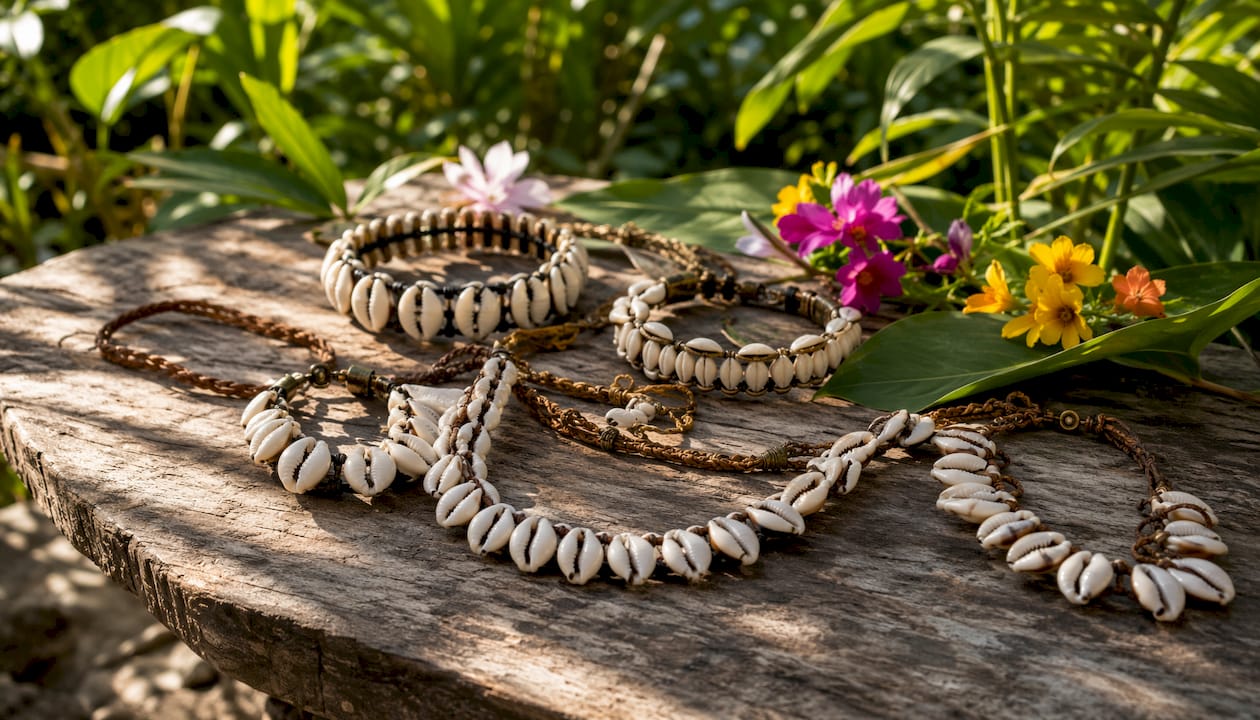
Potli bag | Raw silk + mirror work + cowrie shells, hand-embellished | Festive Indian outfits or maximalist styling | Medium–High |
Hand-painted silk scarf | Habotai or crepe silk + fabric paint, hand-brushed | Neck tie, bag accent, or hair wrap | Medium–High |
Ceramic brooch | Stoneware clay + glaze, hand-formed + kiln-fired | Pin to a lapel, beret, or tote strap | Medium |
Upcycled fabric scrunchie | Deadstock or vintage fabric, hand-sewn | Hair or wrist; coordinates with outfit palette | Low |
Embroidered patch | Cotton or linen base + embroidery floss, hand-stitched | Iron or sew onto jackets, bags, or denim | Low |
Pro Tip: When browsing online listings, zoom into the product photo and look for the maker’s name or studio in the caption. A genuine handcrafted listing will typically name the artisan, specify materials (e.g., “vegetable-tanned leather, hand-stitched with waxed linen thread”), and note the technique. If that information is absent, treat the “handmade” label with skepticism.
Artisans design many luxury handcrafted pieces as conversation starters. Unexpected combinations, cowrie shells on a potli bag, glitter on a structured wooden clutch, turn functional accessories into identity-rich statements. That quality is precisely what separates them from mass-produced alternatives. For more on how these pieces function within a curated wardrobe, the guide on accessory styling offers a useful complement to the examples above.
How artisans make these pieces: materials and techniques to recognize
Understanding construction helps you appreciate a piece and assess its quality. The table below maps each core technique to its typical materials and the visual signature it leaves behind.
Technique | Common Materials | Visual Signature |
Beadwork / hand-stringing | Gemstone beads, freshwater pearls, seed beads | Consistent spacing, hand-knotted intervals between beads |
Macramé knotting | Cotton, hemp, or silk cord; brass or silver rings | Visible square or spiral knots; slight texture variation per piece |
Wire-wrapping | 20-gauge copper, sterling, or gold-fill wire | Hand-formed loops, visible wraps, no solder marks |
Polymer clay sculpting | FIMO or Sculpey clay, acrylic paint | Terrazzo flecks, marbled swirls, or hand-pressed textures |
Hand-stitching / leatherwork | Full-grain or vegetable-tanned leather, waxed linen thread | Saddle-stitch rows with slight spacing variation; burnished edges |
Hand-painting on silk | Habotai or crepe silk, gutta resist, fabric paint | Soft color gradients, no hard digital print lines |
Ceramic glazing | Stoneware or earthenware clay, oxide glazes | Slight glaze pooling at edges; no two pieces identical |
Embroidery / appliqué | Cotton or linen base, stranded floss, metallic thread | Raised satin stitch, French knots, visible thread tension |
The “material language” of a piece shapes its entire aesthetic register. Hammered copper reads as earthy and organic; polished sterling silver signals clean modernity; raw silk with mirror work carries festive opulence. Matching that language to your wardrobe palette, or to a recipient’s personal story, is what transforms an accessory into something genuinely memorable. Designers often call this a “wearable memory” approach: the material itself communicates something before a word is spoken.
Pro Tip: For longevity, prioritize hypoallergenic metals (sterling silver, gold-fill, niobium) in wire-wrapped pieces, sealed finishes on hand-painted silk, and regular conditioning with a pH-neutral leather balm for hand-stitched leather goods. These small maintenance steps extend the life of a handcrafted piece dramatically. The deeper story of handcrafted leather and why it ages so distinctively is worth reading before you invest in a leather wallet or bag.
Quick DIY prompts you can try this weekend
These prompts are mapped to the gallery examples above. Each one is achievable in an afternoon; the skill level is noted so you can choose your entry point.
Stackable gemstone bracelet set. String three strands of 8mm gemstone beads on elastic cord with a single accent bead at center. Materials: gemstone beads, elastic cord, crimp covers. Skill: Beginner.
Wire-wrapped crystal ring. Frame a small crystal point with 20-gauge sterling wire, wrapping the base and forming a simple band. Materials: crystal point, 20-gauge wire, round-nose pliers. Skill: Beginner–Intermediate.
Polymer clay terrazzo earrings. Roll white clay flat, press in flecks of colored clay, cut into geometric shapes, bake, and attach gold-fill ear wires. Materials: polymer clay, gold-fill ear wires, craft knife. Skill: Beginner.
Macramé friendship bracelet, finished properly. Knot a classic square-knot pattern in silk or cotton cord, then finish with ribbon crimps and a lobster-clasp closure instead of a simple knot. Materials: silk cord, ribbon crimps, lobster clasp. Skill: Beginner.
Coordinate charm bracelet. Stamp GPS coordinates onto a thin copper or brass disc using a metal stamp set, then attach to a chain bracelet. Materials: metal disc, letter stamps, hammer, chain bracelet. Skill: Intermediate. Personalized jewelry frameworks offer helpful step-by-step guidance for this type of project.
Upcycled fabric scrunchie. Cut a 22-inch strip of deadstock or vintage silk, fold and stitch into a tube, thread elastic through, and close. Materials: fabric scrap, elastic, needle and thread. Skill: Beginner.
Hand-embroidered patch. Transfer a simple botanical motif onto cotton twill, fill with satin stitch and French knots in stranded floss, then trim and back with iron-on adhesive. Materials: cotton twill, embroidery floss, hoop, iron-on backing. Skill: Beginner–Intermediate.
Pro Tip: Elevate any of these projects with luxury-grade findings: gold-fill clasps instead of brass, silk cord instead of cotton, or hand-polished gemstone beads instead of glass. The technique stays the same; the result reads entirely differently.
Where to find and buy handcrafted accessories in the U.S.
Authentic handcrafted pieces are available across several channels, each with its own strengths.
Curated online marketplaces. Etsy remains the largest U.S. platform for handmade goods, with filters for “handmade,” material type, and maker location. Use search terms like “artisan,” “hand-stitched,” or “wire-wrapped sterling” to narrow results. Handmade.com offers a similar catalog spanning bags, scarves, and jewelry at a range of price points.
Local craft fairs and artisan markets. In-person events let you examine finishing quality directly, ask the maker questions, and often commission custom pieces. The American Craft Council runs juried shows in several U.S. cities annually.
Independent boutiques. Many carry small-batch artisan accessories alongside clothing; look for maker attribution cards displayed with each piece.
Artist social shops. Instagram and Pinterest shops linked directly from an artisan’s profile often carry limited-edition pieces not listed elsewhere. Direct purchase from the maker typically means the most transparent provenance.
Curated luxury e-commerce. Collections like Vivienlauren’s fashion accessories shop offer pre-vetted, craftsmanship-focused pieces, which removes the sourcing effort for buyers who prioritize quality assurance over the hunt.
Price bands vary considerably by category and material. Simple woven cotton totes or fabric scrunchies typically sit at the lower end of the market, while fine silk scarves, hand-stitched leather wallets, and gemstone jewelry occupy the mid-to-high range. What drives premium pricing is rarely just materials: time-intensive techniques, limited-edition runs, and traceable maker stories all contribute. Choosing handcrafted over mass-produced also carries a sustainability dimension, since well-made artisan pieces tend to be repairable and longer-lived than factory equivalents.
How to spot a genuinely handcrafted piece
The difference between a truly handcrafted accessory and a mass-produced item labeled “handmade” often comes down to a handful of observable details.
Checklist: signs of genuine handwork
Maker attribution: artist name, studio, or maker story present on the listing or tag
Close-up photos showing joins, stitching, or wire wraps with slight natural variation
A specific materials list (e.g., “vegetable-tanned leather, waxed linen thread” rather than “genuine leather”)
Visible hand-tool marks: burnished leather edges, hand-formed wire loops, glaze pooling on ceramics
Minor inconsistencies that signal handwork: no two pieces are perfectly identical
Thoughtful packaging or a maker card explaining the process
Questions worth asking a seller:
“Who made this piece, and where?”
“What materials and finish do you use?”
“Is this one-of-a-kind or a small-batch run?”
Red flags to watch for:
Dozens of identical pieces at unusually low prices
Vague material labels (“metal,” “fabric”) with no further detail
No maker information anywhere on the listing
Generic factory-style product photography with a “handmade” tag and no supporting evidence
There is no single legal definition of “handcrafted jewelry” in the U.S. The practical distinction is this: a handcrafted piece emphasizes maker input and unique finishing rather than factory-standardized output. That distinction matters most when you are paying a premium.
Care and maintenance by material:
Leather: Condition every few months with a pH-neutral balm; store away from direct heat.
Hand-painted silk: Dry-clean or hand-wash in cold water; keep out of prolonged sunlight to prevent fading.
Wire-wrapped metals: Avoid harsh solvents; store in an anti-tarnish pouch.
Polymer clay: Handle with care around hard surfaces; avoid prolonged UV exposure to preserve color.
Embroidered textiles: Spot-clean only; press face-down on a towel to protect raised stitching.
Key Takeaways
Handcrafted accessories are distinguished by maker attribution, visible technique, and specific material transparency — these three signals are the most reliable indicators of genuine artisan quality.
Point | Details |
Core accessory categories | Jewelry, bags, textiles, hair accessories, leather goods, and decorative brooches each have distinct technique signatures. |
Top trust signals | Maker attribution, a specific materials list, and visible hand-tool marks are the clearest indicators of genuine handwork. |
DIY entry point | A stackable gemstone bracelet or polymer clay earring project teaches core techniques before you invest in higher-priced artisan pieces. |
Price drivers | Material quality, time-intensive technique, and limited-edition runs justify premium pricing in handcrafted accessories. |
Vivienlauren’s curation | Vivienlauren’s accessories collection offers pre-vetted, craftsmanship-focused pieces for luxury buyers who value quality assurance. |
Why handcrafted accessories belong at the center of a luxury wardrobe
There is a particular kind of authority that a handcrafted accessory carries, one that no mass-produced piece can replicate, however polished its finish. When I consider the women whose wardrobes I most admire, the detail that consistently elevates their look is not the dress or the shoes alone. It is the wire-wrapped ring that catches the light in an unexpected way, or the hand-painted silk scarf tied with apparent effortlessness at the collar. These are pieces that carry a maker’s intention within them, and that intention is perceptible, even when you cannot name it.
What strikes me most, having spent years thinking about the relationship between craftsmanship and personal style, is how often the handcrafted piece does the work that the rest of the outfit cannot. A beautifully constructed hand-stitched leather wallet, aged to a warm patina, communicates something about the values of its owner in a way that a logo-heavy alternative simply does not. The timeless case for luxury apparel rests on exactly this principle: quality that reveals itself slowly, over time and with use, rather than announcing itself loudly at first glance.
Vivienlauren’s curation philosophy is rooted in this conviction. The pieces we select are not merely beautiful objects. They are wearable arguments for a slower, more considered approach to fashion, one where the maker’s hand is present in every stitch, every brushstroke, every carefully formed wire loop.
Vivienlauren’s curated handcrafted accessories collection
For readers who have spent time with these examples and are ready to invest in pieces that meet the standards described above, Vivienlauren offers a curated selection of luxury handcrafted accessories, including Italian leather goods with hand-stitched detailing, hand-painted scarves, and artisan-made footwear. Every piece in the collection reflects the craftsmanship standards outlined throughout this guide: traceable maker origins, specific material quality, and finishing that improves with wear rather than deteriorating.
International shipping is available on orders above £300, and multiple payment options including interest-free installment plans make it straightforward to invest in a piece you will carry for years. The full accessories collection is the clearest next step for anyone seeking luxury handcrafted pieces without the sourcing effort. If you are drawn specifically to Italian leather craftsmanship, the handmade leather mule is a strong example of what that standard looks like in practice.
Useful sources
Source | What it covers |
Concise definition of handcrafted items and their place in traditional craft industries | |
20 Luxury Handmade Jewelry Ideas | Gallery of luxury handmade jewelry examples with styling and maker notes |
Handmade.com marketplace | Broad U.S. marketplace for handcrafted bags, scarves, and jewelry with sample price points |
Handmade jewelry ideas and tutorials | Accessible technique guides for polymer clay, beading, and wire-wrapping projects |
Personalized jewelry making ideas | Project frameworks for coordinate bracelets, charm bracelets, and found-object jewelry |
Handcrafted vs. handmade jewelry | Explains the practical distinction between handcrafted and handmade for buyers |
Handcrafted vs. mass-produced: sustainable style | Sustainability case for choosing artisan pieces over factory alternatives |
Etsy marketplace | Primary U.S. platform for handmade and artisan accessories with maker attribution |
Jewelry crafts from beginning to end | Broad DIY reference covering macramé, wire-wrapping, beading, and leather jewelry |
FAQ
What are handcrafted items?
Handcrafted items are objects made primarily by hand using traditional techniques, often by individual artisans or small-scale producers, resulting in pieces that are both practical and aesthetically distinct from factory output.
What is considered handcrafted jewelry?
There is no single legal definition in the U.S. A piece is generally considered handcrafted when a maker’s hand labor was involved at a meaningful stage of production, emphasizing unique finishing and artistic intention rather than standardized factory output.
What are the best examples of handcrafted accessories for beginners to make?
Polymer clay earrings, upcycled fabric scrunchies, and stackable gemstone bracelets are the most accessible starting points, requiring minimal tools and yielding polished results quickly.
How do I know if an accessory is genuinely handcrafted?
Look for maker attribution, a specific materials list, close-up photos showing natural variation in joins or stitching, and visible hand-tool marks. Vague labels and perfectly identical multiples at low prices are the clearest red flags.
Where can U.S. shoppers buy authentic handcrafted accessories?
Etsy, Handmade.com, local juried craft fairs, independent boutiques, and curated luxury retailers like Vivienlauren all offer genuine handcrafted pieces, with varying levels of maker transparency and price range.
Recommended
This fashion piece has been authored and brought to you by Sammy Li. For Vivien Lauren. Vivien Lauren. Luxury. Craftsmanship. That's Proudly Italian. Vivien Lauren. Proud To Style.
