
Skip Dry Cleaning: Machine Wash Most Luxury Linen Dresses Unless Lined - linen dress care
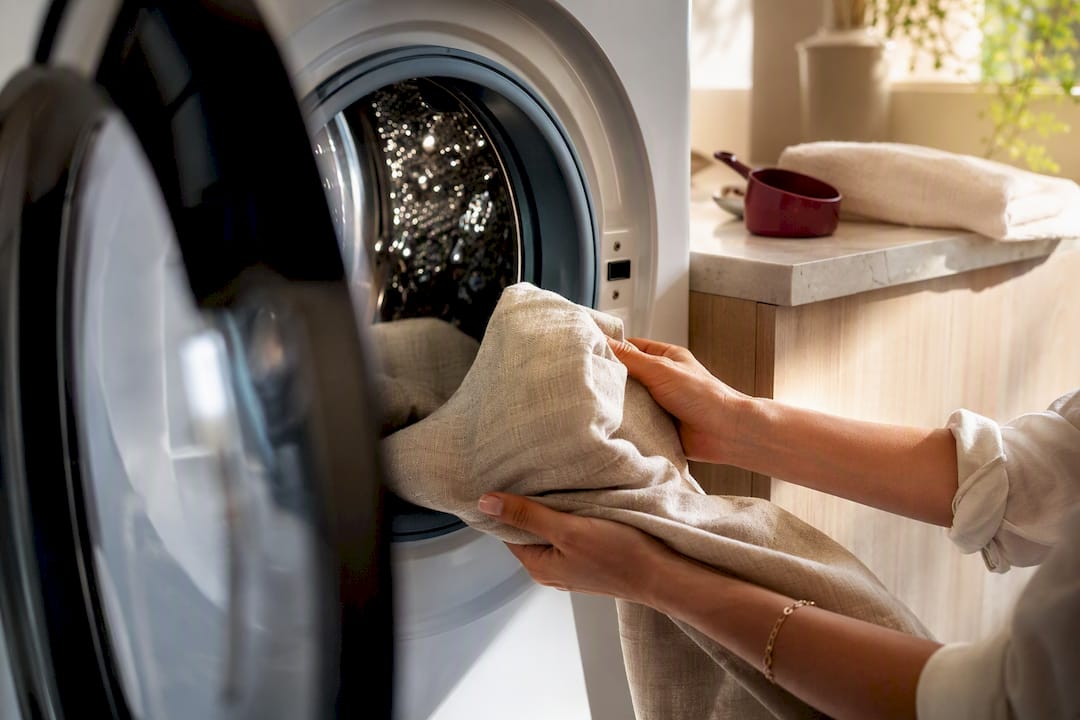
The safest linen dress care routine is simple: wash in cold to lukewarm water (under 104°F) on a gentle cycle or by hand, use a mild detergent, skip the bleach and fabric softener, and dry on low heat or air, pulling the dress out while it’s still faintly damp so you can reshape it. Structured or lined pieces belong at the dry cleaner, not in your washing machine.
Yet another practicality - Save but keep your clothes clean.
Did you know this:
Most linen dresses can be machine washed on a gentle cycle with cold or lukewarm water, but with no structured lining or embellishments, as these require dry cleaning.
Avoid overloading the washing machine to prevent fiber wear; hand washing provides more control for delicate or untrustworthy fabrics.
Drying should prioritize air-drying on wide hangers or flat, with low heat if using a dryer, and reshaping while still damp to prevent shrinkage and misshaping.
Treat stains promptly by blotting and rinsing from the back, and skip optical brighteners or bleach unless the linen is white and tested beforehand.
Proper storage involves fully dry, breathable covers and avoiding prolonged sunlight, to prevent mildew, yellowing, or color fading.
Table of Contents
Pre-Wash Checklist for Your Linen Dress
Before you touch the detergent, take sixty seconds to look the dress over. Linen forgives a lot, but only if you set it up correctly from the start.
Read the care label and inspect the construction. Does the dress have a lining, boning, or structured seaming that changes the rules?
Turn the dress inside out and fasten every button or hook. Slip delicate or embellished silhouettes into a mesh laundry bag.
Sort by color and wash with similarly lightweight pieces. Heavy jeans or towels in the same load will rough up the fibers.
Measure the detergent rather than eyeballing it. Excess soap doesn’t clean better; it just sits in the fibers and makes them stiff.
Set the machine to a gentle or delicate cycle with a low spin speed.
You can also skip the wash entirely more often than you’d think. Linen genuinely does not need laundering after every wear, and airing a dress out on a hanger overnight often does the job that a full wash cycle would otherwise do.
Machine Washing vs. Hand Washing a Linen Dress
Both methods work. The one you choose depends on how the dress is built and how much you trust your washing machine’s gentle cycle.
Machine washing is fine for most everyday linen dresses, and there’s no need to treat the fabric as fragile beyond reason. Set the water to cold or lukewarm (below 104°F), choose the delicate cycle, and keep the spin speed low. Never overload the drum. Linen needs room to move freely in the water, and a crowded load creates friction that wears down the weave over time.
Hand washing gives you more control and is the better choice for a dress you’re not fully confident about.
Fill a basin with cool to lukewarm water and dissolve a small amount of mild liquid detergent.
Submerge the dress and let it soak for 10 to 15 minutes.
Agitate gently with your hands, focusing on any visibly soiled areas.
Drain and refill with clean water to rinse, repeating until no suds remain.
Press the water out between your palms. Never wring or twist linen. Twisting stresses the fibers and can leave permanent creases.
A few habits protect the fabric regardless of method. Cold or lukewarm water and a mild detergent preserve the fibers far better than hot water and heavy-duty soap, and fabric softener is not just unnecessary but counterproductive, since it coats the fibers and dulls linen’s natural texture.
Pro Tip: If your dress smells faintly of detergent even after a normal rinse, run one extra rinse cycle. Leftover residue is one of the most common causes of linen that feels stiff or scratchy straight out of the wash.
Drying and Reshaping a Linen Dress Correctly
Drying is where most linen dresses actually get damaged, not washing. If you take one lesson from this guide, make it this one: heat and neglect during drying cause more shrinkage and misshaping than any detergent ever will.
Air-dry lightweight dresses on a smooth, wide hanger to let gravity keep the drape natural.
Lay heavier or fuller dresses flat on a towel so the wet weight doesn’t stretch the shoulders or waistline.
If you use a dryer, choose the lowest heat setting and pull the dress out while it’s still slightly damp rather than running a full cycle to bone dry.
While the dress is still damp, smooth the seams, tug the hem straight, and press out major creases with your hands.
That timing detail matters more than most people assume. Drying is the single stage where linen care most often goes wrong, because heat exposure and reshaping happen too late, after the fibers have already set into whatever shape they were crumpled in.
For a gentler alternative to full ironing, try a short low-heat tumble with a damp towel tossed into the dryer alongside the dress. The moisture creates a light steam effect that relaxes stubborn wrinkles, and you finish by air-drying and reshaping as usual.
Ironing and Steaming: Getting the Right Finish
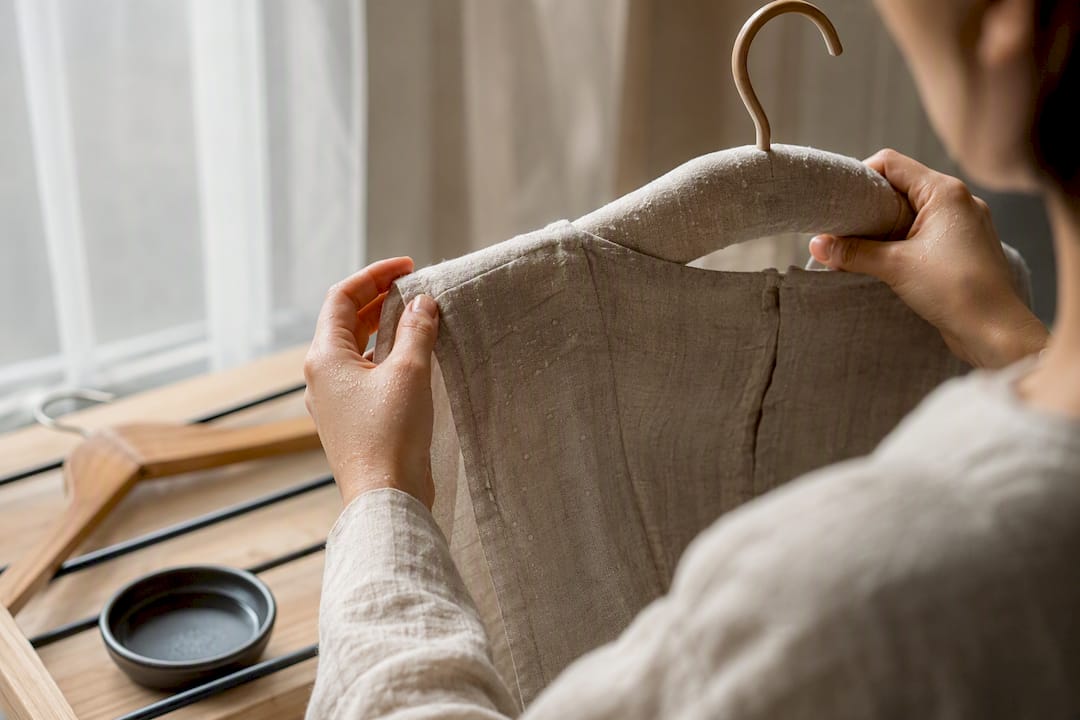
Linen responds best to heat when there’s still moisture in the fibers, which is why a completely dry dress is so much harder to press than one pulled straight from the dryer or hanger while damp.
Iron the dress while it’s slightly damp, or use a steam iron on the linen setting.
Iron on the reverse side, or place a thin pressing cloth over the front to protect any surface texture or trim.
Test your iron’s heat setting on an inside seam first, especially on colored or printed dresses.
For dresses with beading or lace detailing, avoid direct iron contact entirely. Read more on caring for lace and delicate trims before you press anything ornamented.
If you want a crisp, tailored finish, iron methodically along the grain of the fabric while it’s damp and let it dry flat before wearing. If you prefer linen’s relaxed, lived-in character, a steamer while the dress hangs does the job with far less risk to trims and seams. Steaming is the gentler, more lifestyle-friendly option for refreshing a dress you’ve already worn once or twice.
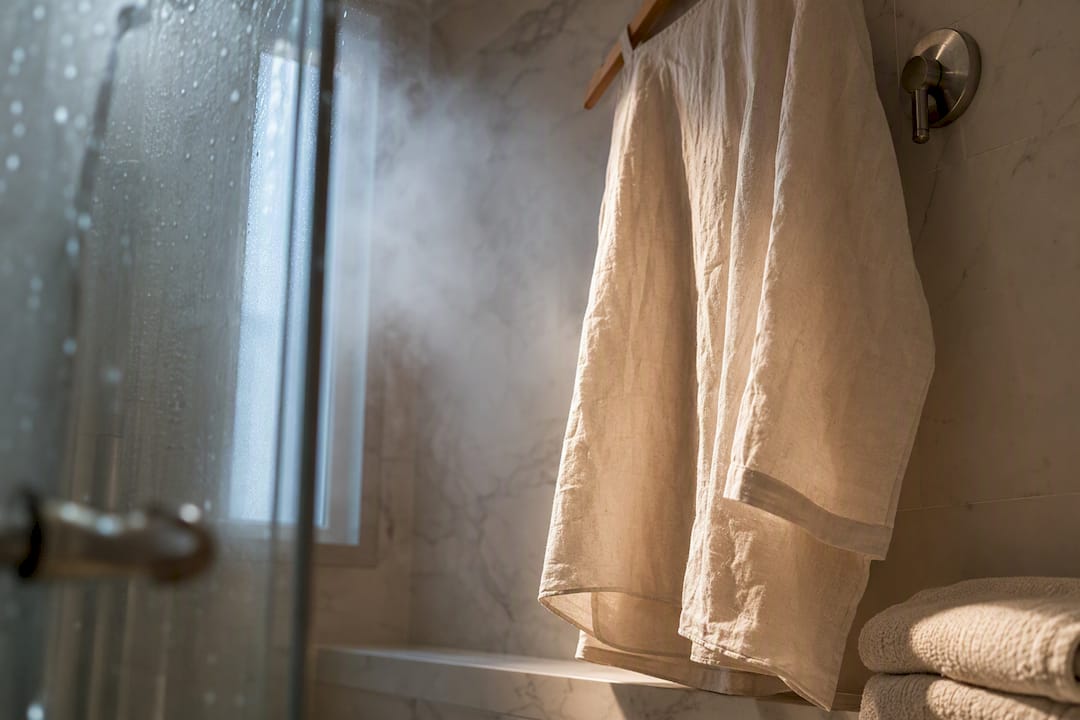
Pro Tip: Hang the dress in the bathroom during a hot shower for ten minutes before an event. The ambient steam softens light creases almost as well as a handheld steamer.
How to Treat Stains on a Linen Dress
Speed matters more than force. The moment something spills, your instinct might be to rub at it, and that’s exactly the wrong move.
Blot the stain immediately with a clean cloth. Never rub, which pushes the stain deeper into the weave.
Turn the fabric over and rinse from the back with cool water, flushing the stain out rather than through.
For food or protein-based marks, soak the area in mild detergent or an enzyme-based spot remover before washing the whole dress.
For wine or pigment stains, apply a gentle lifting technique with a clean cloth and cold water, working from the outside of the stain inward.
Skip optical brighteners entirely, and reserve diluted bleach strictly for white linen, and only after testing it on a hidden seam.
Pre-treat underarm or oil marks with a short detergent soak before the dress goes into a full wash cycle.
Blotting first and rinsing from the back is the foundational stain-removal method for linen, and it works for the overwhelming majority of everyday spills, from coffee to salad dressing. For pale or white dresses specifically, pairing this with careful color preservation matters even more. Our guide to styling and caring for a white dress covers additional tips for keeping light fabrics bright without resorting to harsh bleach.
Storing Linen Dresses Between Seasons
Storage mistakes are quiet. You won’t notice the damage until you pull the dress out months later and find mildew spots or yellowing you can’t explain.
Store the dress only once it’s completely dry. Any lingering dampness invites mildew in as little as a day or two.
Use breathable garment bags or cotton pillowcases, never sealed plastic, which traps moisture against the fibers.
Hang most dresses to avoid permanent fold lines, but fold heavier or beaded pieces flat with acid-free tissue paper between the layers for long-term storage.
Rotate what you wear rather than leaving one dress hanging in direct sunlight for months, since prolonged UV exposure fades color unevenly.
Between wears, air the dress on a hanger, steam out light creases, and spot-clean small marks instead of running a full wash.
If your closet setup needs a refresh to support this kind of rotation, a few smart laundry room and hanging space adjustments make breathable storage far easier to maintain consistently.
When to Hand-Wash vs. When to Choose Dry Cleaning
Not every linen dress belongs in your washing machine, and the ones that don’t are usually obvious once you know what to look for.
Structured features change everything. A lining, canvassed seams, boning, or shoulder pads mean the dress has internal construction that submersion can distort permanently. These structured or heavily lined garments should generally go to a professional cleaner, because home washing risks warping the shape in ways that pressing can’t undo. Once a tailored linen dress loses its intended silhouette, there’s often no way to press it back to its original form.
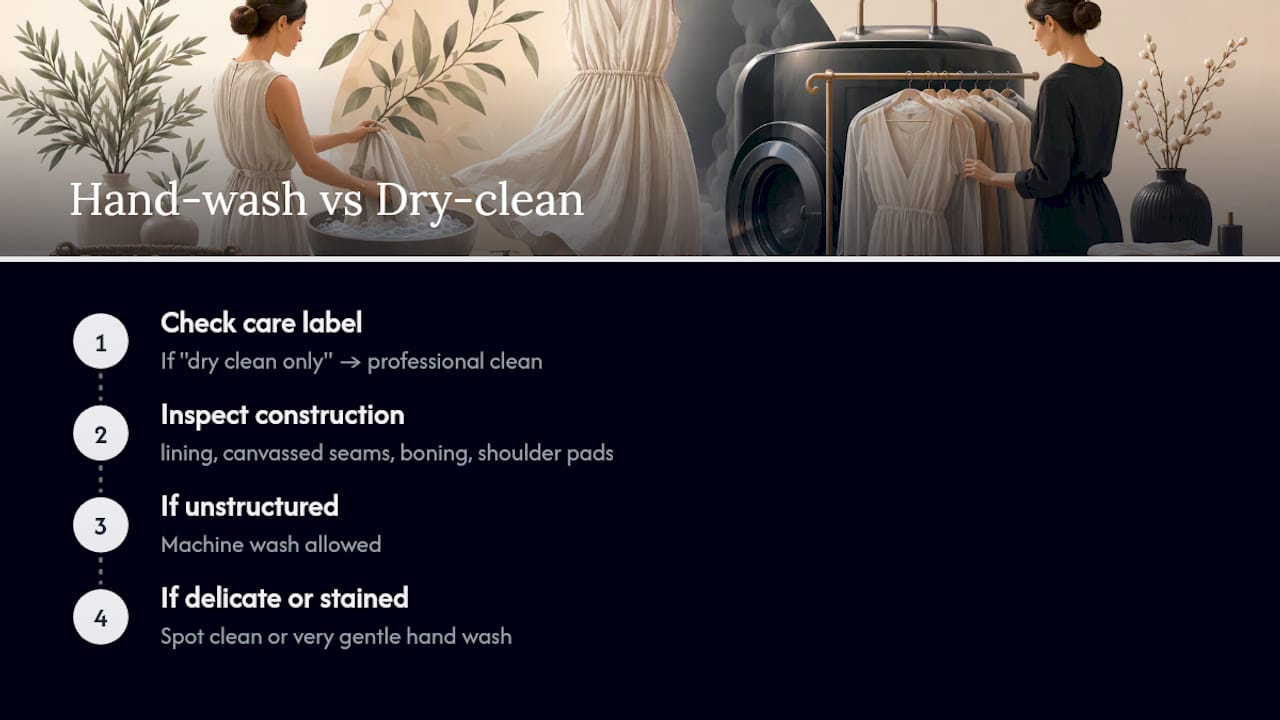
Check the care label before deciding anything. If it says “dry clean only” or the construction includes visible lining, trust it. When you must handle something at home, limit yourself to spot cleaning small marks or a very gentle hand wash, and only when the alternative is leaving a stain to set permanently.
Vivien’s Expert Tips for Luxury Linen Longevity
A well-made linen dress, especially one built with Italian tailoring and considered lining, deserves more thought than the average wardrobe basic. My own routine comes down to three habits: minimal detergent, short gentle cycles, and reshaping every piece while it’s still damp, never after it has fully dried into whatever wrinkled state the dryer left it in.
Craftsmanship should change how you approach care, not complicate it. A dress with a fitted lining or hand-finished seams asks for a slower hand than a casual weekend piece. Check the label, understand the construction, and let that guide whether you’re washing at home or calling a cleaner. For a fuller breakdown of these principles across your wardrobe, our luxury fashion care guide walks through detergent choices and temperature settings in more depth.
Preservation is really a handful of small, consistent choices: rotate what you wear, treat stains the moment they happen, store everything in breathable covers, and keep a mental note of any repairs a piece has had. Do these consistently and a well-made linen dress will outlast trends by years, not seasons.
If you’re building a wardrobe around pieces meant to last, Vivien Lauren’s dress collection is designed with exactly this kind of longevity in mind. Every piece is made to reward the kind of care outlined here, and Vivien Lauren offers free UK shipping on orders over £80, with international shipping available on orders above £300.
Why Most Linen Care Advice Misses the Point
Most guides to linen care treat it as a laundry problem: what temperature, what cycle, what detergent. That’s necessary information, but it skips the part that actually determines whether a good dress survives five years or fifteen, which is the drying and reshaping stage. Nearly every damaged linen dress I’ve seen ruined wasn’t ruined in the wash. It was ruined by sitting crumpled in a dryer or laundry basket until the wrinkles set permanently.
The conventional advice also underplays how much construction should dictate your approach. A basic linen shift and a tailored, lined linen dress are not the same care problem, even though most articles treat them identically. If your dress has real structure, no amount of gentle detergent saves it from a poor decision to wash it at home instead of sending it out.
If you take one thing from this guide, prioritize the damp-reshaping step over everything else. Get the washing right, but treat the five minutes after the wash, while the dress is still damp, as the moment that actually protects its shape.
— Vivien Lauren.
Sources
For deeper technical detail on washing temperatures and detergent chemistry, The Spruce’s linen care guide is a solid reference. The Laundry Brothers cover machine settings and structured-garment risk in more detail, and MagicLinen’s step-by-step washing guide is useful for stain-specific instructions. When in doubt, the care label and a trusted professional cleaner beat guesswork every time.
FAQ
How Do You Take Care of a Linen Dress?
Wash in cold to lukewarm water on a gentle cycle with mild detergent, skip the bleach and softener, then air-dry or tumble on low heat and reshape the dress while it’s still slightly damp
Can 100% Linen Go in the Washing Machine?
Yes, most everyday linen dresses can be machine washed on a delicate cycle with cool to lukewarm water and a low spin, as long as the dress has no structured lining or delicate trims.
Is Linen Difficult to Care For?
Not really. Linen is fairly forgiving as long as you avoid hot water, harsh detergent, and high heat during drying. The main risk is neglecting the fabric while it dries, not the washing itself.
Is Linen Really Dry Clean Only?
No, most linen dresses aren’t dry clean only. Dry cleaning is really only necessary for structured, lined, or heavily embellished pieces where home washing risks distorting the internal construction.
Recommended

This fashion piece has been authored and brought to you by Shona White. For Vivien Lauren. Vivien Lauren. Luxury. Craftsmanship that's Proudly Italian. Vivien Lauren. Proud To Style.
