Why Shop Curated Collections: Better Wardrobes, Less Fuss
Updated: Aug 19

Shop curated collections because they save you time, eliminate choice overload, and deliver a cohesive, higher-quality wardrobe built around craftsmanship and intention rather than impulse. For luxury women’s fashion shoppers, that distinction is everything: a thoughtfully edited selection means each piece has already been vetted for provenance, silhouette, and longevity before it reaches you. Think with Google research notes that far more luxury shoppers prefer shopping such better managed selections.
Table of Contents
Trust signals that tell you a collection is genuinely well-curated
How Vivien Lauren’s collections put these principles into practice
Common pitfalls of curated collections and how to avoid them
The quiet confidence of buying from a collection that knows what it is
Vivien Lauren: a place to experience curated luxury women’s fashion
What a curated collection actually is (and what it isn’t)
A curated collection is a theme-driven, deliberately limited set of items chosen for cohesion, quality, and a clear point of view, rather than assembled by volume or algorithm alone. The principles of fashion curation rest on editorial judgment: a human voice decides what belongs, what complements what, and what the collection as a whole communicates.
This stands in sharp contrast to the “endless aisle” model of large marketplaces, where filters and recommendation engines surface products by popularity or paid placement, not by how well they work together. Curation signals to look for include a stated theme or season, editor or artisan notes, a limited SKU count, and clear provenance statements that tell you where and how each piece was made.
Why shop curated collections: the real consumer benefits
The advantages of curated selections are practical, not merely aesthetic. Here is what they deliver:
Time savings. Someone with genuine expertise has already done the sorting. You browse a finished, considered edit rather than hunting through thousands of results.
Reduced decision fatigue. Fewer, better options lower cognitive load and help you reach a confident “yes” faster, without the anxiety that comes from wondering whether something better exists two pages deeper.
Wardrobe cohesion. Curated sets are built to work together. Pieces share a color logic, a silhouette family, or a tonal story, which means building a timeless wardrobe becomes a natural outcome of shopping rather than a separate project.
Higher confidence in quality. A curator who stakes their editorial reputation on a selection has strong incentive to vet materials, construction, and provenance. For luxury buyers, that vetting translates directly into fewer returns and longer wear.
Easier gifting. A cohesive collection makes gift selection intuitive: you are choosing within a world that already makes sense, rather than assembling disparate pieces and hoping they feel intentional.
Slower, more sustainable consumption. Curated collections naturally favor fewer, better pieces, which aligns with conscious luxury principles and the slow-fashion ethos that defines genuinely elevated style.
Statistic to note: Think with Google research found that consumers cycle through repeated evaluation and exploration loops that stall purchases. Curation short-circuits that cycle by presenting a finished, satisfying endpoint.
Pro Tip: When comparing price across curated and non-curated options, factor in cost-per-wear rather than sticker price. A £280 Italian leather bag from a vetted collection will almost always outlast three £90 alternatives, making the curated choice the more economical one over time.
The paradox of choice: why curation matters more than ever
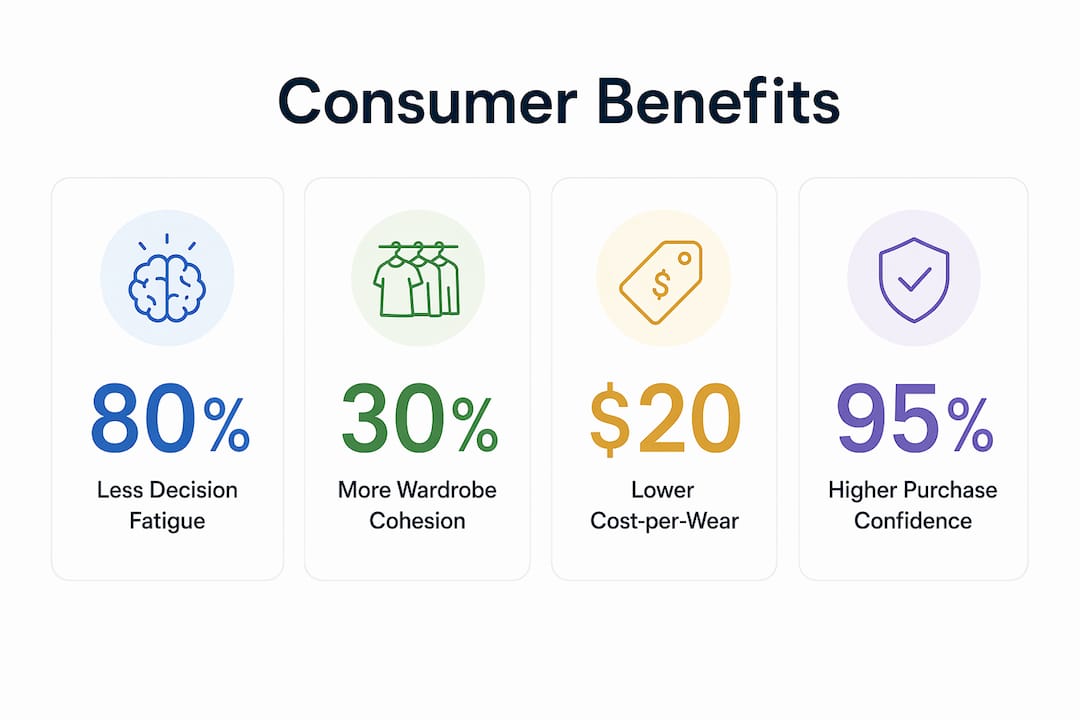
Psychologist Barry Schwartz’s research established that excessive choice increases anxiety, regret, and decision paralysis. Digital commerce amplified this effect dramatically: as assortments expanded, cart abandonment and returns surged, and shoppers began citing “too many options” as a primary reason for abandoning purchases, particularly in apparel.
Wardrobe fragmentation is the closet-level version of this problem. Shoppers accumulate pieces that never quite connect, resulting in a full wardrobe that still feels like it has nothing to wear. Curated collections address fragmentation by presenting items that are already in conversation with one another, encouraging mix-and-match purchases that form a consistent personal style rather than a collection of isolated impulse buys.

Editorial curation also restores what writer Allan Winder calls “the luxury of finished”: a finite, vetted catalog gives shoppers a clear endpoint to browsing, which is itself a form of relief in an era of infinite scroll.
How to evaluate a curated collection before you buy
Not every collection that calls itself “curated” has earned the word. Use this checklist before committing:
Identify the collection theme. Is there a stated concept, season, or lifestyle story? Vague or absent themes suggest assembly by algorithm, not editorial intent.
Check mix-and-match logic. Can you picture at least three pieces working together? A well-curated set makes that visualization effortless.
Inspect materials and provenance. Look for specific fiber content, country of origin, and maker or artisan credits. Generalities like “premium quality” without specifics are a warning sign.
Read curator or editor notes. These signal that a human made deliberate choices and can articulate why. Their absence does not disqualify a collection, but their presence adds meaningful trust.
Verify sizing and fit guidance. Detailed fit notes, model measurements, and size comparisons reduce the risk of a return and signal that the retailer knows its product deeply.
Confirm returns and shipping policies. A clear, fair returns policy is not a bonus; it is evidence that the retailer stands behind what it sells.
Key questions to scan for on any collection page: Who curated this, and what is their background? What is the unifying theme? Are materials and origins stated explicitly? Are styling suggestions present?
Pro Tip: A higher unit price is a positive signal only when it is accompanied by specific material and provenance details. Price alone proves nothing; price plus artisan credits, named materials, and a clear origin story is the combination worth trusting.

Trust signals that tell you a collection is genuinely well-curated
Credible curation leaves a paper trail. Look for these signals on any product or collection page:
A curator statement or editor note that explains the selection rationale in specific terms.
Clear provenance and materials — named fibers, leather grades, country of manufacture, and ideally maker or workshop credits.
Detailed fit and sizing information, including model height and measurements where possible.
Curated styling guides or lookbooks that show pieces working together in real outfits.
Authentic customer reviews with photos, not just star ratings, which provide unfiltered evidence of real-world quality and fit.
Transparent returns and shipping policies stated plainly, not buried in fine print.
Artisan or maker credits that connect a product to the hands that made it.
For luxury shoppers, each of these signals reduces purchase risk in a measurable way. Provenance details, for instance, let you assess whether the craftsmanship justifies the price. Styling guides reduce the chance of buying a piece that looks beautiful in isolation but has no natural home in your wardrobe. Sustainable sourcing transparency, particularly relevant when choosing ethical luxury pieces, signals that a brand’s values align with considered consumption.
Pro Tip: Look for a brief curator bio or editorial byline on the collection page.
How Vivien Lauren’s collections put these principles into practice
Vivien Lauren offers a useful, concrete illustration of what genuine curation looks like in a luxury women’s fashion context. Several specific practices distinguish its approach:
Italian craftsmanship provenance. Pieces are handcrafted in Italy using techniques passed down across generations, with artisan credits that connect each product to its origin. The handmade woven leather bucket bag is one example of how provenance is stated at the product level, not just the brand level.
Limited, cohesive SKU counts. Rather than expanding inventory endlessly, Vivien Lauren maintains focused collections where pieces are chosen to work together, supporting wardrobe building rather than impulse accumulation.
Editorial styling notes and blog content. The brand’s curated fashion editorial explains curation decisions and offers wardrobe-building guidance, giving shoppers the context to visualize how pieces fit into their existing style.
Practical customer policies. Free UK shipping on orders over £80 and international shipping on orders above £300, alongside multiple payment options including interest-free installment plans, reduce the friction that often accompanies luxury purchases.
Vivien Lauren’s approach reflects what the best curated collections share: a clear editorial voice, a commitment to provenance, and the restraint to offer fewer, better choices rather than more of everything.
Common pitfalls of curated collections and how to avoid them
Curation is a promise, and not every retailer keeps it. The most common pitfall is false curation: a collection labeled “curated” that is simply a filtered category page with no editorial rationale, no provenance detail, and no coherent theme. The fix is to apply the trust-signal checklist above before purchasing.
A second limitation is size and fit risk, which remains real even in well-curated collections, particularly for luxury pieces with structured silhouettes. Always read fit notes carefully and prioritize retailers with clear, fair return policies.
Third, curated collections can occasionally reflect a curator’s taste more than your own. A tightly edited selection is a strength, but it also means less variety. If a collection’s aesthetic does not resonate with your personal style, the curation works against you rather than for you. Browse the theme and styling notes first; if the vision does not speak to you, move on without guilt.
Finally, price opacity is worth watching. A curated label can sometimes serve as justification for markup without corresponding quality. Provenance details, material specifics, and artisan credits are your protection against paying a curation premium for ordinary goods.
Key Takeaways
Curated collections save time, reduce decision fatigue, and build cohesive wardrobes by presenting a finished, vetted edit rather than an overwhelming inventory.
Point | Details |
Curation reduces decision fatigue | Think with Google research links better-managed selections to 4–7% additional sales and faster purchase decisions. |
Wardrobe cohesion is a direct benefit | Curated sets are built to mix and match, reducing fragmentation and making every piece earn its place. |
Trust signals matter | Provenance details, artisan credits, fit notes, and curator statements are the markers of genuine curation. |
Price needs context | A higher price is meaningful only when paired with specific material origins and maker credentials. |
Vivien Lauren as a reference point | Vivien Lauren’s Italian-crafted, editorially guided collections demonstrate how provenance, cohesion, and styling notes work together in practice. |
The quiet confidence of buying from a collection that knows what it is
There is a particular clarity that comes from shopping a collection with a genuine point of view. You are not hunting; you are choosing within a world that has already been made coherent for you. The last time I bought from a collection that stated its theme plainly, named its makers, and showed me exactly how each piece could be worn with two others already in my wardrobe, I felt none of the usual post-purchase second-guessing. The returns policy was clear, the fit notes were accurate, and the piece arrived exactly as described. That is not luck. It is what good curation produces: confidence before the purchase, satisfaction after it, and a wardrobe that grows more intentional with every addition.
Vivien Lauren: a place to experience curated luxury women’s fashion
For women who want the benefits of curated shopping without compromise, Vivien Lauren brings together Italian handcrafted apparel, leather goods, and accessories in collections built around cohesion, provenance, and timeless elegance. Each piece carries the weight of genuine artisanship, and the editorial styling guidance means you can see exactly how a new addition fits into the wardrobe you are building.

Free UK shipping on orders over £80 and international shipping above £300 make the experience as practical as it is beautiful. Explore the full collection at Vivien Lauren or browse the curated dress selection to see how a considered edit feels when it is done with genuine care.
FAQ
What does “curated collection” mean in fashion?
A curated collection is a deliberately limited, theme-driven selection of pieces chosen for cohesion and quality by an editor or designer with a clear point of view, rather than assembled by algorithm or volume.
Why do curated collections reduce decision fatigue?
By presenting a finished, vetted edit rather than thousands of options, curated collections give shoppers a clear endpoint to browsing, which lowers cognitive load and helps buyers commit with confidence.
How can I tell if a collection is genuinely curated?
Look for a stated theme, curator or editor notes, specific material and provenance details, artisan credits, and detailed fit guidance. These signals indicate that a human made deliberate editorial choices.
Are curated collections worth the higher price?
A higher price is justified when it is accompanied by named materials, country of origin, and maker credentials. Vivien Lauren’s Italian handcrafted pieces, for example, carry provenance details that connect price directly to craftsmanship.
How do curated collections support sustainable fashion?
Curated collections naturally favor fewer, better pieces, which aligns with slow-fashion principles. Provenance transparency, a hallmark of genuine curation, also makes it easier to verify ethical sourcing and responsible production.
Recommended
This fashion piece has been brought to you by Sammy Li. On behalf of Vivien Lauren. Vivien Lauren. Luxury. Craftsmanship. That's Proudly Italian. Vivien Lauren. Proud to Style.