
Discover Luxury Fashion: artisanship, timelessness, value
Updated: May 27

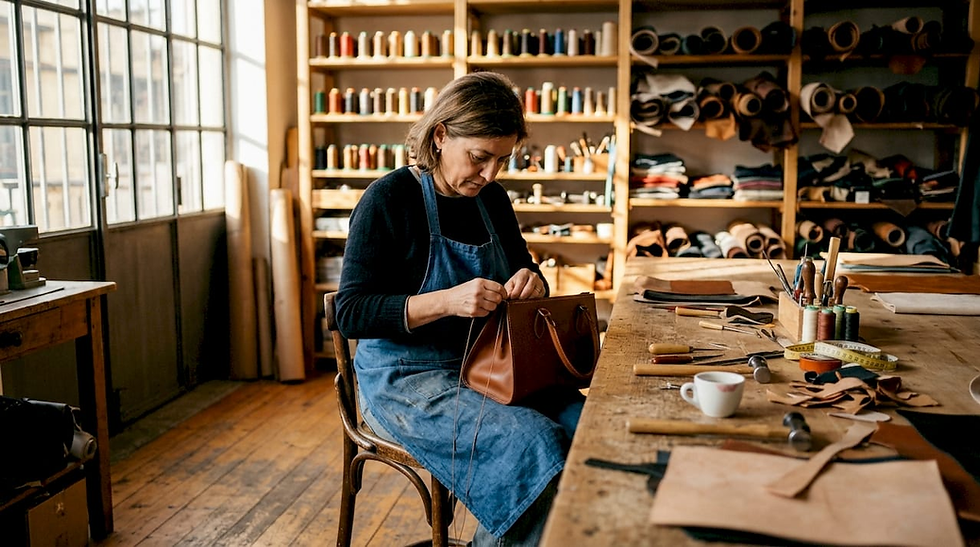
What is luxury fashion.
True luxury fashion is rooted in craftsmanship, heritage, and emotional value, not just price.
Italian luxury emphasizes artisanal techniques, premium materials, and effortless elegance called sprezzatura.
Applying luxury principles involves investing in timeless, well-crafted pieces with longevity and authenticity.
Luxury fashion is one of those concepts that resists simple definition, much like trying to describe an abstract painting to someone with their eyes closed. Most of us assume it begins and ends with price, that a four-figure price tag is the passport to luxury. But that assumption misses something far more profound. True luxury, particularly in the Italian tradition, is rooted in artisanal handcrafting, premium materials, and sprezzatura, that ineffable quality of effortless elegance. It is about heritage, intention, and the invisible hours of skill woven into every seam. In this article, we will explore what luxury fashion truly means, why Italian craftsmanship defines its highest expression, and how you can apply these principles with discernment to your own wardrobe.
Table of Contents
Key Takeaways
Point | Details |
Luxury is more than price | True luxury is defined by exclusivity, emotional value, and heritage rather than cost alone. |
Italian craftsmanship matters | Artisanal handcrafting and premium regional materials distinguish Italian luxury fashion from mainstream. |
Timeless investment pays off | Luxury items offer cost per wear and lasting value through longevity and resale potential. |
Modern luxury adapts | Sustainability and quiet elegance are redefining luxury for contemporary style seekers. |
Discernment is key | Knowing the hallmarks of authentic luxury helps avoid diluted, mass-produced items mislabeled as luxury. |
Defining luxury fashion: Beyond price and labels
When we speak of luxury fashion, we are not simply speaking of expense. We are speaking of a philosophy, a set of values that elevates clothing and accessories beyond mere utility into something closer to art. Understanding this distinction is essential, because the market is crowded with brands that charge luxury prices without delivering luxury substance.
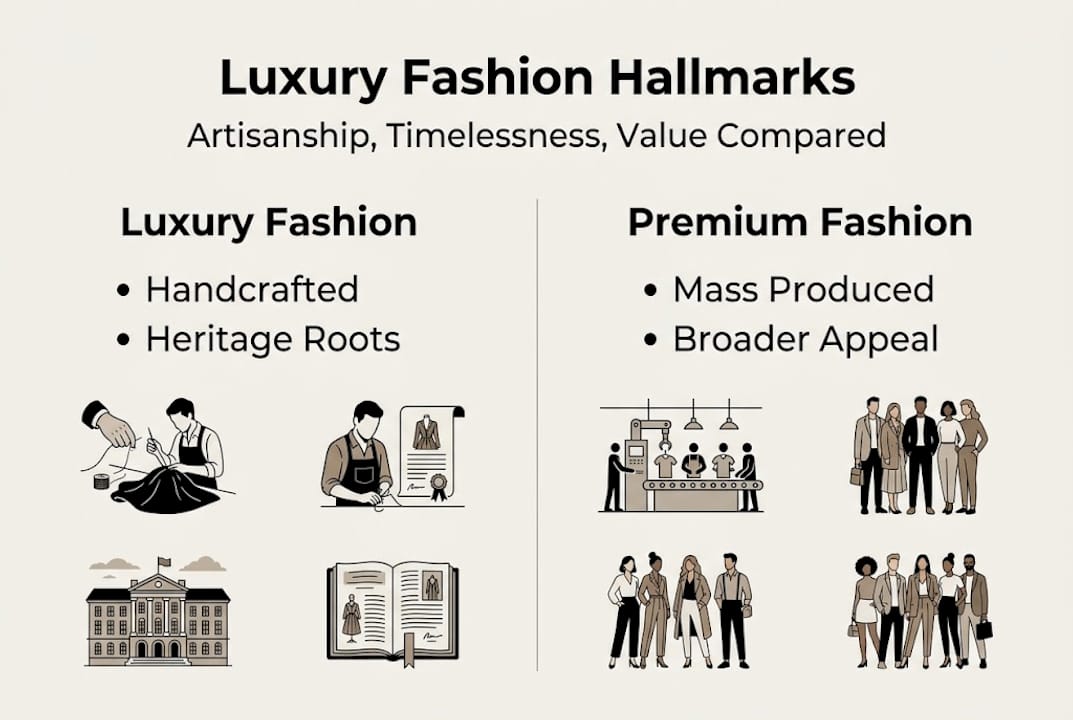
The clearest way to understand this is to compare luxury, premium, and mainstream fashion side by side.
Category | Exclusivity | Heritage | Margins | Distribution |
Luxury | Very high | Deep, generational | Highly restricted | |
Premium | Moderate | Moderate | 12 to 20% | Selective |
Mainstream | Low | Minimal | Under 12% | Mass market |
Luxury differs from premium fashion in ways that go well beyond margin percentages. Premium fashion is accessible, broadly distributed, and often excellent in quality. But luxury carries something premium cannot manufacture: emotional and symbolic weight. When you hold a luxury piece, you are holding the accumulated knowledge of generations of artisans, the story of a house, a region, a way of seeing the world.
The defining traits of genuine luxury fashion include:
Exclusivity: Limited production runs that preserve desirability and protect craftsmanship standards
Heritage: A brand story rooted in place, tradition, and authentic expertise
Emotional value: The feeling a piece evokes, confidence, gracefulness, identity
Authentic materials: Sourced with intention and selected for longevity, not economy
Craftsmanship: Human hands, not machines, as the primary instrument of creation
You can explore the full spectrum of luxury fashion hallmarks to understand how these traits manifest in real garments and accessories. The point is this: luxury is not a price point. It is a standard of being.
The Italian approach: Craftsmanship, materials, and sprezzatura
Italy has long held a singular position in the world of luxury fashion, and that position is not accidental. It is the product of centuries of artisanal tradition, regional specialization, and a cultural attitude toward beauty that is almost impossible to replicate elsewhere.
Italian luxury fashion is built on handcrafting techniques passed down through generations, premium materials sourced from regions like Tuscany and Milan, and a concept called sprezzatura. Sprezzatura, a term coined in the 16th century by Baldassare Castiglione, describes the art of making something difficult appear utterly effortless. In fashion, it is the quality that makes a perfectly constructed jacket look as though it simply fell into place.
The materials themselves are extraordinary. Full-grain leathers from Tuscany, cashmere from the finest Italian mills, silks woven with a precision that machines cannot match. Luxury items feature full-grain leathers, hand-stitching, and vegetable-tanned materials, each of which contributes to a garment’s longevity, feel, and quiet authority.
Here is a quick reference for identifying genuine Italian luxury materials:
Material | Authentic indicator | Why it matters |
Full-grain leather | Natural grain visible, slight imperfections | Ages beautifully, breathes naturally |
Cashmere | Soft but substantial weight | Warmth without bulk |
Vegetable-tanned leather | Earthy tone, stiffens then softens | Develops a unique patina over time |
Hand-stitched seams | Slight irregularity, tight tension | Far stronger than machine stitching |
Signs of authenticity extend beyond materials. The weight of a piece, the way it drapes, the tension of its stitching, these are the sensory markers of Italian artisan craftsmanship that no fast fashion replica can convincingly imitate. Understanding Italian leather importance is particularly valuable when investing in bags or shoes, where material integrity is the foundation of both beauty and durability.
Pro Tip: When shopping for leather goods, run your fingertips along the surface and edges. Genuine full-grain leather feels warm and slightly textured. Vegetable-tanned pieces will have a natural, almost earthy scent. Machine-finished or bonded leather feels uniform and cool, and often smells faintly synthetic.
The spirit of timeless Italian elegance is not about following trends. It is about wearing something so well-made that it transcends them entirely.
Timelessness and trend: How luxury fashion stays relevant
One of the most remarkable qualities of true luxury fashion is its ability to remain relevant without chasing relevance. This is not a paradox. It is a discipline, and Italian luxury houses have practiced it for generations.

Heritage is the foundation. A brand’s story, its founding vision, its regional roots, these are not marketing embellishments. They are the source of authenticity that gives a collection meaning. When a house has been producing exquisite leather goods in Florence for a century, that history is embedded in every piece it creates.
But heritage alone is not enough. Timeless luxury blends heritage and contemporary innovation, including sustainable materials and technology-driven refinement. The most admired luxury brands today are those that honor their traditions while thoughtfully evolving.
Here is how modern luxury fashion is adapting without losing its essence:
Sustainable sourcing: Ethical procurement of materials, from traceable wools to responsibly tanned leathers
Quiet luxury aesthetics: A shift away from logo-heavy branding toward understated, craftsmanship-forward design
Technology in production: Precision tools that support, rather than replace, artisan skill
Circular fashion thinking: Designing for longevity and repairability rather than planned obsolescence
Transparent supply chains: Allowing consumers to trace a garment’s journey from raw material to finished piece
Modern luxury evolves with sustainability, ethical sourcing, and quiet luxury aesthetics, and this evolution is reshaping what discerning women expect from their wardrobes. The luxury market statistics reflect this shift, with consumers increasingly prioritizing quality and longevity over novelty.
You can explore sustainable luxury brands that are leading this movement, and understand why fashion heritage remains the most powerful differentiator in a crowded market. For a broader perspective, the sustainable fashion overview offers essential context.
Pro Tip: When evaluating a luxury brand’s contemporary credentials, look beyond its marketing language. Ask whether its materials are traceable, whether its artisans are named or celebrated, and whether its pieces are designed to be repaired rather than replaced.
Applying luxury in your wardrobe: Investment, longevity, and cost per wear
Knowing what sets luxury apart, let’s consider how you can apply these principles to your own wardrobe with intention and sophistication.
The concept of cost per wear is one of the most clarifying frameworks in fashion. A £900 Italian leather bag worn three hundred times costs £3 per wear. A £90 bag that falls apart after thirty uses costs £3 per wear as well, but without the beauty, the heritage, or the possibility of resale value. Luxury Italian apparel offers value via longevity, cost per wear, and resale potential, with benchmark features including higher GSM (grams per square meter) fabrics and reinforced seams that simply last longer.
When selecting luxury pieces for your wardrobe, consider these principles:
Versatility: Choose pieces that work across multiple contexts, a beautifully cut dress that transitions from afternoon to evening, a structured bag that complements both casual and formal looks
Timeless silhouettes: Avoid pieces that are so trend-specific they will feel dated within two seasons
Material integrity: Prioritize natural fibers and full-grain leathers over synthetic alternatives
Resale potential: Certain Italian houses and styles hold or appreciate in value, making them genuine investments
Emotional resonance: Buy pieces you feel something for, not pieces you feel you should own
Here is a practical checklist for verifying authenticity before you invest:
Check for a ‘Made in Italy’ label with a specific region or artisan reference
Examine stitching under good light. Hand-stitching has subtle, beautiful irregularity
Feel the weight of the fabric or leather. Genuine luxury materials have substance
Research the brand’s heritage. How long have they been producing? Where?
Ask about care and repair services. Luxury brands stand behind their pieces
The timeless fashion selection process rewards patience and discernment. And if you are building a wardrobe from the ground up, the timeless trend guide offers a thoughtful starting point.
Pro Tip: Avoid any brand that uses the word ‘luxury’ extensively in its own marketing without substantiating it with material specifics, artisan credentials, or regional heritage. Genuine luxury rarely needs to announce itself.
The uncomfortable truth about luxury fashion: What most buyers never realize
Here is something the fashion industry rarely says plainly: the term ‘luxury’ is diluted by overuse on everyday items, and many consumers are paying luxury prices for premium, or even mainstream, quality dressed in aspirational packaging.
The most quietly devastating thing a brand can do is trade on its heritage without honoring it. When a storied house expands into mass-market diffusion lines, licenses its name to factories it has never visited, and prioritizes logo visibility over material integrity, it is no longer selling luxury. It is selling the memory of luxury.
The pieces that hold the deepest value are often the ones that whisper rather than shout. An exquisitely stitched silk blouse with no visible branding. A structured leather bag whose beauty lies entirely in its construction. These are the pieces that luxury hallmarks actually describe, and they are the ones worth seeking.
Buy with discernment. Let craftsmanship be your compass, not the logo.
Explore Italian luxury: Shop timeless elegance with Vivien Lauren
If this exploration of Italian luxury has stirred something in you, a desire for pieces that are genuinely made with care, rooted in tradition, and designed to last, then we invite you to discover what we have curated at Vivien Lauren.

Luxury fashion collections by Vivien Lauren Mini Bags Handmade in Italy - Designs by Vivien Lauren 
Classic Shoes on Vivien Lauren 
Bamboo Handle Tote - with woven pochette & soft supple Dolaro Leather - by Vivien Lauren 
Handmade classic white Pumps - By Vivien Lauren 
Caramel Pom Pom Flat Mule Shoes Deisgned and Handmade in Italian Leather Suede - by Vivien Lauren
At Vivien Lauren, every piece in our collection reflects the values we have discussed here: authentic Italian craftsmanship, exquisite materials, and timeless design that transcends seasonal trends. Whether you are drawn to the sculptural beauty of our Italian leather bucket bag, the refined femininity of our luxury dresses, or the full breadth of our curated collection, you will find pieces made to be worn, loved, and passed on. This is slow fashion at its most sophisticated.
Frequently asked questions
How is luxury fashion different from premium fashion?
Luxury is defined by exclusivity, deep heritage, and emotional resonance, while premium differs by broader distribution and more accessible pricing. Premium can be excellent quality, but it lacks the symbolic and artisanal depth that defines true luxury.
What are the hallmarks of Italian luxury apparel?
Artisanal handcrafting and premium materials from regions like Tuscany and Milan are the defining markers, alongside authentic regional production and the spirit of sprezzatura. These qualities create pieces that feel as extraordinary as they look.
Why is cost per wear important in luxury investments?
Longevity and resale potential make luxury pieces far more cost-effective over time than fast fashion alternatives that wear out quickly. The true cost of a garment reveals itself over years, not seasons.
How can I verify if a piece is genuinely luxury?
Examine material feel, weight, and stitching closely, and look for heritage markers like ‘Made in Italy’ with specific regional or artisan references. Genuine luxury always has evidence of human hands in its construction.
Is sustainability part of modern luxury fashion?
Absolutely. Ethical sourcing and sustainable materials are increasingly central to how leading luxury brands define and communicate their contemporary relevance. For the most discerning buyers, sustainability is now a hallmark of authenticity, not an afterthought.
Recommended
This fashion piece has been authored and brought to you by Sammy Li. For Vivien Lauren. Luxury. Craftsmanship. That's Proudly Italian. Vivien Lauren. Proud To Style.

